AI will learn user preferences and adapt accordingly: Samsung’s JB Park


While most brands are projecting consumer AI as a feature add-on to their offerings, Samsung is trying to integrate AI into its core philosophy and utilise it as a foundation that ties everything from R&D, product development, operations, to the user experience. At CES 2026, Samsung showcased AI-powered experiences across various segments, including entertainment, home, and intelligent care.
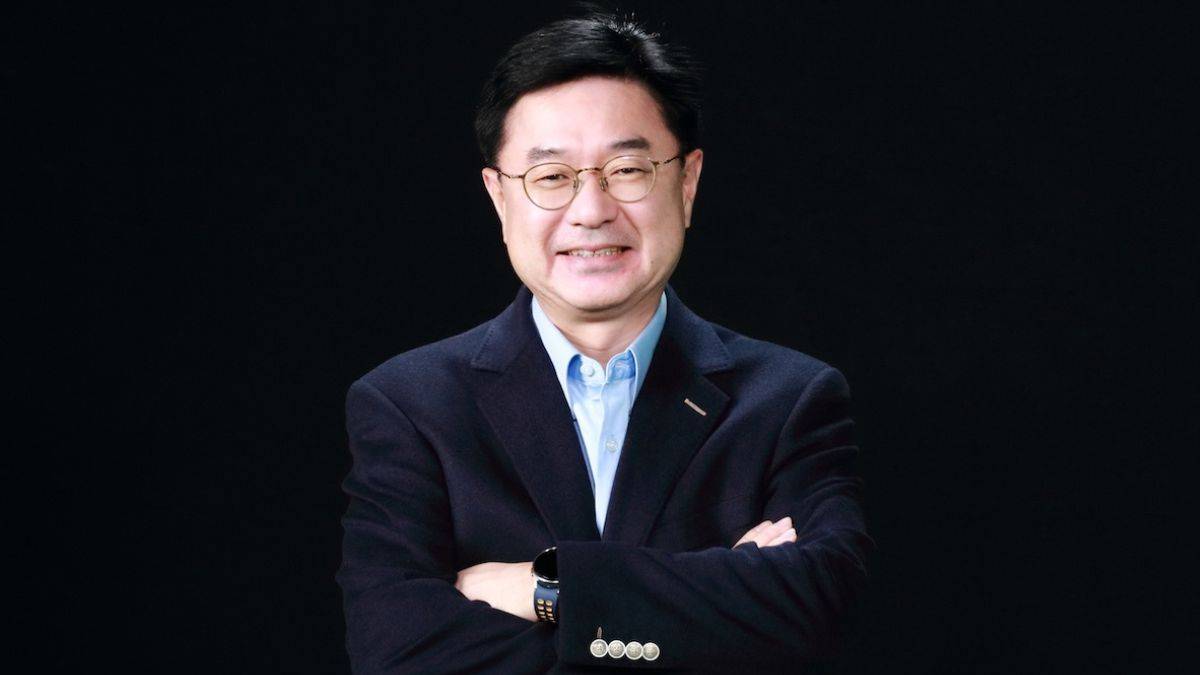
Fielding questions from a contingent comprising senior tech journalists from India, JB Park, President and CEO, Samsung Southwest Asia, spoke about the company’s long-term AI strategy, the role of India in the overall scheme of things for the brand, how AI is affecting user experience, and more.
I asked him about how Samsung is ensuring a seamless user experience for its customers, especially with AI being integrated into so many Samsung devices. As per JB Park, Bixby acts as a tool that sits over and above Galaxy AI, Bespoke AI and Vision AI… along with the SmartThings engine and Knox handling security. So as far as Samsung is concerned, it’s trying to get AI to learn user preferences and adapt things accordingly, and not the other way around.
Here are some excerpts from the rest of the conversation.
Table of Contents
On appliances keeping pace with AI models.
As TM (Roh) mentioned in his ‘First Look’ announcement that about 400 million mobile devices already have AI, and he expects 800 million to have AI globally by the end of this year. I think that’s the future; we will have (AI) across all of our devices that are above a certain price point through Wi-Fi connectivity. And they will be able to use SmartThings that supports an engine to monitor, to manoeuvre or to control the device in a very energy-efficient way and communicate both ways so you can have easier access to it.On Galaxy AI adapting to Indian languages.
India has many major languages and dialects. One of the advantages of AI is that it translates instantly. So, you can speak in your local tongue, and AI will translate it. In the past, we had a local language printed on our washing machine, so you could understand the feature before you turned the knob. Now, we have a larger screen with voice recognition, so you do not have to worry about which language you’re speaking; it will convert into a machine command.

On privacy concerns around AI.
Samsung has a very advanced privacy mechanism, which we call the Knox Vault. The Knox platform locks all of your device commands, personal information, etc, on the device. This protected information will never go out. It’s protected by the Knox Security, that is a hardware lock mechanism instead of software and is of US military standards.We are very, very proud that the privacy of every individual is protected. You don’t want your television monitoring you, or some of your mobile devices or home appliances to have all connectivity so that they can monitor and be used against you. Those policies are very strict at Samsung, and protecting the privacy of every individual is paramount.
On India’s role in Samsung’s long-term AI strategy.
We have invested heavily in R&D; we have our consumer electronics-focused R&D in Delhi, mobile R&D in Noida, while in Bengaluru, it’s more advanced technology that involves multiple categories. The role of the R&D centre is to upgrade the software, architect it and develop it in a way that it is used in the Indian market or globally.We are transforming our engineers to be more AI-centric. India has abundant resources and many brilliant students who are capable of global contribution through their work, and we’re very proud of this. We have more than 10,000 engineers, plus we have another 4,000 that are doing the architecture for the semiconductor team in Bengaluru.
On plans to charge users for AI.
We are not Perplexity, Gemini or Open AI. All those platforms are running a data centre, right? And they use a lot of power to run their data centre. So obviously, you have to pay for the services.But our AI, which is on-device, is over and above these platforms. So our Bixby integrates, and we work with Android to make things integrated into our device. But it is not Samsung that will be charging to use the function. So, to answer your question, no, we don’t charge the consumers for the function or the way we integrate our on-device AI. We don’t. We are not a company to sell our technology on top of a subscription base.
On adding India-specific features to products.
Yes, there are India-specific features. Like in the washing machine, if you put a saree in, the AI detects the textile automatically and does the washing. And, in the cooking menus on the microwave oven, we have embedded special recipes. So, one of the great things that we demonstrated in BKC—our experience store in Mumbai—is that whatever food ingredient you have in the refrigerator, we have a 32-inch screen that’s on the refrigerator panel, and you can ask Bixby what kind of recipe you can make out of this, and it recommends Indian recipes. It sends (the instructions) automatically to the microwave oven to get this cooking ready, so that you can take out the ingredients, dice them up, and it can also show you on YouTube how to make it, and then you put it in the microwave, and it automatically cooks to that recipe. So we have showcased such localisations.Regarding India not being in the scheme of things for the Galaxy Z TriFold launch.


There are only two countries that sell the TriFold currently, and we just added Dubai and Singapore as the third and fourth. We are not selling globally, even in Europe or in South American countries. It’s not available anywhere except Korea and the US market, which are the dominant markets, and some to Dubai and Singapore. But when is the right time to bring in a technology? This is not limited to TriFold, but any devices that are premium like our XR, where we collaborated with Google. When are we bringing those devices, and how much quantity does it justify for us to run the manufacturing? I think the MOQ, I would say is half a million units for me to really get the ROI out of it. Can I sell half a million units of TriFold in India? That is a task that I have to solve.