In 2026, smartphone users no longer expect their phones to deliver only on performance, battery life, and camera quality. They want their devices to go the extra mile by offering a full suite of cutting-edge AI features that make everyday life easier and enhance the overall experience. While there are several aspects of AI worth discussing, perhaps the most crucial one for most users is generative AI photo editing. After all, once a moment has passed, you simply can’t go back and take the same picture again, and in those cases, generative AI photo editing can save the day.
In order to find out which phone trumps the entire market in this category, we put the Samsung Galaxy S26 Ultra up against the iPhone 17 Pro Max and the vivo X300 Pro to find out which of these phones offers the best AI features.
Table of Contents
Generative AI Photo Editing
To evaluate the generative AI chops of all three phones, we ran two identical tasks on the same image across each device. Here’s what we found.
Test 1: Object Movement and Generative Fill
The task here was straightforward: move a slice of pizza taken from a whole pizza and fill the gap as if it had never been removed. It’s a real-world use case that puts both object detection and generative fill to the test.
Right off the bat, it’s worth noting that only the Samsung Galaxy S26 Ultra and vivo X300 Pro support moving objects within an image. The iPhone 17 Pro Max only allows creating stickers from images, so it was a non-starter for this particular test.
Here’s how the other two fared:
Object Selection
- The Samsung Galaxy S26 Ultra’s Galaxy AI lasso tool identified the pizza slice cleanly, with full freedom to reposition, resize, and rotate the object.
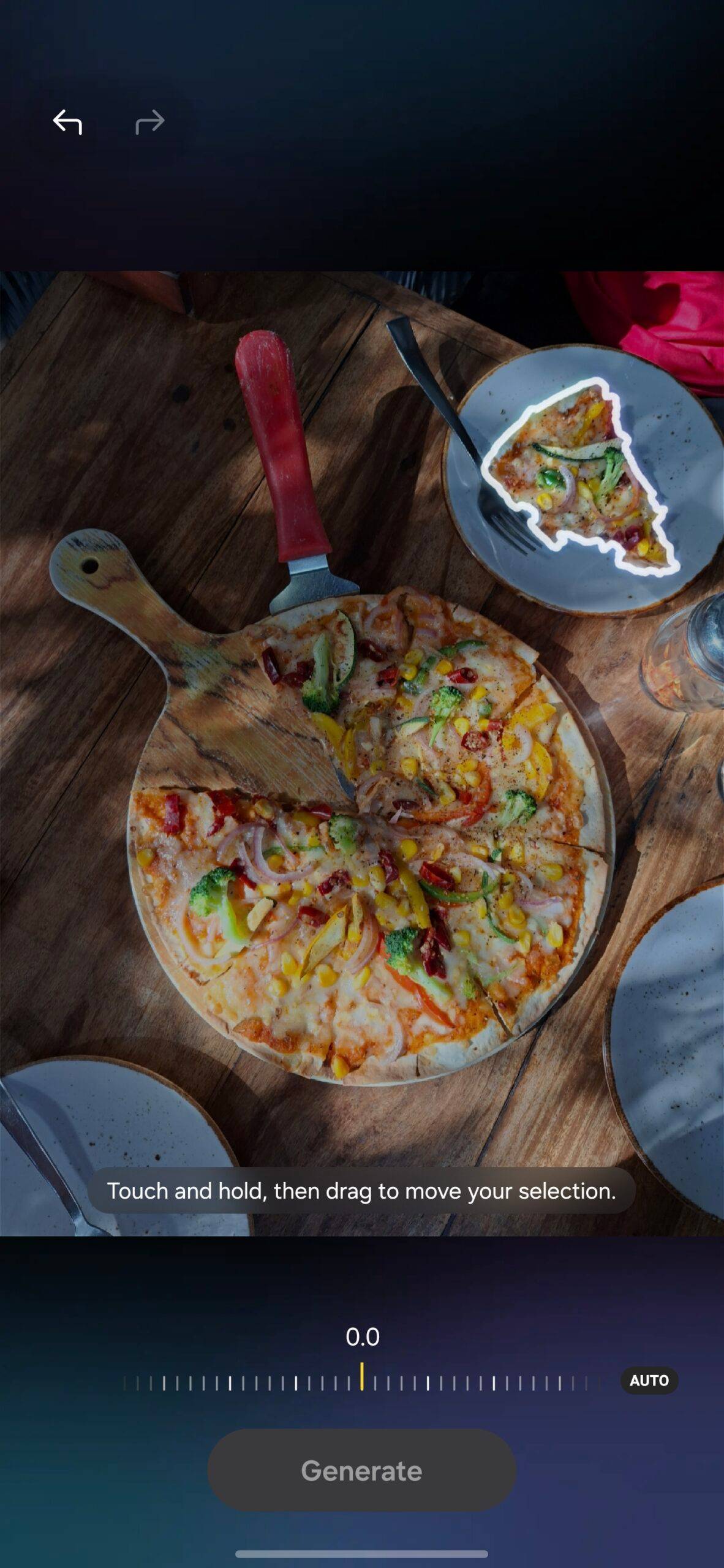
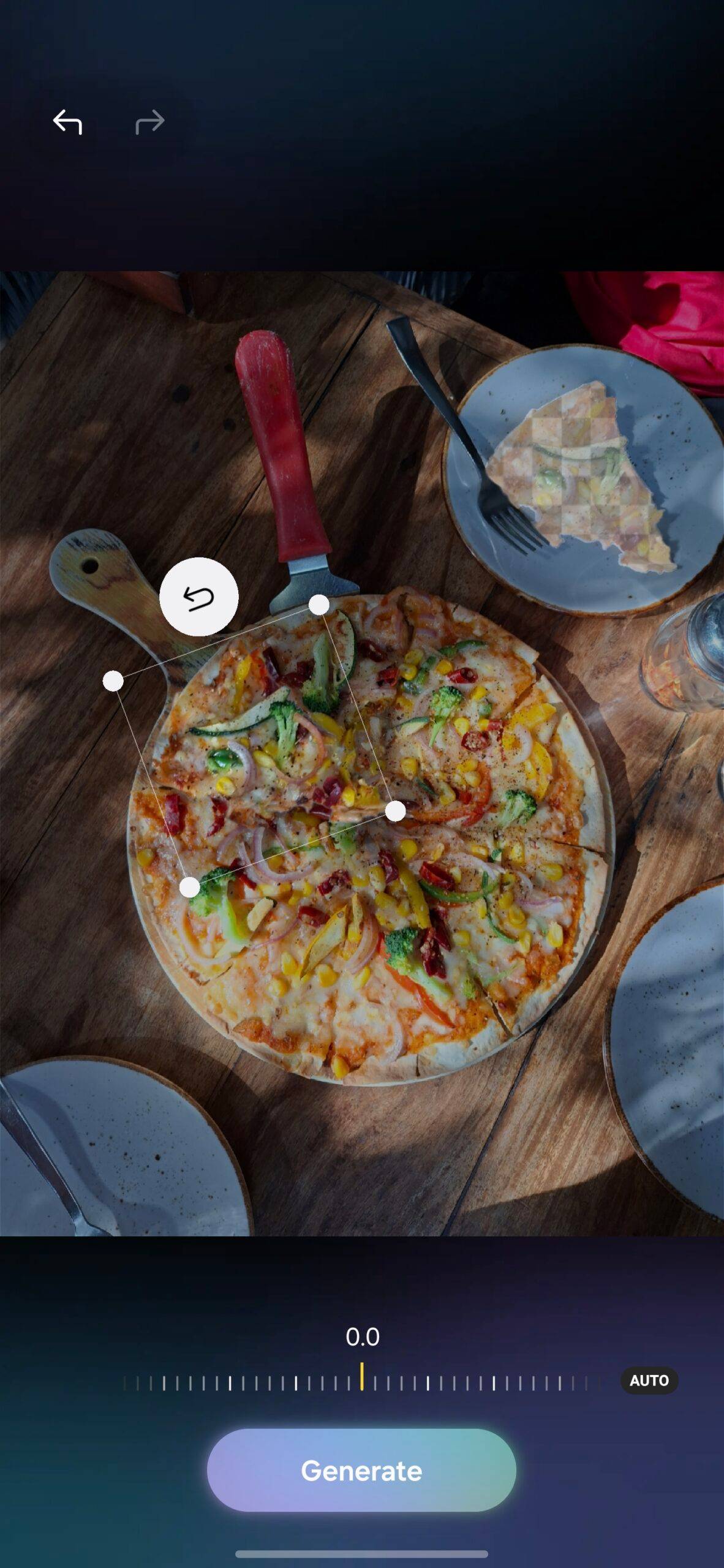
- The vivo X300 Pro’s magic move feature isn’t surfaced under AI edit options; it needs to be manually invoked by tapping and holding an object. Even then, it over-selected, picking up the entire plate beneath the pizza slice instead of the slice alone.



Generative Fill Results
- The Galaxy S26 Ultra impressed us here. It not only filled in the missing slice convincingly but also recreated the dotted pattern on the serving plate, a level of contextual awareness that goes beyond what you’d expect.
- The vivo X300 Pro managed to generate the tabletop in the gap, but the pizza slice fill needed considerable refinement and looked noticeably off.Final result: Samsung Galaxy S26 Ultra (left), vivo X300 Pro (right)



Note: As mentioned, the iPhone 17 Pro Max does not support object selection and movement within an image at this time.
Test 2: Using built-in AI photo editing features
Note: The Samsung Galaxy S26 Ultra uses “Photo Assist” for custom generative edits. The iPhone 17 Pro Max relies on “Playground”, powered by ChatGPT. The vivo X300 Pro’s ambience-change feature is limited to images captured through its own AI visual mode, a significant restriction.
For the second test, we captured a portrait shot from each phone and used its built-in AI features. The aim was to change the season style from summer to autumn. For this, we used Vivo’s AI visual mode, Samsung’s Photo Assist, and the iPhone’s Playground app, which relies on ChatGPT.

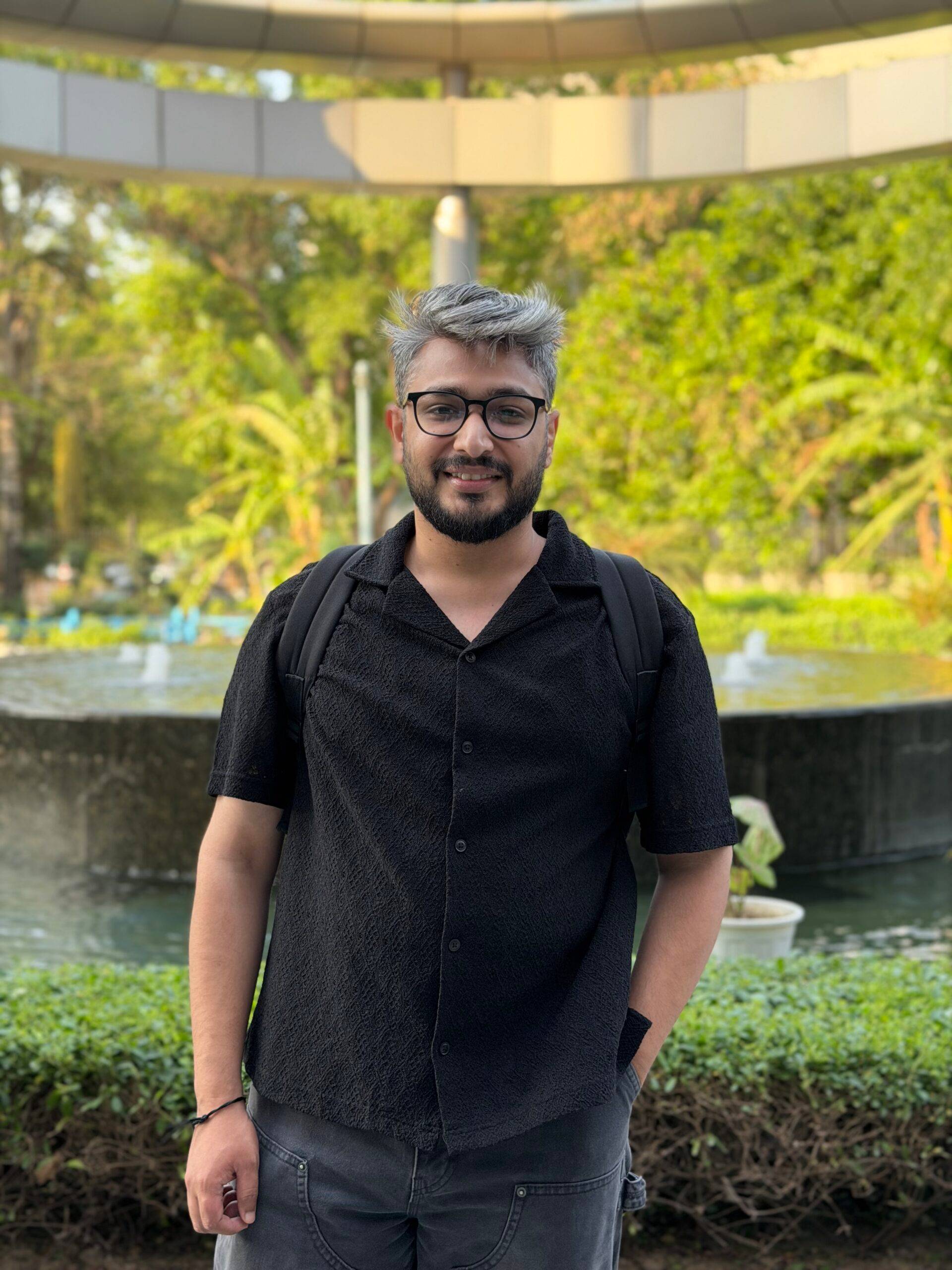

Portrait shot on (Left to right): Samsung Galaxy S26 Ultra, iPhone 17 Pro Max, and vivo X300 Pro
Here’s the prompt we used on Samsung and iPhone: “Change the background to the autumn season without editing the elemental structure of the picture.”
Results
- Given that vivo X300 Pro’s AI visual mode is its USP, it did a great job of changing the season’s style. On closer inspection, a few shortcomings were observed, such as the fountain’s water being replaced with leaves and the water jet being removed entirely, altering the image’s elemental structure. The overall image felt unnatural.
- The Samsung S26 Ultra’s Photo Assist performed better. It not only preserved the elemental structure, even inside the fountain, but it also managed to keep a more realistic look.
- The iPhone 17 Pro Max’s result was simply the worst of the lot. Even with several attempts, it couldn’t get the picture right. Instead of tweaking the original image, it always resulted in a generic image depicting autumn.




AI Autumn season edit (Left to right): Samsung Galaxy S26 Ultra, iPhone 17 Pro Max, and vivo X300 Pro
Test 3: Ambience Change via Generative Edit
Moving to a more stringent test, we transferred a night-time shot of India Gate to all three phones and prompted each to convert it into a daytime image. A more demanding task that tests how well the AI understands both the scene and the instruction.
We used the same prompt across all three: “Turn this into a daytime shot.”
Results
- Samsung Galaxy S26 Ultra: Galaxy AI handled this with ease, transforming the nighttime atmosphere into a convincing daytime scene while preserving the composition, monument, and surrounding elements from the original shot.
- iPhone 17 Pro Max: Playground did produce a result, but it struggled to identify India Gate as a monument. After a couple of failed attempts, we had to explicitly name “India Gate” in the prompt, and even then, the output was a generic, AI-generated image that had no resemblance to the original.
- vivo X300 Pro: This test could not be completed fairly, as the feature only works with images captured natively via the phone’s AI visual mode, ruling out any third-party image input.


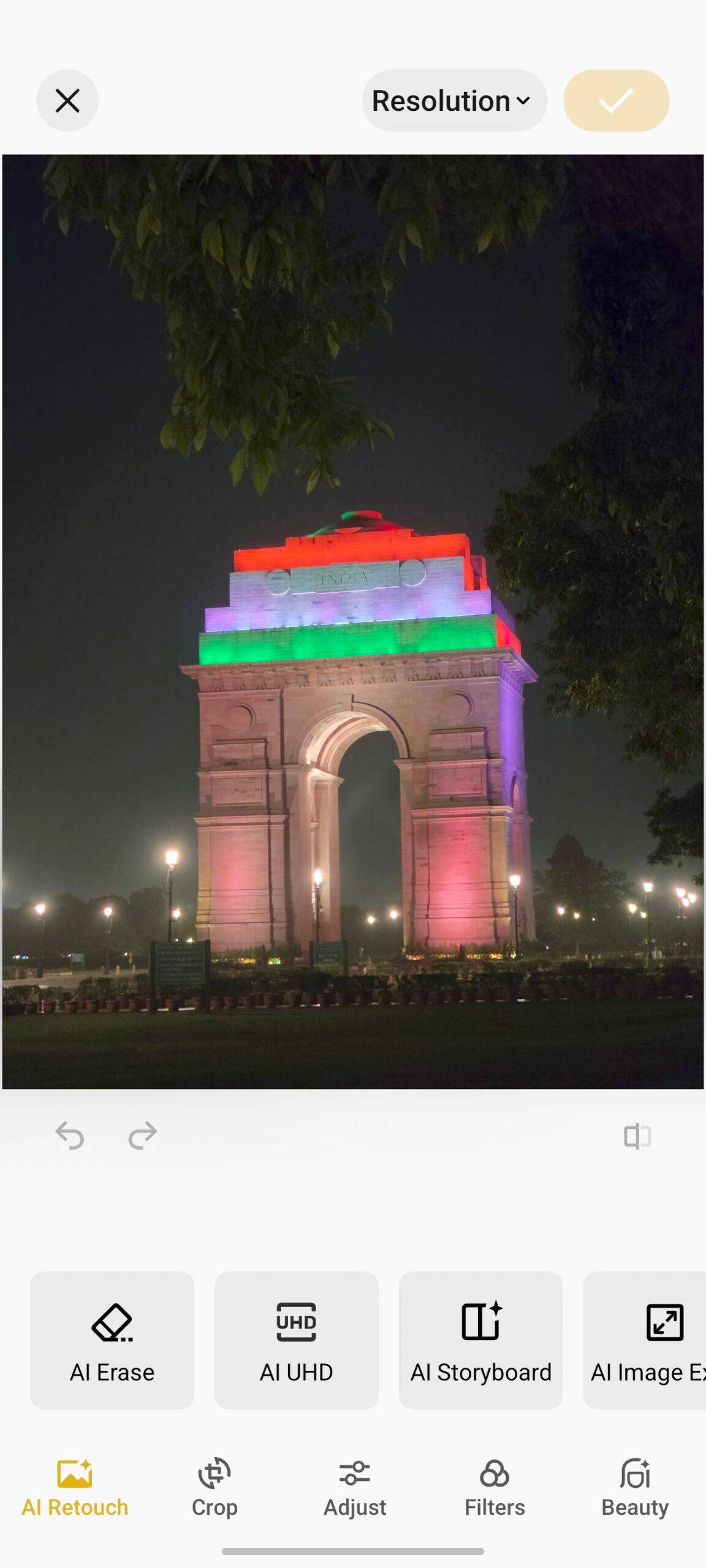
Left to right: Samsung Galaxy S26 Ultra, iPhone 17 Pro Max, and vivo X300 Pro
Test 4: Sketch to Image
This test pushed the creative side of each phone’s AI. We drew a simple, kid-style tree sketch and prompted all three phones to transform it into a fully rendered, artistic image. It’s the kind of feature that highlights just how imaginative and how capable each phone’s generative AI really is.
Note: The vivo X300 Pro does not support sketch-to-image generation in any form and was therefore excluded from this test entirely.
Results
- Samsung Galaxy S26 Ultra: This was the standout result of the entire TestLab session. Galaxy AI interpreted the rough tree sketch and rendered it into a charming crayon-style painting, complete with fluffy clouds in the sky and a boat visible in the background, elements that were never part of the original sketch. The AI not only respected the child-like aesthetic of the input but also actively built a coherent, imaginative scene around it. It’s the kind of output that makes you genuinely appreciate what on-device AI has become.
- iPhone 17 Pro Max: Playground produced a result here, but it took three to four attempts before the output was usable. The final image rendered the sketch as a plant illustration rather than a tree, suggesting the AI misread the original input. That said, the quality of the eventual output was decent and detailed and visually clean, but the repeated tries and the misidentification of the subject are clear points against it.
- vivo X300 Pro: No sketch-to-image capability is available on this device.
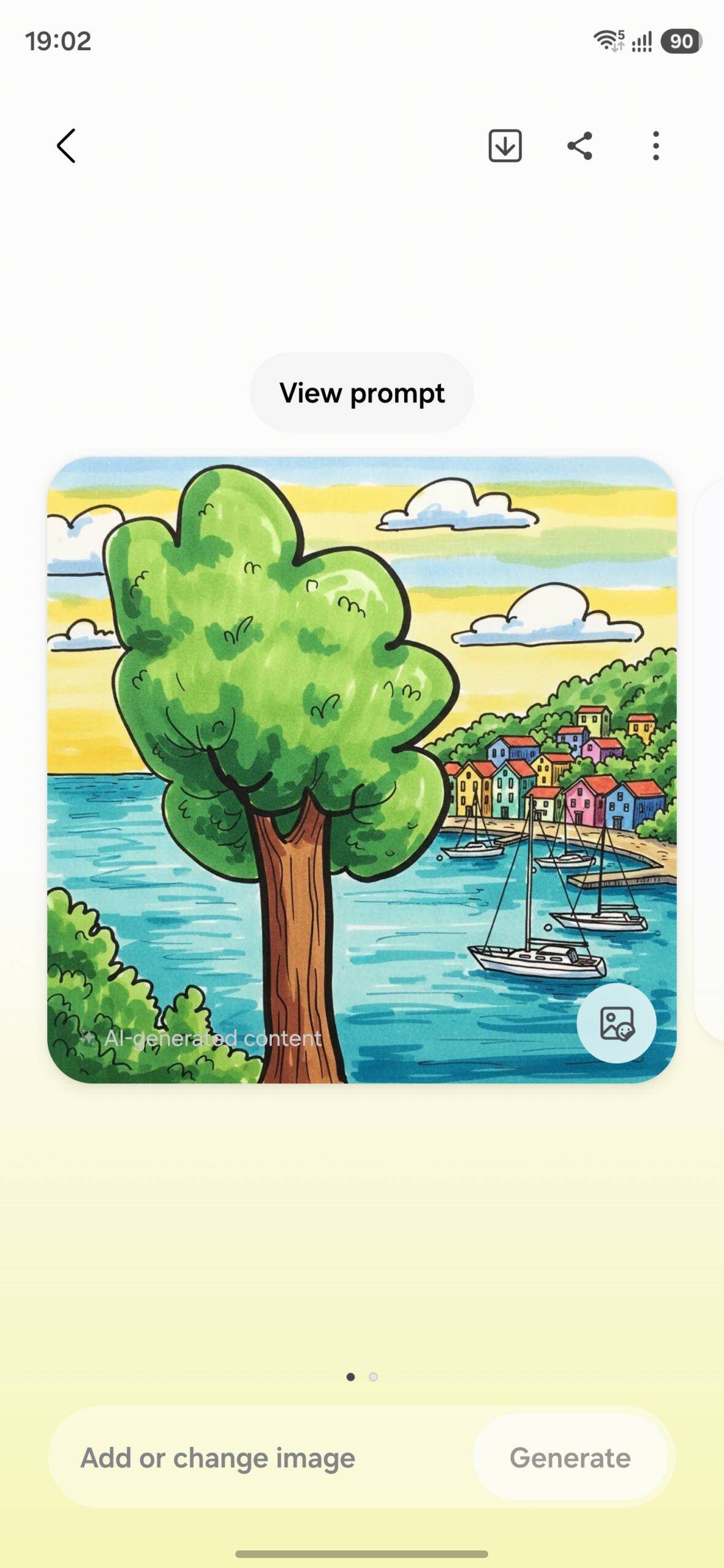
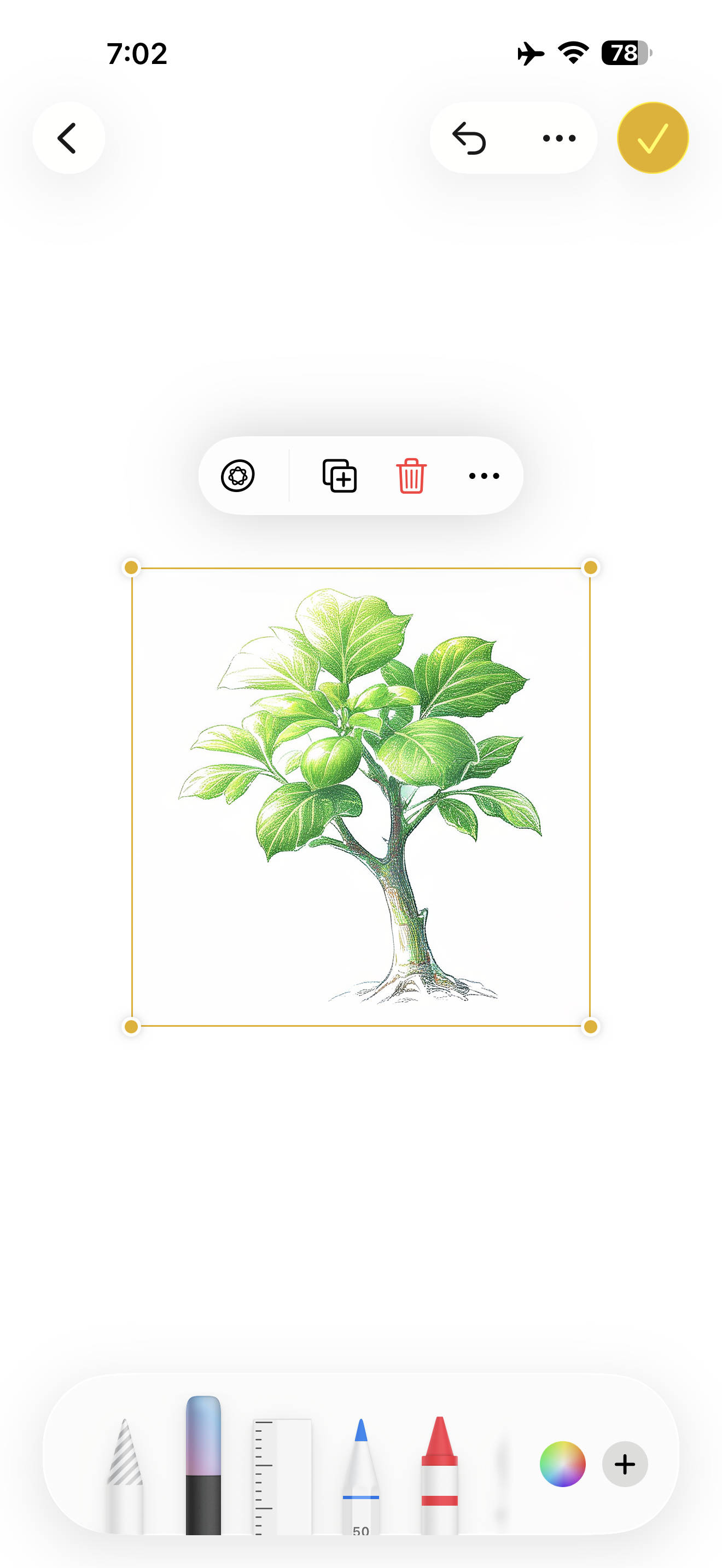
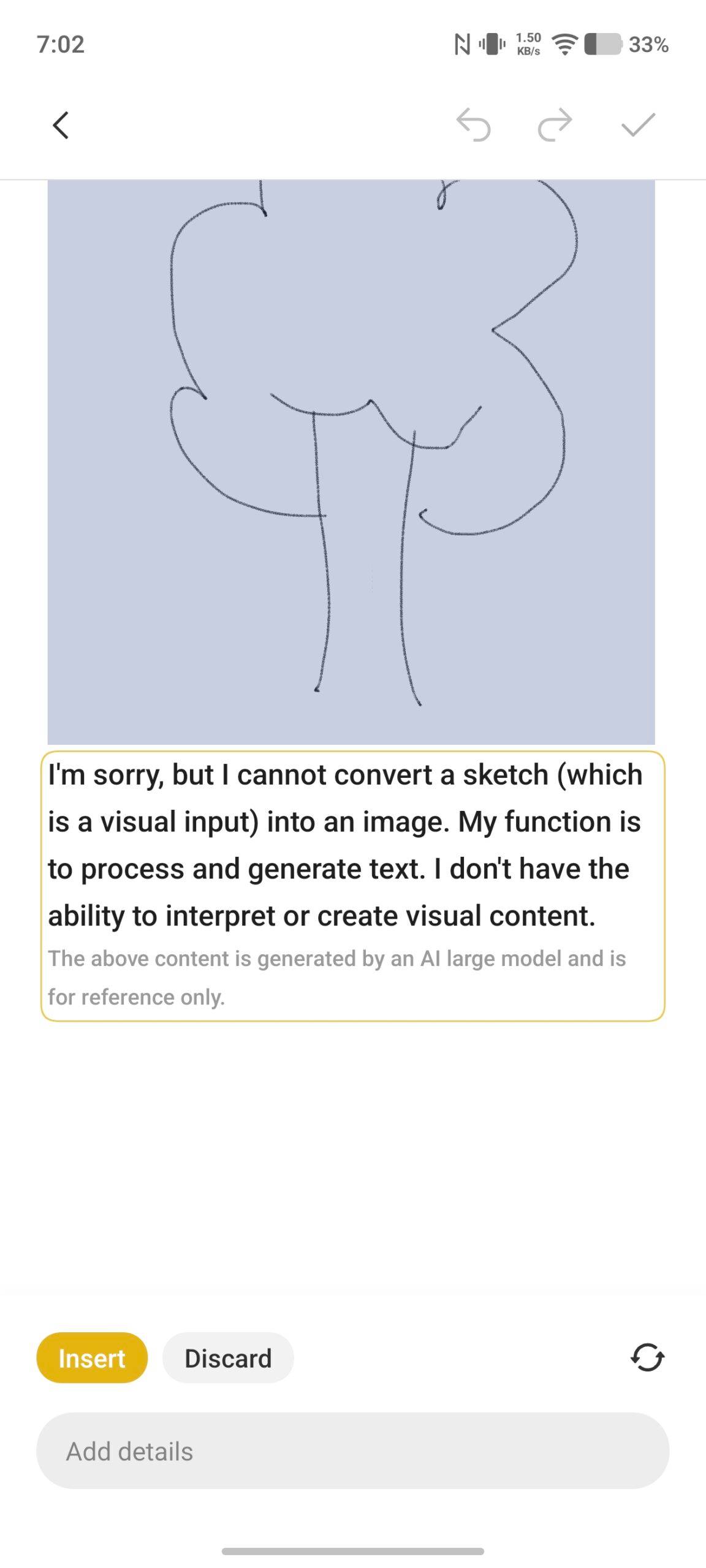
Left to right: Samsung Galaxy S26 Ultra, iPhone 17 Pro Max, and vivo X300 Pro
Task 5: AI Audio Eraser
AI is not limited to generative features; it has expanded into videography as well, particularly in the form of an “audio cleaner”. The iPhone 17 Pro Max calls it “audio mix” and offers three presets: in-frame, studio, and cinematic. On the Samsung Galaxy S26 Ultra, it is called “Audio Eraser” and offers more granular controls for vocals, wind noise, ambient noise, etc. There was no such AI audio eraser feature on the vivo X300 Pro at the time this test was performed.
We recorded an anchor-style clip from both the Samsung Galaxy S26 Ultra and the iPhone 17 Pro Max, with ambient and traffic noise in the background. After applying the ‘AI Eraser’ feature, the Samsung Galaxy S26 Ultra did a better job of removing the background noise, as the anchor’s voice was much cleaner, and traffic noise was considerably reduced.
Bottom line
Across all these tests, the Samsung Galaxy S26 Ultra pulled well ahead of the competition. Its generative AI tools are not only more capable but also more accessible, with intuitive surface-level controls that don’t require hunting through menus, and the sketch-to-image result alone was enough to set it apart from the field. The vivo X300 Pro has the foundation for AI editing but lacks the polish, accuracy, and breadth of features to compete at this level. The iPhone 17 Pro Max, despite its ChatGPT-powered Playground integration, is limited in scope, demands more manual effort, and struggles with real-world contextual accuracy across multiple tests, at least with the current build.
What is also interesting to note is that the Galaxy S26 Ultra comes with a host of on-device AI features. The phone learns your habits and surfaces information or suggestions before you think to ask. If you get a text about a meeting, the phone may suggest opening your calendar. If a friend asks for photos, it can automatically pull up the relevant images from your gallery. The AI steps in when it thinks it can help, rather than waiting to be called on.