
vivo V40
+ Compare


-
Design25

-
Rear Camera12

-
Front Camera4

-
360° View
![360° View]()
-
UI Screenshot17
![UI Screenshot]()
-
Videos3
![Videos]()


Key Specs
Performance
-
Qualcomm Snapdragon 7 Gen 3 -
Octa core (2.63 GHz, Single Core + 2.4 GHz, Tri core + 1.8 GHz, Quad core) -
8 GB / 12 GB RAM, LPDDR4X
Display
-
6.78 inches (17.22 cm); AMOLED (Curved Display) -
1260x2800 px (FHD+) -
120 Hz Refresh Rate -
Bezel-less with punch-hole display
Rear Camera
-
Dual Camera Setup - 50 MP Wide Angle Primary Camera
- 50 MP Ultra-Wide Angle Camera
-
Smart Aura Light -
4k @30 fps Video Recording
Front Camera
-
50 MP Wide Angle Lens -
4k @30 fps Video Recording
Battery
-
5500 mAh, Li-ion -
80W Flash Charging; USB Type-C port
General
-
SIM1: Nano, SIM2: Nano -
5G Supported -
128 GB / 256 GB / 512 GB internal storage, Non Expandable -
Dust Resistant, Water Resistant
vivo V40 Prices in India
 Flipkart
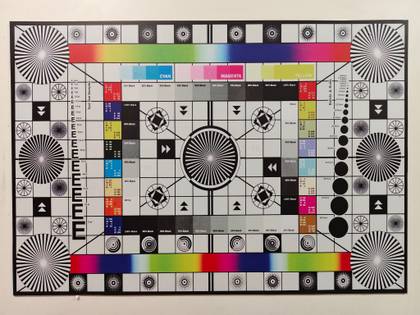
vivo V40 Compare Camera Samples
























vivo V40 Expert Review Summary
Expert Rating:
![Shekhar Thakran]()
Verdict
With meaningful upgrades, the V40 comes as a decent option in mid-range. With ZEISS goodness, the phone offers a better portrait camera experience than its predecessor but somehow struggles to capture details in certain scenarios. Some of the aspects that favour V40 include a sleek design, long battery backup, and a bright vibrant AMOLED display. However, in the performance department, some phones outperform the phone as Vivo has retained the same processor on the phone as its predecessor.
Pros
- Impressive portrait photography
- Peak display brightness of 4500 nits
- Slim design with 5500mAh battery
Cons
- Same chipset as its predecessor
- Cameras struggle with capturing details
Design and display
+
Vivo V40Realme GT 6TMotorola Edge 50 ProThickness7.6mm8.65mm8.19mmWeight190 grams191 grams186 gramsIP ratingIP68IP65IP68
Read More
Cameras
+
The V40 ships with a dual camera setup at the back, featuring a 50MP primary sensor with f/1.9 aperture, 1/1.55-inch sensor size, PDAF, and OIS support. The primary shooter is assisted by an ultra-wide 50MP camera with a 119-degree field-of-view, 1/2.76-inch sensor size, and AF. As I mentioned earlier, the V40 comes with ZEISS-branded cameras this time around. To provide a more natural flash, the brand has included 'Studio Quality Aura Light' on the phone. To recall, the V30 series also had the Aura Light but in a rounded square shape. This time around, you get a circular light but the idea remains the same - to provide you with a natural flash that can improve low-light images without overexposing them, unlike regular flash.ZEISS multi-focal portrait allows you to capture some really good portrait shots at different zoom levels in various styles (Landscape Portrait - 24mm, Street Portrait - 35mm, Natural/Classic Portrait - 50mm) and edge detection was on point. I was consistently impressed with the portrait shots clicked by the phone and that is perhaps the strongest point in favour of the phone's cameras. The different ZEISS Style Bokeh effects available in the portrait mode - Cinematic, Cine-flare, Planar, Sonnar, Sonar, Biotar etc., are all fun to use and the multiple LUTs available for different festivals make this camera mode consistently interesting. Aesthetically speaking, the V40 captures some really good shots, irrespective of the lighting conditions. I specifically mentioned the word 'aesthetically' for a reason. In terms of details, if you zoom into some of the camera samples clicked by the phone, they often lack the details that some other phones in this price range manage to capture. This is especially noticeable towards the edge of the images. First, you can have a look at some of the camera samples I clicked with the phone and then we can dive deeper into its camera performance against competition. DaylightIn the daylight shot, the Motorola Edge 50 Pro (review) boosted the colours too much for my liking while the V40 ended up blurring some of the objects at the edge of the frame.In this shot, the Realme GT 6T (review) was the clear winner by a distance as it produced the most detailed shot with colour accuracy. While the V40 was decent in terms of colour reproduction, the image processing and lack of details were quite clearly inferior to that of the Realme handset.UltrawideIn the ultrawide shot, the Edge 50 Pro produced an oversaturated shot that completely changed the way the actual frame looked. On the other hand, the V40 also boosted the colours a bit (but far less than the Edge 50 Pro) and still struggled with capturing details. Surprisingly, in this shot, the Realme GT 6T produced the least detailed shot and the overall picture was really grainy. In terms of colour accuracy, Vivo was the best-performing handset here and even in terms of details, the phone performed well, although details around the edge of the frame were still questionable.PortraitIn portrait shots, the V40 outshined the other two phones with ease. While all three phones offered good edge detection, the sheer variety of bokeh shots and the application of the bokeh effect itself gave a clear edge to the Vivo handset.Both the Edge 50 Pro and the Realme GT 6T aggressively blurred the background and failed to capture my skin tone accurately. Vivo V40 produced a shot that was miles clear of the other two phones in this particular department.SelfieIn the selfie department, the V40 produced the best image out of the three with colour accuracy in terms of skin tone and a decent amount of detail.In comparison, the Realme GT 6T produced a washed-out image, while the Edge 50 Pro was in between the two phones in terms of colour accuracy and details. In the portrait selfies, I found the GT 6T edge detection to be superior to the other two phones.Low-light (night mode)In the low-light shots, the V40 overexposed the shots and made them overly bright, which resulted in shots that looked rather unrealistic. In comparison, the Edge 50 Pro did a better job of handling the level of exposure.Realme GT 6T did not overexpose like the V40 but didn't produce as detailed shots as the Edge 50 Pro either. Overall, the Edge 50 Pro managed to produce the best shots in night/low-light conditions.
Read More
Performance and software
+
While the Vivo V40 comes with some meaningful upgrades in many key areas, one aspect where it remains the same as its predecessor is the choice of processor. The handset comes with the Snapdragon 7 Gen 3 chipset at its helm, and this is hardly a surprise as many brands are still opting for this SoC in this price bracket. The phone comes with up to 12GB of LPDDR4X RAM and 512GB of UFS 2.2 storage but the unit I received had 8GB RAM and 128GB storage. The phone offers up to 12GB of extended RAM to help it tackle some of the more demanding tasks and run more than 40 apps in the background to make sure you don't have to constantly deal with reloading issues within the apps. To gauge the phone's performance against its top competitors, we pitted it against the Realme GT 6T and the Motorola Edge 50 Pro. In this comparison, we started by performing the AnTuTu benchmark test on all these phones. As the AnTuTu benchmark score is a quantitative measure of a device's overall performance, it evaluates various aspects of the device's hardware and software capabilities through a series of tests.There were no surprises in this test as the Realme GT 6T with its Snapdragon 7+ Gen 3 chipset outperformed both Edge 50 Pro and the V40 easily. Despite featuring the same chipset, the Edge 50 Pro fared slightly better in comparison with the V40 on this benchmark. Next, we ran the Geekbench test on these same devices. The Geekbench score quantifies a device's CPU and GPU performance through various tests, providing an overall measure of its processing power and efficiency in handling single-core and multi-core tasks. Here too, the GT 6T managed to outperform both the other phones.However, the V40 performed better than the Edge 50 Pro in this particular benchmark test, indicating it can handle CPU-intensive tasks more efficiently.Talking about efficiency, next up, we ran the Burnout test on these phones to gauge how they performed under pressure. In this test, the Edge 50 Pro was the winner, followed closely by the V40. The GT 6T's performance was throttled to quite an extent in this particular test.MODELPRE-LOADED APPSSOFTWARE UPDATES (IN YEARS)SECURITY UPDATES (IN YEARS)Vivo V405134Realme GT 6T5234Motorola Edge 50 Pro4134
Read More
Battery life and charging speeds
+
With a 5,500mAh battery and 80W fast charging support, the V40 managed to offer a pretty good backup for me in daily usage. I usually had some battery left by the end of the day, which is always a good sign. In our PCMark battery test, the phone lasted for 13 hours. This is somewhat similar to the backup offered by other phones in this price range.PHONECHARGE TIME (20-100 PERCENT)Vivo V4035 minutesRealme GT 6T32 minutesMotorola Edge 50 Pro16 minutes
Read More
Read full Review

Verdict
With meaningful upgrades, the V40 comes as a decent option in mid-range. With ZEISS goodness, the phone offers a better portrait camera experience than its predecessor but somehow struggles to capture details in certain scenarios. Some of the aspects that favour V40 include a sleek design, long battery backup, and a bright vibrant AMOLED display. However, in the performance department, some phones outperform the phone as Vivo has retained the same processor on the phone as its predecessor.
- Impressive portrait photography
- Peak display brightness of 4500 nits
- Slim design with 5500mAh battery
Pros
- Same chipset as its predecessor
- Cameras struggle with capturing details
Cons
Design and display
+Vivo V40Realme GT 6TMotorola Edge 50 ProThickness7.6mm8.65mm8.19mmWeight190 grams191 grams186 gramsIP ratingIP68IP65IP68
Read MoreCameras
+The V40 ships with a dual camera setup at the back, featuring a 50MP primary sensor with f/1.9 aperture, 1/1.55-inch sensor size, PDAF, and OIS support. The primary shooter is assisted by an ultra-wide 50MP camera with a 119-degree field-of-view, 1/2.76-inch sensor size, and AF. As I mentioned earlier, the V40 comes with ZEISS-branded cameras this time around. To provide a more natural flash, the brand has included 'Studio Quality Aura Light' on the phone. To recall, the V30 series also had the Aura Light but in a rounded square shape. This time around, you get a circular light but the idea remains the same - to provide you with a natural flash that can improve low-light images without overexposing them, unlike regular flash.ZEISS multi-focal portrait allows you to capture some really good portrait shots at different zoom levels in various styles (Landscape Portrait - 24mm, Street Portrait - 35mm, Natural/Classic Portrait - 50mm) and edge detection was on point. I was consistently impressed with the portrait shots clicked by the phone and that is perhaps the strongest point in favour of the phone's cameras. The different ZEISS Style Bokeh effects available in the portrait mode - Cinematic, Cine-flare, Planar, Sonnar, Sonar, Biotar etc., are all fun to use and the multiple LUTs available for different festivals make this camera mode consistently interesting. Aesthetically speaking, the V40 captures some really good shots, irrespective of the lighting conditions. I specifically mentioned the word 'aesthetically' for a reason. In terms of details, if you zoom into some of the camera samples clicked by the phone, they often lack the details that some other phones in this price range manage to capture. This is especially noticeable towards the edge of the images. First, you can have a look at some of the camera samples I clicked with the phone and then we can dive deeper into its camera performance against competition. DaylightIn the daylight shot, the Motorola Edge 50 Pro (review) boosted the colours too much for my liking while the V40 ended up blurring some of the objects at the edge of the frame.In this shot, the Realme GT 6T (review) was the clear winner by a distance as it produced the most detailed shot with colour accuracy. While the V40 was decent in terms of colour reproduction, the image processing and lack of details were quite clearly inferior to that of the Realme handset.UltrawideIn the ultrawide shot, the Edge 50 Pro produced an oversaturated shot that completely changed the way the actual frame looked. On the other hand, the V40 also boosted the colours a bit (but far less than the Edge 50 Pro) and still struggled with capturing details. Surprisingly, in this shot, the Realme GT 6T produced the least detailed shot and the overall picture was really grainy. In terms of colour accuracy, Vivo was the best-performing handset here and even in terms of details, the phone performed well, although details around the edge of the frame were still questionable.PortraitIn portrait shots, the V40 outshined the other two phones with ease. While all three phones offered good edge detection, the sheer variety of bokeh shots and the application of the bokeh effect itself gave a clear edge to the Vivo handset.Both the Edge 50 Pro and the Realme GT 6T aggressively blurred the background and failed to capture my skin tone accurately. Vivo V40 produced a shot that was miles clear of the other two phones in this particular department.SelfieIn the selfie department, the V40 produced the best image out of the three with colour accuracy in terms of skin tone and a decent amount of detail.In comparison, the Realme GT 6T produced a washed-out image, while the Edge 50 Pro was in between the two phones in terms of colour accuracy and details. In the portrait selfies, I found the GT 6T edge detection to be superior to the other two phones.Low-light (night mode)In the low-light shots, the V40 overexposed the shots and made them overly bright, which resulted in shots that looked rather unrealistic. In comparison, the Edge 50 Pro did a better job of handling the level of exposure.Realme GT 6T did not overexpose like the V40 but didn't produce as detailed shots as the Edge 50 Pro either. Overall, the Edge 50 Pro managed to produce the best shots in night/low-light conditions.
Read MorePerformance and software
+While the Vivo V40 comes with some meaningful upgrades in many key areas, one aspect where it remains the same as its predecessor is the choice of processor. The handset comes with the Snapdragon 7 Gen 3 chipset at its helm, and this is hardly a surprise as many brands are still opting for this SoC in this price bracket. The phone comes with up to 12GB of LPDDR4X RAM and 512GB of UFS 2.2 storage but the unit I received had 8GB RAM and 128GB storage. The phone offers up to 12GB of extended RAM to help it tackle some of the more demanding tasks and run more than 40 apps in the background to make sure you don't have to constantly deal with reloading issues within the apps. To gauge the phone's performance against its top competitors, we pitted it against the Realme GT 6T and the Motorola Edge 50 Pro. In this comparison, we started by performing the AnTuTu benchmark test on all these phones. As the AnTuTu benchmark score is a quantitative measure of a device's overall performance, it evaluates various aspects of the device's hardware and software capabilities through a series of tests.There were no surprises in this test as the Realme GT 6T with its Snapdragon 7+ Gen 3 chipset outperformed both Edge 50 Pro and the V40 easily. Despite featuring the same chipset, the Edge 50 Pro fared slightly better in comparison with the V40 on this benchmark. Next, we ran the Geekbench test on these same devices. The Geekbench score quantifies a device's CPU and GPU performance through various tests, providing an overall measure of its processing power and efficiency in handling single-core and multi-core tasks. Here too, the GT 6T managed to outperform both the other phones.However, the V40 performed better than the Edge 50 Pro in this particular benchmark test, indicating it can handle CPU-intensive tasks more efficiently.Talking about efficiency, next up, we ran the Burnout test on these phones to gauge how they performed under pressure. In this test, the Edge 50 Pro was the winner, followed closely by the V40. The GT 6T's performance was throttled to quite an extent in this particular test.MODELPRE-LOADED APPSSOFTWARE UPDATES (IN YEARS)SECURITY UPDATES (IN YEARS)Vivo V405134Realme GT 6T5234Motorola Edge 50 Pro4134
Read MoreBattery life and charging speeds
+With a 5,500mAh battery and 80W fast charging support, the V40 managed to offer a pretty good backup for me in daily usage. I usually had some battery left by the end of the day, which is always a good sign. In our PCMark battery test, the phone lasted for 13 hours. This is somewhat similar to the backup offered by other phones in this price range.PHONECHARGE TIME (20-100 PERCENT)Vivo V4035 minutesRealme GT 6T32 minutesMotorola Edge 50 Pro16 minutes
Read MoreCompetitors For vivo V40
View Alternatives







Popular Comparisons
 vivo V40
 vivo V50
vivo V40
 vivo V40 Pro
vivo V40
 vivo V60
vivo V40
 vivo T3 Ultra
vivo V40
 vivo V60e
vivo V40
 vivo V30



vivo V40 Specifications
General |
|
|---|---|
| Launch Date | August 7, 2024 (Official) |
| Operating System | Android v14 |
| OS Updates | 2 Years |
| Security Updates | 3 Years |
| Custom UI | Funtouch OS |
Performance
(Very Good)
|
||||
|---|---|---|---|---|
| Chipset | Qualcomm Snapdragon 7 Gen 3 View Details | |||
| Processor | Octa core (2.63 GHz, Single core, Cortex A715 + 2.4 GHz, Tri core, Cortex A715 + 1.8 GHz, Quad core, Cortex A510) | |||
| Architecture | 64 bit | |||
| Fabrication | 4 nm | |||
| Graphics (GPU) | Adreno 720 | |||
| RAM | 8 GB / 12 GB | |||
| RAM Type | LPDDR4X | |||
| Cooling Technology | Vapor Chamber | |||
|
Gaming Test Results

* after 30 mins of gaming
|
||||
Benchmark Screenshots

AnTuTu Benchmark

Graphics Benchmark

Geekbench6 Benchmark
|

Display
(Best In Class)
|
|
|---|---|
| Display Type | AMOLED (Curved Display) |
| Screen Size | 6.78 inches (17.22 cm) |
| Resolution | 1260x2800 px (FHD+) |
| Peak Brightness | 4500 nits |
| PWM Dimming | 2160 Hz |
| Refresh Rate | 120 Hz |
| Touch Sampling Rate | 300 Hz |
| Aspect Ratio | 20:9 |
| Pixel Density | 453 ppi |
| Screen to Body Ratio (calculated) | 90.23 % |
| Screen Protection | Yes |
| Bezel-less Display | Yes with punch-hole display |
| HDR 10 / HDR+ Support | Yes, HDR 10+ |
| Screen to Body Ratio (claimed by the brand) | 93 % |
UI Screenshots

Lock Screen

Home Screen

Screen With Widgets

Dialer Screen

App Drawer

Notification Panel

Quick Settings Panel

Settings Screen

OS Version

Storage

Battery

Camera On

Camera Options

Camera Modes

Camera Settings

Picture Size Options

Video Size Options
|
Design |
|
|---|---|
| Height | 164.16 mm |
| Width | 74.93 mm |
| Thickness | 7.58 mm |
| Weight | 190 grams |
| Build Material | Back: Mineral Glass |
| Water Resistance | Yes, Water resistant, IP68, IP69, (up to 30 minutes in a depth of 1.5 meter) |
| Ruggedness | Dust proof |
|
Click to View

|
Rear Camera
(Very Good)
|
||||||||||||||||||||||||
|---|---|---|---|---|---|---|---|---|---|---|---|---|---|---|---|---|---|---|---|---|---|---|---|---|
| Resolution | ||||||||||||||||||||||||
|
||||||||||||||||||||||||
| Autofocus | Yes | |||||||||||||||||||||||
| OIS | Yes | |||||||||||||||||||||||
| Flash | Yes, Smart Aura Light | |||||||||||||||||||||||
| Image Resolution | 8150 x 6150 Pixels | |||||||||||||||||||||||
| Settings | Exposure compensation, ISO control | |||||||||||||||||||||||
| Shooting Modes |
Continuous Shooting High Dynamic Range mode (HDR) SuperMoon |
|||||||||||||||||||||||
| Camera Features |
Digital Zoom Auto Flash Face detection Touch to focus |
|||||||||||||||||||||||
| Video Recording |
4k @30 fps Full HD @30 fps |
|||||||||||||||||||||||
| Video Recording Features |
Dual Video Recording Bokeh portrait video |
|||||||||||||||||||||||
Rear Camera Samples

Wide Angle

Portrait Shot

Night Mode OFF

Night Mode ON

Close Up

Low Light

Low Light With Flash

Colour Variance

Daylight Auto / HDR OFF

Daylight / HDR ON

AI ON

Macro
|
Front Camera
(Excellent)
|
||||||||||||||
|---|---|---|---|---|---|---|---|---|---|---|---|---|---|---|
| Resolution | ||||||||||||||
|
||||||||||||||
| Autofocus | Yes | |||||||||||||
| Video Recording |
4k @30 fps Full HD @30 fps |
|||||||||||||
Front Camera Samples

Selfie

Selfie Portrait

Selfie Low Light

Selfie Low Light With Flash
|
Battery
(Very Good)
|
||||
|---|---|---|---|---|
| Capacity | 5500 mAh | |||
| Battery Type | Li-ion | |||
| Quick Charging | Yes, 80W Flash Charging | |||
| Reverse Charging | Yes | |||
|
Battery Test Results
|
Storage |
|
|---|---|
| Internal Storage | 128 GB / 256 GB / 512 GB |
| Storage Type | UFS 2.2 |
| Expandable Storage | No |
Network & Connectivity |
|
|---|---|
| SIM Slot(s) | Dual SIM |
| SIM Type | SIM1: Nano, SIM2: Nano |
| Network Support | 5G, 4G |
| VoLTE | Yes |
| SIM 1 |
5G bands, 4G bands
Expand
|
| SIM 2 |
5G bands, 4G bands
Expand
|
| SAR Value | Head: 0.970 W/kg, Body: 0.90 W/kg |
| Wi-Fi | Yes, Wi-Fi 5 (802.11 a/b/g/n/ac) 5GHz |
| Wi-Fi Features | Mobile Hotspot |
| Bluetooth | Yes, v5.4 |
| GPS | Yes with A-GPS, Glonass |
| NFC | No |
Multimedia |
|
|---|---|
| Stereo Speakers | Yes |
| Audio Jack | USB Type-C |
Sensors |
|
|---|---|
| Fingerprint Sensor | Yes |
| Fingerprint Sensor Position | On-screen |
| Fingerprint Sensor Type | Optical |
| Other Sensors | Light sensor, Proximity sensor, Accelerometer, Compass, Gyroscope |
Recent Stories

vivo V40 User Reviews
vivo V40 Key Highlights
| Processor | Qualcomm Snapdragon 7 Gen 3 |
| RAM & Storage | 8 GB RAM + 128 GB 8 GB RAM + 256 GB 12 GB RAM + 512 GB |
| Display | 6.78", 1260 x 2800 Resolution |
| Rear Camera | 50 MP + 50 MP |
| Front Camera | 50 MP |
| Battery | 5500 mAh |


















vivo V40 Price In India
| Product Name | Store | Price |
|---|---|---|
| vivo V40 (8 GB + 128 GB) | Flipkart | ₹31,999 |
| vivo V40 (8 GB + 256 GB) | Flipkart | ₹36,991 |
| vivo V40 (12 GB + 512 GB) | Flipkart | ₹41,991 |
Popular Links
- All Upcoming Phones
- Upcoming vivo Phones
- vivo phones under 10k
- vivo phones under 20k
- OPPO F35 Pro
- Samsung Galaxy F70 5G
- OPPO Find X10
- OPPO Find X10 Pro Max
- OPPO F35
- Samsung Mobiles
- Motorola Mobiles
- vivo Mobiles
- OPPO Mobiles
- Tecno Mobiles
- realme Mobiles
- OnePlus Mobiles