
Movie |
World War Ii | Navy
Disclaimer: All content and media belong to original content streaming platforms/owners like Netflix, Disney+ Hotstar, Amazon Prime Videos, JioCinema, SonyLIV etc. 91mobiles entertainment does not claim any rights to the content and only aggregate the content along with the service providers links.

Best Actor in a Supporting Role | 1956 | Jack
Best Written American Comedy | 1956 | Joshua
Top Male Comedy Performance | 1956 | Henry
Top Ten Films | 1955
Best Foreign Actor | 1956 | Jack
Outstanding Directorial Achievement in Motion Pictures | 1956 | John
Best Film | 1955
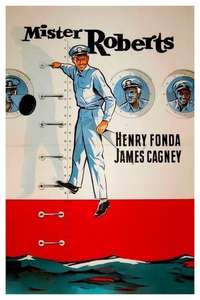
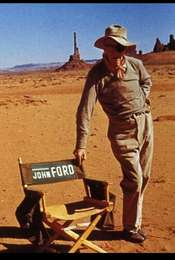
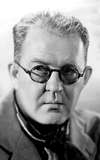
When John Ford met James Cagney at the airport, the director warned that they would "tangle asses," which caught Cagney by surprise. The next day, Cagney was slightly late on set, and Ford became incensed. Cagney cut short the imminent tirade, saying: "When I started this picture, you said that we would tangle asses before this was over. I'm ready now - are you?" Ford backed down and walked away, and he and Cagney had no further conflicts on the set. Cagney later said: "I would have kicked his brains out. He was so goddamned mean to everybody. He was truly a nasty old man."
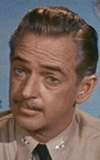
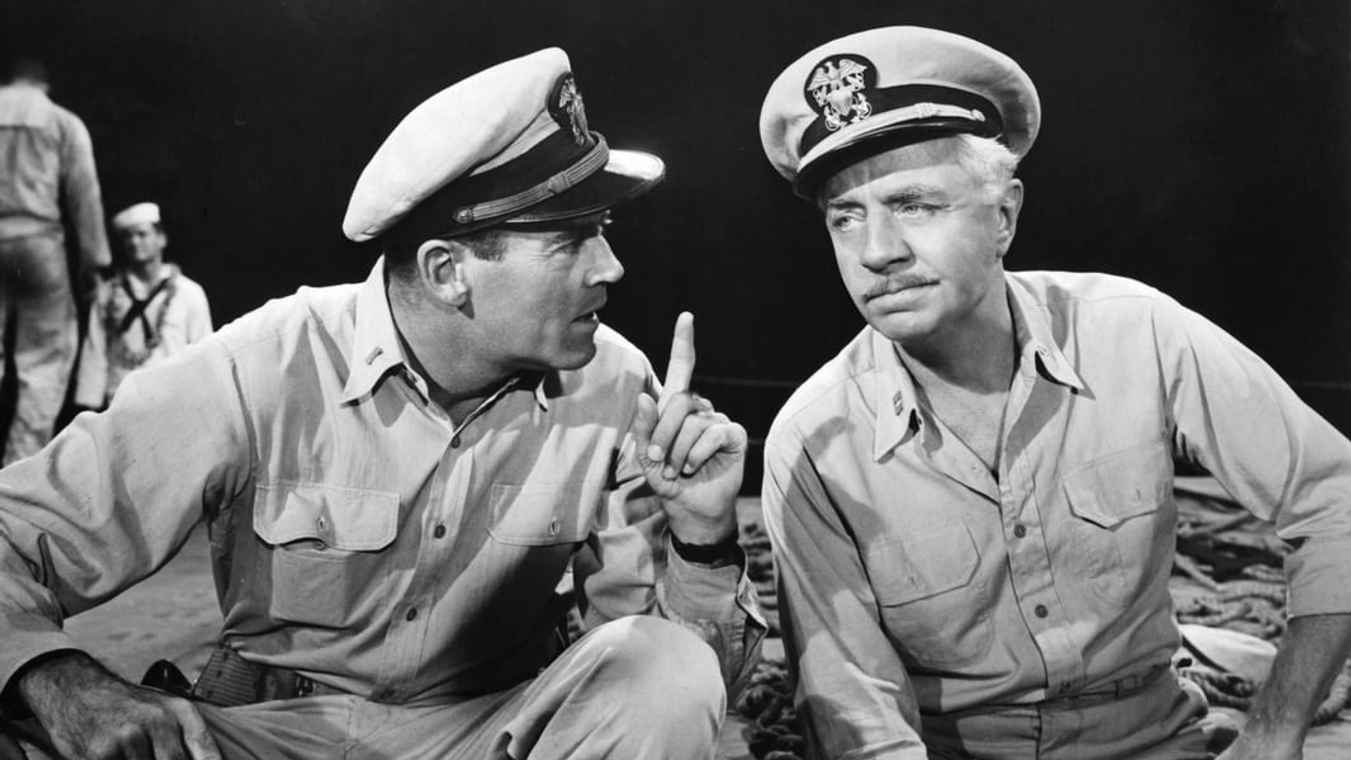
William Powell's last film, his final film appearance. He had marked difficulties retaining his lines, something that had not happened to him in earlier films. This, along with frail health (including bouts with cancer) plus a difficult Hawaii location shoot, ultimately led to the actor's decision to retire.
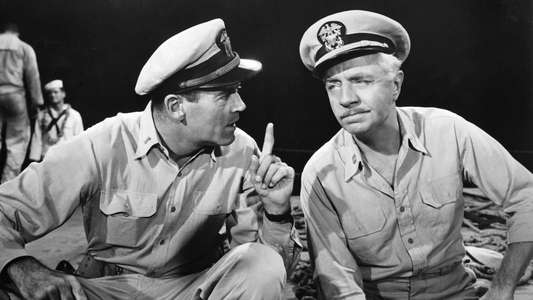
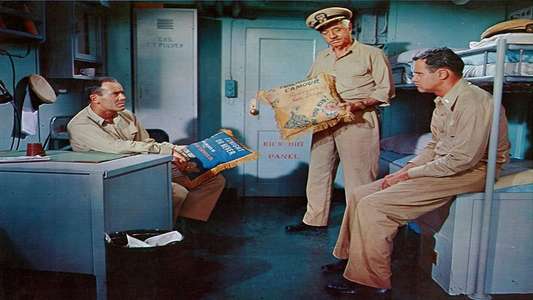
Ensign Pulver meets Capt. Morton (James Cagney), apparently for the first time, identifies himself, and tells the captain that he's been on the ship for "14 months, sir." Before shooting the scene, Cagney realized that he would have to rehearse the moment with Jack Lemmon again and again so he wouldn't burst out laughing during the actual filming. Lemmon agreed, and when the scene was filmed, Cagney claimed he was just barely able to hang on with a straight face, despite the repeated rehearsals.
John Ford was drinking more heavily than usual, causing him to behave erratically. Ward Bond helped direct when Ford was too inebriated.
Jack Lemmon started a long-time friendship with James Cagney, which lasted until Cagney's death in 1986. Prior to Lemmon's appearance in his first film years before, Lemmon got started in live television. In one particular performance, Lemmon decided to play his character differently: the right-handed Lemmon decided to play his character left-handed. With much practice, he pulled off the performance without anyone noticing the change. This change even fooled Lemmon's wife at the time. A few years went by and Jack met Cagney on their way to Midway Island to film this movie. They introduced themselves, and Cagney chimed in, "Are you still fooling people into believing you're left handed?" They had a great laugh and a strong friendship was born.
"[last lines] Ensign Frank Thurlowe Pulver: Captain, it is I, Ensign Pulver, and I just threw your stinkin' palm tree overboard! Now what's all this crud about no movie tonight?"
"Ensign Frank Thurlowe Pulver: [reading Mr. Roberts' letter] Doc, I've been aboard this destroyer for two weeks now and we've already been through four air attacks. I'm in the war at last, Doc! I've caught up with that task force that passed me by. I'm glad to be here. I had to be here, I guess. But I'm thinking now of you, Doc,and you, Frank. And Dolan, and Dowdy, and Insigna and everyone else on that bucket. All the guys everywhere who sail from tedium to apathy and back again, with an occasional side trip to monotony. This is a tough crew on here, and they have a wonderful battle record. But I've discovered, Doc, that the unseen enemy of this war is the boredom that eventually becomes a faith and, therefore, a terrible sort of suicide. l know now that the ones who refuse to surrender to it are the strongest of all. Right now I'm looking at something that's hanging over my desk. A preposterous hunk of brass attached to the most bilious piece of ribbon I've ever seen. I'd rather have it than the Congressional Medal of Honor. It tells me what I'll always be proudest of - that at a time in the world when courage counted most I lived among 62 brave men."