
Movie |
1960s | Washington Dc, Usa
Disclaimer: All content and media belong to original content streaming platforms/owners like Netflix, Disney+ Hotstar, Amazon Prime Videos, JioCinema, SonyLIV etc. 91mobiles entertainment does not claim any rights to the content and only aggregate the content along with the service providers links.

Best Supporting Actress | 1995 | Joan
Worst Foreign Actor | 1997 | Anthony
Best Supporting Actress | 2016 | Joan
Best Supporting Actress | 1996 | Joan
Best Supporting Actress | 1996 | Joan
Best Supporting Actress | 1995 | Joan
Best Supporting Actress | 1995 | Joan
Best Supporting Actress | 1995 | Joan
Best Music Original Dramatic Score | 1996
Best Actress in a Supporting Role | 1996
Best Writing Screenplay Written Directly for the Screen | 1996
Best Actor in a Leading Role | 1996 | Anthony
Best Performance by an Actor in a Motion Picture Drama | 1996 | Anthony
Best Performance by an Actress in a Supporting Role | 1996 | Joan
Outstanding Performance by a Cast | 1996
Outstanding Performance by a Male Actor in a Leading Role | 1996 | Anthony
Outstanding Performance by a Female Actor in a Leading Role | 1996
Best Original Score | 2016 | John
Best Casting for Feature Film Drama | 1996 | Heidi
Best Supporting Actress | 1996 | Joan
Best Actor | 1995 | Anthony
Best Actress in a Supporting Role | 1995 | Joan
Budget 44,000,000 USD
Box Office Collection 13,681,765 USD
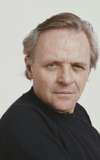
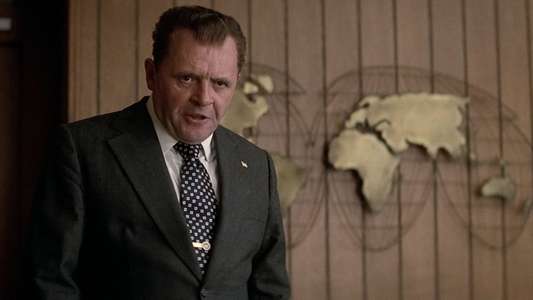
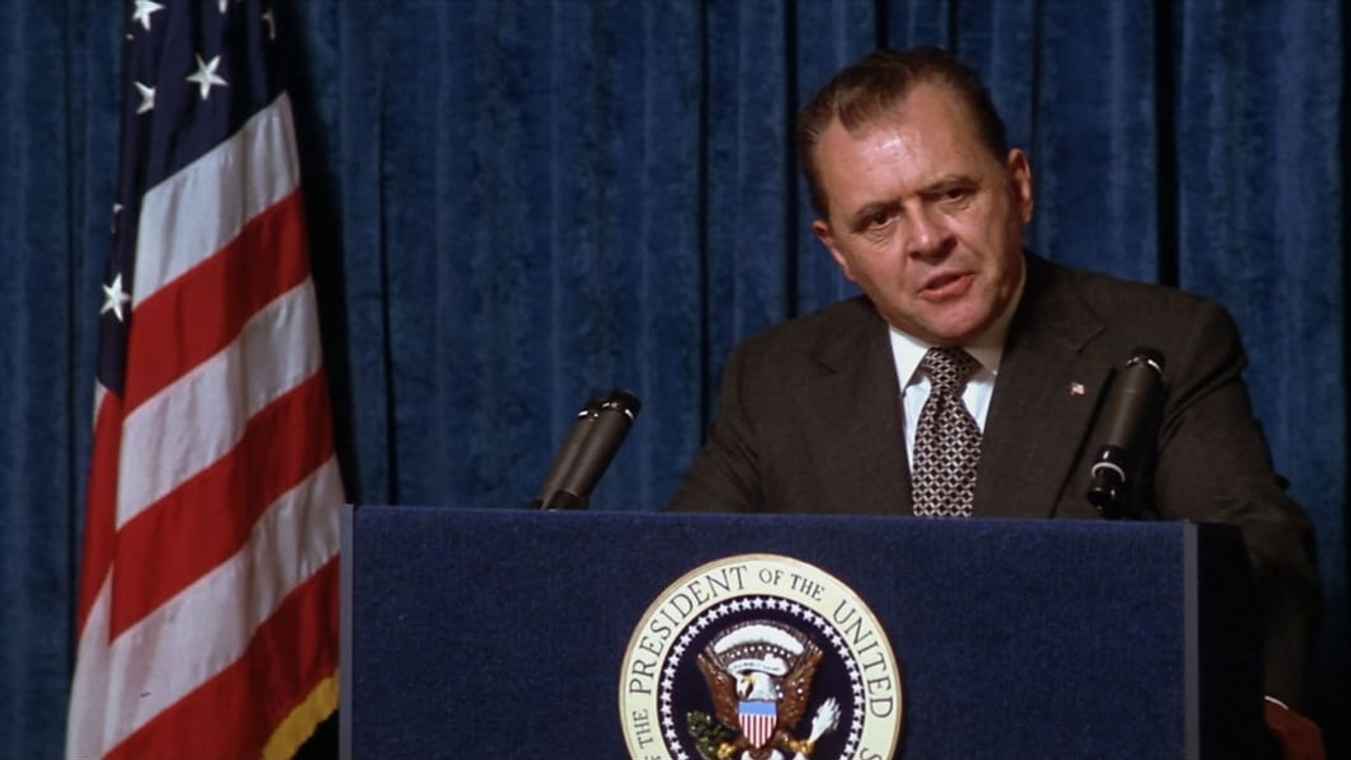
To gain the feel of Richard Nixon, Sir Anthony Hopkins watched on tape almost every speech Nixon ever made several times. He also met some people who knew Nixon who could lend Hopkins some insight on him.
Writer, producer, and director Oliver Stone said he voted for Richard Nixon in 1968, based on his pledge to end the Vietnam War.
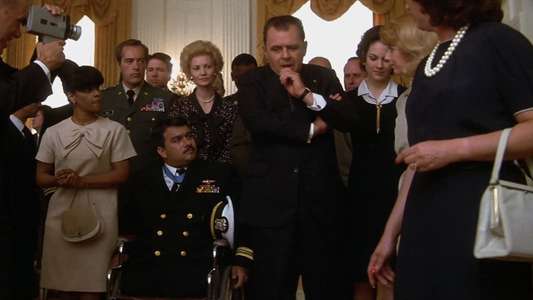
A major scene that was unable to be filmed was of Richard Nixon and his family watching Patton (1970), Nixon's favorite movie, and one he watched repeatedly. The scene would've highlighted Patton's speech at the beginning of this movie in which he says "Americans have never lost and will never lose a war, because the very thought of losing is hateful to Americans" which would have had resonance with Nixon's line "I will not be the first President to lose a war." But George C. Scott did not relinquish his image rights for Patton (1970), and the scene could not be filmed.
This movie was completed around the time Richard Nixon died in 1994. The footage of his funeral at the end, along with a narrated epilogue, was added several months before this movie's release.
While shooting the scene where Richard Nixon (Sir Anthony Hopkins) and Jack Jones (Larry Hagman) confront each other, the lights were aimed straight down at coffee tables in front of the fur upholstered couch. The lights were so powerful that the rug beneath one of the tables started smoking. In the middle of the first take, an extra noticed the increasing amount of smoke, and muttered "fire" quietly during a pause between lines of dialogue. James Woods (H.R. Haldeman) heard this and stopped the scene before the rug caught fire.
"Richard M. Nixon: [to a portrait of Kennedy] When they look at you, they see what they want to be. When they look at me, they see what they are."
"[Nixon is making an impromptu nighttime visit to the Lincoln Memorial, where a group of young protestors have camped out] Richard M. Nixon: Hi! I'm Dick Nixon. [He starts shaking hands with the incredulous protesters] Richard M. Nixon: [to one young protester] Hi. Where you from? Student #1: Syracuse. Richard M. Nixon: Oh yeah, the Orangemen. Now there's a football program. Jim Brown. And that other tailback... the one with the blood disease. Student #1: Ernie Davis. Richard M. Nixon: Yeah, right, right. I used to play a little ball myself at Whittier. 'Course, they used to use me as a tackling dummy. Young Student: [Stepping forward] We didn't come here to talk about football. Richard M. Nixon: Yeah, I understand that. How old are you, young lady? Young Student: 19. Richard M. Nixon: Yeah. Well, probably most of you think I'm a real SOB. I know that. I understand how you feel, but you know, I want peace too. But peace with honor. Student #2: What does that mean? Richard M. Nixon: Well, you can't have peace without a price. Sometimes you have to be willing to fight for peace, and sometimes to die. Student #2: Yeah? Tell that to the GI's who are gonna die tomorrow in Vietnam. Student #1: What you have to understand, Mr. Nixon, is we're willing to die for what we believe in. [the other protesters say "Yeah!"] Richard M. Nixon: [Turns and points to the statue of Lincoln] Look, that man up there, he lived in similar times. He had chaos and civil war and hatred between the races. Sometimes I go to the Lincoln room at the White House and just pray. But you know, liberals act like idealism belongs to them. That's not true. My family went Republican because Lincoln freed the slaves. My grandmother was an abolitionist, those Quakers who founded Whittier, my hometown... to abolish slavery. They were, y'know, conservative Bible folk, but they had a powerful sense of right and wrong. And 40 years ago, I was like you, looking for answers. [the protesters scoff, unconvinced. Just then a gang of Nixon's aides, led by Haldeman, arrive and push through the crowd to come to his side] Richard M. Nixon: It's OK, Bob, we're just rapping, my friends and I. In fact we agree on a lot of things, don't we? Young Student: No, we don't! You say you want to end the war, so why don't you? Richard M. Nixon: Change always comes slowly. I pulled out more than half the troops. I'm trying to cut the military budget for the first time in 30 years. I want a volunteer army. But it's also a question of American credibility, our position in the world. Student #1: Come on, Mr. Nixon. It's a civil war between Vietnamese. Young Student: You don't want the war, we don't want the war, the Vietnamese don't want the war, so why does it go on? [Nixon hesitates. Haldeman whispers "We should be going" to him] Young Student: You can't stop it, can you? Even if you wanted to. Because it's not you, it's the system. The system won't let you stop it. Richard M. Nixon: There's... there's more at stake here than what you want, or what I want. Young Student: Then what's the point? What's the point of being President? You're powerless! Richard M. Nixon: [Firmly] No. No, I'm not powerless. Because, because I understand the system, I believe I can, uh, I can control it. Maybe not control it totally, but tame it enough to make it do some good. Young Student: Sounds like you're talking about a wild animal. Richard M. Nixon: Yeah, maybe I am."