
Movie |
Refugee | Kansas, Usa
Disclaimer: All content and media belong to original content streaming platforms/owners like Netflix, Disney+ Hotstar, Amazon Prime Videos, JioCinema, SonyLIV etc. 91mobiles entertainment does not claim any rights to the content and only aggregate the content along with the service providers links.










Best Feature Film | 2015 | Philippe
2014 | Philippe
2014 | Philippe
Best Breakthrough Performance in a Film | 2015 | Reese
Best Newcomer | 2015 | Arnold
Feature Film Category | 2016 | Margaret
Outstanding Breakthrough Performance Female | 2015 | Kuoth
Outstanding Writing in a Motion Picture | 2015 | Margaret
2014 | Philippe
Budget 20,000,000 USD
Box Office Collection 3,396,345 USD
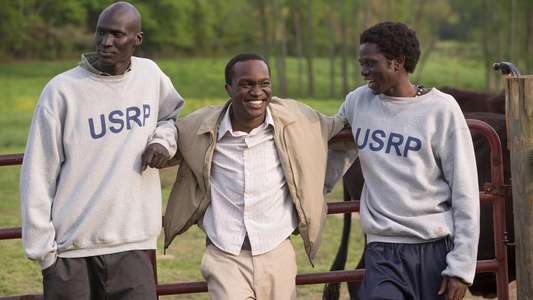
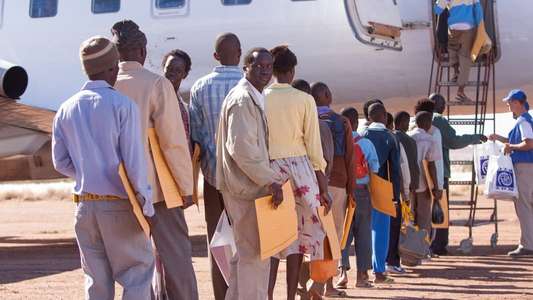
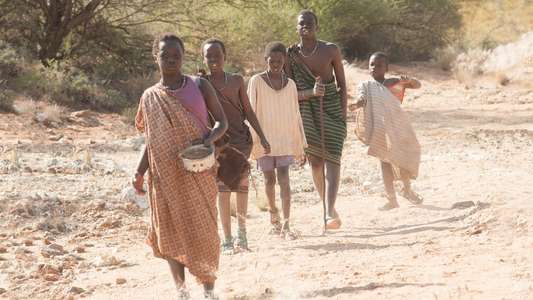
"The Lost Boys of Sudan", the name given to over 20,000 boys of the Nuer and Dinka ethnic groups, who were displaced and/or orphaned during the Second Sudanese Civil War, served as inspiration for the movie.
Emmanuel Jal (Paul) described his real child-soldier atrocities in BBC's Horizon (1964), season forty-five, episode eighteen, "How Violent Are You?"
Ger Duany is a Sudanese refugee who was a child soldier before being granted asylum in the United States.
Received a five minute standing ovation when it premiered at the Toronto International Film Festival.
Much attention has been directed toward the Lost Boys, but their counterparts, the Lost Girls, are often ignored. Even before the conflict, culture-based inequalities heavily influenced their post-conflict recovery and integration in refugee camps and resettlement programs. Boys were placed into boys-only areas of the camp upon arrival. According to Sudanese culture, the girls could not be left alone, so they were placed with surviving family members or adopted by other Sudanese families. Although these family placement practices provided security, domestic work often prevented the girls from attending school. Even when allowed to attend, housework often kept girls behind. Many girls were abused by their host families and by other refugees. Some were even sold as brides. When US resettlement program began in 1999, one requirement was that the children must be orphaned. Because these girls had been living within a family unit, they were no longer considered orphans. Of the 4,000 Sudanese refugees approved in 2000, only 89 were women.
"Young Jeremiah: Some of these people have no color. Young Mamere: Because they are born without skin."
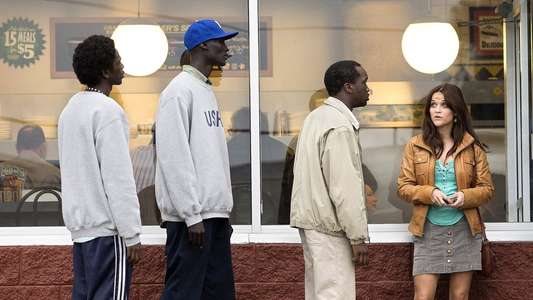
"Nick: What are you doing? Jeremiah: It is a sin not to give to those in need. Nick: According to who? Jeremiah: Jeremiah. Nick: And who is that? Jeremiah: [turning in his apron] Me. My name is Jeremiah."