
Movie |
Disguise | Robbery
Disclaimer: All content and media belong to original content streaming platforms/owners like Netflix, Disney+ Hotstar, Amazon Prime Videos, JioCinema, SonyLIV etc. 91mobiles entertainment does not claim any rights to the content and only aggregate the content along with the service providers links.



Best Achievement in Sound for a Feature Film Mixing | 2002 | Phil
Soundtrack of the Year | 2002 | John
Best Achievement in Sound for a Feature Film Effects Editing | 2002
Best Achievement in Sound for a Feature Film Foley Recording Editing | 2002 | Les
Best Sound | 2002
Best Editing | 2002 | Martin
Best Original Soundtrack Album | 2002 | David
Best Music Score | 2002 | David
Best Editing | 2002 | Martin
Best Supporting Actor Male | 2002 | Joel
Best Actor Male | 2002 | Guy
Best Actor in a Supporting Role | 2002 | Joel
Best Actress in a Leading Role | 2002 | Rachel
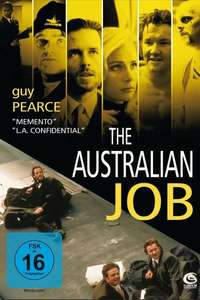
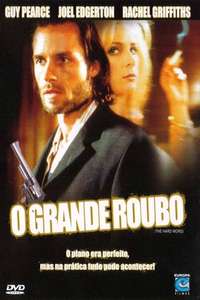
The films title 'The Hard Word' is a reference to the type of Aussie slang (Cant or Cryptolect language) the films main protagonists use when they would communicate with one another in prison or "on the job". This language is known as Retchab Klat (Rech-tub kay-lat) 'Butcher Talk'. Words spelt backwards with digraphs and plurals kept intact. It was developed as a form of communicating between butchers to either ogle or make fun of certain customers and not draw attention. It is an old time butchers language that is still used in some small country Australian towns to this day.
The robbery in Melbourne is based on the "Great Bookie Robbery" of 1976. Six men robbed bookmakers in the Victoria Club, as the bookmakers met to settle up debts after a day's racing. Estimated takings were between $14 and $16 million. The true figure was never known; the bookmakers were reluctant to divulge how much money they had lost, to avoid the interest of the tax office. The six thieves became the targets of other criminals and corrupt police demanding a share. By 1987, all the known thieves were believed dead, either killed by other criminals or police, or had disappeared. The money was never recovered.
Producer Al Clark set about about finding cast by firstly approaching Guy Pearce to take the lead role of the eldest brother Dale. They had first met when Clark produced 'The Adventures of Priscilla, Queen of the Desert' (1994) about seven years earlier. Both had been waiting for the right project to work together again. Pearce was drawn to the film for a number of reasons. He said: "The idea of working back at home, working with Al again, working with such a funny script and the idea of playing within that little unit of three brothers who have a very strong hold over each other - a sort of devotion to each other - I found quite appealing."
The book on "the joys of modern marriage" Dale recommends to Frank is Confessions of a Crap Artist by Philip K. Dick.
Like the genesis of many a "true" story, the essence of The Hard Word came to writer-director Scott Roberts in a dream. "I am in a safe house with several associates. We have just hijacked a truck full of cash. Everything has gone smoothly, and no one got hurt. We wait for someone else to arrive before we divide the loot. A car pulls up outside. We all tense. I go to the window and crack the curtains. I feel a deep, biochemical sense of relief. It is only the cops." Almost simultaneously, Roberts heard a real life true story about a gang of bank-robbing brothers who once operated from a New South Wales remand prison, and who were run by some bent cops they could not shake off. Once the box was opened, the first draft was written quickly, in March 2000.
"Jane Moore: Do you like robbing banks? Shane Twentyman: Off the record, I fucking love it!"
"Mal Twentyman: You smell better than Christmas dinner."