
Movie |
Based On True Story
Disclaimer: All content and media belong to original content streaming platforms/owners like Netflix, Disney+ Hotstar, Amazon Prime Videos, JioCinema, SonyLIV etc. 91mobiles entertainment does not claim any rights to the content and only aggregate the content along with the service providers links.

Outstanding Film Sound Mixing for a Limited Series or a Special | 1983 | John W.
Outstanding Individual Achievement Graphic Design and Title Sequences | 1983
Outstanding Film Editing for a Limited Series or a Special | 1983 | Benjamin A.
While serving his sentence in prison, Herbert Kappler divorced his first wife and married his nurse, Anneliese, in 1972. In 1975, he was diagnosed with cancer. As the authorities refused to release him, in 1977, Anneliese carried Kappler out of prison in a large suitcase (he weighed less than one hundred five pounds at the time). They escaped to West Germany, where Kappler died six months later.
General Max Helm (Herbert Kappler's superior officer depicted in this movie) is based on the real-life Karl Wolff. Wolff was the Supreme S.S. Commander (or S.S. Obergruppenführer) for the Nazis in Italy, and was third in command of the entire S.S. Wolff survived the war and was found not guilty of war crimes. His real name could not be used in this movie, as at the time, the former S.S. General was still alive in 1981. He lived to an old age and died in 1984.
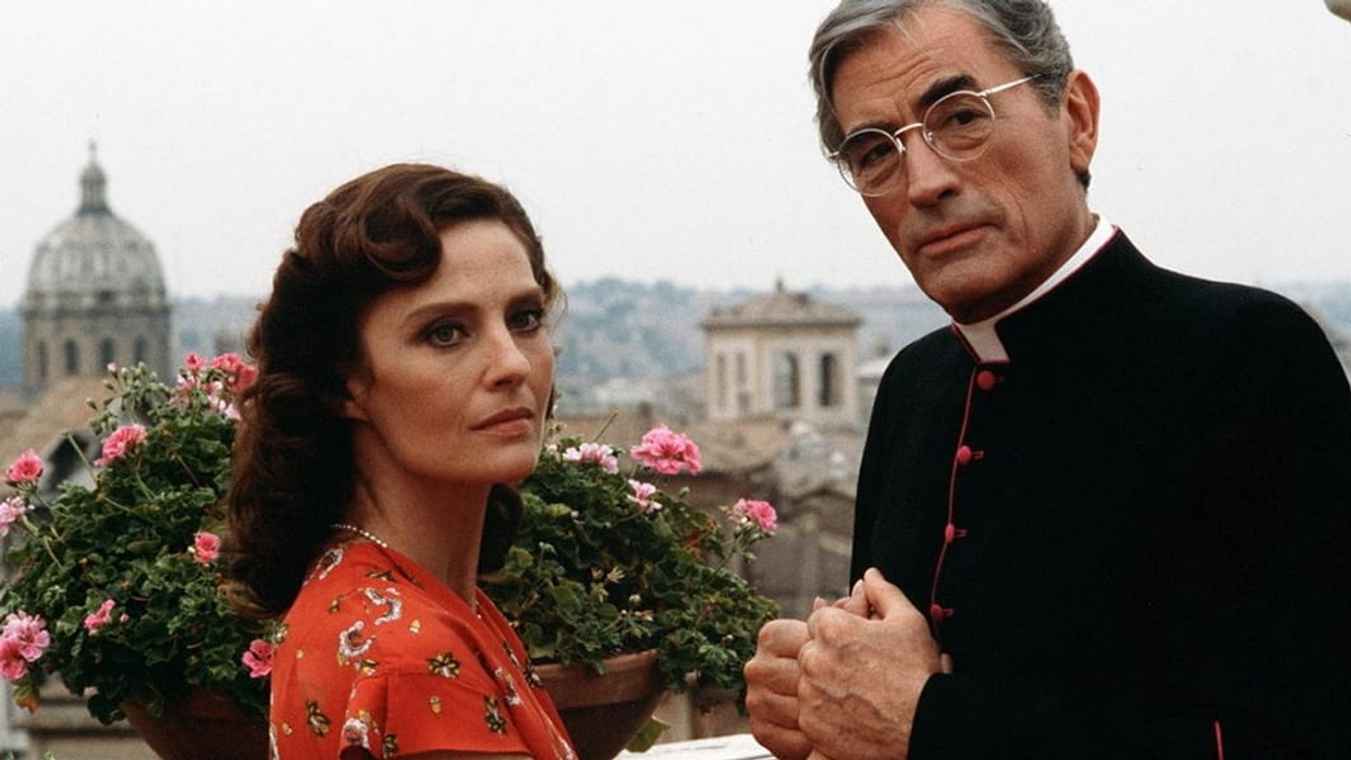
The closing epilogue states: "After the liberation, Monsignor Hugh O'Flaherty was honored by Italy, Canada, and Australia, given the U.S. Medal of Freedom, and made a Commander of the British Empire (CBE). Herbert Kappler was sentenced to life imprisonment for war crimes. In the long years that followed in his Italian prison, Kappler had only one visitor. Every month, year in and year out, O'Flaherty came to see him. In 1959, the former head of the dreaded Gestapo in Rome was baptized into the Catholic faith at the hand of the Irish priest."
One of three occasions in his career in which Sir John Gielgud played a Pope. The other two were The Shoes of the Fisherman (1968), where he played the fictional Pope Pius XIII, and Elizabeth (1998), where he played the real-life Pope Pius V.
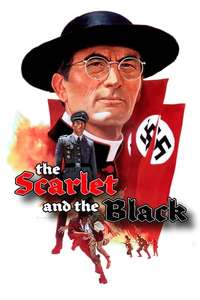
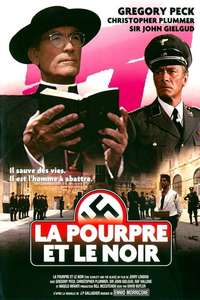
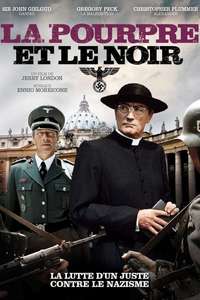
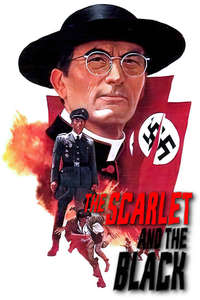
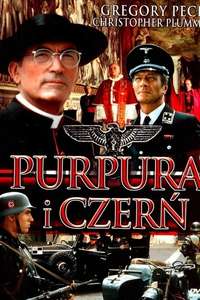
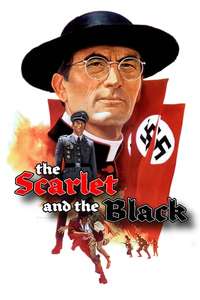
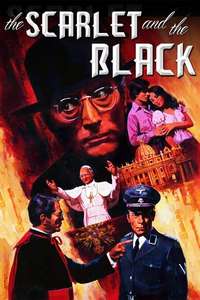
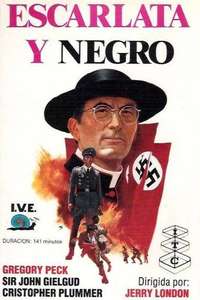
The title, "The Scarlet and the Black", is a variation on the source book title on which it is based: "The Scarlet Pimpernel of the Vatican". Apparently, this movie is also known as "The Vatican Pimpernel".
"Col. Herbert Kappler: You're alone? Monsignor Hugh O'Flaherty: I am. Col. Herbert Kappler: Not afraid I'll shoot you? Monsignor Hugh O'Flaherty: No. If you were going to kill me, your man would have already done it in my room. Col. Herbert Kappler: That is so. [pause] Col. Herbert Kappler: But believe me, at this moment, nothing would give me greater pleasure. Monsignor Hugh O'Flaherty: Well, when it comes down to it, a bullet's your answer to just about everything, isn't it? The only argument you've got."
"Monsignor Hugh O'Flaherty: Colonel Kappler! What a surprise. Col. Herbert Kappler: Not for me, Monsignor. I was looking forward to continuing our talk. Monsignor Hugh O'Flaherty: Were you, now? Well, I would have though we'd covered just about everything there was to say. Col. Herbert Kappler: Ah... but that was before I had given you my... [pause] Col. Herbert Kappler: autograph... [pause] Col. Herbert Kappler: before I'd heard of your reputation for being so amusing. Monsignor Hugh O'Flaherty: You also have quite a reputation. Col. Herbert Kappler: True, but I am German... [pause] Col. Herbert Kappler: and know my enemies. [pause] Col. Herbert Kappler: You're Irish. How strange to feel such concern for the enemies of your country! Monsignor Hugh O'Flaherty: Speaking of your enemies, that's just about the entire civilized world, isn't it? Col. Herbert Kappler: I was told you had wit. I find you disappointingly obvious. Monsignor Hugh O'Flaherty: Well, forgive me. I just wanted to make sure that you understood my meaning."