
Bharti Airtel is rolling out a “smart” defence against one of India’s most common scams, where fraudsters trick people into reading out bank OTPs over the phone. The company has launched an AI-powered alert system that works straight from its network, warning users the moment a banking OTP arrives while they’re on what seems like a dodgy call.
Here’s how it works. Instead of depending on apps or phone settings, the system scans for specific red flags at the network level: an incoming call that matches known scam patterns — like fake delivery agents, pushy bank executives, or customer care reps — followed almost immediately by a legitimate OTP from your bank landing on the same number. When those signals line up, Airtel pushes a real-time popup or message right to your screen, flashing something like “Don’t share this OTP” before you can give it out to the caller. It’s a direct defence against the social engineering tricks that have exploded alongside UPI and digital banking, where scammers create panic to get you to override your instincts.
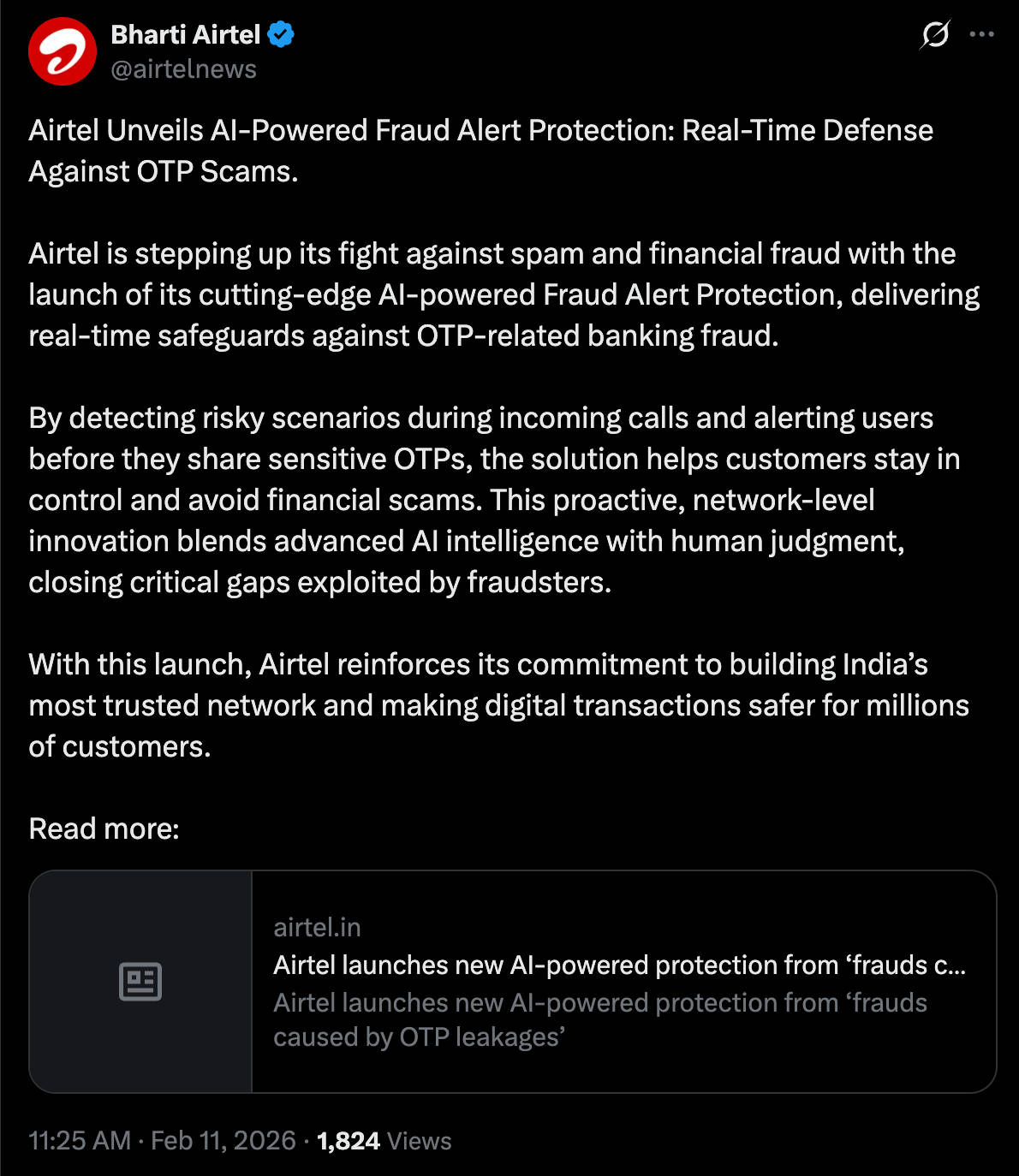
Airtel’s AI pulls from multiple data points in real time: call origin patterns, OTP delivery timing, and behavioural clues tied to documented fraud methods. More importantly, it doesn’t require the user to do anything — no app downloads, compatibility headaches, or toggling settings. That makes it especially valuable for less tech-savvy users, like elderly family members or rural customers, who tend to bear the brunt of these attacks but might skip app-based protections.
“We’re on a mission to make Airtel the safe network,” said Shashwat Sharma, Airtel India’s MD and CEO, framing this as part of a broader AI fraud shield. The feature went live first in Haryana after extensive testing and should reach all Airtel users nationwide within two weeks.
Airtel isn’t starting from scratch here. Over the last couple of years, they’ve layered on AI tools for spam call labelling and malicious link blocking, which cut down some frauds but left voice-based scams largely untouched. Banks also send plenty of “don’t share OTPs” advisories too, but those are usually static SMS warning. With this initiative, Airtel has become sort of a checkpoint for frauds, which is a shift from the strategy of networks being just call carriers and leaving security to banks, apps or the government.
Competitors are doing their bit too, but this initiative is a firs-of-its-kind. Jio’s AI flags suspicious calls as “Suspected Spam” before they ring and runs public awareness drives, while Vodafone Idea’s Vi Protect suite delivers on-screen spam tags and blocks risky SMS links. Both are network-level moves mandated partly by TRAI’s tightening spam rules, but neither ties alerts specifically to OTP delivery during an active call. Airtel’s approach feels like a step up.
For anyone relying on SMS OTPs for banking, deliveries, or e-commerce — which is most of us — this is a welcome step. It won’t catch every scam, but in a country where digital fraud complaints topped millions last year, having a network watch your back in real time could save real money and headaches.