Apple is reportedly planning to push its high-end Mac hardware into new territory with the M7 Ultra. According to a Bloomberg’s Power On newsletter, the chip is being engineered to support up to 1.5TB of unified memory, a figure that would place it alongside the most extreme memory configuration ever offered on the 2019 Intel Mac Pro. Let’s discuss this in more detail below.
Table of Contents
What the report says
The key figure here is undoubtedly the 1.5TB of unified memory, which would put the M7 Ultra at an all-new standard. Mark Gurman’s newsletter says Apple is designing the chip for that level of memory, although the final configuration may change depending on supply conditions and how the market looks closer to launch.
He also shares that Apple is dropping the M6 Pro, M6 Max and M6 Ultra, with only the base M6 chip arriving this year before the company moves straight to the M7 family. That would shift the high-end Mac roadmap to an M7 Pro and M7 Max in late 2027, followed by the M7 Ultra in 2028, as Apple prioritizes AI-focused silicon over a full M6 lineup
Apple’s unified memory design gives Macs very fast access to system memory, but it also ties capacity to the size and design of the chip itself. If Apple really moves to 1.5TB, it would signal a much bigger step for creative workflows, AI tasks and other heavy professional use cases.
The comparison with the 2019 Mac Pro is here because that machine was Apple’s old high-end reference point for extreme memory capacity. Matching it in Apple Silicon would show just how far the company’s newer architecture has come, while also reinforcing Apple’s shift away towards tightly integrated silicon built for specific tasks and now AI workloads.
There is, however, one important caveat. The report says Apple may not ship the full 1.5TB configuration if memory shortages continue. Apple might be building the chip to support that level, but it may still launch the final product with a lower top-end option depending on market conditions.
Apple’s AI push reaches the Mac
Apple’s move to engineer an M7 Ultra that can handle up to 1.5TB of unified memory looks to be a sign of where its high‑end Macs are headed. Based on an earlier report by Bloomberg, the company is already skipping the usual M6 Pro, Max and Ultra chips to jump straight to an AI‑focused M7 family, which suggests Apple cares more about on‑device and workstation‑class AI performance than small, incremental CPU upgrades.
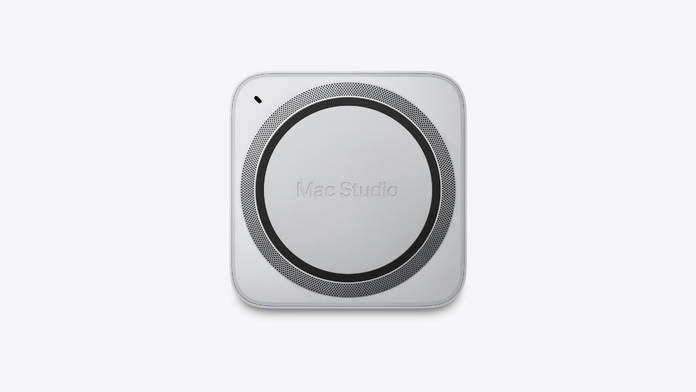
In that context, a 1.5TB capacity is mainly about keeping much larger models and datasets in RAM while the CPU, GPU and Neural Engine all work from the same memory pool, instead of shuffling data in and out of slower storage or the cloud. It also gives Apple room to pitch future Mac Studio or Mac Pro machines as local AI workstations for studios and teams that already live inside macOS and as an alternative to Nvidia‑based setups.
The rumoured M7 Ultra looks best suited for power users who work with large creative files, AI models or heavy professional workflows. It also makes sense for studios, developers and technical teams that want very high memory capacity on a Mac system, especially if they already rely on macOS for production work.