boltt smartphones will offer everything you need, nothing you don’t: Arnav Kishore, Founder & CEO


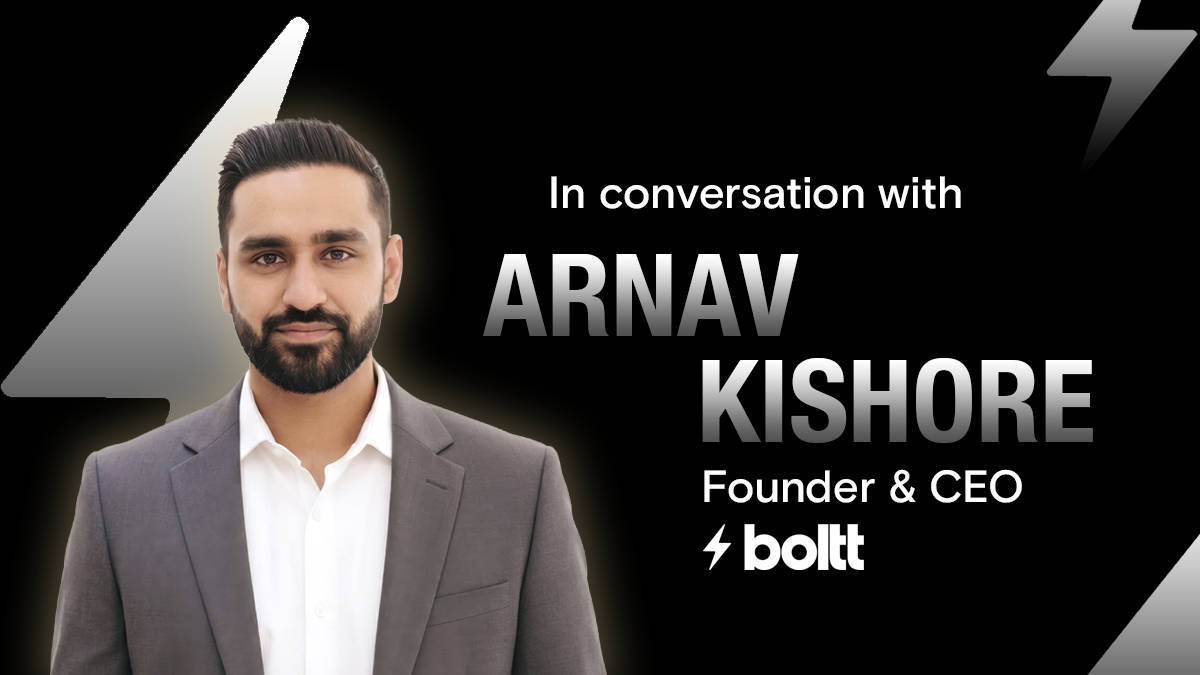
Fire-Boltt built its name on smartwatches — going from a standing start in 2020 to the number one wearable brand in India and the second-largest globally within three years. So when the company decided to enter the smartphone segment, the obvious questions were: why, and why now? I got on a call with Arnav Kishore, Founder & CEO, to talk about boltt, the company’s new smartphone brand, and what he’s planning in terms of product strategy, retail, service support and everything else this segment demands.
Table of Contents
The pivot: from wearables to smartphones
A five-year run in wearables as the springboard: Arnav traces the decision back to Fire-Boltt’s own journey — a “very humble beginning” in 2020, followed by rapid growth that took the brand to the top of the Indian smartwatch market and second place globally. That run, spanning “topping to bottoming to topping again,” gave the team the confidence that they understood what it takes to compete in a hardware category with tight margins and deep component complexity. As Arnav put it, building a smartwatch is arguably just as challenging as building a smartphone, given the sheer number of components, the software layer, and the health-and-fitness data scrutiny involved.
A year in the making: The move into smartphones isn’t a snap decision. Arnav says the team has been working on it for about 12 months, figuring out the right price segment and gap in the market.
Timing driven by market disruption: Arnav points to a shift in the last few months, with several existing brands struggling to sustain themselves in the affordable segment. That opening, combined with supply chain groundwork Fire-Boltt had already secured, made this the right moment to launch. He plans to start in the sub-Rs 15,000 to sub-Rs 20,000 bracket, with one 4G and one 5G device to begin with. He notes that 4G is “coming back in a big way” as 5G handsets have become pricier of late.


The value proposition: everything you need, nothing you don’t
Simplifying an overcrowded segment: Arnav frames the opportunity as an inflection point in the smartphone market. Customers, he says, aren’t necessarily chasing more features anymore, but better value, after phones became “more complicated and more expensive than they should have become.” boltt’s pitch is built around delivering just the essentials — smooth performance, a good camera, and solid battery life — at the right price.
Stock Android, no bloatware: Arnav is direct about one of the brand’s core promises. No unnecessary pre-loaded apps or software bloat, which he flags as a common source of security and privacy concerns on budget devices today. boltt phones will run close-to-stock Android on the latest version, with the company betting that a clean, trustworthy experience builds long-term loyalty rather than one-time purchases.
Specs at par or better: On the hardware side, Arnav claims the team has put in the work over the past several months to make sure performance, battery, display, and camera specs are “at par or slightly better” than the existing competition in the same price bracket.
Going up against incumbents in a tough market
When I asked him how a new entrant plans to compete against brands that have been entrenched in India’s budget segment for years, Arnav leans on boltt’s underlying value proposition, differentiated software experience, and Fire-Boltt’s own captive base of over 40 million customers built up over four years, which the brand hopes to convert into early smartphone buyers.
Distribution: Flipkart online, wearables network offline
An exclusive online tie-up: Boltt is launching exclusively online with Flipkart, one of the country’s leading channel partners, for both e-commerce and channel support.
Leaning on existing offline muscle: Beyond Flipkart, Arnav is confident about offline retail too, pointing to Fire-Boltt’s own track record as a leading offline brand in smartwatches, with reach into tier 2 and tier 3 markets and organised retail. The plan is a pan-India launch across both channels, with a dedicated distribution network for boltt smartphones expected to take shape over the next six months — one that should also help place Fire-Boltt’s wearables in more retail locations.


After-sales support and software updates
In-app customer support: Arnav describes a dedicated support application built into the phone itself, letting customers reach live agents directly from the device rather than hunting for a separate helpline.
400 service centres, GMS-aligned updates: Backing this up is a network of roughly 400 repair and service centres across India for walk-in support, along with regular software updates aligned to GMS guidelines, rolled out on a regular basis.
AI and the Gemini integration
Asked about AI as a point of differentiation, an area where affordable phones have traditionally lagged, Arnav confirms Boltt will lean on a deep Google Gemini integration across use cases, including camera features. He adds that additional AI-driven features are in the pipeline for future updates, though these remain under wraps for now.
The roadmap: two models now, premium play from January
boltt is starting with two models, each available in five to six colourways, which Arnav describes as long-term foundational products for the entry-level segment rather than short-lived, tactical launches. The company is targeting sales of around a million units across these two devices in the coming months. From January onward, the roadmap is set to expand into more premium price points, bringing AMOLED displays, improved cameras, and other higher-tier features into play.
The bigger ecosystem play
With smartwatches, hearables, and the recently launched Fire Lens AI glasses already under Fire-Boltt’s umbrella, the natural question is whether Boltt smartphones are meant to tie this ecosystem together. Arnav agrees this is very much the intent — and acknowledges that several brands have tried and failed to pull off a convincing ecosystem play in the past. He believes Fire-Boltt’s advantage lies in understanding how its existing wearable users behave, and in controlling the smartphone, OS, and platform layer itself, which should let boltt bring these devices together more seamlessly than a phone-first brand retrofitting an ecosystem around itself. Making this ecosystem story the brand’s lead message, he says, is one of the company’s biggest internal priorities going forward.