Dell and HP announce pre-orders for new Googlebook powered by Snapdragon X Elite processors


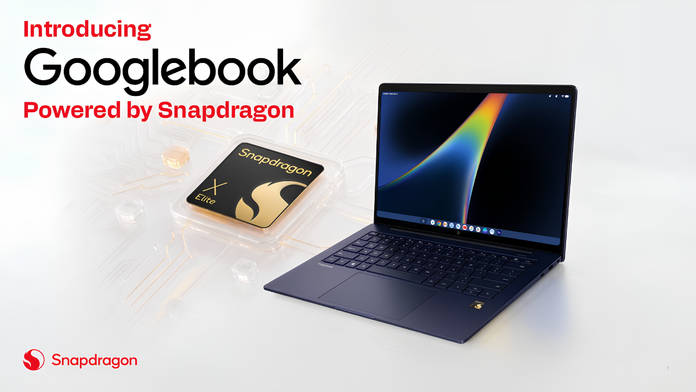
Googlebook is taking another step towards its launch, with Qualcomm confirming that Snapdragon X Elite will power the first Googlebook laptops. HP and Dell are among the first manufacturers bringing these devices to market, with pre-orders now open from September 21. The new Googlebook is based around Gemini Intelligence, with deeper Android integration and AI features baked into the laptop experience. Here’s what we know so far.
Table of Contents
Snapdragon X Elite powers the first Googlebooks
Qualcomm says Snapdragon X Elite will power the first Googlebook laptops, bringing its focus on performance, efficiency, and on-device AI to Google’s new platform. The chip’s built-in NPU will also play a role in running Googlebook’s AI features, while Qualcomm says the platform will support native Android apps and games.
Googlebook is being positioned as much more than just a premium Chromebook. Gemini sits much closer to the core experience, with features such as Magic Pointer, Create My Widget, and Cast My Apps designed to make the laptop more useful during everyday tasks.


Magic Pointer, for example, allows users to select something on screen and ask Gemini to analyse, compare, or create with it, while Cast My Apps lets users open apps from their Android phone on the laptop without separately installing them. Google also offers Quick Access for accessing files stored on a connected Android phone.
HP and Dell are the first to bring Snapdragon X Elite-powered Googlebooks to market, while Acer, ASUS, and Lenovo are also part of Google’s wider launch lineup.
HP calls its product the Googlebook 14c, which gives us a clearer idea of the kind of hardware Google is targeting. The laptop comes with a Snapdragon X Elite processor, 16GB RAM, 512GB SSD storage, and a 14-inch 3K OLED touchscreen. Although it is quite premium, starting at USD 1,299. We don’t know much about the Dell Googlebook just yet.
Googlebook’s approach also means buyers will get devices from several manufacturers rather than one reference model. That should bring more choice in terms of design, hardware, and eventually pricing.
Show Full Article
Should you wait for Googlebook?
The $1,300 price tag of the HP Googlebook 14c gives us a fairly good idea of where this new category could sit. The machine itself looks every bit like a premium Snapdragon-powered laptop, with a high-resolution OLED display, generous memory and storage, and hardware we come to expect from a premium thin and light device. Snapdragon-based PCs are also known for their focus on power efficiency and long battery life, which should work well with Google’s vision for a laptop that can stay useful throughout the day.
The bigger question here is not the hardware, but the software experience. Googlebook is neither a Windows laptop nor a Mac, and that makes it a tough sell at this price. Google is effectively asking users to buy into a new laptop platform with no proven history, with Gemini and Android integration forming a major part of the experience.
Therein lies the challenge but also a big opportunity if Google does it right. If the brand can actually make users appreciate the uniqueness of its new OS, Googlebook could carve out a niche for itself as a more premium alternative to traditional ChromeOS machines.
The big challenge, however, is convincing users that the Googlebook experience itself is worth paying around $1,300 for. At that price, buyers have plenty of mature Windows alternatives with established software ecosystems, while MacBooks already have an excellent reputation for premium hardware and battery life. Google’s biggest task will therefore be proving that its Gemini-backed approach offers enough actual potential and ability to justify moving to a completely new platform.