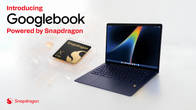
Googlebook is getting another hardware partner, with MediaTek confirming that its new Dimensity CX C10 Max chip will power an upcoming Lenovo device running Googlebook OS. The processor joins Intel and Qualcomm as another platform for Google’s new laptop ecosystem. Here’s what you need to know.
Table of Contents
MediaTek brings its new chipset to Googlebook
According to 9to5 Google’s report, the MediaTek-powered device will not be the already announced 15-inch Lenovo Googlebook, which uses an Intel processor. Instead, the chip is expected to appear in a rumoured Lenovo tablet running Googlebook OS.
The Dimensity CX C10 Max is the first chip from MediaTek’s new CX range for computers. It uses a 3nm manufacturing process and an eight-core CPU, alongside an 11-core GPU and a dedicated NPU for AI workloads. To put it simply, the NPU handles AI tasks separately from the main processor, allowing features such as Gemini to run more efficiently.
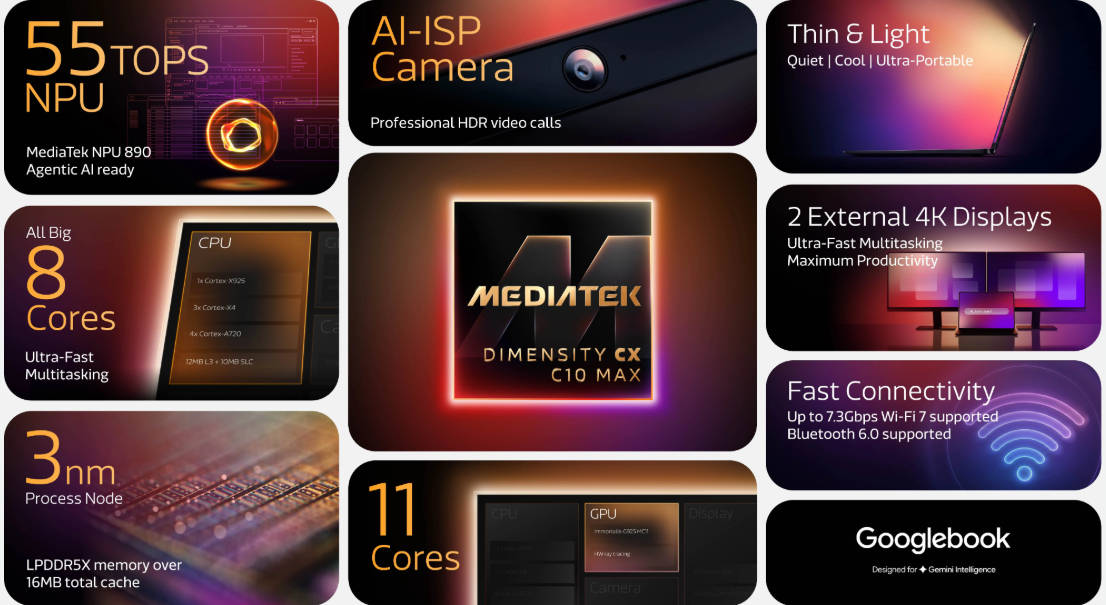
MediaTek says the chip can deliver up to 55 TOPS of AI performance, a measure of how many trillion AI operations the NPU can perform each second. The company is also focusing heavily on efficiency, claiming that the chip can support thin, light and fanless devices while still offering all-day battery life. MediaTek’s Dimensity series chipsets have already shown these capabilities in flagship smartphones, so there’s a decent credibility to this claim.
For regular users, that means a quieter machine, longer battery life and enough processing capabilities for multitasking and AI-assisted features without the need of a powerful cooling system. The C10 Max also supports LPDDR5X memory, UFS 4.0 storage and Wi-Fi 7, although the final configuration will depend on Lenovo’s device.
MediaTek gives Googlebook more room to grow
The addition of MediaTek gives Googlebook another hardware option at a time when the platform has just set its foot in the market. The first Googlebooks from Acer, ASUS and Lenovo use Intel processors, while Dell and HP have adopted Qualcomm’s Snapdragon X Elite. MediaTek is now bringing its own ARM-based platform to the ecosystem with a focus on AI and power efficiency.
More hardware options are definitely something to look forward to as Googlebook expands into different configurations and more affordable variants. The key challenge, however, remains the same one we have seen since Google first announced the platform. Google needs to show that Googlebook OS and Gemini can offer enough actual utility to justify moving away from the much more established Windows, Linux and macOS ecosystems.
The MediaTek-powered Lenovo device could be a good reference point in answering that question. It isn’t simply another premium laptop, so it can instead showcase whether Googlebook can scale into tablets and other hybrid devices while keeping the same AI-first experience.