From smartphones to smart cars: A look back at MediaTek’s 2024
MediaTek has had a busy year, so let's look back at some of MediaTek's key moments of the year gone by.


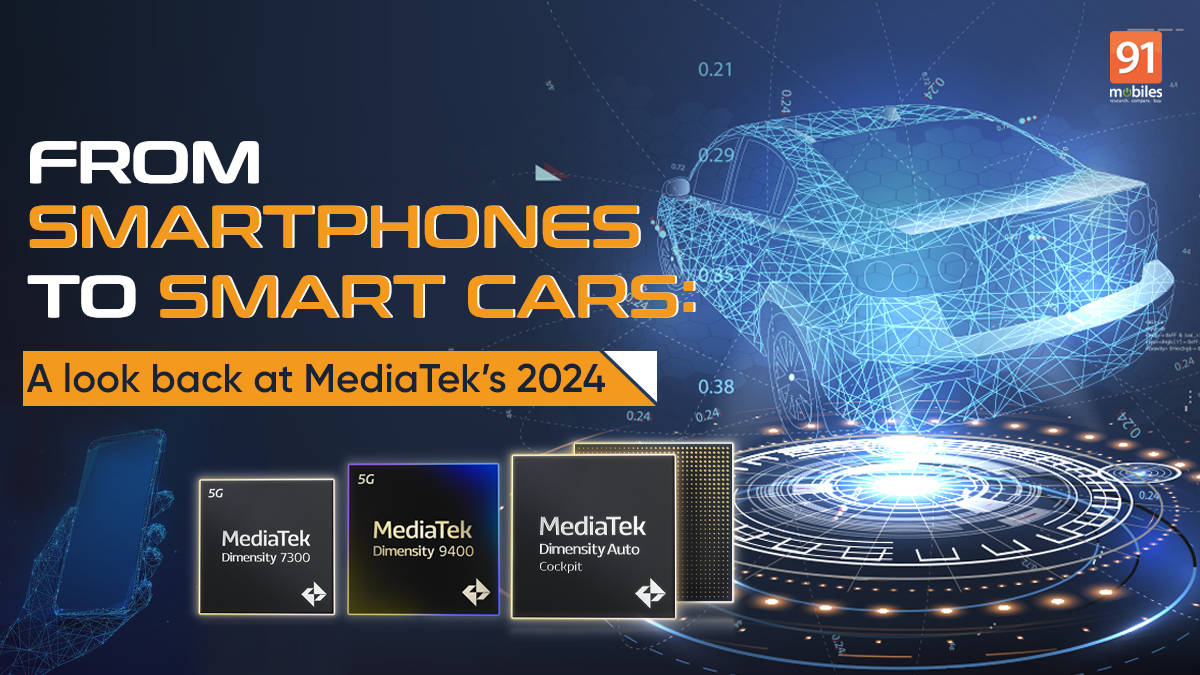
2024 is in the history books, and it was one where MediaTek continued to disrupt the industry by going beyond the norm. This includes forays into the Autotech segment, which is a growing segment globally. Besides this, the brand continues to launch new and more powerful SoCs that are set to be at the heart of many smartphones launched in 2025. Furthermore, MediaTek is fostering a vibrant tech community that, by now, is over 3,000 members strong through impactful events and initiatives.
Understandably, MediaTek’s endeavors in the region have toppled the competition. According to Counterpoint Research, the brand led India’s smartphone chipset market with a 54% share at the end of Q3 2024. Further, it was reported that the brand dominated the sub-Rs 30,000 5G smartphone segment in H1 2024 with a 64% market share.
MediaTek also dominated the sub-Rs 15,000 segment. Counterpoint reports that the brand had a 74% market share in the segment in Q1 2024. This number then went up to 80% by the end of Q3 2024.
But that’s not all. CyberMedia Research conducted a survey that measured Brand Salience amongst consumers when it comes to smartphone chipsets. As per the survey, MediaTek held its own against the competition with a brand salience score of 69 out of 100. This shows that the brand has better recall value and is better known than its competition.
Clearly, MediaTek has had a busy year, so let’s look back at some of MediaTek’s key moments of the year gone by.
Table of Contents
New chipsets
In April, Mediatek announced the Dimensity 6300, a new mid-range processor that’s designed to offer high-end features on affordable devices. Besides offering 5G connectivity, the octa-core SoC also supports up to 108MP cameras. The SoC also supports high-end panels with support for HDR and high refresh rate technologies for a premium viewing experience. Further, the chipset comes with the MediaTek HyperEngine suite of technologies which allow for a much better gaming experience. The realme 13 5G is an excellent example of a smartphone that makes the most of the Dimensity 6300 platform.


In May, MediaTek unveiled the Dimensity 7300 and Dimensity 7300X SoCs, with the latter specifically designed for dual-screen smartphones. Based on the 4nm process, the chipsets are aimed at mid-to-high-end smartphones and are designed to enable effortless multitasking, superior photography, accelerated gaming, and AI-enhanced computing. The MediaTek NPU 655 in the SoC supports new mixed precision data types and utilizes memory bandwidth more efficiently, which in turn reduces memory requirements for larger AI models. In fact, it is said to deliver twice the performance as compared to the Dimensity 7050. Nothing’s latest affordable offering, the CMF Phone 1 was powered by the Dimensity 7300, while the LAVA Agni 3 and moto razr 50 and their dual displays were powered by the Dimensity 7300X.


Then, in October, MediaTek unveiled the Dimensity 9400, its new flagship SoC that would propel devices into 2025. The new SoC improved upon its predecessor in almost every way with the second-generation All Big Core design built on Arm’s v9.2 CPU architecture. It also features advanced GPU and NPU, resulting in powerful yet efficient performance.
Thanks to MediaTek’s 8th Gen NPU, the Dimensity 9400 is able to deliver groundbreaking Gen AI with industry-first features like on-device LoRA training and high-quality video generation. It also promises to offer up to 80% faster LLM prompt performance and 35% better power efficiency as compared to the Dimensity 9300. Further, it is equipped with the new Dimensity Agentic AI Engine (DAE) that supports advanced agentic AI applications, allowing them to learn, adapt, and make decisions without constant human intervention.
We have already seen a number of flagship devices powered by the Dimensity 9400. Smartphones like the vivo X200 Pro and OPPO Find X8 Pro are excellent platforms that showcase the capabilities of the new SoC. 2025 should see even more flagships powered by the high-end chipset.


But that wasn’t all. Just before the end of the year, MediaTek unveiled the Dimensity 8400. Aimed at premium smartphones, it builds upon the All Big Core design with eight Arm Cortex-A725 processors. It also features a powerful MediaTek NPU 880 that is designed to accelerate generative AI tasks. It supports mainstream LLM/SLM/LMMs like Gemini Nano, Meta Llama 2, Qwen 2.5, and Baichuan 3. This will also allow users to access Gen AI applications for translation, rewriting, media generation, and more. It also integrates the Dimensity Agentic AI Engine (DAE) for advanced agentic AI applications. This will help developers create agentic AI applications that can anticipate user needs.
POCO recently unveiled the X7 Pro, a competitively priced smartphone powered by the MediaTek Dimensty 8400 in India. Unsurprisingly, the smartphone has left a positive impression on budding gamers and performance enthusiasts.
A year of interesting launches
2024 was packed with MediaTek-powered phones launching almost every month, so mentioning all of them would be impossible. However, there are a few phones that really stood out. This includes the Infinix GT 20 Pro. Featuring the unique Cyber Mecha design, the phone stands out amongst its peers. But it’s not just about looks as it is powered by a MediaTek Dimensity 8200 Ultimate SoC that is aided by 12GB RAM. This makes it a powerhouse device that can take on pretty much any game out there.
Those looking to turn heads might want to consider the LAVA Agni 3. This Dimensity 7300X-powered smartphone makes full use of the capabilities of the platform. It packs a tiny 1.7-inch AMOLED secondary display located next to the rear camera module. This is handy for quickly checking notifications, taking selfies, managing calls and more. Other features of the smartphone include a 6.78-inch primary display, 50MP triple-rear camera with 3X optical zoom and support for 66W fast charging.


Motorola launched two new phones that raised eyebrows for all the right reasons. The moto Razr 50 is a reimagining of the classic moto razr smartphone from the early 2000s. This flip phone packs a folding 6.9-inch FHD panel, and a smaller 3.6-inch secondary panel. As it comes with two displays, the MediaTek Dimensity 7300X was obviously the best option to power the smartphone. The moto Edge 50 Neo is a much more affordable device that is powered by the Dimensity 7300. This smartphone is all about offering value and packs a 6.4-inch FHD+ pOLED display with a 120Hz refresh rate.


OPPO also launched two new smartphones as part of its popular Find series. This included the Find X8, and Find X8 Pro. Both the smartphones are powered by the MediaTek Dimensity 9400 SoCs for flagship-grade performance. However, while the standard Find X8 packs a 6.59-inch display and a triple-rear camera with three 50MP sensors, the Find X8 Pro ups the ante with a 6.78-inch display quad-rear camera with four 50MP units.


Another set of flagship smartphones powered by the Dimensity 9400 launched in 2024 were the vivo X200 and the X200 Pro. Both the phones offered triple-rear cameras, with the standard variant offering three 50MP sensors. The vivo X200 Pro swapped one of the 50MP telephoto cameras with a 200MP unit, allowing for impressive levels of detail. Further, it should be noted that these phones come with ZEISS lenses, which should allow for exceptional clarity.
New television launches
Smartphones weren’t the only new MediaTek-powered devices to be launched. The Motorola Envision X and the Realme TechLife CineSonic TVs were launched this year and were excellent flagbearers to showcase MediaTek’s versatility. Both these TVs offered impressive hardware and software features while also offering incredible value, which is something MediaTek devices have always been known for.


New tablets
2024 also saw the launch of a number of MediaTek-powered tablets. This included a pair of devices from Acer. The Iconia iM9-12M and the Iconia iM10-22 offered users a portable big screen experience. The Acer Iconia iM9-12M packs a compact 8.7-inch WXGA display with a MediaTek Helio P22T chipset. It also packs a large 5100mAh battery and promises 8 hours of video playback. Those looking for something larger can consider the Acer Iconia iM10-22. This tablet packs a 10.36-inch 2K display with a MediaTek Helio G99 SoC. Buyers also get a larger 7400mAh battery and a quad-speaker setup.


realme joined the party with the Pad 2 Lite tablet. This tablet packs a large 11-inch 2K display with a 90Hz refresh rate and is powered by a Helio G99 SoC. For audio, it offers a quad-stereo speaker setup with OReality Audio. Other features include 4GB RAM, 128GB storage and 4G connectivity.
Pioneering technologies
2024 also saw MediaTek introduce new technologies, while also pioneering existing ones. This includes QPD Remosaic, which was featured in the MediaTek Imagiq 1080 ISP in the Dimensity 8400. This technology allows for more capture of light, faster focus, and more accurate reproduction of high-resolution images.
Gamers will be pleased to know that MediaTek has also collaborated with Google to enhance the gaming experience on smartphones. Google’s Android Dynamic Performance Framework (ADPF) aims to optimise mobile gaming by dynamically adjusting performance and visuals based on real-time conditions to maintain consistent frame rates and battery efficiency. MediaTek Adaptive Game Technology (MAGT) is exclusive to MediaTek Dimensity chipsets and enhances ADPF’s capabilities by offering improved performance, visuals, and power management.


MediaTek also improved existing technologies to make them even more useful. For instance, MediaTek tweaked its existing AI offering to ensure faster responses when interacting with LLMs. Further, MediaTek UltraSave 3.0+ was offered in even more chipsets, allowing for greater power efficiency when connected to 5G networks.
Smarter vehicles with MediaTek
MediaTek strengthened its offerings in the automotive sector by launching the MediaTek Dimensity Auto Cockpit platform. Developed in partnership with NVIDIA DRIVE, the platform is designed to help introduce advanced AI capabilities into vehicles. The Dimensity Auto Cockpit platform consists of four SoCs that cover entry-level to premium segments.


Further, MediaTek also collaborated with JioThings Limited, a subsidiary of Jio Platforms Limited, to launch a ‘Made in India’ Smart Digital Cluster and Smart Module specially tailored for the 2-wheeler market. This long-term strategic collaboration will deliver Android-based smart digital cluster solutions in India and the global market. Through this collaboration, riders will have access to the Jio Automotive App Suite, which includes services such as Jio Voice Assistant, JioSaavn, JioPages, JioXploR and more.
In November, at the Experience India 2024 event in New Delhi, India, MediaTek conducted several sessions which talked about technologies that were shaping India’s digital future. This included an auto showcase that highlighted connected vehicles with examples from brands such as Tata Motors and Kinetic Green being showcased.
Launch of MediaTek Connect powered by 91mobiles
On July 8, the brand launched the MediaTek Connect powered by 91mobiles. MediaTek Connect is a community wherein tech enthusiasts can gain access to MediaTek devices, get event invites, and more. Over 400 fans and influencers attended the launch event over the course of the day and were able to explore various MediaTek-powered devices, learn about MediaTek products, and watch the live launch of CMF Phone 1 and its accessories. Additionally, attendees enjoyed a fireside chat on the new Dimensity 7300 chipset and Phone 1, followed by BGMI matches and a Scavenger Hunt with exciting prizes.


MediaTek’s Catch-up with Tech
In September, MediaTek hosted Catch up with Tech, a lifestyle influencer meet & greet in collaboration with Motorola and Flipkart. The event showcased the motorola razr 50 and edge 50 Neo, powered by Dimensity 7300 series chipsets, along with the EnvisionxSpectra Smart TV lineup. Over 50 influencers, analysts, and media personalities attended the event which featured product demos and a QnA session. The session included expert panellists such as Shivam Ranjan, Head of Marketing, APAC at Motorola, Konark Tyagi, Tech Influencer, and Sneha Arora, Lifestyle Influencer. It was moderated by Anuj Sidharth, Director of Marketing & Corporate Communications at MediaTek.


MediaTek Fan Meetup in collaboration with 91mobiles
In November, MediaTek hosted a Fan Meetup in New Delhi in partnership with 91mobiles. The event included some of the biggest names in tech such as SuperSaf, MrMobile, and Jenna Ezarik. Attendees interacted with these tech icons and explored MediaTek-powered devices like the CMF Phone 1, Vivo V40e, and POCO M6 5G in the Experience Zone. MediaTek’s leadership, including senior executives like Anuj Sidharth, Director of Marketing & Corporate Communications at MediaTek, shared insights into the company’s commitment to innovation, highlighting advancements in 5G, AI, and gaming technologies. The event also featured global media representatives, further showcasing MediaTek’s global impact.

MediaTek Tech Diaries
Mediatek also hosted the 13th and 14th Chapters of its Tech Diaries event in 2024. First held in 2018, the latest chapter, titled ‘This Chip Changes Everything,’ highlighted the MediaTek Dimensity 9400-powered OPPO Find X8 Pro. It reaffirmed the brand’s leadership in mobile, automotive, and IoT technologies while highlighting its focus on emerging innovations such as generative AI, satellite connectivity, automotive solutions, 5G, and smart clusters. It also included a panel discussion with industry leaders, including Peter Dohyung Lee from OPPO, who discussed the Dimensity 9400 chipset’s advancements in AI. Attendees explored MediaTek’s latest innovations in the demo area, featuring the OPPO Find X8 Pro, Tata Punch.eV, and Skoda Slavia.

Looking ahead
As one can see, 2024 was a year of innovation, growth, and impactful collaborations for MediaTek, which cemented its position as a leader in mobile, automotive, and smart device technologies. From powerful new chipsets to AI-driven automotive solutions and community-focused events, the year was busier than ever for the brand. As MediaTek continues to push boundaries and expand its ecosystem, 2025 promises even more breakthroughs that will redefine connectivity, performance, and user experiences.