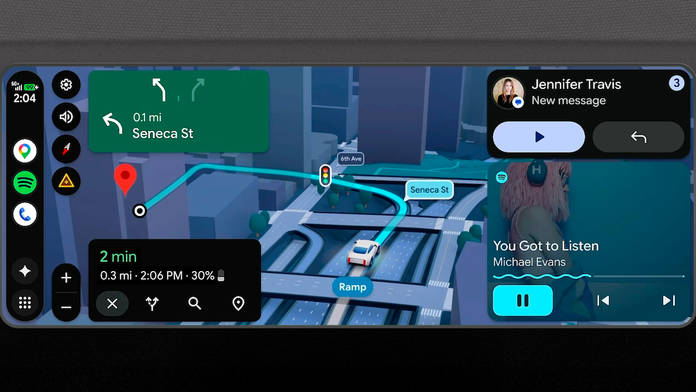
Google has announced a sweeping set of updates to Android Auto and cars with Google built-in, covering everything from a ground-up visual redesign to full HD video playback, Dolby Atmos spatial audio, and deeper Gemini integration. The announcement, made by Guemmy Kim, Senior Director of Product and UX for Android for Cars, covers features rolling out across more than 250 million Android Auto-compatible cars on the road today, as well as the 100-plus models from 16 car brands that run Google built-in.
Table of Contents
A redesigned Android Auto
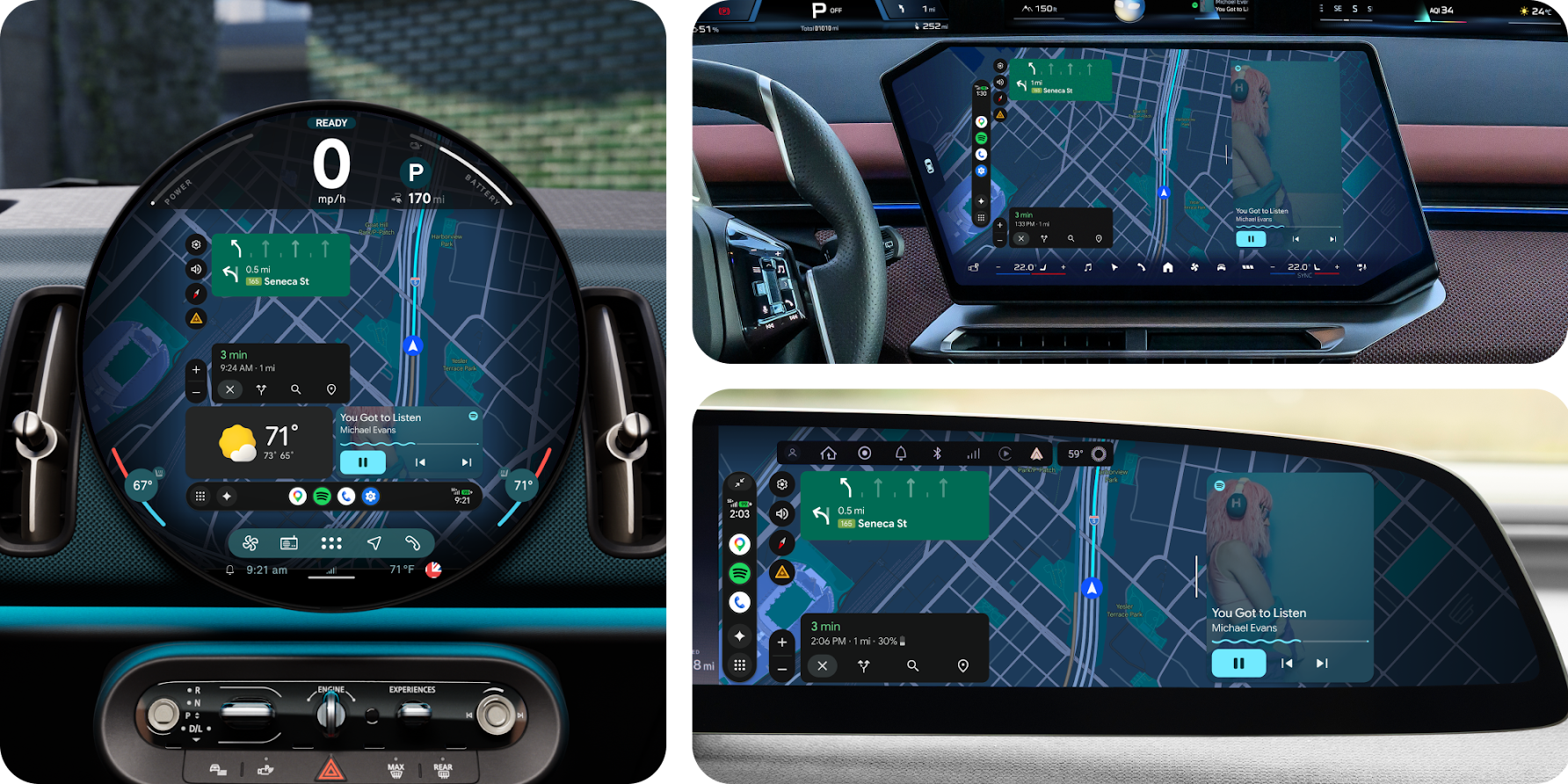
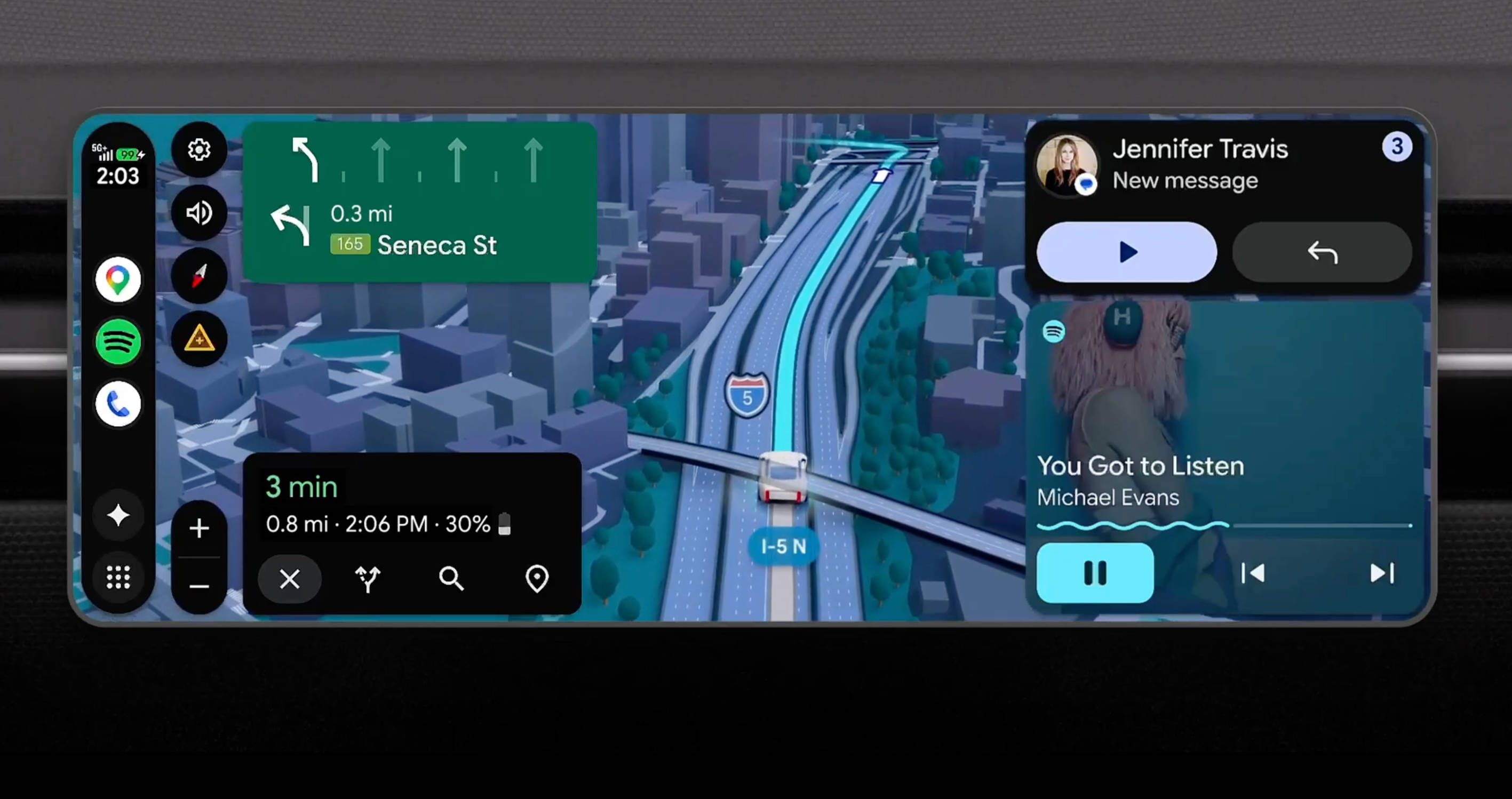
The most visible change is a complete refresh of the Android Auto interface. Built on the Material 3 Expressive design language already familiar from Android phones, the new experience brings expressive fonts, smooth animations, and wallpapers to the car dashboard. The interface is also now adaptive, designed to look and function correctly across a wide range of screen shapes and sizes, including ultrawide rectangles, circular displays, and non-standard form factors.
Immersive Navigation: the biggest Maps update in over a decade
At the heart of the new experience is what Google calls Immersive Navigation, described as the most significant update to Google Maps in more than 10 years. The map now renders in a vivid 3D view that surfaces buildings, overpasses, and terrain, while highlighting critical details including lanes, traffic lights, and stop signs to help drivers navigate complex junctions and merges with greater confidence.
Full HD video and Dolby Atmos come to Android Auto
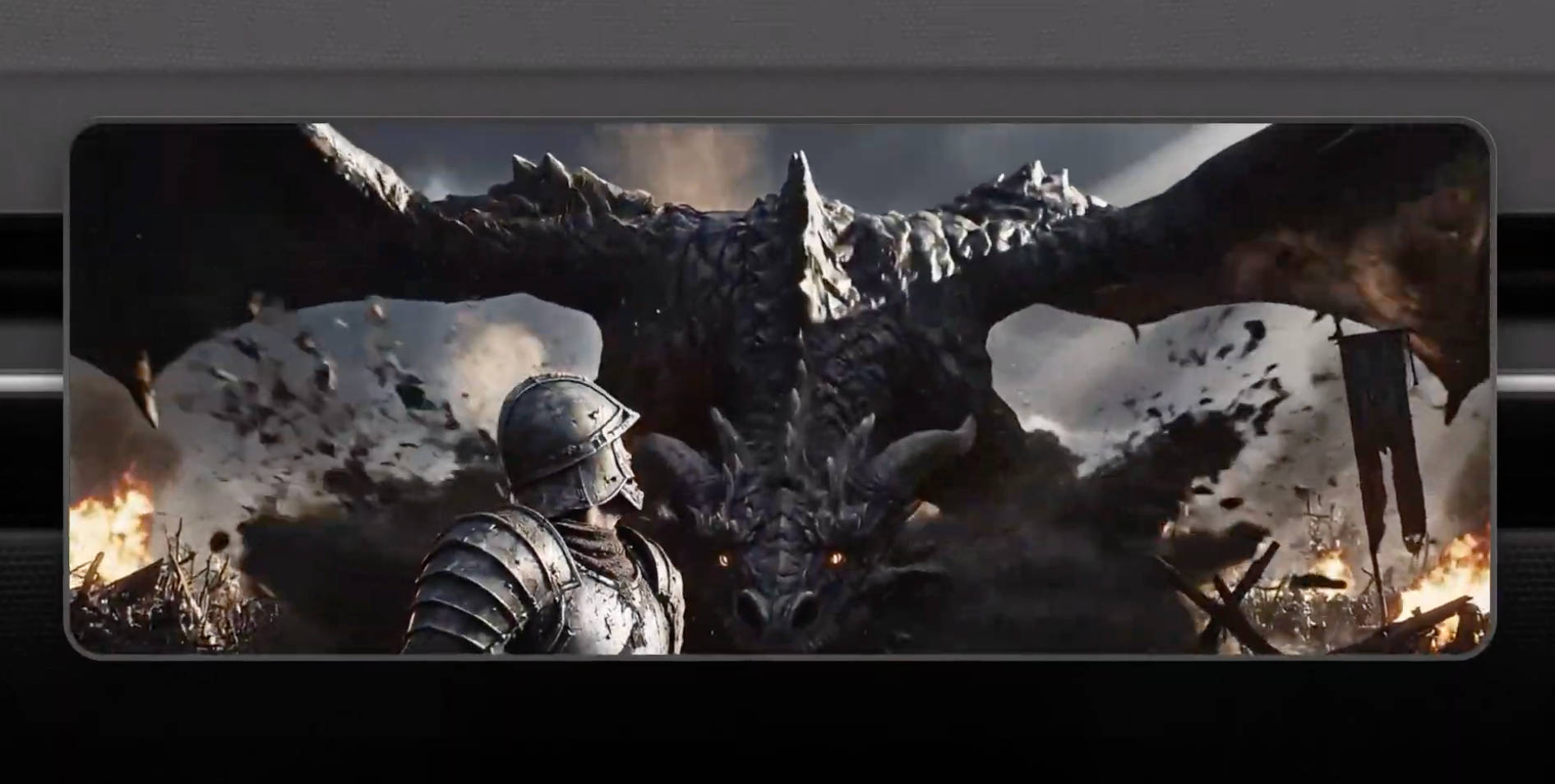
For the first time in Android Auto, drivers and passengers will be able to watch video content, including YouTube, on the car’s screen while parked or charging. The experience is being delivered at 60fps in full HD in supported vehicles, launching with BMW, Ford, Genesis, Hyundai, Kia, Mahindra, Mercedes-Benz, Renault, Škoda, Tata, and Volvo.
On the audio side, Android Auto will also support immersive spatial sound via Dolby Atmos in supported apps and cars, starting with BMW, Genesis, Mahindra, Mercedes-Benz, Renault, Škoda, Tata, and Volvo.
A more capable Gemini in the car
Gemini is now widely available in Android Auto and is getting meaningfully more capable. Drivers can use it to get things done, brainstorm, or learn while on the road. For phones with Gemini Intelligence, deeper integration is coming later this year, bringing contextual awareness that lets the assistant understand what’s happening across messages, email, and calendar.
Magic Cue, a feature introduced with the Pixel 10 series, demonstrates what this looks like in practice: if a friend texts to ask for an address, Gemini can understand the context, find the answer from relevant data on the phone, and offer to reply with the correct information with a single tap. DoorDash integration also arrives as part of this update, letting drivers place food orders by voice, including specific instructions like doubling an order, with the food ready for pickup on arrival.
In cars with Google built in, Gemini goes further still, with deep hardware integration that lets it answer vehicle-specific questions, identify a dashboard warning light, or tell the driver whether a piece of furniture will fit in the boot. Zoom is also coming to cars with Google built in this year, joining the growing list of apps accessible directly on the car screen.
The scale of this update is hard to overstate. Google is essentially repositioning the car as a more capable, more personalised computing environment, not just a screen for navigation and music. The Immersive Navigation update, Dolby Atmos support, and full HD video all point to a clear ambition: make the in-car screen as compelling as the living room. Whether live lane guidance and Gemini Intelligence deliver meaningfully in real-world conditions is the test that matters, and that will only be clear once these features land in actual vehicles. The rollout is expected to continue throughout 2026.