Xiaomi unveils HyperOS 4 with glass design aesthetics, improved features: list of eligible devices revealed


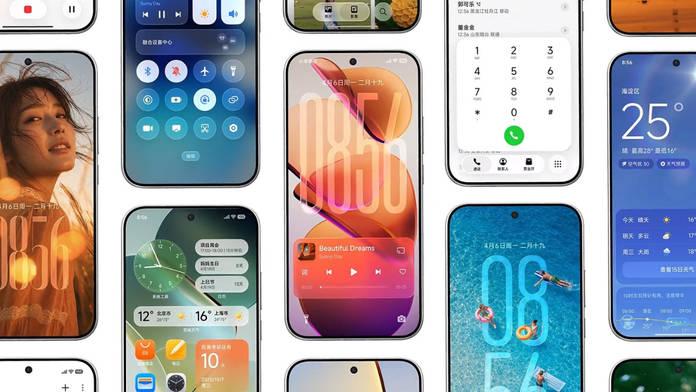
With several Android manufacturers pushing out the Android 17 update for their devices in either beta or stable form, Xiaomi was quick to announce the next iteration of its custom skin, HyperOS 4. While the update has been announced for China, one can expect most of the new features (except AI), performance improvements, and design changes in the global HyperOS 4 ROM when it rolls out in the coming months. Subsequently, Xiaomi has also released the list of devices eligible for the new firmware in China.
Table of Contents
Xiaomi HyperOS 4: what’s new?
Performance improvements
Starting with underlying changes, Xiaomi claims that HyperOS 4 has been optimised to run at lower memory than HyperOS 3. The company has rolled out a redesigned app runtime environment intended to make system apps run more efficiently. In Xiaomi’s tests, the time needed to open 30 apps one after another following extended use fell by 17.5 percent, and frame drops during long sessions decreased by 28.9 percent.
Battery has been further improved over HyperOS 3, allowing users to get better battery endurance across all tasks. A particularly noticeable upgrade appears in the Gallery app, where scrolling through large sets of photo thumbnails is now up to 90 percent faster.
“Soft Light Glass” interface and customisation changes
HyperOS 4 adapts the ‘Soft Light Glass’ aesthetics, resulting in translucent surfaces and lighting effects across key areas, such as quick settings toggles, menu buttons, widget and folder backgrounds, and more. This glass-like appearance may have been inspired by Apple’s iOS 26, but the end result looks quite striking and refined.
Show Full Article
The lock screen finally gains the ability to resize large clocks, while stacked notifications have also been introduced on HyperOS 4. We previously saw a stacked notification style on ColorOS 16 and OriginOS 6. Furthermore, the Integrated Device Centre offers a new layout and brings the functionality to switch between multiple homes with a single tap.
Apart from this, you may notice dozens of minor and subtle design and animation changes and improvements across first-party apps, including the Phone app, which now features a floating bottom tab, and blur improvements in the Gallery.
AI improvements
In the Recorder app, the system can now create intelligent outlines and summaries, highlight important details, and automatically skip silent sections of a recording. The Super XiaoAI Input Method gains structured voice-to-text transcription along with real-time voice translation input, while AI Voice Notes lets users add images to their notes and automatically pull out key conclusions and actionable to-do items.
List devices eligible for HyperOS 4 update (China)
Along with announcing the devices list, Xiaomi has confirmed that it’ll initiate batch-wise beta update rollouts starting August 14th:
First HyperOS 4 beta rollout (August 14th)
- Xiaomi 17 Ultra
- Xiaomi 17 Ultra Leica Edition
- Xiaomi 17 Pro Max
- Xiaomi 17 Pro
- Xiaomi 17
- Redmi K90 Pro Max
- Redmi K90 Pro Max Champion Edition
- Redmi K90
- Xiaomi Pad 8 Pro
- Xiaomi Pad 8
Second HyperOS 4 beta rollout (August 27th)
- Xiaomi 17 Max
- Xiaomi 17T Pro
- Xiaomi 17T
- Xiaomi 15 Ultra
- Xiaomi 15 Ultra Dual Satellite Edition
- Xiaomi 15S Pro
- Xiaomi 15 Pro
- Xiaomi 15
- Redmi K90 Max
- Redmi K90 Supreme Edition
- Redmi K Pad 2
Third HyperOS 4 beta rollout (September 17th)
- Redmi K100 Pro Max
- Redmi K100 Pro
- Redmi K80 Pro
- Redmi K80 Supreme Edition
- Redmi K80
- Xiaomi MIX Flip 2
- Xiaomi Pad 7 Ultra
- Xiaomi Pad 7S Pro 12.5
With the update announced for China, it shouldn’t be long before Xiaomi make the India or global-specific HyperOS 4 announcement. In other news, Motorola has already released the list of devices eligible for Android 17, while OPPO, OnePlus, and Realme have begun recruiting testers for the ColorOS 17 closed beta update.