Review Summary
Expert Rating
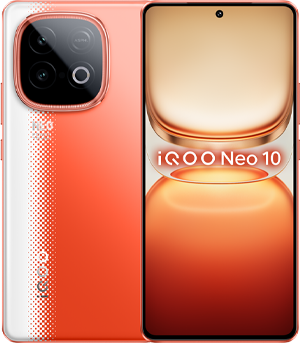
iQOO has already made a strong mark in 2025 with the iQOO 13 (review) and iQOO Neo 10R (review), so expectations were naturally high for its latest offering, the iQOO Neo 10. For the most part, it lives up to the hype, and I can confidently say it’s one of the best smartphones under Rs 40,000 in India right now.
In true iQOO fashion, the Neo 10 prioritises raw performance, much like its siblings. But it doesn’t stop there – you also get reliable camera performance, a solid battery, and a vibrant display. So, is there a catch? Let’s find out.
Table of Contents
Verdict
The iQOO Neo 10 (starts at Rs 31,999) testifies that iQOO is moving beyond just being a gaming-focused brand. While the Neo 10’s core strength still lies in raw performance thanks to the new Snapdragon 8s Gen 4, it also offers capable cameras, solid battery life, and a noticeably improved user interface. That said, iQOO still needs to reduce the number of pre-installed apps. I would have also appreciated a few more colour options.
Design and display
Much like the iQOO Neo 10R and last year’s iQOO Neo 9 Pro (review), iQOO’s latest offering doesn’t bring significant design changes. The company continues to offer limited colour options, with each variant presenting a distinct aesthetic. The Inferno Red option, which I reviewed, is the flashier of the two, featuring a bright finish and racing-inspired accents on the back. Personally, I prefer the Titanium Chrome variant for its more refined and elegant appeal. That said, a white colour option would have looked excellent with this design.

The phone features a polycarbonate build, but it feels sturdy and fairly premium. It weighs 199 grams, which is quite impressive given the massive 7,000mAh battery inside.
| Smartphone | Thickness | Weight | IP Rating |
| iQOO Neo 10 | 8.09 mm | 206 grams | IP65 |
| realme GT 7T | 8.25 mm | 202 grams | IP68 +IP69 |
| vivo V50 | 7.39 mm | 189 grams | IP68 +IP69 |
| Xiaomi Redmi Note 14 Pro+ 5G | 8.87 mm | 210 grams | IP68 |
Aside from the limited colour choices, there’s little to complain about with the iQOO Neo 10. Whether it’s durability or everyday ergonomics, it follows the familiar design language that iQOO typically uses for its Neo lineup. Users upgrading from a more compact device may find it a bit large at first, but I appreciate its taller build, especially for reading.
| Smartphone | Display | Peak Brightness |
| iQOO Neo 10 | 6.78 inches - AMOLED | 5500 nits |
| realme GT 7T | 6.8 inches - AMOLED | 6000 nits |
| vivo V50 | 6.77 inches - AMOLED (Curved Display) | 4500 nits |
| Xiaomi Redmi Note 14 Pro+ 5G | 6.67 inches - AMOLED (Curved Display) | 3000 nits |
Hardcore gamers will also love the expansive 6.78-inch AMOLED display with a 144Hz refresh rate. In day-to-day usage, I didn’t often notice it reaching the peak refresh rate, but for gaming, the experience was exceptionally smooth. When it comes to watching content on YouTube or OTT platforms, the display delivers a vibrant and immersive viewing experience.

In our lab tests, the phone achieved a peak brightness of 1,550 nits with HDR support, placing it among the top performers in its segment. The stereo speakers are also adequately loud, rounding out the multimedia experience. Whether you’re into gaming, reading, or binge-watching content, the iQOO Neo 10 is sure to impress.
Cameras
Unlike most rivals in the segment, iQOO takes a safe and modest approach with its camera setup. The iQOO Neo 10 features dedicated wide and ultra-wide cameras, but skips a telephoto lens, a norm in smartphones priced above Rs 25,000. To compensate, iQOO labels its 50MP main sensor as a “portrait camera.” It’s paired with an 8MP “wide” lens. On the front, there’s a 32MP selfie camera capable of recording videos at 4K 60fps.

The camera performance is consistent with iQOO’s typical output – a blend of its in-house ‘NICE’ image algorithm and Vivo’s colour science. Photos generally feature natural tones with minimal noise across various lighting conditions, and both wide and ultra-wide shots produce fairly consistent results.
However, detail retention can be a mixed bag. The software sometimes softens parts of the image to suppress noise, which can result in a slight loss of sharpness. Portrait shots, while visually appealing, can occasionally fall short of accurate skin tones.


Overall, the proprietary colour tuning does a good job of delivering social media-ready photos. I also appreciate the 4K 60fps video recording on both the front and rear cameras, though stabilisation could use some improvement.
I also compared Neo 10’s camera performance against the Vivo V50 and Realme GT 7. Here’s a detailed analysis:
Daylight
In daylight, iQOO’s image appears close to natural, though it boosts the greens for a more dramatic effect. The Realme GT 7 produces a similar photo, but the green areas are less pronounced. Both smartphones capture comparable background details.


The Vivo V50’s image is visibly brighter and equally picturesque, with detail levels on par. However, iQOO’s shot may appear more aesthetically pleasing due to its colour tuning.

Ultra-wide
The iQOO Neo 10 does a good job of maintaining colour consistency with its primary camera, though the level of detail is average. Realme’s ultra-wide image shows slightly different colour science but preserves more fine details.


Vivo’s ultra-wide shot stands out with the best overall detail and colour balance. However, like the other two, it struggles with corner distortion.

Portrait
As noted earlier, iQOO tends to boost skin tones, which is clearly visible in its portrait output. Realme takes a more natural approach, and it also does a better job of retaining facial details.


Once again, Vivo delivers the most balanced output in terms of colour accuracy, edge detection, and facial detail. Its adjustable aperture adds depth to the background blur, making the bokeh richer than the competition.

Selfie
iQOO’s selfie appears brighter, while Realme sticks to a more natural tone.


Vivo offers a more thoughtful default focal length, capturing a wider background without compromising the subject’s placement. It also provides better colours and finer details.

Low light (Night Mode)
In a low-light indoor shot, iQOO handles brightness decently, but again over-emphasises green spots. Realme’s image is the closest to reality and shows minimal shakiness.


Vivo’s photo is comparable to Realme’s in clarity but introduces a yellowish tint across the frame, which might not appeal to everyone.

Performance and software
As mentioned, performance remains a core focus across iQOO devices, and the Neo 10 is no exception. It is the first smartphone in India to feature Qualcomm’s Snapdragon 8s Gen 4 SoC, the successor to the Snapdragon 8s Gen 3 that powers the Neo 10R. The Neo 10 is available in multiple storage configurations, with the top-end variant offering 16GB LPDDR5x Ultra RAM and 512GB UFS 4.1 storage (Rs 40,999), a first in this price segment. However, due to system files and pre-installed apps, users have about 470GB of usable storage, which is still ample for storing thousands of photos, notes, apps, and other media.

When it comes to raw power, the iQOO Neo 10 is easily among the most powerful smartphones under Rs 40,000. It topped our AnTuTu and Geekbench (single and multi-core) tests, and gaming performance was consistently smooth. In our 90-minute gaming test, which included titles such as BGMI, Call of Duty Mobile, and Real Racing 3, the Neo 10 ranked among the top three performers. Based on lab results, Realme GT 7T and Vivo V50 (review) narrowly outperformed it in BGMI average FPS under HDR graphics and Ultra FPS settings (39.1 and 39.2, respectively). The Neo 10 clocked an average of 37.3 FPS after 30 minutes of continuous playtime.
| Smartphone | Pre-Installed Apps | Software Support |
| iQOO Neo 10 | 52 | 3 Years OS Updates + 4 Years Security Updates |
| realme GT 7T | 58 | 4 Years OS Updates + 6 Years Security Updates |
| vivo V50 | 51 | 3 Years OS Updates + 4 Years Security Updates |
| Xiaomi Redmi Note 14 Pro+ 5G | 66 | 3 Years OS Updates + 4 Years Security Updates |
For everyday tasks, the iQOO Neo 10 handled animations, app switching, and multitasking effortlessly. However, the Funtouch OS might seem a little tricky for those unfamiliar with this Android skin. iQOO deserves credit for reducing third-party pre-installed apps to just four. However, its Android skin is far from the cleanest; instead, we get over 50 pre-installed system tools.




Users can also access certain AI features, primarily related to the camera.
For productivity, users get access to Google’s Gemini Live and Circle to Search. However, competitors like OPPO and OnePlus currently offer slightly more practical AI tools, such as AI Write and AI Summary, integrated directly into their software. Nothing and Motorola are also doing a great job with their own AI-driven features, particularly for note-taking and information capture.
Battery and charging
iQOO is going big on batteries this year – quite literally!

The latest iQOO Neo 10 includes a massive 7,000mAh battery, made more compact using silicon carbide technology, which helps reduce size without compromising capacity. What’s equally impressive is that despite the large battery, iQOO continues to offer 120W fast charging support with the charger included in the box.
With all settings maxed out, the iQOO Neo 10 easily lasted a day during my review. With moderate use, which included a few hours of social media and reading, about an hour of calls, and some light camera activity, I was able to stretch the battery life to around 1.5 days.
Charging is the most impressive part. With the bundled charger, the phone went from 20 to 100 percent in under 30 minutes.
| Smartphone | Battery Capacity | Charging Support | Charging time (20% to 100% ) |
| iQOO Neo 10 | 7000 mAh | 120W Flash Charging | 27m 9s |
| realme GT 7T | 7000 mAh | 120W Super VOOC Charging | 36m |
| vivo V50 | 6000 mAh | 90W Flash Charging | 39m 5s |
| Xiaomi Redmi Note 14 Pro+ 5G | 6200 mAh | 90W Hyper Charging | 53m 10s |
Final verdict
There’s no doubt that the iQOO Neo 10 is one of the best smartphones you can consider under Rs 40,000 in India right now. Whether it’s handling daily tasks, delivering smooth gaming performance, offering lightning-fast charging, or providing impressive battery life, it excels across the board. The dual cameras are also reliable, even if not perfect.
I also appreciate iQOO’s effort to improve the user experience by cutting down third-party pre-installed apps. That said, trimming the number of native apps and introducing more productivity-focused AI features could further improve the experience. Personally, I would’ve also liked to see a few more colour options as well.
Overall, the Neo 10 is a well-rounded phone with very few shortcomings.
Editor’s rating: 8.1 / 10
Reasons to buy:
- The iQOO Neo 10 is snappy and powerful.
- It offers a solid battery life.
- Charing speed is incredibly fast.
- The cameras are decent.
Reasons not to buy:
- The design could’ve been better with more colour options.
- The phone has a lot of pre-installed apps.
- There’s no telephoto camera.