Microsoft-NVIDIA event brings Surface Laptop Ultra, RTX Spark PCs and DGX Station for Windows


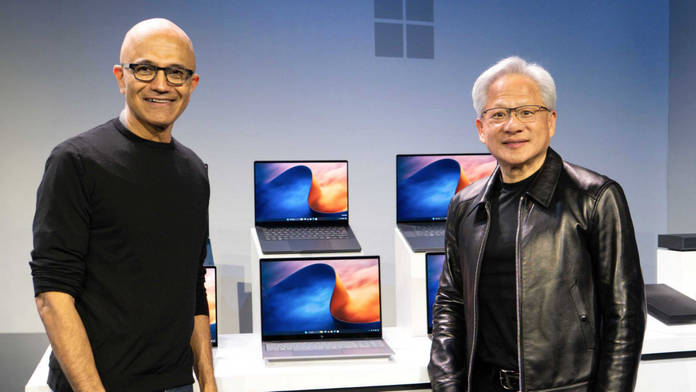
At the Windows AI and Surface event in San Francisco, Microsoft and NVIDIA jointly introduced the Surface Laptop Ultra, its most powerful Surface laptop yet, powered by NVIDIA’s new RTX Spark Superchip. The platform combines a Grace CPU, Blackwell RTX GPU and unified memory to deliver more local AI and graphics performance in a relatively thin laptop.
NVIDIA has also introduced its new DGX Station for Windows to empower local AI capabilities for enterprise teams. Let’s look at it in more detail below.
Table of Contents
Surface Laptop Ultra offers desktop-level hardware
The Surface Laptop Ultra is a 15-inch laptop built around NVIDIA’s new RTX Spark N1X platform. Microsoft offers two versions, with either an 18-core or 20-core NVIDIA Grace CPU paired with a Blackwell GPU with up to 6,144 cores. It also supports up to 128GB of unified LPDDR5X memory, giving the laptop much more runway for demanding workloads than a typical thin-and-light machine.
The laptop also gets a 15-inch PixelSense Ultra touchscreen with a 3:2 aspect ratio, 3270 x 2180 resolution, 120Hz dynamic refresh rate and 100 per cent DCI-P3 coverage. Microsoft has added a larger haptic touchpad, HDMI 2.1b, an SD card reader, USB-C, USB-A and a headphone jack, so users can connect peripherals without relying heavily on dongles. It also weighs around 2kg and measures under 18mm thick.
Microsoft has also built a larger cooling system for the Laptop Ultra, with up to 2.5 times the thermal capacity of its 15-inch Surface Laptop. This is important because the RTX Spark is designed for sustained workloads such as AI development, 3D work, video editing and gaming, which tend to generate a lot of heat that needs to be dissipated effectively. Microsoft rates the laptop for up to 15 hours of local video playback and up to 12 hours of active web use.
NVIDIA DGX Station also comes to Windows
NVIDIA also previewed the DGX Station for Windows, a deskside AI system built around the GB300 Grace Blackwell Ultra Desktop Superchip. It offers 748GB of coherent memory and up to 20 petaflops of FP4 AI performance, allowing enterprise teams to run very large AI models locally. It also lets developers keep their existing Windows workflows while using NVIDIA’s heavy-duty AI tools, instead of maintaining separate Windows and Linux systems.
Show Full Article
Do we finally have a MacBook Pro rival on Windows?
The Surface Laptop Ultra starts at $2,599.99, while the higher-end version costs $3,699.99 with pre-orders beginning on October 16. Microsoft has not yet announced an India price or launch date.
The Surface Laptop Ultra clearly takes some design cues from the MacBook Pro. Both use premium metal designs, high-resolution displays and large trackpads, while targeting users who need more power for creative work, AI tasks and other demanding workloads. Apple’s MacBook Pro starts at Rs 2,39,900 in India, while the 14-inch M5 Pro model starts at Rs 2,49,900.
The biggest difference comes from the hardware itself, as the RTX Spark combines an ARM-based NVIDIA Grace CPU with a Blackwell RTX GPU and up to 128GB of unified memory. In simple terms, it combines the low power use of an ARM processor with a much more powerful GPU than you normally get in ARM laptops. NVIDIA says the platform can run AI models with up to 120 billion parameters locally and uses the full CUDA and TensorRT software stack.
Another big advantage here could be gaming, which remains a big challenge for ARM-based systems even now. Snapdragon-powered Windows laptops and Apple M-series MacBooks offer excellent battery life and performance, but they do not focus on high-end gaming in the same way. RTX Spark supports NVIDIA’s gaming and graphics technologies, giving the Surface Laptop Ultra the ability to handle modern games alongside professional workloads.
This makes the Surface Laptop Ultra a worthwhile alternative to the MacBook Pro for users who want high performance, good battery efficiency and proper gaming/AI workload support in the same machine.