MSI revives its Lightning flagship GPU with NVIDIA GeForce RTX 5090 LIGHTNING Z at CES 2026


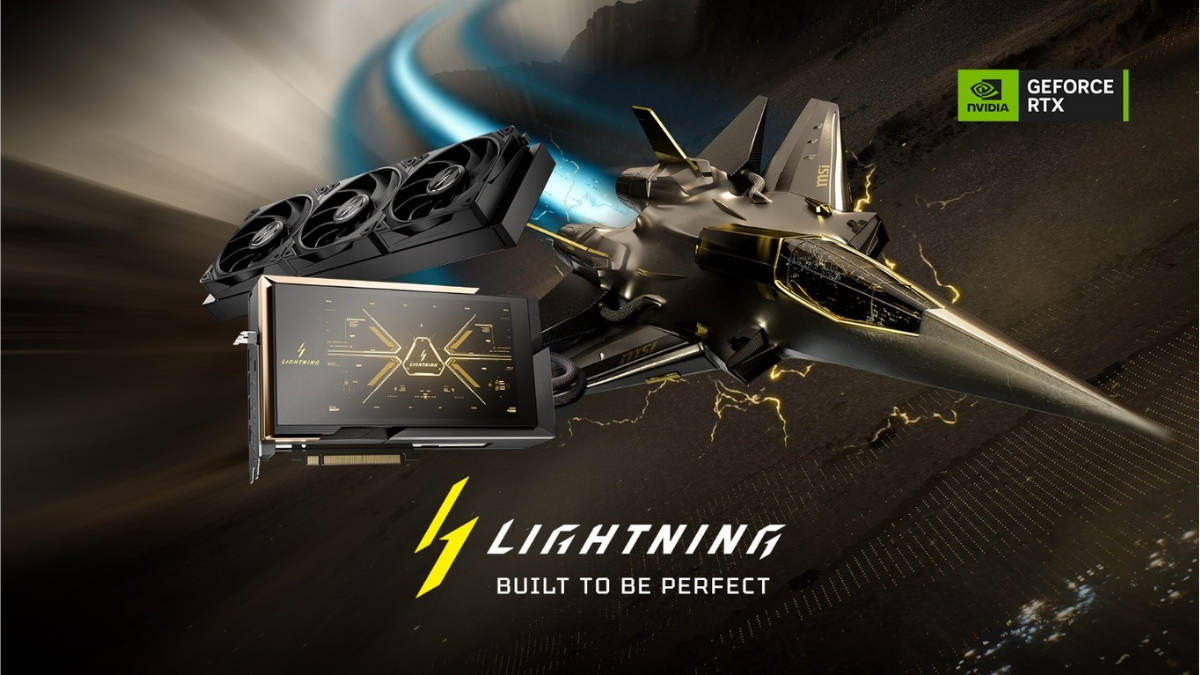
MSI has unveiled the NVIDIA GeForce RTX 5090 32G LIGHTNING Z at CES 2026, marking the return of its Lightning flagship graphics card series after a seven-year hiatus. It is positioned as MSI’s most advanced and exclusive GPU to date. The RTX 5090 LIGHTNING Z is aimed at extreme enthusiasts, overclockers, and creators. Basically, those who want the highest possible performance without compromise.
The new card is built on NVIDIA’s Blackwell architecture and forms part of the GeForce RTX 50 series. Bringing its next-generation AI acceleration, DLSS 4 support, and significantly higher performance for gaming, content creation, and AI workloads. MSI is positioning the Lightning Z not as a mainstream flagship, but as a showcase of what is technically possible at the high end of PC hardware today.
Table of Contents
Built around extreme cooling and power delivery
A central focus of the RTX 5090 LIGHTNING Z is its cooling and power architecture. MSI says the card uses a full-cover liquid cooling system that spans the GPU, memory, and power delivery components. It combines a next-generation high-pressure pump, a full-cover cold plate, a hybrid fin radiator, and MSI’s proprietary Lightning Fan design.


This setup is designed to help keep temperatures stable, even under sustained heavy workloads such as overclocking, AI processing, or long gaming sessions at maximum settings. MSI says the thermal system is engineered to deliver consistent cooling. It is also designed to control acoustics. That balance becomes increasingly difficult to achieve at the top end of GPU performance.
Show Full Article
The card also features a custom-designed PCB with reinforced power delivery, including a 3oz copper layer and premium-grade components. A dual BIOS system allows users to switch between standard and performance-focused profiles. It gives advanced users more control over thermals, voltage, and clock behaviour.
A strong emphasis on design and customisation
Visually, the RTX 5090 LIGHTNING Z is one of the most distinctive GPUs MSI has ever built. It features carbon fibre elements, lightning-cut detailing, and an individually numbered badge, underscoring its limited-edition status.

Most notably, the card includes an 8-inch integrated display. Brand claims it to be the first of its kind on a graphics card. It allows users to display system stats, animations, or custom artwork directly on the GPU shroud. This display, along with lighting and performance controls, is managed through MSI’s Lightning Hub software. Alongside, there is also the Lightning Overdrive mobile app. It offers real-time tuning and monitoring without needing heavy desktop software.
Performance aimed at overclockers and AI-heavy workloads
MSI claims the RTX 5090 LIGHTNING Z has already topped multiple global overclocking benchmarks. They’ve achieved first-place results across a wide range of HWBOT and 3DMark tests at launch. While these numbers primarily matter to competitive overclockers, they highlight the card’s stability under extreme power and thermal conditions.
No. | Benchmark | Score / Result | Platform |
1 | Geekbench5 | 683433 points | HWBOT |
2 | 3DMark Solar Bay | 311387 marks | HWBOT |
3 | 3DMark Solar Bay Extreme | 66977 marks | HWBOT |
4 | GPUPI v3.3 – 32B | 38 sec 102 ms | HWBOT |
5 | 3Dmark Time Spy | 53207 marks | 3Dmark |
6 | 3Dmark Fire Strike | 90797 marks | 3Dmark |
7 | 3Dmark Fire Strike Extreme | 68039 marks | 3Dmark |
8 | 3Dmark Fire Strike Ultra | 41566 marks | 3Dmark |
9 | 3Dmark Fire Strike Physics | 77879 marks | 3Dmark |
10 | GPUPI – 1B | 0 sec 730 ms | HWBOT |
11 | GPUPI – 32B | 41 sec 110 ms | HWBOT |
12 | GPUPI v3.3 – 1B | 0 sec 720 ms | HWBOT |
13 | 3DMark Port Royal | 49812 marks | HWBOT |
14 | 3DMark Time Spy (GPU) | 61289 marks | HWBOT |
15 | 3DMark Speed Way | 18619 marks | HWBOT |
16 | Geekbench6 | 513272 points | HWBOT |
17 | 3DMark Wild Life Extreme | 139907 marks | HWBOT |
Beyond raw gaming performance, the card is also positioned as a high-end platform for creators and AI developers. NVIDIA’s RTX 50 series introduces faster AI inference, accelerated content-creation workflows, and expanded support for RTX AI features across professional and creative applications.
This should make the RTX 5090 LIGHTNING Z less about incremental upgrades and more about serving as a bleeding-edge platform. This also helps users push the limits of gaming, simulation, rendering, and AI development.
Limited availability and niche positioning
Unlike mainstream graphics cards, the RTX 5090 LIGHTNING Z will be produced in a strictly limited run of 1,300 units worldwide. Each unit is individually serialised, reinforcing its positioning as a collector-grade and enthusiast-focused product rather than a mass-market GPU.
MSI will showcase the card publicly for the first time at CES 2026. Visitors will be able to see the design, cooling system, and software features in action.
The launch reflects a broader trend in the high-end PC hardware market. Vendors are increasingly creating ultra-premium halo products. The goal is to showcase engineering leadership, rather than drive volume sales. Similar to how car manufacturers build hypercars to demonstrate technical prowess, GPUs like the RTX 5090 LIGHTNING Z function as technology flagships. They influence design, cooling, and power strategies. These ideas then filter down into future mainstream products.
At the same time, it highlights how GPUs are no longer just gaming components. They are now central to AI acceleration, creative workflows, and high-performance computing. This should make the high-end GPU market as much about developers and professionals as it is about gamers.
In that sense, the RTX 5090 LIGHTNING Z is less of a product for the average PC buyer. Rather, it’s more a statement of intent showing where GPU performance, cooling design, and AI capability are heading.
Also Read


CES 2026: MSI refreshes 32-inch 4K QD-OLED monitor lineup with new DarkArmor and Uniform Luminance tech


MSI refreshes business and gaming laptop lineup at CES 2026 with new Prestige, Raider, Stealth and Crosshair models

XPS Comeback, Alienware Shake-Up, UltraSharp Flex: First Impressions From Dell's CES 2026