CES 2026: MSI refreshes 32-inch 4K QD-OLED monitor lineup with new DarkArmor and Uniform Luminance tech


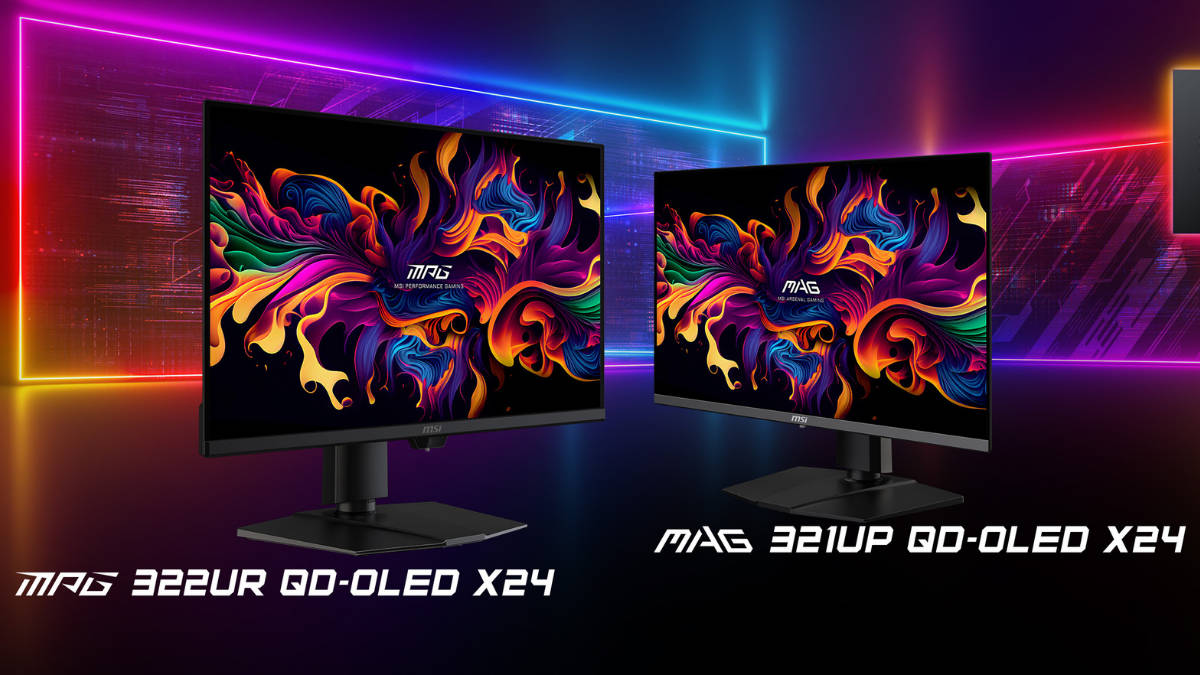
Alongside its laptop lineup, MSI announced an update to its 32-inch 4K QD-OLED gaming monitor lineup at CES 2026 in Las Vegas. Introducing two new models: the MPG 322UR QD-OLED X24 and the MAG 321UP QD-OLED X24. Both monitors are built on a new 5-layer Tandem OLED panel architecture with EL Gen 3 technology, which MSI says improves brightness efficiency, panel longevity, and overall image consistency.
The update focuses on addressing two of the most common complaints with current QD-OLED displays: inconsistent black levels under ambient light and fluctuating brightness in HDR content.
Table of Contents
DarkArmor film targets deeper blacks and better durability
Both new monitors introduce MSI’s DarkArmor film. MSI mentions it is a new panel coating designed to reduce light reflection. And not just that, it is also supposed to eliminate the purple or reddish tint often visible on QD-OLED panels in well-lit rooms. According to MSI, this improves perceived black levels by up to 40%. It also increases contrast and makes dark scenes appear cleaner and more natural.


The DarkArmor layer also increases surface hardness from 2H to 3H, which MSI says improves scratch resistance and makes the panel more resilient to daily use.
Show Full Article
Uniform Luminance aims to stabilise HDR brightness
The second major addition is Uniform Luminance, a feature designed to smooth out the brightness shifts. This usually occurs when HDR content changes window sizes or scene composition.

Instead of allowing brightness to fluctuate aggressively, Uniform Luminance lets users control how brightness scales. It mostly depends on the size of the active display area. Brand says, The goal is to create a more stable and predictable HDR experience, especially for users who switch between full-screen gaming, windowed applications, and mixed-content workflows.
MPG 322UR adds AI-based panel protection
The higher-end MPG 322UR QD-OLED X24 model includes an additional feature called the AI Care Sensor. This uses an NPU-based controller to detect user presence in real time and automatically manage panel protection routines when the screen is idle.
MSI says this allows the monitor to reduce the risk of burn-in or image retention without forcing aggressive screen dimming or manual interventions. This is supposed to help extend the panel life while keeping the experience seamless for users.
The more affordable MAG 321UP QD-OLED X24 includes the same core display technologies. It includes Tandem OLED, DarkArmor, and Uniform Luminance, but it does not feature the AI Care Sensor.
Positioning and availability
Direct competitors like Alienware and ASUS QD-OLED monitors offer similar 4K resolution and high refresh rates. They also come with premium HDR support and advanced panel technologies. Some models include features like Dolby Vision and very high refresh modes. These can be especially appealing to users focused on gaming or consuming films and series.
WOLED alternatives are technically different, but they still deliver excellent contrast and motion clarity. In many cases, they match or closely rival QD-OLED for gaming and media use. Their refresh-rate flexibility, such as switching to 480 Hz at 1080p, is desirable for esports players. It also suits users who alternate between competitive gaming and cinematic viewing.
Overall, all of these monitors are strong options depending on what you value most. That could be HDR image quality. It could be raw gaming performance. Or it could be an all-round display with strong visuals and responsiveness for everyday use.
With these updates, MSI is clearly positioning its QD-OLED monitors not just around peak brightness or colour accuracy, but around long-term usability and consistency. The focus here is clearly on deeper blacks in real-world lighting, smoother HDR behaviour, and smarter panel protection. This reflects a shift toward making OLED more practical for everyday gaming and desktop use, not just visually impressive in ideal conditions.
MSI has not yet announced pricing or regional availability, but says more details about the new QD-OLED monitors will be shared ahead of their release in 2026.
Also Read


MSI refreshes business and gaming laptop lineup at CES 2026 with new Prestige, Raider, Stealth and Crosshair models


XPS Comeback, Alienware Shake-Up, UltraSharp Flex: First Impressions From Dell's CES 2026

Intel unveils Core Ultra Series 3 at CES 2026, marking its first platform built on Intel 18A