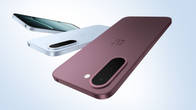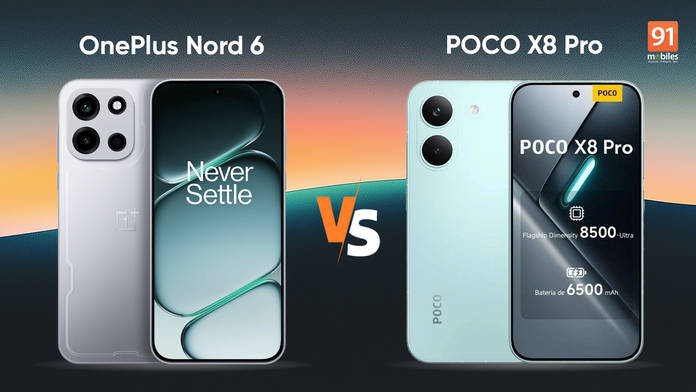
The OnePlus Nord 6 marks a shift in OnePlus’ mid-range strategy, stepping into a more premium segment with a starting price of Rs 38,999. Equipped with a massive 9,000mAh battery, a smooth 165Hz display, and the powerful Snapdragon 8s Gen 4 chipset, it’s clearly aimed at performance-focused users. Compared to its predecessor, the Nord 5, the price bump reflects broader industry trends, where rising component costs have pushed smartphones into higher price brackets.
Despite the increase, the Nord 6 still delivers a compelling package for its category. However, it faces strong competition from the POCO X8 Pro, another mid-range contender built with performance in mind.
Here’s a detailed comparison between the OnePlus Nord 6 and POCO X8 Pro to see how they stack up in this competitive segment.
Table of Contents
OnePlus Nord 6 vs POCO X8 Pro: price
Starting with the biggest differentiator between the two phones—pricing. The OnePlus Nord 6 starts at Rs 38,999 for the base model with 8GB RAM and 256GB storage. The POCO X8 Pro, on the other hand, is priced at Rs 32,999 for the same memory configuration.
Here’s a table with the complete breakdown:
| Variant | OnePlus Nord 6 price | POCO X8 Pro price |
| 8GB+256GB | Rs 38,999 | Rs 32,999 |
| 12GB+256GB | Rs 41,999 | Rs 35,999 |
Before we get to the comparison, here’s a glance at the OnePlus Nord 6 and POCO X8 Pro’s specifications.
| Specs | OnePlus Nord 6 | POCO X8 Pro |
| Display | 6.78-inch 1.5K AMOLED display, 165Hz refresh rate | 6.59-inch 1.5K AMOLED display, 120Hz refresh rate |
| Processor | Qualcomm Snapdragon 8s Gen 4 | MediaTek Dimensity 8500 Ultra |
| Rear cameras | 50MP primary, 8MP ultra-wide | 50MP primary, 8MP ultra-wide |
| Selfie camera | 32MP | 20MP |
| Battery | 9,000mAh | 6,500mAh |
| Charging | 80W SUPERVOOC | 100W |
Design, display: large or compact?
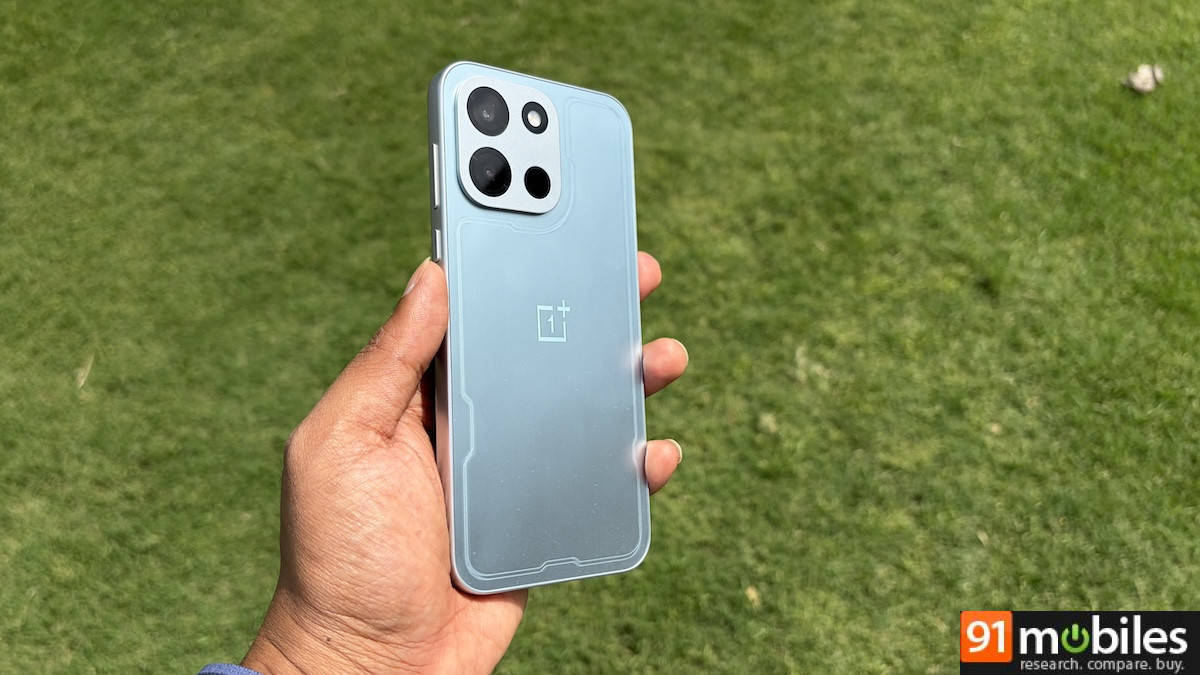
The OnePlus Nord 6 adopts a bold and modern look with its square-shaped camera module, giving it a more distinctive and premium visual identity, especially in the Holographic Quick Silver variant. It comes in Fresh Mint and Pitch Black colours as well, catering to users who prefer both vibrant and classic styles. The overall design leans toward a sleek, polished aesthetic typical of OnePlus devices.
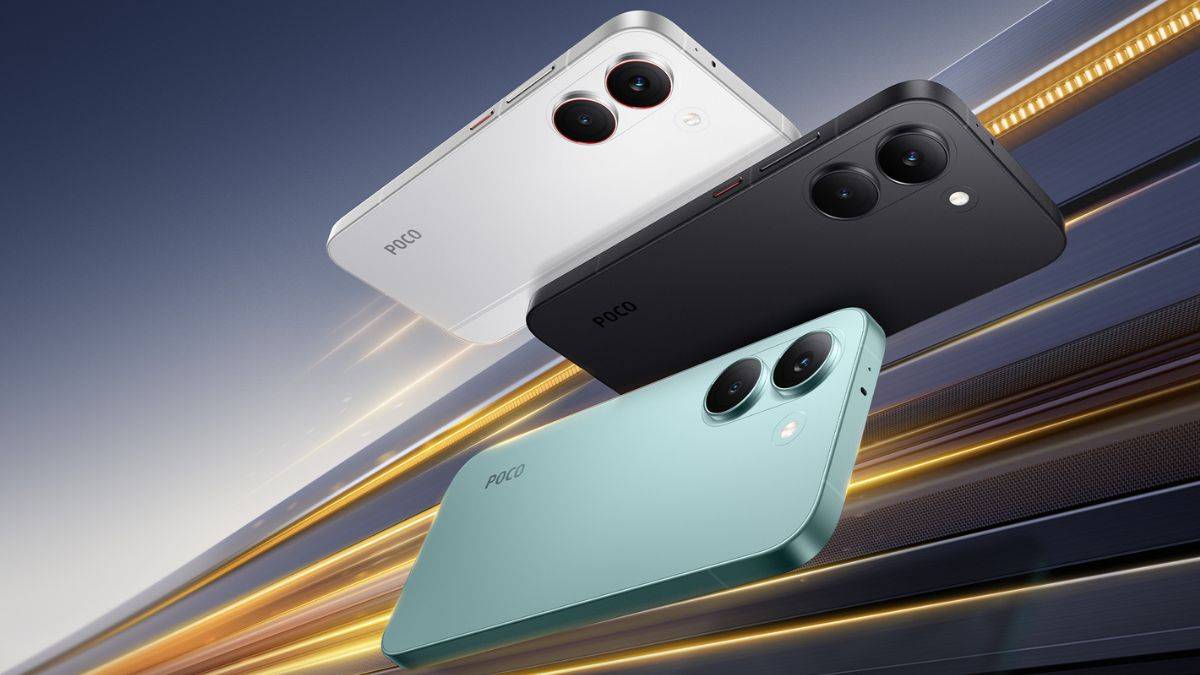
In contrast, the POCO X8 Pro goes for a cleaner and more futuristic approach. It features a compact pill-shaped rear camera module, which keeps the back panel minimalistic. A standout element is the inclusion of dynamic RGB lighting around the camera area, adding flair for gaming effects, notifications, and calls.
Both phones are built for durability, offering IP66, IP68, IP69, and IP69K ratings.
The OnePlus Nord 6 features a 6.78-inch 1.5K (2772 × 1272 pixels) AMOLED display with a 165Hz refresh rate and 3,600 nits of peak brightness, making it one of the smoothest panels in its class. The screen is protected by Crystal Guard Glass, which OnePlus claims rivals Gorilla Glass Victus+ in drop resistance. On the other hand, the POCO X8 Pro sports a slightly smaller 6.59-inch AMOLED display with a 1.5K resolution and HDR10+ support. It offers an adaptive refresh rate up to 120Hz, which is lower than the Nord 6 but still smooth for everyday use. The display can reach a peak brightness of 3500 nits and comes with Corning Gorilla Glass 7i protection.
OnePlus Nord 6 is recommended for users who prioritise ultra-smooth visuals, especially for gaming and a larger immersive display. The POCO X8 Pro offers a more compact feel with unique RGB lighting aesthetics and a balanced display experience.
Chipset: Qualcomm vs MediaTek
The OnePlus Nord 6 is powered by the Snapdragon 8s Gen 4, claimed to have scored over 2.5 million on the AnTuTu benchmark. To maintain sustained performance, the device features advanced graphene cooling and the brand’s OxygenOS 16 CPU Scheduler, helping reduce throttling during long gaming or multitasking sessions. Overall, the Nord 6 clearly positions itself as a performance powerhouse in the mid-range segment.
The POCO X8 Pro, meanwhile, runs on the MediaTek Dimensity 8500 Ultra, a newer mid-range chipset. It is claimed to have an AnTuTu score exceeding 2 million, putting it on similar lines with the Nord 6. The handset is equipped with the POCO 3D dual-layer IceLoop cooling system with an ultra-large area of 5300mm², which should help with heat dissipation during extended gaming sessions.
Since both phones are designed for power users and gamers, performance should be more or less the same. There could be slight differences, but overall, you shouldn’t find anything lacking in terms of performance in either of the phones.
Battery: 9,000mAh against 6,500mAh
The OnePlus Nord 6 stands out with its massive 9,000mAh silicon-carbon battery, one of the largest in its class. OnePlus claims it can deliver over 2.5 days of moderate usage, making it ideal for users who prioritise long battery life. Charging is handled by 80W SUPERVOOC, which, while not the fastest on paper, is still quick considering the huge battery capacity.
In comparison, the POCO X8 Pro packs a smaller but still substantial 6,500mAh battery. Where it gains an edge is in charging speed, supporting 100W fast charging for quicker top-ups. Additionally, it offers 27W reverse charging, allowing it to double as a power bank for other devices.
The OnePlus Nord 6 is the better choice if you prioritise a larger battery and longer usage. The POCO X8 Pro, on the other hand, still offers reliable battery life along with faster charging speeds.
Cameras: similar setup
Cameras are an area where both phones provide an adequate setup for everyday photography, and nothing too special. With the Nord 6, you get a 50MP primary sensor and an 8MP ultra-wide camera. For selfies, there’s a 32MP front camera. The Nord 6 also comes with AI editing tools like Portrait Glow, Eraser, Unblur, and Perfect Shot.
The POCO X8 Pro also features a dual-rear camera setup with a 50MP primary sensor and an 8MP ultra-wide lens. Its selfie camera is a 20MP sensor, slightly inferior to the Nord 6. The X8 Pro also offers AI features, including AI Reflection Removal, AI Beautify, and AI Cutouts.
Both phones offer a similar camera setup suitable for casual photography needs and social media. The Nord 6 has a slight edge with a superior selfie camera.
Software: both aim for longevity
On the software front, the OnePlus Nord 6 runs OxygenOS 16 based on Android 16 out of the box. This is the latest software version offering a fluid and customisable UI with several AI features. OnePlus also promises four major OS updates and six years of security patches, ensuring long-term usage.
The POCO X8 Pro also comes with the latest HyperOS 3.0 based on Android 16. HyperOS 3.0 focuses on enhanced AI integration, deeper customisation, and smoother performance. Like the Nord 6, the X8 Pro is also promised four major OS upgrades and six years of security updates.
The choice might come down to personal preference of the UI, as both phones offer the same software support.
Summing up
Based on the specs and pricing, the OnePlus Nord 6 holds an edge with its larger battery, stronger selfie camera, and bigger display. The POCO X8 Pro, meanwhile, stands out for its more compact design, capable chipset, and relatively lower price. Overall performance should be fairly similar between the two, with key differences in battery, software, and selfie output.