OPPO Reno 15 Pro Mini vs OnePlus 13s: the compact phone showdown


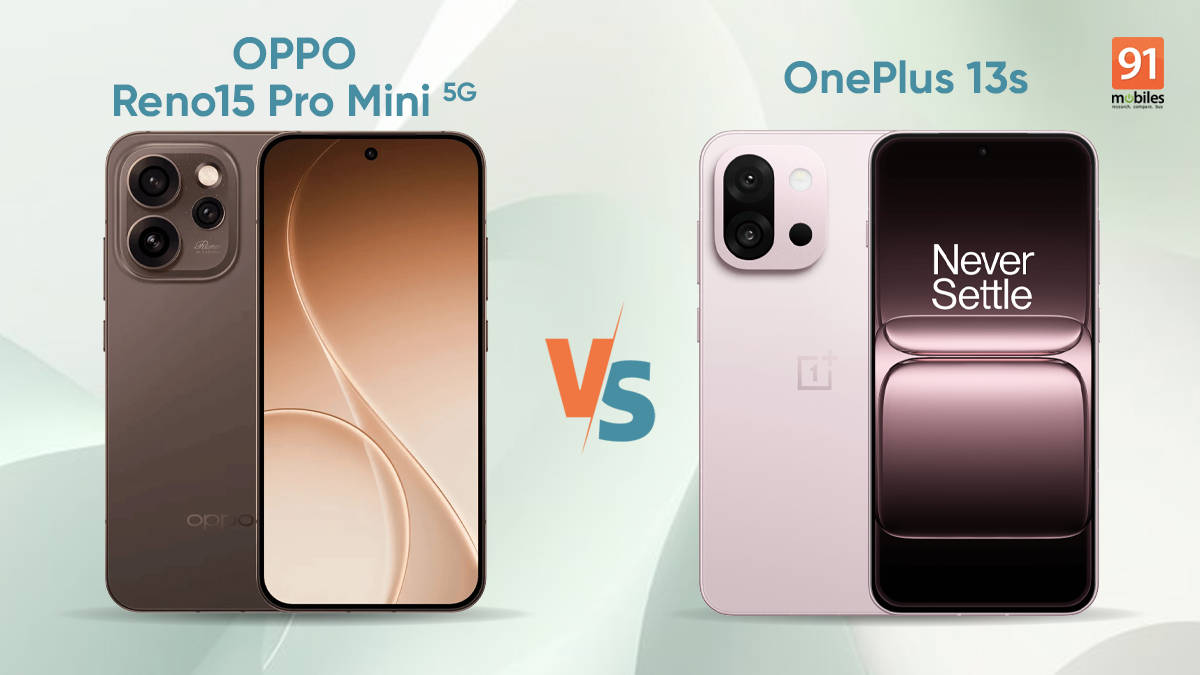
The OPPO Reno 15 Pro Mini is OPPO’s latest compact flagship in India. It features a 6.32-inch display, a refined design, upgraded cameras, and a notably large battery for its size. This is OPPO’s official entry into the compact phone market, which was made mainstream last year with phones like the OnePlus 13s and Vivo X200 FE. It looks like this trend is here to stay, with OPPO also joining the league.
Show Full Article
Priced from Rs 59,999, the Reno 15 Pro Mini sits above other compact options such as the Vivo X200 FE (comparison) and the OnePlus 13s. To add context, we compare the Reno 15 Pro Mini with the OnePlus 13s to highlight the key similarities and differences between the two compact flagships. This is a specifications-based comparison aimed at setting expectations, rather than delivering a final verdict.
Table of Contents
Design, display: stylish vs subtle
The OPPO Reno 15 Pro Mini has a 6.32-inch LTPS AMOLED 1.5K display with an adaptive 120Hz refresh rate, and up to 1,800 nits of HBM brightness. It also gets Corning Gorilla Glass 7i protection against scratches and drops. The phone is very comfortable to hold, as we mentioned in our initial impressions, although brightness will have to be tested, especially outdoors. The smartphone is highly durable with IP66, IP68, and IP69 ratings. It also looks very stylish and premium with OPPO’s new HoloFusion technology, which creates subtle 3D visual effects on the Glacier White variant. The Cocoa Brown colour offers a clean, pattern-free back.


The OnePlus 13s is the same size as the Reno 15 Pro Mini, making it equally comfortable to hold and use. This phone has a more subtle finish in three colours: Green Silk, Black Velvet, and Pink Satin, so the design choice will ultimately depend on one’s personal preference. The smartphone’s durability isn’t great, though, with only an IP65 rating. OnePlus 13s also has a 6.32-inch AMOLED display with a FHD+ (2640×1216 pixels) resolution and a more power-efficient LTPO display panel.


Performance: flagship vs upper mid-range
The OPPO Reno 15 Pro Mini is powered by MediaTek’s Dimensity 8450 processor, which achieved an impressive AnTuTu score of 21,41,05, conducted by our in-house team. We’re yet to judge the phone’s all-around performance, but the phone feels snappy and smooth, especially with ColorOS 16 delivering fluid dominations, swift multitasking, and refinement. We should get a better idea once we review the Reno 15 Pro Mini.
AnTuTu score


OnePlus 13s
Qualcomm Snapdragon 8 Elite
2,581,355

OPPO Reno15 Pro Mini
MediaTek Dimensity 8450
2,141,052
AnTuTu assesses a smartphone's CPU, GPU, memory, and overall user experience (higher is better)
In comparison, the OnePlus 13s has the flagship Snapdragon 8 Elite chipset, thus delivering a higher AnTuTu score of 25,81,355. Real-world performance of the OnePlus 13s is great, making it a very good option for gaming with high graphics and minimal heating up. Although a direct comparison isn’t possible right now, you shouldn’t find any performance issues in either phone and consider them for regular and intensive usage as well.
Cameras: one’s versatile, the other’s sufficient
The OPPO Reno 15 Pro Mini houses a 200MP main sensor with OIS, a 50MP ultra-wide lens, a 50MP 3.5x telephoto camera, and a 50MP selfie camera, which is a versatile camera setup. The smartphone’s cameras are designed to focus on portraits, group shots, and social-media-ready photography, along with specific features for Indian skin tones and local lighting conditions. We’re yet to test its cameras, but the Reno 15 Pro Mini is expected to deliver an impressive camera performance.

The OnePlus 13s has a dual-camera setup with a 50MP Sony LYT-700 primary sensor and a 50MP 2x telephoto lens. The absence of an ultra-wide camera makes it feel lacking for a flagship smartphone. The main camera is quite capable, though, delivering sharp images with pleasing colours and strong contrast. It also maintains good dynamic range and good details with the 2x telephoto lens.
For a more versatile camera setup, the OPPO Reno 15 Pro Mini would be the better pick.
Battery: marginal difference
The OPPO Reno 15 Pro Mini packs a 6,200mAh battery with 80W SuperVOOC fast charging support. This is a very decent battery setup for a compact smartphone, and should be more than enough to comfortably deliver a full day of use. It’s also bigger than the OnePlus 13s’s 5,850mAh battery, which has proven to last a full day and more with moderate to heavy use. Since there isn’t a major difference between the two phones’ battery capacities, performance is also expected to stay largely the same. We’ll also have to see how well-optimised the Reno 15 Pro Mini is for battery consumption.
Software: longer support makes the difference
The Reno 15 Pro Mini runs Android 16-based ColorOS 16 out of the box. It will get five OS upgrades up to Android 21, and six years of security patches. This is one of the longest software support periods you can get on phones in this segment. ColorOS 16 adds meaningful updates with the Flux Home Screen, Aqua Dynamics, Mind Space, call summaries, live translation, and more.
OnePlus 13s runs the older Android 15 version with OxygenOS out of the box. Since ColorOS and OxygenOS are mostly the same, you shouldn’t feel a difference in terms of UI. The differentiating factor would be the software support, which is less with the 13s. This handset will get four Android OS updates and six years of security patches. So other than that, the experience on both phones should be the same.
Summing up
Both the OPPO Reno 15 Pro Mini and the OnePlus 13s are well-rounded compact smartphones. The Reno 15 Pro Mini stands out with a more durable build, longer software support, and a more flexible camera setup. The OnePlus 13s, while trailing slightly in these areas, offers stronger performance and a lower starting price of Rs 54,999.
With the Reno 15 Pro Mini priced from Rs 59,999, the choice largely comes down to priorities. If budget is not a concern, the Reno 15 Pro Mini makes more sense as the more forward-looking option. Otherwise, the OnePlus 13s remains a solid and more affordable alternative.