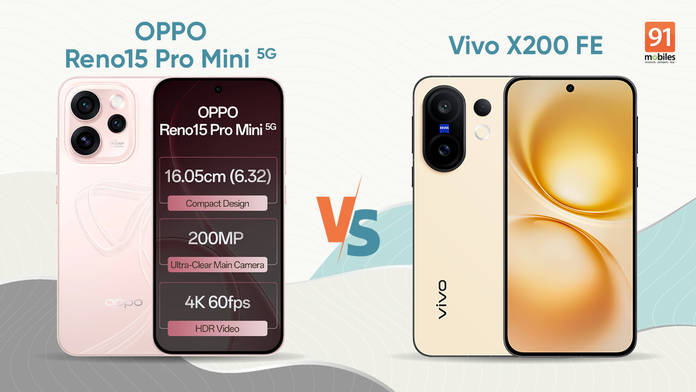
OPPO kicked off 2025 with an aggressive refresh of its popular Reno lineup, introducing four new smartphones under the Reno 15 series. Among them, the Reno 15 Pro Mini stands out as the brand’s first serious attempt at a compact premium phone. With a 6.32-inch display, which is becoming the sweet spot for small-form-factor flagships, the Reno 15 Pro Mini aims to deliver a top-tier experience without the bulk. It doesn’t cut corners either, offering a versatile camera system, a capable chipset, and a large battery for its size. To see how it stacks up in the compact segment, we pit the Reno 15 Pro Mini against the Vivo X200 FE and find out which phone truly makes the most of its smaller footprint.
Table of Contents
Design, display
The OPPO Reno 15 Pro Mini features a 6.32-inch LTPS AMOLED 1.5K display with an adaptive 120Hz refresh rate, and up to 1,800 nits of HBM brightness, making it just as comfortable to use outdoors as it is for late-night scrolling. Corning Gorilla Glass 7i protects the panel from everyday scratches and minor drops, while IP66, IP68, and IP69 ratings ensure serious resistance against dust and water. The Reno 15 Pro Mini features OPPO’s new HoloFusion technology, which creates subtle 3D visual effects on the Glacier White variant, making it the first phone in the industry to use this finish. The Cocoa Brown colour keeps things understated with a clean, pattern-free back.

Despite the premium build, the phone feels instantly manageable in the hand, weighing 187 grams and measuring under 8mm in thickness, it strikes a rare balance between reassuring solidity and true one-hand comfort.
The Vivo X200 FE plays the compact card even harder. Its 6.31-inch AMOLED display is marginally smaller, but it matches the OPPO in sharpness with a 1.5K resolution and 120Hz refresh rate, while pushing brightness to the extreme with a claimed 5,000 nits peak and 1,800 nits in high brightness mode. Vivo also matches OPPO’s durability credentials with IP68 and IP69 certification, making it just as ready for rough conditions.
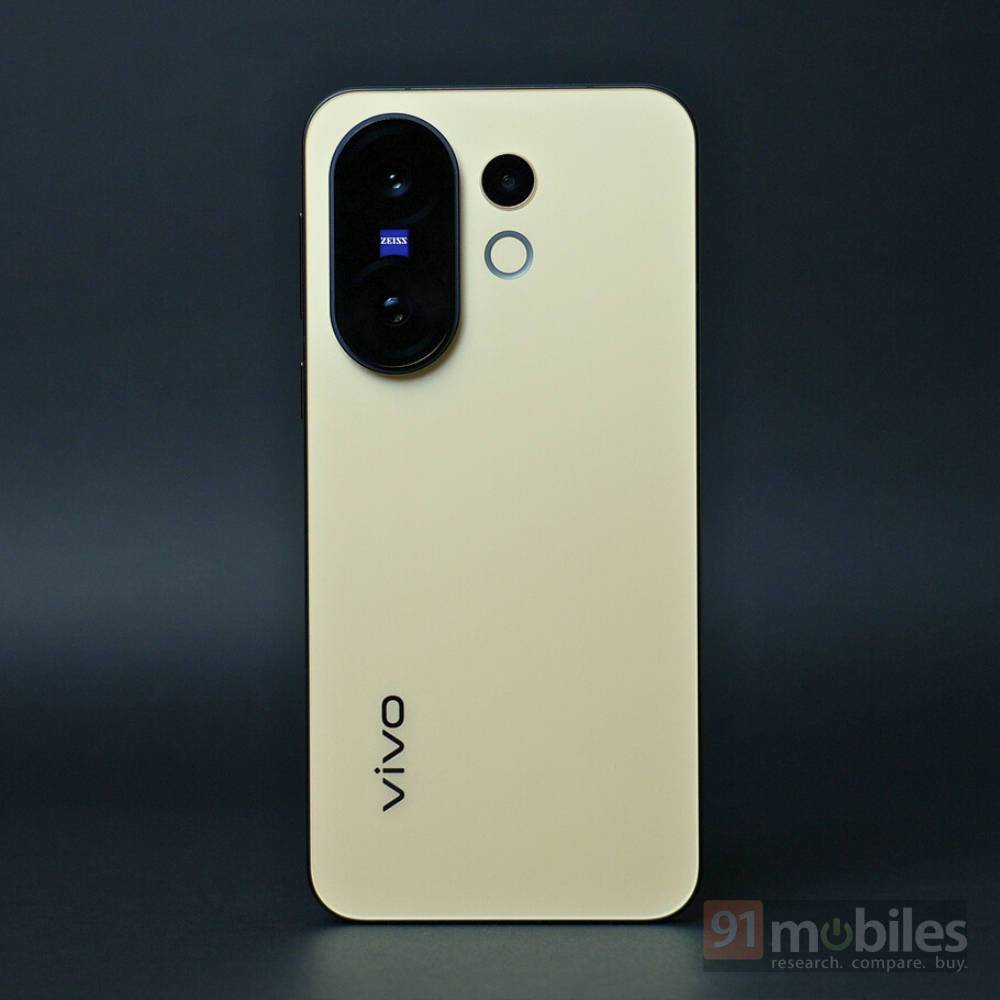
Where the X200 FE differentiates itself is in its cleaner, more industrial design language. Available in Amber Yellow, Luxe Black, and Frost Blue, it pairs a coloured rear with a contrasting black aluminium frame that gives the phone a sleek look. It’s also a hair lighter at 186 grams, and in daily use, the slightly smaller footprint makes it feel even easier to grip than the Reno, especially for users who truly value one-handed comfort.
Cameras
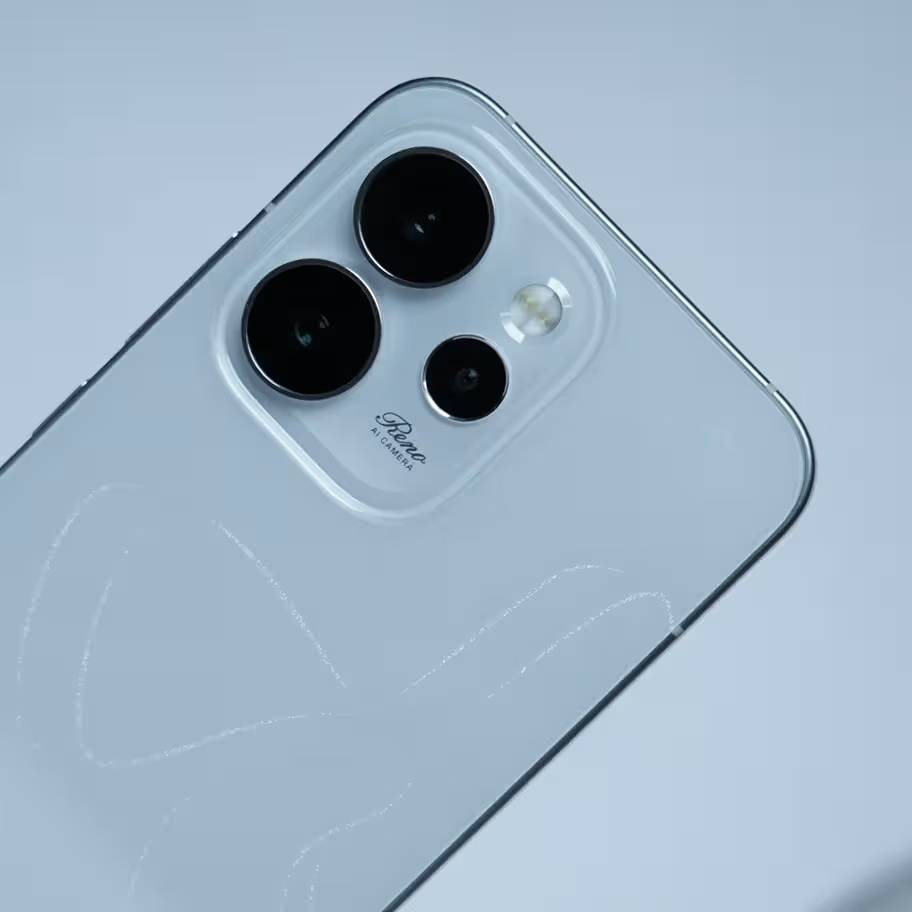
The OPPO Reno 15 Pro Mini may be compact, but its camera setup is anything but. The phone is headlined by a massive 200MP main sensor with OIS, joined by a 50MP ultra-wide lens and a 50MP 3.5x telephoto camera, giving it one of the most versatile triple-camera systems in the compact segment. Up front, there’s a 50MP selfie camera that’s clearly aimed at creators and frequent video callers. OPPO is placing a strong emphasis on portraits, group shots, and social-media-ready photography, backed by its new PureTone imaging pipeline that has been tuned specifically for Indian skin tones and local lighting conditions. We’re yet to test its cameras, but the setup does look quite promising.
The Vivo X200 FE brings a Zeiss-backed triple camera setup with a 50MP IMX921 primary sensor with OIS, a 50MP Zeiss telephoto lens offering 3x optical zoom, up to 6x lossless zoom, and 100x digital zoom, along with an 8MP ultra-wide camera. On the front, there’s a 50MP wide-angle selfie shooter. Compared to the Reno 15 Pro Mini’s 3.5x telephoto, Vivo sticks to a slightly lower 3x optical zoom, but compensates with strong computational zoom tuning and its Aura Light Portrait system that supports multiple focal lengths from 23mm all the way to 100mm.
In real-world use, the Vivo X200 FE’s primary and telephoto cameras deliver social-media-ready photos with good dynamic range, vibrant colours, and impressive portraits across different zoom levels. Even higher digital zoom shots remain usable, though there’s some softness at 3x and beyond. The ultra-wide camera is serviceable but clearly the weakest link, while the 50MP front camera offers pleasing colours with a wide field of view, albeit with slightly smoothed facial details.
Performance
Powering the smartphone is MediaTek’s Dimensity 8450 processor, a 4nm all-big-core chipset designed to deliver a noticeable bump in performance, better power efficiency, and stronger AI capabilities. In early usage, the phone feels consistently snappy, with ColorOS 16 ensuring a smooth, refined experience. Animations remain fluid, multitasking is seamless, and the overall performance comes across as well-optimised rather than overly tuned for benchmarks. The smartphone also has an impressive AnTuTu score of 21,41,052, conducted by our in-house team, which is slightly more than the X200 FE (19,81,630). We should get a better idea of how this translates in real-world use in our detailed review.
The Vivo X200 FE is driven by MediaTek’s Dimensity 9300+, a 2024-era flagship chipset clocked at up to 3.4GHz, and is paired with 12GB of LPDDR5X RAM, 512GB of UFS 3.1 storage, and an additional 12GB of virtual RAM. While it sits a step behind the newer processors such as the Snapdragon 8 Elite seen on the OnePlus 13s, the real-world experience remains thoroughly premium. Day-to-day performance is effortless, heavy apps run without hiccups, and multitasking feels fast and stable thanks to solid memory optimisation, with the gap only becoming noticeable in sustained gaming or more intensive workloads.
Battery
The OPPO Reno 15 Pro Mini is backed by a sizeable 6,200mAh battery with support for 80W SuperVOOC fast charging. While it edges past the OnePlus 13s in sheer capacity, it still falls short of the Vivo X200 FE’s larger 6,500mAh cell. That said, considering the Reno’s compact form factor, the battery size is impressive and should be more than enough to deliver a full day of use without breaking a sweat.
The Vivo X200 FE is equipped with a large 6,500mAh battery and supports 90W fast charging. In daily use, it consistently delivered over eight hours of screen-on time, often with some charge still left by bedtime, making it a reliable all-day performer even for power users.
Software
The OPPO Reno 15 Pro Mini runs ColorOS 16 based on Android 16 and comes with five years of Android updates and six years of security patches. Rather than a radical overhaul, ColorOS 16 feels like a thoughtful evolution, with additions such as the Flux Home Screen, Aqua Dynamics, and tighter Google Gemini integration enhancing usability without clutter. AI features like Mind Space, call summaries, live translation, and smart transcription are geared towards users who want more contextual assistance from their phones, although their real-world value will ultimately depend on how reliably they perform.
The Vivo X200 FE ships with Funtouch OS 15 based on Android 15 and also comes loaded with AI-powered tools such as Google Gemini, Circle to Search, AI Screen Translation, Live Text, and Smart Call Assistant. The interface feels clean right out of the box, with minimal bloatware, and you can further declutter things by turning off app and search suggestions in Global Search. Vivo is promising a healthy update cycle of four years of Android updates and five years of security patches, with future versions transitioning to the more polished OriginOS experience.
The difference here would lie in longevity, for which OPPO has an advantage in the newer Android 16 and longer software support.
Takeaways
In the end, both the OPPO Reno 15 Pro Mini and the Vivo X200 FE show that compact smartphones no longer have to feel like a compromise. The Reno 15 Pro Mini focuses on longer software support, a newer chipset and a more feature-rich camera system, appealing to users who prioritise longevity and advanced photography tools. The Vivo X200 FE, on the other hand, delivers a more balanced everyday experience with strong battery life and ZEISS-tuned imaging. There is also a clear price gap to consider, with the Reno 15 Pro Mini starting at Rs 59,999, while the Vivo X200 FE is priced from Rs 54,999, giving buyers a tangible choice between added features and better value.