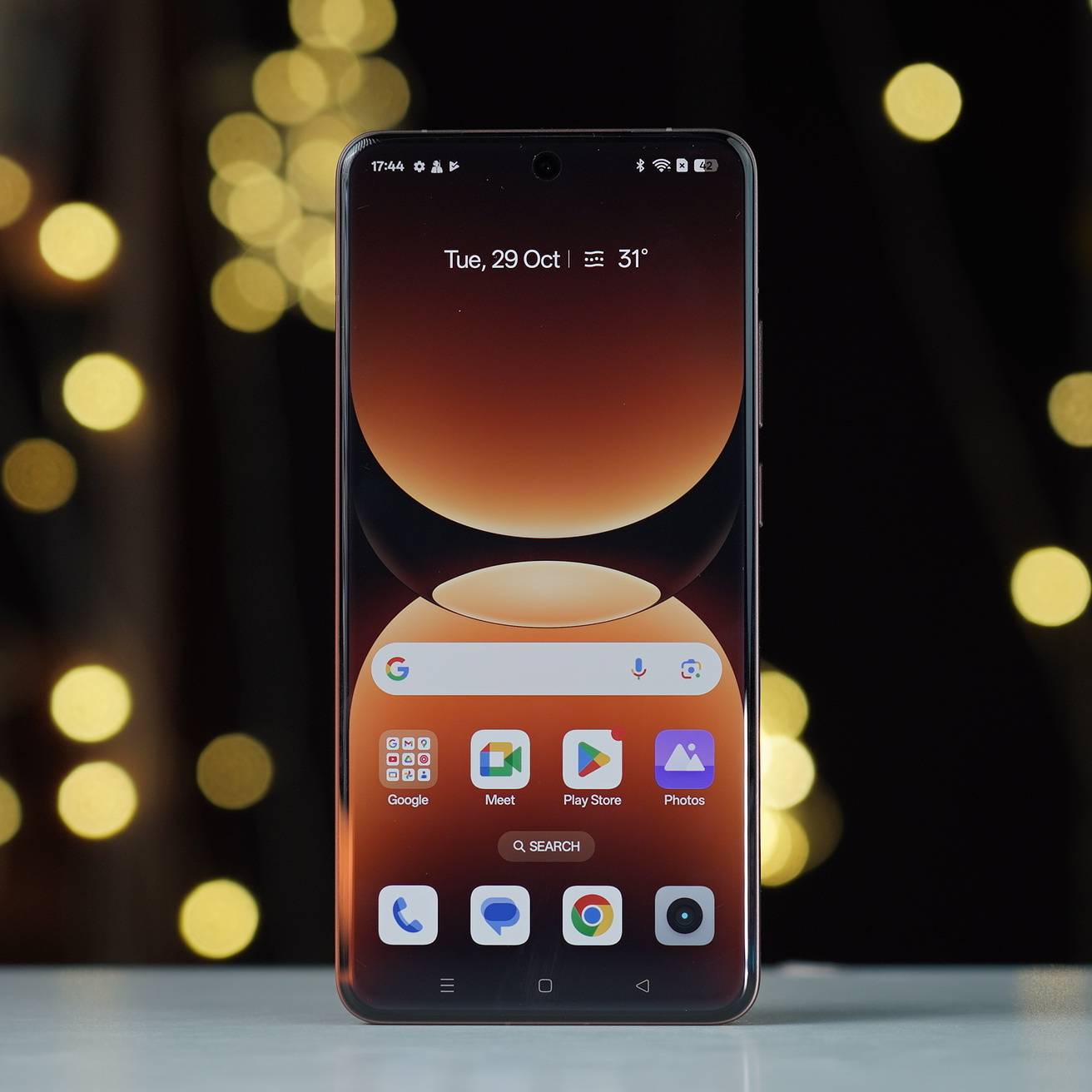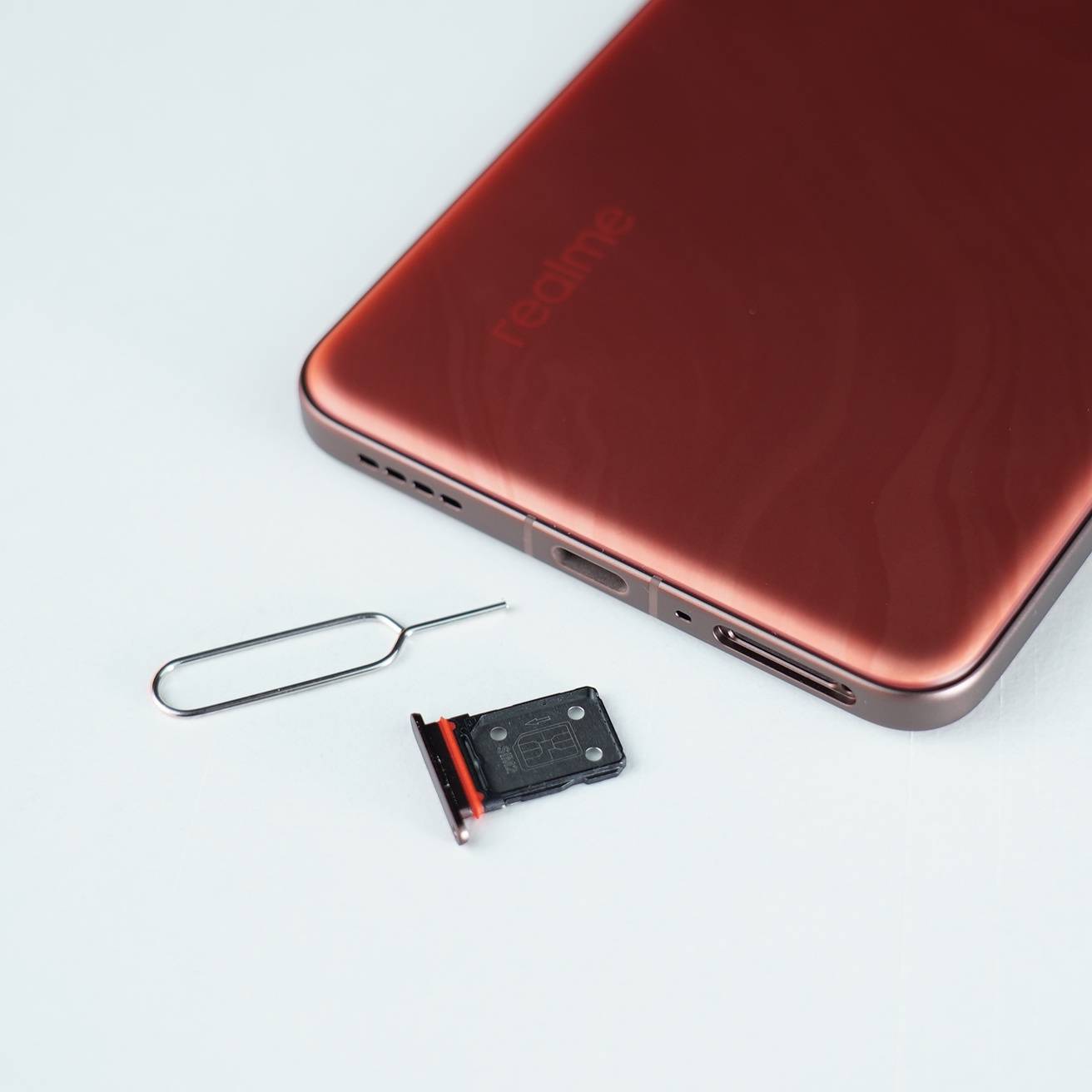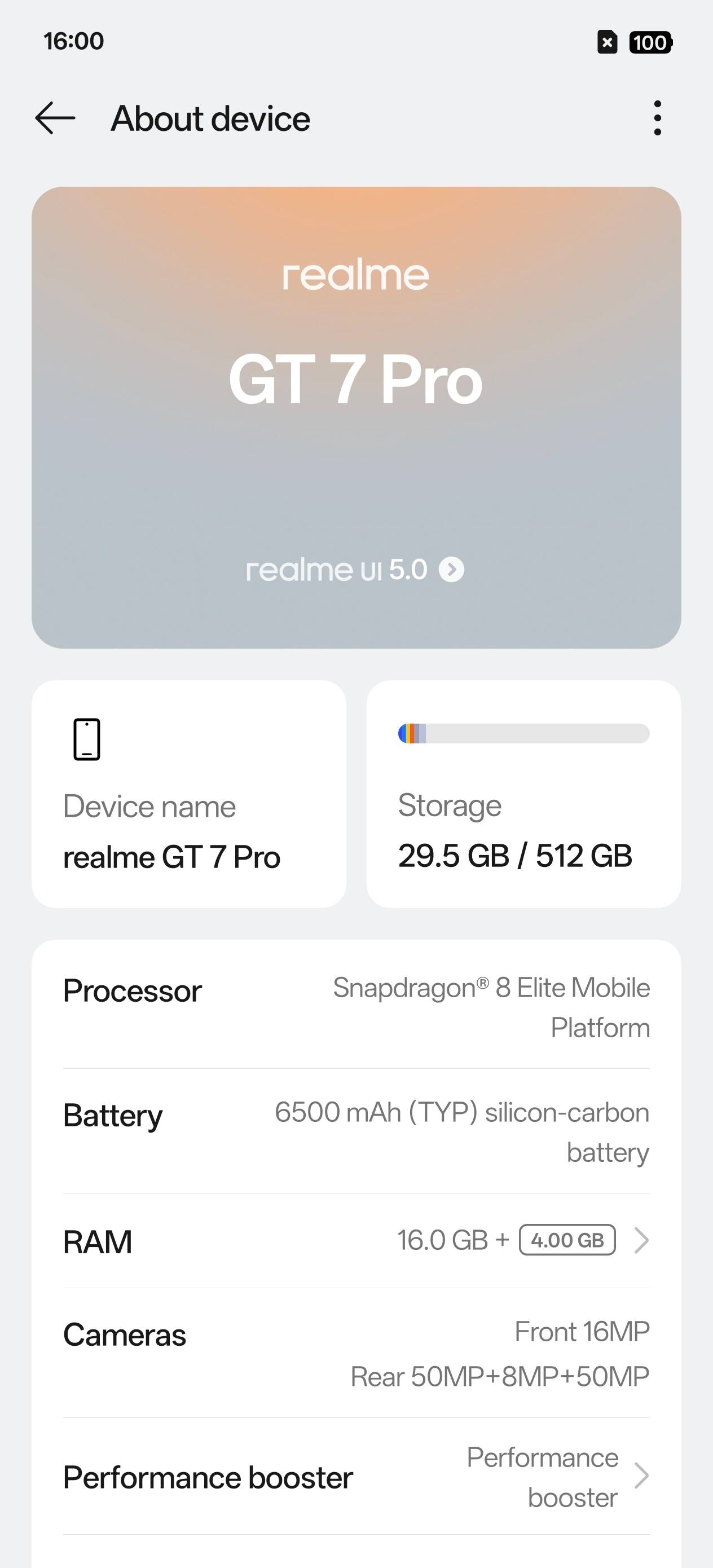
The Realme GT 7 Pro positions itself as one of the most powerful smartphones on the market, powered by the flagship Qualcomm Snapdragon 8 Eite chipset. It is the first smartphone in the country with the said chipset, which surpasses the performance of the iPhone 16 Pro Max’s A18 Pro chipset. This also marks the first time an Android-focused SoC has outperformed Apple’s silicon, setting a new benchmark in the industry. The peak performance makes the device a gamer’s paradise, precisely the audience this smartphone is designed to cater to. To give you a better context, we have compared the Realme GT 7 Pro’s performance with the Xiaomi 15, launched in China with the same Snapdragon 8 Elite chipset, and the OnePlus 12, which runs on last year’s flagship Snapdragon 8 Gen 3. Continue reading to know more:
Table of Contents
Verdict
The Realme GT 7 Pro excels in both synthetic benchmarks and real-world performance, thanks to the new Qualcomm chipset onboard. The handset effortlessly handles high-end gaming; however, its thermal inefficiency and tendency to throttle highlight areas where there’s room for improvement.
Pros
- Top tier performance
- Excels in memory & GPU performance
- Gaming powerhouse
Cons
- Thermal inefficiency
- Sub-par throttle performance
Realme GT 7 Pro performance review at a glance:
| Test | Result |
| AnTuTu | Rank 1 – Realme GT 7 Pro Rank 2 – Xiaomi 15 Rank 3 – OnePlus 12 |
| Geekbench | Rank 1 – Realme GT 7 Pro / Xiaomi 15 Rank 2 – OnePlus 12 |
| Burnout | Rank 1 – OnePlus 12 Rank 2 – Realme GT 7 Pro Rank 3 – Xiaomi 15 |
| Gaming | Rank 1 – OnePlus 12 Rank 2 – Realme GT 7 Pro Rank 3 – Xiaomi 15 |
This Realme GT 7 Pro performance review offers an in-depth analysis of the smartphone’s capabilities, based on both synthetic benchmark and real-world tests. These include AnTuTu, Geekbench, CPU throttling, and gaming sessions, all designed to assess the device’s CPU, GPU, throttling, thermal efficiency, and FPS performance.
AnTuTu (higher is better)
Winner: Realme GT 7 Pro
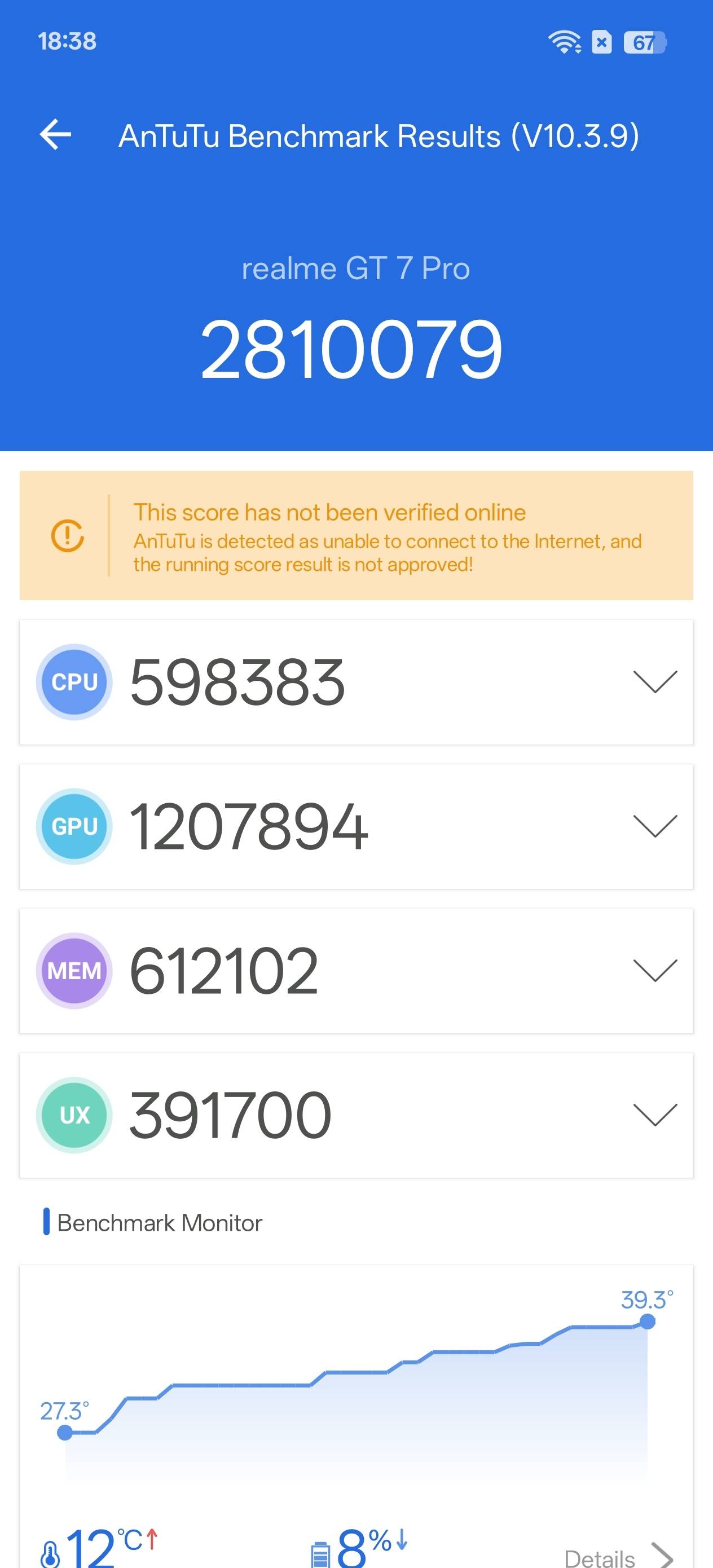
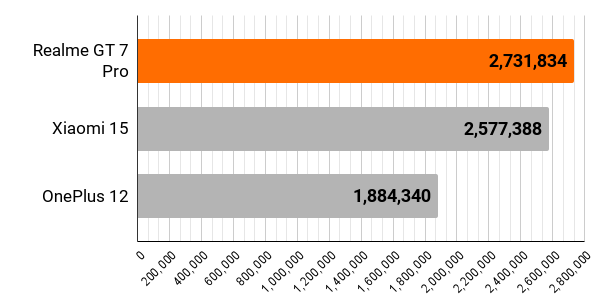
Based on our test, the Realme GT 7 Pro achieves the highest AnTuTu score for an Android smartphone. The score is significantly better than the OnePlus 12, which is almost 9 lakh points behind. Against the Xiaomi 15, the Realme GT 7 Pro again maintains a slight advantage.
Notably, while the Realme smartphone overpowers the Xiaomi device in all departments, its superiority lies in memory and GPU performance.
Real-world context: The Realme GT 7 Pro’s top score highlights its dominance over competitors, with superior optimisation in processing, graphics, memory, and user experience. Furthermore, its standout memory and GPU performance ensure faster task completion, particularly for gaming and resource-intensive applications, than both the Xiaomi 15 and OnePlus 12.
Geekbench (higher is better)
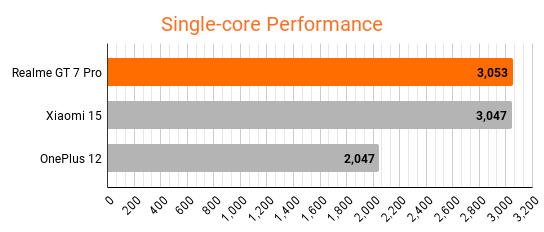
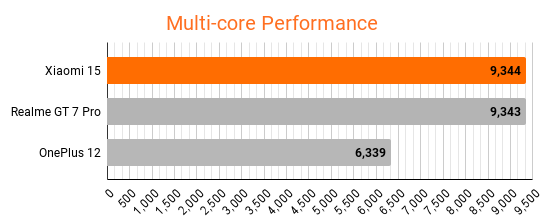
Winner: Realme GT 7 Pro and Xiaomi 15
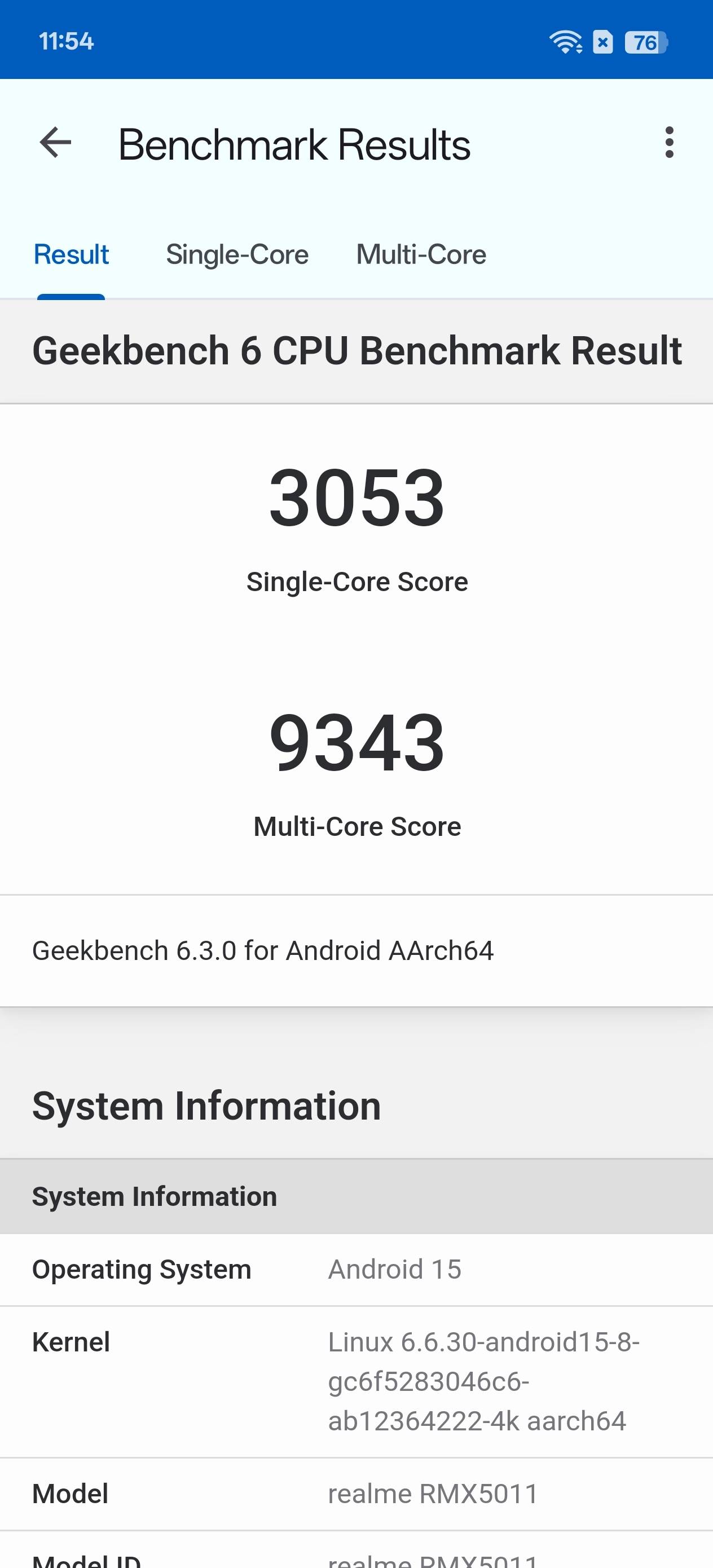
As we saw in the AnTuTu benchmark, the Realme GT 7 Pro outperforms the OnePlus 12 by a significant margin in Geekbench’s single-core and multi-core tests. However, the Xiaomi 15, equipped with the same chipset, offers tough competition, as both smartphones achieve scores exceeding 3,000 points in the single-core test and 9,000 points in the multi-core test. While not the single-core, the Xiaomi 15 and Realme GT 7 Pro’s multi-core results are the highest ever for a smartphone.
Real-world context: The Realme GT 7 Pro and Xiaomi 15 are equally fast at completing basic and heavy workloads. Both devices feel marginally faster than the Snapdragon 8 Gen 3-powered OnePlus 12, delivering a smooth, responsive experience with optimised software and fluid animations, free from lag or jitter.
CPU Throttle (higher is better)
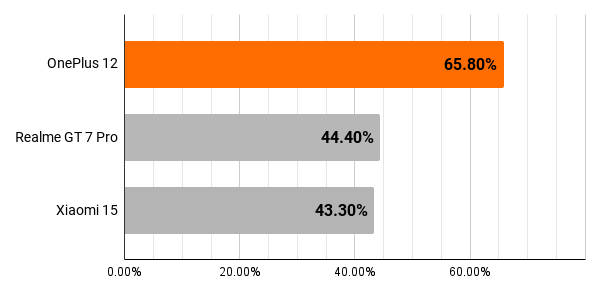
Winner: OnePlus 12
The OnePlus 12 outshines both Realme GT 7 Pro and Xiaomi 15 in the Burnout CPU throttle test. The handset’s Snapdragon 8 Gen 3 SoC seems to be performing roughly 20 percent better under sustained load than the Snapdragon 8 Elite, as per our lab test.
Real-world context: While running these tests, the Realme GT 7 Pro and Xiaomi 15 were not as thermally efficient as the OnePlus 12. This could be the reason the OnePlus smartphone offered a higher level of peak performance even under severe stress. However, it is worth mentioning that the OnePlus 12 uses last year’s SoC, which has been optimised for stability with multiple firmware updates. OnePlus also tends to underclock performance to maintain thermal efficiency.
Gaming
Our mobile gaming test involves playing demanding titles such as BGMI, Call of Duty Mobile, and Real Racing 3 to analyse the thermal and average frames per second (FPS). Good thermal management is crucial for maintaining peak performance without consuming too much power or leading to significant frame drops, which can cause stuttering and disrupted gameplay.
The Realme GT 7 Pro supports max graphics and frame rate for each game. However, to measure its performance, we kept the smartphone’s graphics (‘Ultra HDR’ for BGMI and ‘Max’ for Call of Duty) and FPS settings (‘Ultra’ for BGMI and ‘Max’ for Call of Duty) consistent with its competitors Xiaomi 15 and OnePlus 12. The games were played for a total duration of 30 minutes each.
Average frames per second (FPS) during 30 minutes of gaming (higher is better)
| Smartphones | Average FPS |
| Realme GT 7 Pro | 53 |
| Xiaomi 15 | 55 |
| OnePlus 12 | 47.8 |
The average FPS of the Realme GT 7 Pro and Xiaomi 15 was recorded using their internal monitoring systems, rather than the more accurate third-party app, Takostats, which has yet to add support for Android 15 devices. We plan to retest both devices once support is available. For now, while the Realme GT 7 Pro delivers better FPS than the OnePlus 12 for smoother gameplay, it falls short of the Xiaomi 15, which consistently offers superior average FPS across all three games tested.
However, it is worth mentioning that for Call of Duty, the Xiaomi smartphone recorded 65-70 FPS, even though its settings were capped at 60 FPS.
Temperature increase after 30 minutes of gameplay (lower is better)
| Smartphones | Total temp gain (degrees Celsius) |
| Realme GT 7 Pro | 18.5 |
| Xiaomi 15 | 23.8 |
| OnePlus 12 | 13.5 |
Winner: OnePlus 12
The OnePlus 12 delivers superior thermal efficiency while gaming. This was noticeable while running the synthetic benchmark apps as well. The Realme GT 7 Pro remains second best, despite packing a bigger 11,480 mm square vapour chamber (VC) cooling system than the 9,140 mm square VC on the OnePlus smartphone.
Final verdict
While we are yet to see more Snapdragon 8 Elite-powered devices in the coming months, the Realme GT 7 Pro is currently the most powerful smartphone in India. It is also going to be one of the most affordable Snapdragon 8 Elite smartphones, at least for a year or so.
The handset is ideal for power-hungry users and gamers seeking smooth and efficient performance, even to run titles not designed for smartphones yet. That said, further optimisation is needed to surpass last year’s flagship OnePlus 12 (review) in handling intensive tasks without overheating issues.
Those prioritising long-term stability and thermal efficiency may find the OnePlus 12 or Xiaomi 15 more appealing. As for the Realme GT 7 Pro,
- It excels in synthetic benchmarks like AnTuTu and Geekbench, outperforming its competition with top-tier memory and GPU optimisation.
- The handset also provides an impressive gaming performance even with graphically demanding titles such as BGMI and Call of Duty.
- There are no noticeable lags or stutter while using the device for regular activities or multitasking with a flurry of apps running in the background.
| Smartphones | Starting price |
| Realme GT 7 Pro | Rs 59,999 |
| Xiaomi 15 | Not announced |
| OnePlus 12 | Rs 64,999 |
realme GT 7 Pro Images