Samsung’s JB Park on the India playbook: charting the way to technology leadership


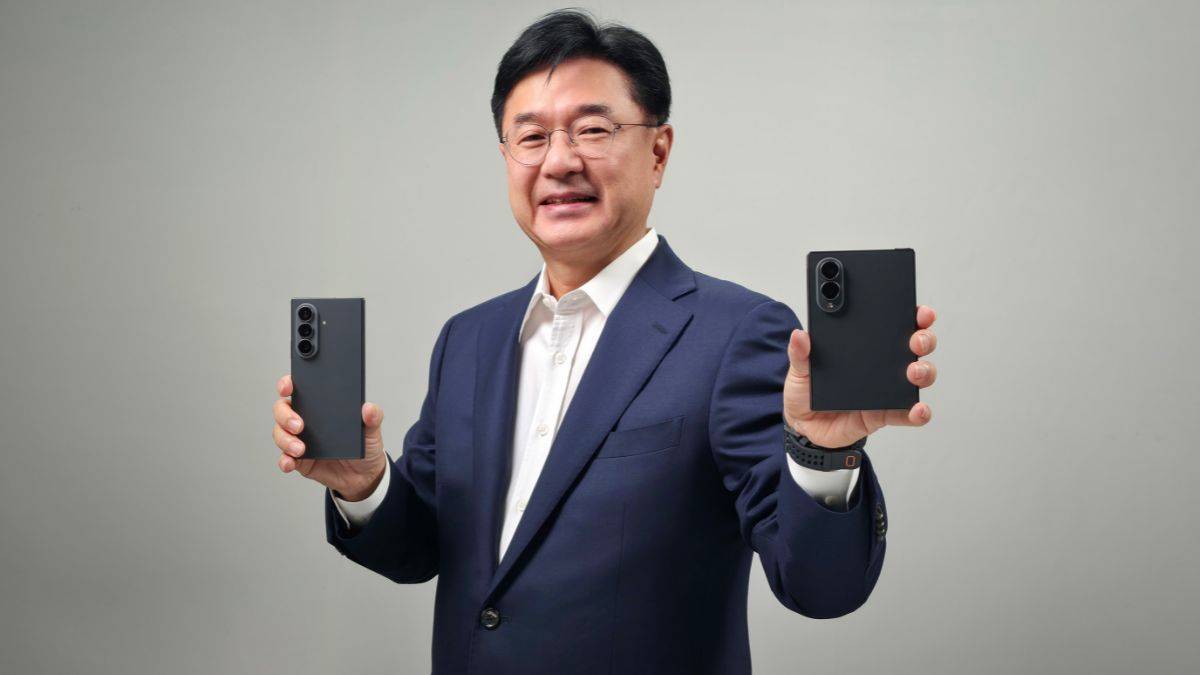
On the sidelines of the Samsung Unpacked event that saw the launch of the Galaxy Z8 series, I was part of a roundtable in London with JB Park, CEO and President of Samsung Southwest Asia, where a group of Indian journalists got more room to push on business strategy, including pricing, the ongoing memory crisis, foldable adoption in India, Galaxy AI’s monetisation path, and where Samsung’s R&D centres in Noida and Bengaluru actually fit into the bigger picture. Park, unsurprisingly, had an answer for almost everything thrown at him.
Table of Contents
Defining foldable success, eight generations in
Asked how Samsung measures success in the foldable category after eight generations, Park pointed to adoption rather than raw sales numbers: more than 20 percent of Samsung’s flagship sales in India now come from foldables, a share that’s grown steadily since 2019, when the category was so unfamiliar that Park said even his own neighbours were surprised the phone could fold at all. He expects the consumer base transitioning to foldables to keep expanding as the category matures.
Park said 65 percent of Samsung’s flagship device sales in India now come from tier 2, tier 3, and rural markets, with rural sales growing faster than metro sales in percentage terms. He credited this to distribution depth, as Samsung ships to 18,000 postal codes and works through more than 80,000 mom-and-pop stores backed by roughly 20,000 in-store promoters. He said the company is investing heavily in educating these markets about premium devices, a shift from the voice-and-feature-phone era Samsung used to sell into in the same towns.
The memory crisis, and who absorbs the cost


Rising memory and component prices were the single most-asked-about topic in the room, and Park didn’t dodge it. He confirmed that device prices are rising industry-wide and called the current memory price spike a situation that will likely keep pushing prices up for another year or two.
On whether Samsung would protect margins or absorb the hit, Park was direct: “Samsung has been absorbing more of the cost increase than competitors over the past eight months”, framing it as a philosophical stance rather than a market-share play. A smartphone, he argued, is a three-year investment for a customer and shouldn’t be repriced like volatile commodities. On EMIs specifically, he said Samsung bears the interest component on flagship devices for 24 to 30 months in India’s open market (where, unlike the US or Europe, there’s no operator subsidy), and pointed to the Galaxy Forever programme — no-cost EMI plus a no-questions-asked upgrade or return with an assured buyback value — as the company’s broader answer to easing the up-front burden on consumers.
Will foldables ever go mass-market, or get an FE model?

Pushed on whether foldables in India are still more of a price story or an awareness-and-use-case problem, Park leaned toward awareness: with 20 percent of flagship sales already foldables, he thinks the bigger barrier is that many buyers still don’t see a clear reason to choose the form factor over a conventional flagship. He expects more competition entering the foldable segment to actually help Samsung here, by raising overall category awareness.
On whether an affordable Fan Edition foldable is coming to unlock tier 2 and tier 3 markets the way the S-series FE has, Park didn’t rule it out but wouldn’t commit either. Samsung, he said, is watching consumer feedback and industry response, and would consider a more affordable “FE” foldable if and when the category is ready for it.
When asked about Chinese OEMs undercutting on price, Park argued that pure price undercutting isn’t a sustainable strategy in the current environment, given every brand is under the same memory-cost pressure. He positioned Samsung’s foldable differentiation as sitting in things that are harder to copy than slimness or weight — crease reduction, hinge durability, and years of OS-level optimisation work with its software partner to make apps actually usable on foldable aspect ratios.
Galaxy AI: free today, hybrid tomorrow?
On where Galaxy AI monetisation is headed, Park described the current model as largely on-device and bundled into the cost of the device, but said Samsung is increasingly leaning into a hybrid model — some cloud-based AI features delivered through partners, where heavier, professional-grade usage (his example: architects or engineers using pro-level AI tools) could eventually sit behind a partner subscription, while the baseline AI experience for everyday consumers stays free. He was clear that any such subscription would sit with the AI partner’s platform, not as a new Samsung Galaxy AI paywall.
Asked about the long-term cost of keeping AI features free given how compute-intensive they are, Park acknowledged the computing cost is real and growing, particularly for heavy users of features like photo and video editing, and said Samsung’s approach is to keep absorbing that cost for the majority of users while reserving any future paid tier for a smaller base of power users.
On differentiation as AI features converge across brands, Park pointed to Samsung’s broader ecosystem — phones, watches, tablets, and home appliances and displays all linked together, with the phone acting as a control hub — plus its commitment to seven years of OS upgrades, as the harder-to-replicate advantages over AI capability alone.
Why the TriFold doesn’t need to be profitable
One of the more candid moments of the session came when Park was asked directly about the economics of expensive new technology — titanium hinges, silicon carbon batteries, the TriFold — landing at a moment when component costs are already spiking. Park didn’t dispute that leading on new technology comes at a cost premium; his argument was that being first is itself the strategy. He pointed to the TriFold specifically as a product that doesn’t make economic sense today, but exists to demonstrate technology leadership, with the expectation that costs come down over time as “fast followers” enter the category and component suppliers scale up. He suggested more affordable rollable or TriFold-style devices could follow once the underlying component economics catch up.
India’s role: software and persona research, not hardware design
On what Samsung’s Noida and Bengaluru R&D centres actually contribute to devices sold globally, Park was fairly specific about the boundary: hardware architecture and design still originate largely out of Korea, while India’s centres focus on software, AI, and persona research on Indian consumers that feeds back into product decisions made in Korea. As an example, he cited a Now Brief feature, Pay Now, built by Indian engineers off local insight, that lets users get reminders and make bill payments through Samsung Wallet, and which will launch exclusively for Indian consumers on the new foldables.
Park said Samsung’s priority for India isn’t just headcount growth in these centres but growing the intellectual property that originates there, positioning Samsung’s existing global lead in patents as something India’s engineering talent is well placed to contribute to, provided the centres are trusted with more creative problems rather than routine technical work.
Health, wearables, and staying open
Asked about the shift toward screen-less, purist fitness wearables, Park framed preventive health as a long-term direction for Samsung’s wearable strategy, name-checking future non-invasive tracking (blood sugar monitoring without skin penetration, as an example) as the kind of capability the industry is heading toward, alongside continued work on ring and watch form factors.
Responding to a direct question from 91mobiles on why advanced Galaxy Watch features like ECG and blood pressure monitoring are gated to Samsung phones, Park clarified this is a hardware-enablement issue rather than a deliberate software lock-in — a Galaxy Watch paired with the Samsung Health app will work on other Android devices or iOS, he said, with no platform barrier beyond installing the app and linking the watch.
Chips and the rest of the business
On whether Samsung’s willingness to absorb rising costs is being subsidised internally by its semiconductor division, Park was unambiguous that the two sides of the business — Device Experience (DX) and Device Solutions (DS) — operate independently and compete for the same component allocation and pricing as any other customer would, describing an internal wall between the two units that, if anything, is getting higher.
On the non-mobile business, Park acknowledged consumer electronics profitability is under real pressure from the volume of competition in categories like air conditioners and appliances, drawing a direct parallel to what the mobile business faced roughly a decade ago, while saying Samsung still aims to hold its top position in displays and home appliances through the current cycle.
Disclosure: This writer attended Samsung Unpacked in London on Samsung India’s invitation