Samsung has introduced its intelligent eyewear at Galaxy Unpacked in London, developed with Gentle Monster and Warby Parker. The wearable is designed to bring AI assistance into everyday life through a lightweight frame, built-in camera and hands-free interactions for work, travel and daily routines.
Samsung’s new intelligent eyewear aims to extend the Galaxy ecosystem beyond phones and into a more natural, always-available wearable form factor. The company says the device blends everyday wearability with AI-powered features, while the two design partners help give it a more style-focused appeal.
Table of Contents
Key features
The eyewear runs on the Snapdragon AR1 Gen1 platform and supports up to nine hours of battery life on a single charge, with the charging case adding up to seven more full charges. Samsung also highlights a built-in camera, voice and gesture controls, Gemini integration, live translation and context-aware assistance as core features.
Samsung says the device can summarise messages, read key information aloud, capture notes from a meeting or whiteboard, help with directions, and support live visual sharing during calls.
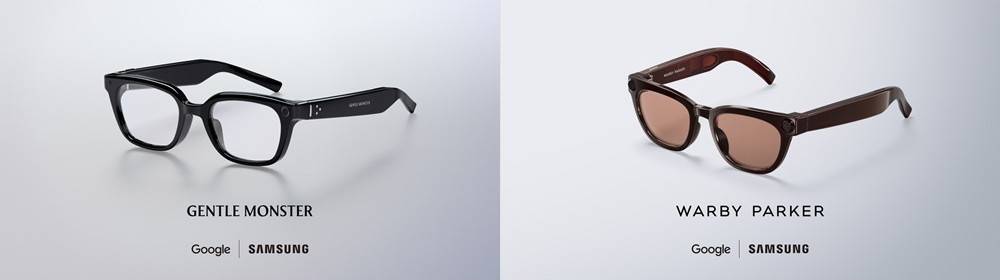
Samsung has introduced two distinct design directions through its partners. The Gentle Monster version uses a slimmer black frame with a more fashion-forward look, while the Warby Parker version goes for a brown finish with a subtly upswept brow line and a more versatile everyday style.
The differing styling approach is important because eyewear is as much about personal identity as it is about utility. Samsung seems to understand that this category will only scale if the product feels like something people actually want to wear, not just something they want to test.
Market positioning
This new product is pretty similar to Meta’s Ray-Ban smart glasses. Both products pair a camera, voice-first AI features and a phone-tethered experience into a wearable form factor. The challenge, of course, is execution. Features like live translation and hands-free capture sound useful, but the real test will be comfort, battery life, and how naturally the eyewear fits into daily life and into a user’s personal style.
For early adopters, frequent travellers and users already invested in Samsung’s or Google’s ecosystem, this could be one of the most interesting wearables of the year. A combination of AI assistance, lightweight design and brand-led styling gives it a better consumer potential than many previous smart eyewear attempts.
Still, this is clearly an emerging category, so mainstream buyers may want to wait and see how the product performs in real-world use.