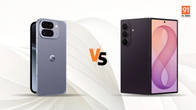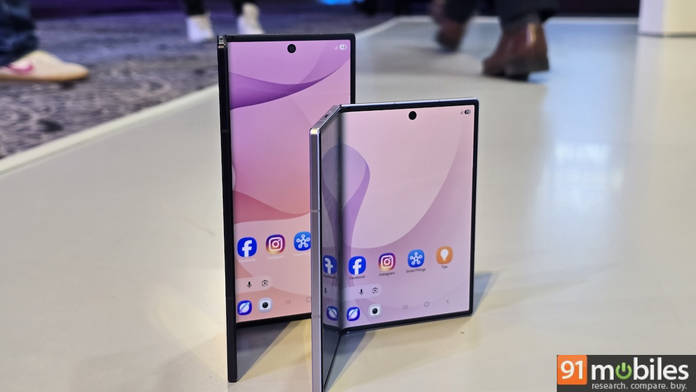
Samsung now has two distinct foldables sitting in its Fold lineup for the first time: the Galaxy Z Fold8 and the Galaxy Z Fold8 Ultra. Where past generations offered a single Fold design, this year’s split feels more deliberate. The Fold8 is the new “wide” foldable that leans into a lighter, more everyday foldable experience, while the Fold8 Ultra keeps Samsung’s productivity and camera ambitions intact. Here’s how the two actually differ, and who each one is really built for.
Table of Contents
Samsung Galaxy Z Fold8 and Z Fold8 Ultra specs at a glance
Specifications | Galaxy Z Fold8 | Galaxy Z Fold8 Ultra |
Main display | 7.6-inch, 120Hz | 8.0-inch, 120Hz |
Cover display | 5.5-inch, 120Hz | 6.5-inch, 120Hz |
Weight | 201g | 215g |
Thickness (unfolded) | 4.5mm | 4.1mm |
Processor | Snapdragon 8 Elite Gen 5 for Galaxy | Snapdragon 8 Elite Gen 5 for Galaxy |
Rear camera | 50MP wide + 50MP ultra-wide | 200MP wide + 50MP ultra-wide + 10MP telephoto (3x) |
Battery | 4,800mAh (typical) | 5,000mAh (typical) |
Charging | Up to 63% in 30 min (45W) | Up to 67% in 30 min (45W) |
RAM/Storage | Up to 16GB + 1TB | Up to 16GB + 1TB |
Colors | Graphite, Cream, Lavender, Pistachio* | Graphite, Cream, Violet Shadow, Green Shadow* |
*Online-exclusive colours available only on Samsung.com
Design and display: lighter vs slimmer
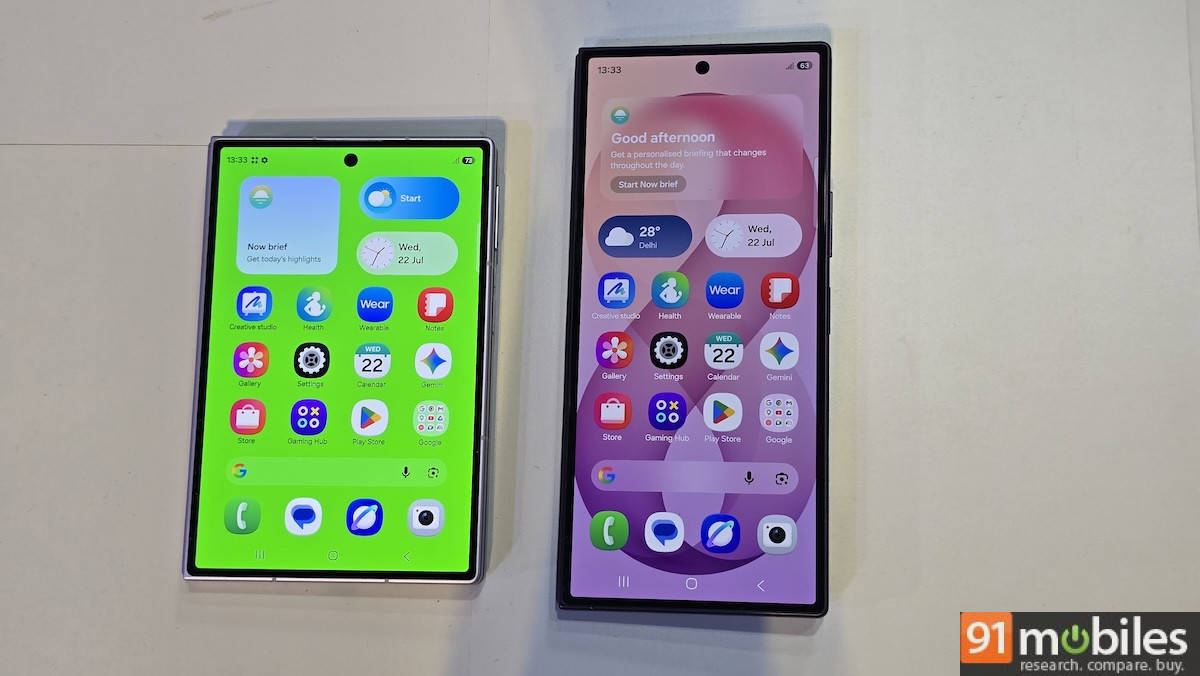
The most immediate difference will be how each phone feels in the hand. The Galaxy Z Fold8 weighs 201g, making it Samsung’s lightest Fold yet, while the Fold8 Ultra is 215g. The Ultra, on the other hand, wins on slimness, at 4.1mm unfolded; Samsung calls it its slimmest Z Fold design ever, compared to the Fold8’s 4.5mm.
Screen sizes scale accordingly. The Fold8 Ultra gets an 8.0-inch main display and a 6.5-inch cover screen, both meaningfully larger than the Fold8’s 7.6-inch main display and 5.5-inch cover screen. That 1-inch difference on the cover screen in particular changes how usable the outer display feels for typing or watching something without unfolding the phone.
Both phones use Samsung’s new Flex Titanium display structure and support up to 3,000 nits of brightness with Vision Booster, so durability and outdoor visibility shouldn’t be a differentiator between the two.
 Cameras: dual setup vs a pro-grade triple system
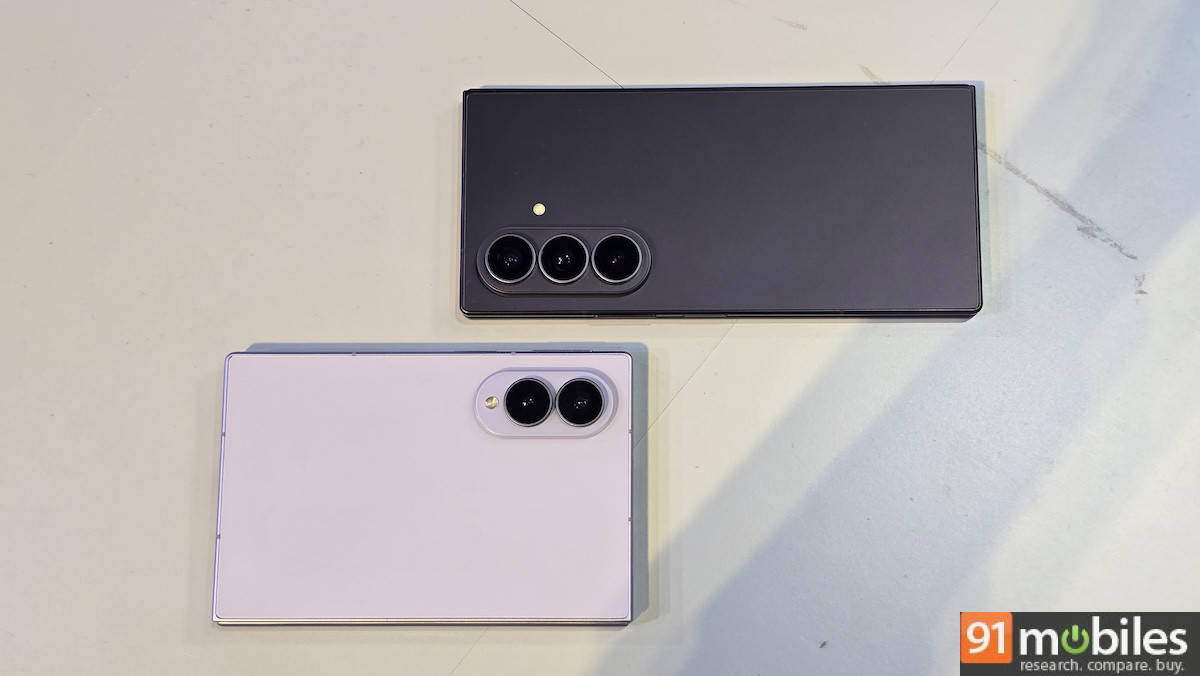
This is where the gap between the two is widest. The Fold8 Ultra gets a 200MP main camera with OIS and 2x optical quality zoom, a 50MP ultra-wide lens, and a 10MP telephoto lens with 3x optical zoom, Samsung’s most advanced foldable camera system yet. It also gets exclusive imaging features like 8K video recording through a new APV codec, Cine LUT for on-device colour grading, and improved Nightography for low-light shots.
The standard Fold8 keeps things simpler, with a 50MP main camera and a 50MP ultra-wide lens, no telephoto. Both phones share Dual Recording and the new My FanCam feature for auto-reframing footage around a subject, but anyone who shoots a lot of zoomed-in photos, video in low light, or wants more control over video colour grading will find the Ultra meaningfully ahead here.
Performance, battery, and charging
Both phones share the same Snapdragon 8 Elite Gen 5 for Galaxy chipset and go up to 16GB of RAM with 1TB of storage, so raw performance on paper should be close. The Fold8 Ultra does get Samsung’s new dual-path charging architecture and an expanded graphite cooling structure, which should help it sustain performance better during longer, heavier workloads like gaming or video editing.
Battery capacity favours the Ultra slightly, 5,000mAh (rated 4,854mAh) against the Fold8’s 4,800mAh (rated 4,660mAh). Charging speeds are close too, the Ultra goes up to 67 percent in 30 minutes on a 45W charger, the Fold8 up to 63 percent in the same time. Neither difference is likely to be noticeable in daily use.
Software: mostly identical, with a few Ultra exclusives
Both phones run One UI 9 on Android 17 with the same core Galaxy AI feature set: Now Brief, Now Nudge, and Gemini Intelligence with Gemini Notebook. Where the Ultra pulls ahead is in its camera-adjacent software, Cine LUT and the APV-based 8K recording aren’t available on the standard Fold8. Everything else, including Knox-based security features and the new AI Assistant Activity dashboard, is shared across both.
Which one should you buy?
If you want a foldable primarily for the format itself, a phone that opens into a bigger screen for reading, browsing, and watching, without needing the most advanced camera system on the market, the Fold8 makes a strong case. It’s lighter, and everything you’d actually use day to day – the chipset, the display quality, the software – is identical to the Ultra.
The Fold8 Ultra makes sense if photography and video are a real priority, or if you want the slimmest, most premium version of Samsung’s Fold design regardless of the 14g weight tradeoff. The triple camera system, 8K recording, and Cine LUT support are genuine capabilities the standard Fold8 doesn’t have, not just marketing checkboxes.
The Fold8 starts at Rs 1,79,999 while the Fold8 Ultra starts from Rs 1,99,999. The question really comes down to whether you want to spend that extra Rs 20,000 for the Ultra’s camera hardware. Otherwise, the Fold8 looks like the far more sensible buy for most people, given how much it shares with its pricier sibling.