Update: The voting is now closed. After tallying 20,451 votes, the Vivo X200 FE emerged as the winner by securing victory in 3 out of our 5 camera scenarios. This performance confirms its place as one of the best flagship camera setups.
The Vivo X200 FE (review) was one of the more unique phones I’ve had the chance to review recently, and it left a strong impression on me. It was my first time with Vivo’s X-series devices, and I’d always heard high praise for their cameras, so naturally, I had some high expectations. The phone impressed me with its performance and camera capabilities, and the behemoth battery was the cherry on top. And all of this came in a compact form factor, which made it one of the highest-rated phones in its price segment. The cameras, particularly, punched above their weight. To see exactly how well they fare, we’ve decided to do a blind camera comparison.
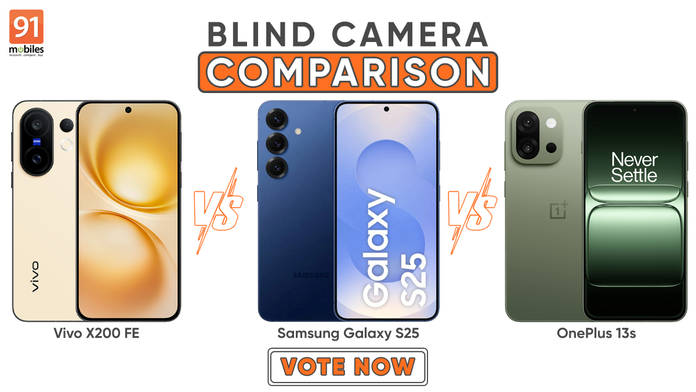
We’re putting the MediaTek Dimensity 9300+ powered Vivo X200 FE against some worthy competitors. This includes its closely priced rival the OnePlus 13s, and the Samsung Galaxy S25, a bona fide flagship that sits a notch above the Vivo X200 FE in price. We’ll be comparing their cameras across five key categories: daylight shots, high-zoom shots, portrait mode, selfies, and low-light performance.
The SoC plays a significant role in image processing, and since all three phones feature flagship-grade chipsets, it should make for an interesting comparison. Before we begin, here’s a quick look at the camera specifications of all three phones:
| Vivo X200 FE | Samsung Galaxy S25 | OnePlus 13s |
| 50MP Sony IMX921 (OIS) primary camera | 50MP (OIS) primary camera | 50MP Sony LYT700 (OIS) primary camera |
| 50MP Sony LYT600 (OIS) periscope camera | 10MP (OIS) telephoto camera | 50MP S5KJN5 telephoto camera |
| 8MP wide-angle camera with 120-degree FOV | 12MP wide-angle camera with 120-degree FOV | – |
| 50MP front camera with AF | 12MP front camera | 32MP front camera with AF |
Daylight
For the daylight shot, we captured a scene featuring a building, greenery, and the sky to help you assess dynamic range, colour reproduction, and the level of detail. Take a look at the options and choose the image that appeals to you most.


Winner: OnePlus 13s
The OnePlus 13s likely won this category thanks to its warmer colour reproduction, which made the yellows and greens appear richer. The image was also marginally brighter than the other two, a crowd-pleasing trait that often draws more votes.
High Zoom
In this high-zoom comparison, we took images at a 10x zoom level with all three devices. Consider the level of detail, clarity, and colour accuracy as you pick the image that you like best.


Below, you can view the images at 100 per cent zoom to assess the level of detail, colours, and clarity, helping you determine the best one.


Winner: Vivo X200 FE
The Vivo X200 FE’s victory here comes down to fine details. When zoomed in, its image offered the best sharpness and the most defined object edges. On top of that, its rich colours made the shot look more appealing than its competitors.
Portrait
For this portrait shot, evaluate the images based on factors like skin tone, bokeh effect, edge detection, etc. Choose the one that looks the best to you.


Winner: Vivo X200 FE
The Vivo X200 FE was once again the winner. Its image showcased the most balanced HDR processing, with rich colours and enhanced contrast that created a more visually pleasing result, which clearly resonated with our voters.
Selfie
In this selfie comparison, pay attention to factors like facial detail, colour balance, sharpness, etc. Select the image that you feel best captures these elements.


Winner: Samsung Galaxy S25
The Samsung Galaxy S25’s win here can be attributed to its cooler colour profile, which made the greens and the subject’s skin tone appear brighter and richer. It also delivered sharper details and higher contrast, adding to the overall appeal.
Low light
Select the low-light shot that appeals to you most. Consider how well each image handles colours, stray light, and lens flares in tricky lighting conditions.


Winner: Vivo X200 FE
The Vivo X200 FE won in the low-light scenario because it managed stray light and lens flares more effectively than its competitors. It also has better exposure and richer colours, which combine to create an extremely appealing shot.
With the conclusion of this blind camera comparison, the Vivo X200 FE’s performance firmly establishes it as a top-tier camera phone in its price segment. If you’re shopping for a premium-yet-compact device with outstanding cameras, our voters have made it clear that the Vivo X200 FE is a great choice.