Vivo X300 and X300 Pro launch in China with MediaTek Dimensity 9500, Zeiss telephoto cameras, OriginOS 6, and more


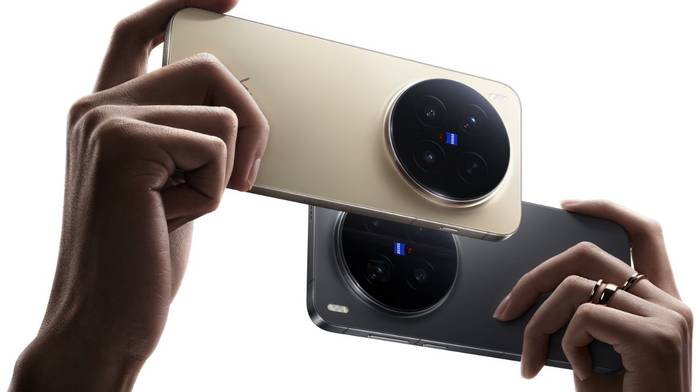
The Vivo X300 and X300 Pro have been launched as Vivo’s newest flagship phones, which will set the standard going into 2026. They’re also the first to feature MediaTek’s new Dimensity 9500 chipset. Like the previous Vivo X200 lineup, the successors also come with dedicated photography features, hardware, and more. What’s interesting this time is also the Vivo X300 replacing the X200 Pro Mini as the new compact flagship. Vivo has launched these phones in China, but they’re expected to hit global markets, including India, soon.
Vivo X300 Pro specifications and features
The Vivo X300 Pro leads the new X300 lineup with meaningful upgrades in both design and performance. It’s powered by the MediaTek Dimensity 9500 chipset, which brings improvements across gaming, AI, imaging, connectivity, and overall efficiency compared to the Vivo X200 Pro’s Dimensity 9400. Built on the same 3nm process, it is claimed to deliver stronger performance and smoother daily experiences. The CPU offers 32 percent higher single-core and 17 percent higher multi-core performance, while multitasking between games and social apps is up to 30 percent more efficient.
Show Full Article
The Vivo X200 Pro performed exceptionally well in our tests and real-world usage, so we expect the X300 Pro to deliver even better performance across the board.
Despite its premium hardware, the phone maintains a balanced profile, weighing 226g and measuring 161.98 × 75.48 × 7.99mm. The X300 Pro features a 6,510mAh battery, supporting both 90W wired and 40W wireless charging. This is a slight increase from the X200 Pro’s 6,500mAh battery, although charging speeds remain unchanged. This setup should get you through an entire day with ease.


The main attraction is the camera system, co-engineered with Zeiss and coupled with Vivo’s in-house V3+ imaging chip. The setup features a 50MP Sony LYT-828 1/1.28-inch primary sensor, a 50MP Samsung JN1 ultra-wide lens, and a 200MP Samsung HPB telephoto camera with a 1/1.4-inch sensor for capturing detailed zoom shots. On the front, there’s another 50MP JN1 sensor with autofocus for selfies and video calls. Powered by the V3+ NPU, the phone enables 4K 60FPS portrait video recording, intelligent motion tracking, and Vivo’s new “Zero-Additive” portrait mode, designed to deliver lifelike colours and natural skin tones. It also supports Live Photo bursts, allowing users to exercise more creative control when capturing movement and expressions.
The Vivo X200 Pro has been our pick for the camera phone of 2025, and its successor is highly expected to take things up a notch.
The 6.78-inch LTPO AMOLED display offers a 1–120Hz adaptive refresh rate, 1,260 × 2,800 resolution, and 1.1mm symmetrical bezels, which should create an immersive visual experience whether gaming or streaming.
Pricing starts at CNY 5,299 (Rs 66,200 approx) for the 12GB + 256GB variant and goes up to CNY 6,699 (Rs 83,600 approx) for the 16GB + 1TB. A premium edition featuring satellite connectivity and a Photographer Kit costs CNY 8,299 (Rs 1,03,600 approx). The phone will be available in China starting October 17th. It’s expected to arrive in India next month and most likely at a higher price. For context, the Vivo X200 Pro launched at Rs 95,000.
Vivo X300 specifications and features
The Vivo X300 is also powered by MediaTek’s Dimensity 9500 chipset and V3+ imaging chip. The vanilla X300 is no slouch in the camera department either. It features a 200MP Zeiss Super main camera (1/1.4-inch Samsung ISOCELL HPB), accompanied by a 50MP ultra-wide lens (1/2.76-inch ISOCELL JN1) and a 50MP Zeiss APO telephoto camera (1/1.95-inch Sony LYT-602) offering 3x optical zoom. On the front, a 50MP autofocus selfie camera, tuned for Zeiss Natural Color, handles portraits and video calls.
With the Vivo X200, we found that the camera hardware and software were finely tuned, making it hard to take a “bad” shot. The X200 also delivered vibrant images with impressive detail.


Up front, the X300 sports a 6.31-inch BOE Q10 Plus LTPO AMOLED display with 1.05mm symmetrical bezels and TÜV-certified eye protection. This is a key change as the X200 features a 6.7-inch display. Vivo introduced the X200 Pro Mini as a compact flagship last year, but it’s now being succeeded by the X300. This means that we won’t be getting an X300 Pro Mini this time. Since the Pro model offers a large screen, the X300 now sits even closer to the likes of the iPhone 17 and the Xiaomi 17 with the same display sizes.
This move is interesting as it suggests OEMs are once again focusing on compact phones, with technology improving to ensure there are fewer compromises in a smaller form factor.
Despite measuring just 7.95mm thick and weighing 190g, the X300 houses a large 6,040mAh Blue Ocean battery with 90W fast charging. The X200 has a 5,800mAh battery, which lasted an entire day with the highest settings enabled. You can expect a slightly longer battery life with the X300, but we’ll have to see if the upgrade actually makes a difference or not.
Other key highlights include LPDDR5X RAM, UFS 4.0 storage (up to 1TB), USB 3.2 connectivity, and an upgraded cooling system designed to handle AI-intensive tasks and gaming with ease. The Vivo X300 has a starting price of CNY 4,399 (Rs 54,900 approx) for the base model. Its predecessor, the X200, launched at Rs 65,999 in India.
Both the Vivo X300 and X300 Pro run on OriginOS 6, based on Android 16. Vivo is also bringing OriginOS 6 outside China, and it’s slated to launch in India on October 15th. The new UI is expected to bring visual enhancements, smoother animations, and more.
The X300 series also features Vivo’s new “Cross-Device Ecosystem” for Apple devices. It allows seamless syncing with iPhones for calls, texts, notifications, and location sharing, while also connecting to iPads for calendar access and file transfers, Macs for clipboard sharing and screen projection, and even Apple Watches to sync health data. Support extends to AirPods, letting users check battery levels and locate devices. It builds on the system first introduced with the X Fold 5, however, this feature currently requires Apple IDs registered in China.
The Vivo X200 and X200 Pro proved their value, particularly in photography, without compromising on performance or battery life. That said, the X200’s AI features still lagged behind competitors like the Samsung Galaxy S24 and Pixel 9. With the X300 series, Vivo has a high bar to meet, and judging by the specs, expectations remain high. While the devices look good on the hardware front, we expect OriginOS will fix some of the issues that plagued Funtouch OS, potentially making the new Vivo flagships near-perfect Android phones. If you’ve been waiting for a premium flagship with standout camera capabilities, the Vivo X300 series is well worth waiting for in India.