
Nothing Phone 3a 256GB
+ Compare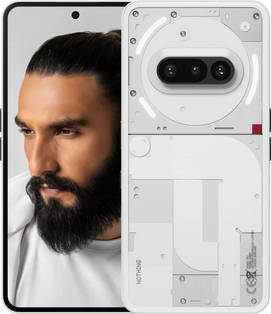
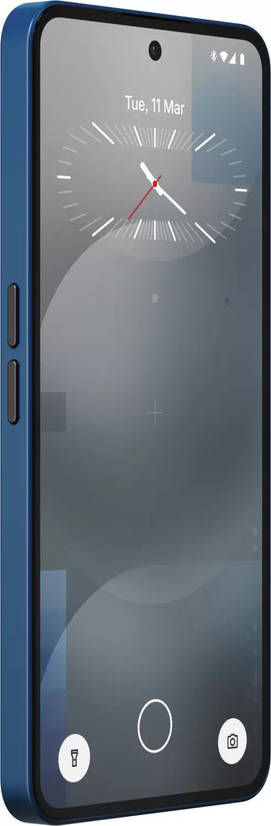
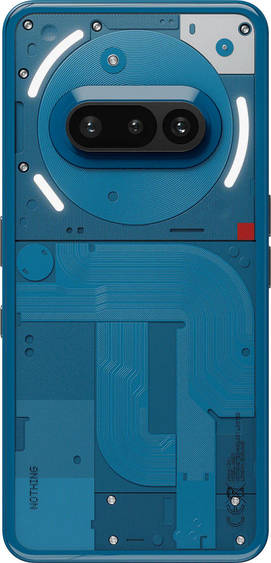
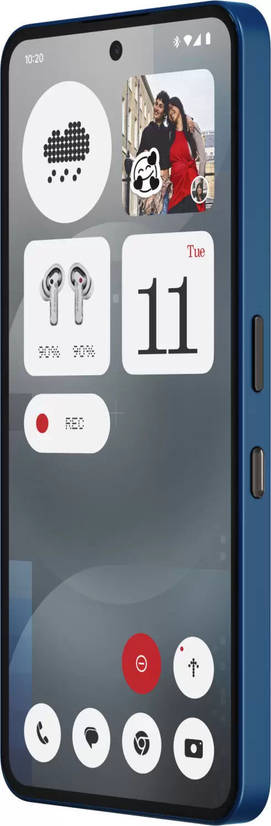
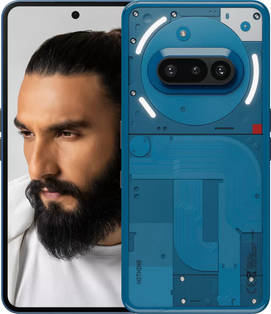
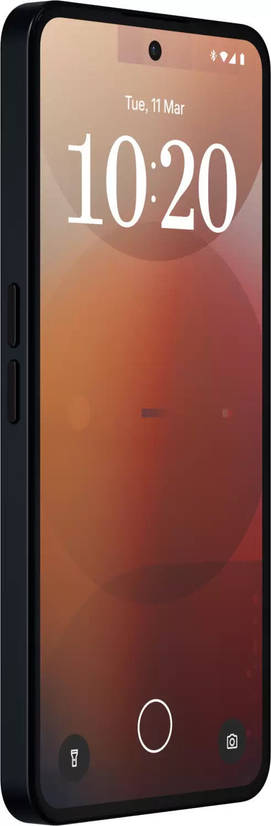
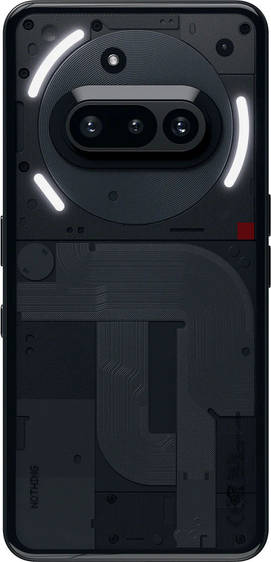
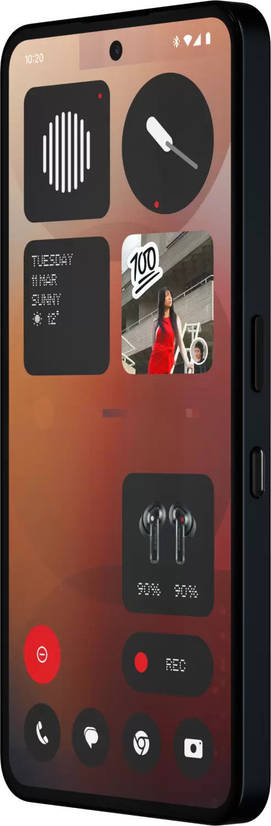
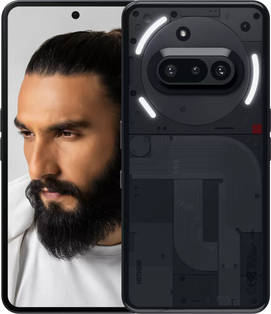
-
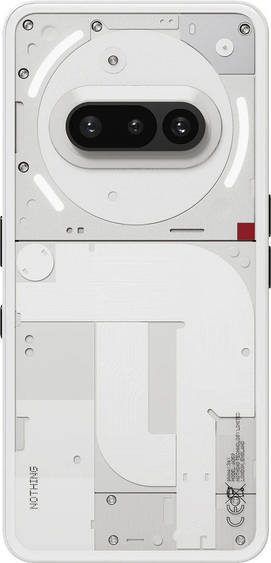
Design20

-
Rear Camera15

-
Front Camera4

-
360° View
![360° View]()
-
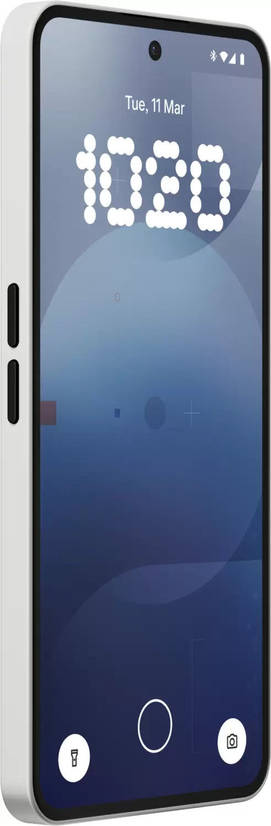
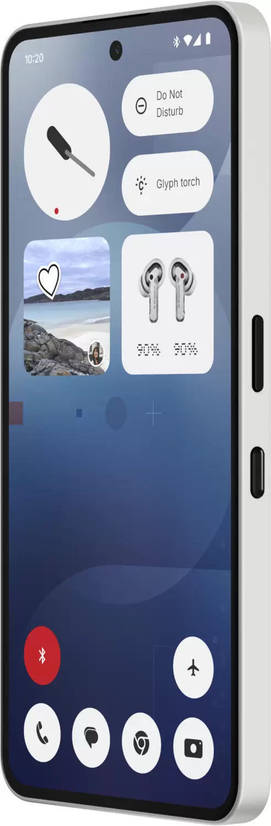
UI Screenshot17
![UI Screenshot]()
-
Videos10
![Videos]()



Key Specs

Performance
-
Qualcomm Snapdragon 7s Gen 3 -
Octa core (2.5 GHz, Single Core + 2.4 GHz, Tri core + 1.8 GHz, Quad core) -
8 GB RAM, LPDDR4X
Display
-
6.77 inches (17.2 cm); Flexible AMOLED -
1080x2392 px (FHD+) -
120 Hz Refresh Rate -
Bezel-less with punch-hole display
Rear Camera
-
Triple Camera Setup - 50 MP Wide Angle Primary Camera
- 8 MP Ultra-Wide Angle Camera
- 50 MP Telephoto (upto 30x Digital Zoom, upto 2x Optical Zoom) Camera
-
LED Flash -
4k @30 fps Video Recording
Front Camera
-
32 MP Wide Angle Lens -
Full HD @60 fps Video Recording
Battery
-
5000 mAh, Li-ion -
50W Fast Charging; USB Type-C port
General
-
SIM1: Nano, SIM2: Nano -
5G Supported -
128 GB / 256 GB internal storage, Non Expandable -
Dust Resistant, Water Resistant
Nothing Phone 3a 256GB Prices in India
 Amazon
Nothing Phone 3a 256GB Compare Camera Samples








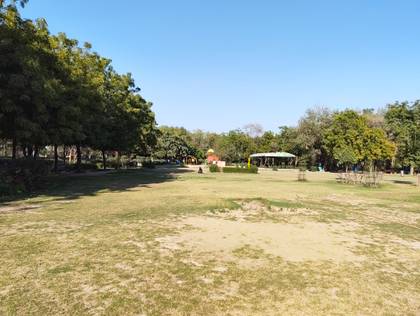











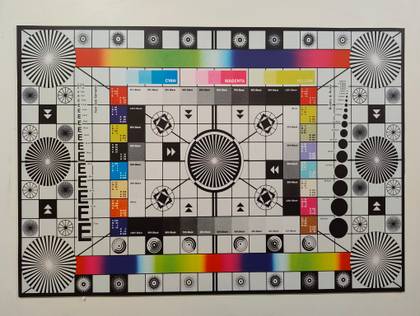


Nothing Phone 3a 256GB Expert Review Summary
Expert Rating:
![Abhik Sengupta]()
Verdict
The Nothing Phone 3a, like its predecessor, stands out with its unique design in the sub-Rs 25K segment. It offers a tall, vibrant display and one of the cleanest OS experiences, which many users will appreciate. The camera performance is also reliable, and the Phone 3a holds up well against some notable competitors and its predecessor. However, its distinctive design and latest hardware additions add to the thickness, and hopefully, its future iterations will become slimmer.
Pros
- Vibrant display
- Clean OS
- Good cameras
- Solid battery
Cons
- Bulky design
- No charger in the box
Design and display
+
While the Phone (3a) Pro gets the major design upgrades, the regular Phone (3a) features a bunch of new additions as well. There's a new Essential button below the power button to launch Nothing AI-backed "Essential Space". Although the Essential Button can be significantly useful to boost productivity, it can take a few attempts to get used to its placement.Otherwise, all the port and button selections remain unchanged, which include the USB-C port and volume rockers. Of course, the pill-shaped camera module now houses an additional telephoto camera. It does add a noticeable protrusion, causing the phone to wobble on flat surfaces, but it's not a deal-breaker for me.SmartphoneWeightThicknessIP RatingNothing Phone (3a)201 grams8.4mmIP64POCO X7190 grams8.4mmIP66 + IP68 + IP69Motorola Edge 50 Neo171 grams8.1mmIP68
Read More
Cameras
+
Looking at the Phone 3a's on-paper specifications, one may have mixed feelings compared to the Phone (2a) (review). The standout addition is the new 50MP telephoto camera (periscope lens on the Pro model), but the primary 50MP OIS-enabled sensor is slightly smaller. The ultra-wide lens has also been downgraded to 8MP, while the 32MP selfie camera remains unchanged.However, real-world performance tells a different story. The Phone (3a) outperformed its predecessor on nearly all fronts in our camera comparison. It handles exposure better in daylight, and the telephoto camera (2x instead of 3x on the Pro model) adds more versatility for portrait shots. The selfie camera has also been fine-tuned for Indian skin tones, delivering a balanced brightness and contrast, even in low-light conditions.Video quality remains solid, though I would've liked to see 4K at 60FPS with the main camera - a feature that's becoming more common in the sub-Rs 30K segment. There's still scope for improvement in terms of details in both still shots and videos, but that's a common challenge faced by almost all smartphones in this category.Beyond its predecessor, the Phone (3a) held its own against the Realme P3 Ultra (review) in our blind camera test, where readers voted on the best shots across different lenses. However, it didn't perform as well as the iQOO Neo 10R (review), which is fair, given the price difference.Compared to its direct rival, the POCO X7 (review), the Phone (3a) falls short in gaming and durability. Let's break down how they differ based on camera performance.DaylightBoth smartphones offer similar levels of detail, but there's a slight difference in their colour science. The Phone 3a opts for a natural approach, while the POCO X7 prioritises slightly warmer tones.The former also strikes a good balance between exposure and contrast, offering a more aesthetically appealing shot.Ultra-wideThe ultra-wide shots from both smartphones may look similar at first glance, but there are noticeable differences in how they handle details.For instance, the Phone (3a) captures sharper foreground elements, while the POCO X7 does a better job of preserving background details.Additionally, the POCO X7 offers a wider dynamic range, making details near the trees on the right more visible.PortraitWe are accessing portrait shots with the primary camera since the POCO X7 skips a telephoto lens.The POCO X7 handles edge detection better, but the Phone (3a) captures superior facial details. Additionally, the Phone 3a does a better job balancing colours, including skin tones, even under harsh brightness.SelfieThe Phone (3a) continues to do a better job capturing more facial details with the front camera, but the POCO X7's image looks more aesthetically pleasing.In this case, the Phone (3a)'s shot looks a bit flat as it lacks depth and contrast.Low-light (with night mode)Finally, both smartphones capture a decent shot in low light with night mode enabled. While they offer similar levels of detail, the POCO X7 has a slight edge in handling lens flare.It also does a better job of balancing exposure, especially with the background lights.
Read More
Essential Space
+
Nothing's latest attempt to stand out in the market is the AI-backed Essential Space, accessible via the dedicated Essential button next to the power button. While the placement could have been more ergonomic, the Essential key is undoubtedly one of the finest additions to a smartphone in a long time.At first glance, its functionality might seem basic, allowing you to store screenshots, quick text notes, and voice memos. But Nothing is leveraging AI to organise files, provide descriptions, and even remind you of upcoming events. Stored notes and voice memos are analysed, creating a personalised diary that helps you revisit things you've looked up online.For anyone who tends to forget things or juggles multiple tasks daily, Essential Space could be a game-changer. While it's still in its early stages, Essential Space has endless possibilities. For instance, the next step could include scanning notifications and emails for even more custom reminders and to-do lists.Apart from the Essential Space, the Phone (3a) provides basic AI tools like Object Remover, AI Unblur, and Google's Circle to Search (with Android 15).
Read More
Performance and software
+
The regular and Pro models of the Phone (3a) series both feature Qualcomm's Snapdragon 7s Gen 3 SoC. While the wait continues for Nothing to utilise MediaTek or Qualcomm's flagship chipsets, the Snapdragon 7s Gen 3 SoC is a modest choice for productivity-focused phones. The brand has also worked closely with Qualcomm to fine-tune the experience, particularly gaming and AI. Additionally, the AI-backed features like Essential Space will appeal to many users, myself included.Of course, if we look at the numbers, the Phone (3a) secures a lower position against immediate rivals like the Realme P3 Pro (also powered by SD 7s Gen 3) and Vivo T3 Pro (SD 7 Gen 3). Its performance in the throttle test is also decent, if not the best.For daily work, the particular Snapdragon chipset is sufficient for browsing and even multitasking. You might notice some lags here and there, though it did not affect my general workflow.Even for gaming, the Phone (3a) supports Extreme+ FPS and Ultra HDR graphics in BGMI. With HDR and Ultra settings, it achieves an average FPS of 39, which is quite impressive, even better than the Realme P3 Pro at 37.5 FPS and the Vivo T3 Pro at 36.6 FPS. I noticed a similar smooth gaming experience while playing COD Mobile at Max settings. Based on our lab test, the phone also managed heat somewhat efficiently.For me, Nothing phones have always been about the software experience, which remains one of the cleanest in any segment - second only to Pixel devices. The Phone (3a) doesn't have any third-party apps, which is impressive since even some flagship models priced over a lakh cannot provide the cleanest Android experience.SmartphonePre-installed appsSoftware updates (OS + security)Nothing Phone 3a27 (0 third-party)3 years + 6 yearsPOCO X765 (17 third-party)3 years + 4 yearsRealme P3 Pro65 (12 third-party)2 years + 3 years
Read More
Battery and charging
+
The Phone 3a retained a 5,000mAh battery, now supported by a slightly faster 50W wired charging. However, there's still no charger in the box, and buying the proprietary adapter costs over Rs 2,000 on Flipkart, which some users might find frustrating.That said, battery life holds up well, and most users won't face major issues. With the highest settings enabled, the Phone 3a lasts almost a full day. Based on our lab tests, which included gaming and YouTube streaming, it performed on par with the POCO X7 and Edge 50 Neo, if not slightly better.However, charging speeds aren't the best in the segment. Compared to the Realme P3 Pro and Edge 50 Neo, the Phone 3a's charging performance is modest.SmartphoneBattery (charging speed)Charging time (20 to 100 percent)Nothing Phone (3a)5,000mAh (50W)52 minutesPOCO X75,500mAh (45W)51 minutesRealme P3 Pro6,000mAh (80W)39 minutes
Read More
Read full Review

Verdict
The Nothing Phone 3a, like its predecessor, stands out with its unique design in the sub-Rs 25K segment. It offers a tall, vibrant display and one of the cleanest OS experiences, which many users will appreciate. The camera performance is also reliable, and the Phone 3a holds up well against some notable competitors and its predecessor. However, its distinctive design and latest hardware additions add to the thickness, and hopefully, its future iterations will become slimmer.
- Vibrant display
- Clean OS
- Good cameras
- Solid battery
Pros
- Bulky design
- No charger in the box
Cons
Design and display
+While the Phone (3a) Pro gets the major design upgrades, the regular Phone (3a) features a bunch of new additions as well. There's a new Essential button below the power button to launch Nothing AI-backed "Essential Space". Although the Essential Button can be significantly useful to boost productivity, it can take a few attempts to get used to its placement.Otherwise, all the port and button selections remain unchanged, which include the USB-C port and volume rockers. Of course, the pill-shaped camera module now houses an additional telephoto camera. It does add a noticeable protrusion, causing the phone to wobble on flat surfaces, but it's not a deal-breaker for me.SmartphoneWeightThicknessIP RatingNothing Phone (3a)201 grams8.4mmIP64POCO X7190 grams8.4mmIP66 + IP68 + IP69Motorola Edge 50 Neo171 grams8.1mmIP68
Read MoreCameras
+Looking at the Phone 3a's on-paper specifications, one may have mixed feelings compared to the Phone (2a) (review). The standout addition is the new 50MP telephoto camera (periscope lens on the Pro model), but the primary 50MP OIS-enabled sensor is slightly smaller. The ultra-wide lens has also been downgraded to 8MP, while the 32MP selfie camera remains unchanged.However, real-world performance tells a different story. The Phone (3a) outperformed its predecessor on nearly all fronts in our camera comparison. It handles exposure better in daylight, and the telephoto camera (2x instead of 3x on the Pro model) adds more versatility for portrait shots. The selfie camera has also been fine-tuned for Indian skin tones, delivering a balanced brightness and contrast, even in low-light conditions.Video quality remains solid, though I would've liked to see 4K at 60FPS with the main camera - a feature that's becoming more common in the sub-Rs 30K segment. There's still scope for improvement in terms of details in both still shots and videos, but that's a common challenge faced by almost all smartphones in this category.Beyond its predecessor, the Phone (3a) held its own against the Realme P3 Ultra (review) in our blind camera test, where readers voted on the best shots across different lenses. However, it didn't perform as well as the iQOO Neo 10R (review), which is fair, given the price difference.Compared to its direct rival, the POCO X7 (review), the Phone (3a) falls short in gaming and durability. Let's break down how they differ based on camera performance.DaylightBoth smartphones offer similar levels of detail, but there's a slight difference in their colour science. The Phone 3a opts for a natural approach, while the POCO X7 prioritises slightly warmer tones.The former also strikes a good balance between exposure and contrast, offering a more aesthetically appealing shot.Ultra-wideThe ultra-wide shots from both smartphones may look similar at first glance, but there are noticeable differences in how they handle details.For instance, the Phone (3a) captures sharper foreground elements, while the POCO X7 does a better job of preserving background details.Additionally, the POCO X7 offers a wider dynamic range, making details near the trees on the right more visible.PortraitWe are accessing portrait shots with the primary camera since the POCO X7 skips a telephoto lens.The POCO X7 handles edge detection better, but the Phone (3a) captures superior facial details. Additionally, the Phone 3a does a better job balancing colours, including skin tones, even under harsh brightness.SelfieThe Phone (3a) continues to do a better job capturing more facial details with the front camera, but the POCO X7's image looks more aesthetically pleasing.In this case, the Phone (3a)'s shot looks a bit flat as it lacks depth and contrast.Low-light (with night mode)Finally, both smartphones capture a decent shot in low light with night mode enabled. While they offer similar levels of detail, the POCO X7 has a slight edge in handling lens flare.It also does a better job of balancing exposure, especially with the background lights.
Read MoreEssential Space
+Nothing's latest attempt to stand out in the market is the AI-backed Essential Space, accessible via the dedicated Essential button next to the power button. While the placement could have been more ergonomic, the Essential key is undoubtedly one of the finest additions to a smartphone in a long time.At first glance, its functionality might seem basic, allowing you to store screenshots, quick text notes, and voice memos. But Nothing is leveraging AI to organise files, provide descriptions, and even remind you of upcoming events. Stored notes and voice memos are analysed, creating a personalised diary that helps you revisit things you've looked up online.For anyone who tends to forget things or juggles multiple tasks daily, Essential Space could be a game-changer. While it's still in its early stages, Essential Space has endless possibilities. For instance, the next step could include scanning notifications and emails for even more custom reminders and to-do lists.Apart from the Essential Space, the Phone (3a) provides basic AI tools like Object Remover, AI Unblur, and Google's Circle to Search (with Android 15).
Read MorePerformance and software
+The regular and Pro models of the Phone (3a) series both feature Qualcomm's Snapdragon 7s Gen 3 SoC. While the wait continues for Nothing to utilise MediaTek or Qualcomm's flagship chipsets, the Snapdragon 7s Gen 3 SoC is a modest choice for productivity-focused phones. The brand has also worked closely with Qualcomm to fine-tune the experience, particularly gaming and AI. Additionally, the AI-backed features like Essential Space will appeal to many users, myself included.Of course, if we look at the numbers, the Phone (3a) secures a lower position against immediate rivals like the Realme P3 Pro (also powered by SD 7s Gen 3) and Vivo T3 Pro (SD 7 Gen 3). Its performance in the throttle test is also decent, if not the best.For daily work, the particular Snapdragon chipset is sufficient for browsing and even multitasking. You might notice some lags here and there, though it did not affect my general workflow.Even for gaming, the Phone (3a) supports Extreme+ FPS and Ultra HDR graphics in BGMI. With HDR and Ultra settings, it achieves an average FPS of 39, which is quite impressive, even better than the Realme P3 Pro at 37.5 FPS and the Vivo T3 Pro at 36.6 FPS. I noticed a similar smooth gaming experience while playing COD Mobile at Max settings. Based on our lab test, the phone also managed heat somewhat efficiently.For me, Nothing phones have always been about the software experience, which remains one of the cleanest in any segment - second only to Pixel devices. The Phone (3a) doesn't have any third-party apps, which is impressive since even some flagship models priced over a lakh cannot provide the cleanest Android experience.SmartphonePre-installed appsSoftware updates (OS + security)Nothing Phone 3a27 (0 third-party)3 years + 6 yearsPOCO X765 (17 third-party)3 years + 4 yearsRealme P3 Pro65 (12 third-party)2 years + 3 years
Read MoreBattery and charging
+The Phone 3a retained a 5,000mAh battery, now supported by a slightly faster 50W wired charging. However, there's still no charger in the box, and buying the proprietary adapter costs over Rs 2,000 on Flipkart, which some users might find frustrating.That said, battery life holds up well, and most users won't face major issues. With the highest settings enabled, the Phone 3a lasts almost a full day. Based on our lab tests, which included gaming and YouTube streaming, it performed on par with the POCO X7 and Edge 50 Neo, if not slightly better.However, charging speeds aren't the best in the segment. Compared to the Realme P3 Pro and Edge 50 Neo, the Phone 3a's charging performance is modest.SmartphoneBattery (charging speed)Charging time (20 to 100 percent)Nothing Phone (3a)5,000mAh (50W)52 minutesPOCO X75,500mAh (45W)51 minutesRealme P3 Pro6,000mAh (80W)39 minutes
Read MoreCompetitors For Nothing Phone 3a 256GB
View Alternatives








Nothing Phone 3a 256GB Specifications
General |
|
|---|---|
| Launch Date | March 11, 2025 (Official) |
| Operating System | Android v15 |
| OS Updates | 3 Years |
| Security Updates | 6 Years |
| Custom UI | Nothing OS |
Performance
(Very Good)
|
||||||
|---|---|---|---|---|---|---|
| Chipset | Qualcomm Snapdragon 7s Gen 3 SM7635 View Details | |||||
| Processor | Octa core (2.5 GHz, Single core, Cortex A720 + 2.4 GHz, Tri core, Cortex A720 + 1.8 GHz, Quad core, Cortex A520) | |||||
| Architecture | 64 bit | |||||
| Fabrication | 4 nm | |||||
| Graphics (GPU) | Adreno 810 | |||||
| RAM | 8 GB | |||||
| RAM Type | LPDDR4X | |||||
| Cooling Technology | Vapor Chamber | |||||
|
Gaming Test Results

* after 30 mins of gaming
|
||||||
Benchmark Screenshots
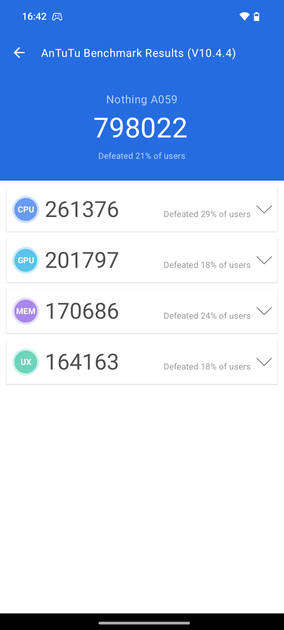
AnTuTu Benchmark
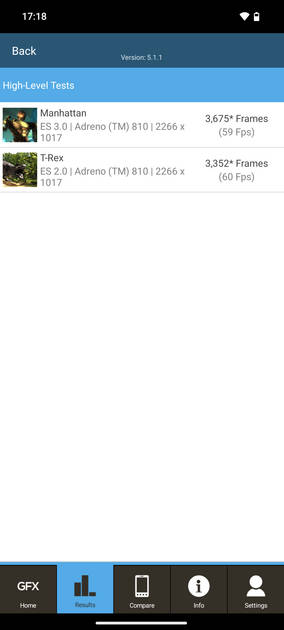
Graphics Benchmark
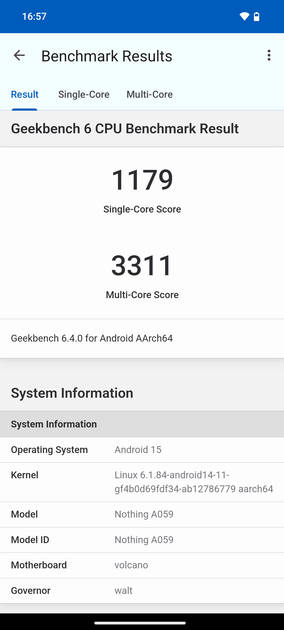
Geekbench6 Benchmark
|


Display
(Excellent)
|
|
|---|---|
| Display Type | Flexible AMOLED |
| Screen Size | 6.77 inches (17.2 cm) |
| Resolution | 1080x2392 px (FHD+) |
| Peak Brightness | 3000 nits |
| HBM Brightness | 1300 nits |
| PWM Dimming | 2160 Hz |
| Refresh Rate | 120 Hz |
| Pixel Density | 388 ppi |
| Screen to Body Ratio (calculated) | 87.32 % |
| Screen Protection | Yes |
| Bezel-less Display | Yes with punch-hole display |
| HDR 10 / HDR+ Support | Yes, HDR 10+ |
| Screen to Body Ratio (claimed by the brand) | 91.4 % |
UI Screenshots
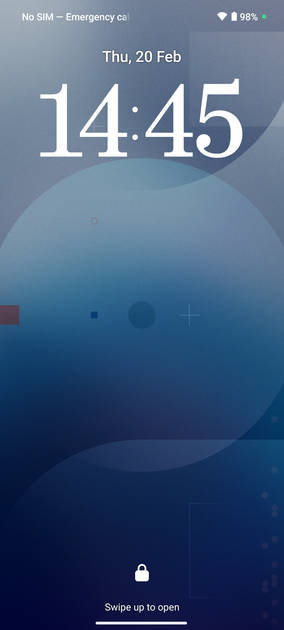
Lock Screen
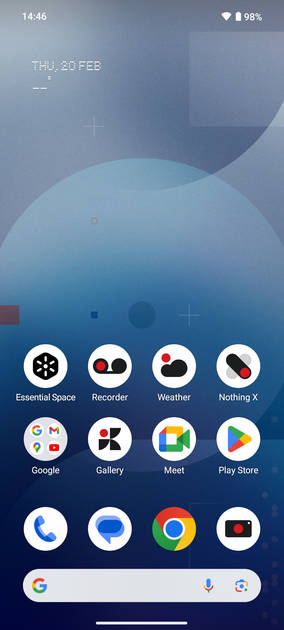
Home Screen
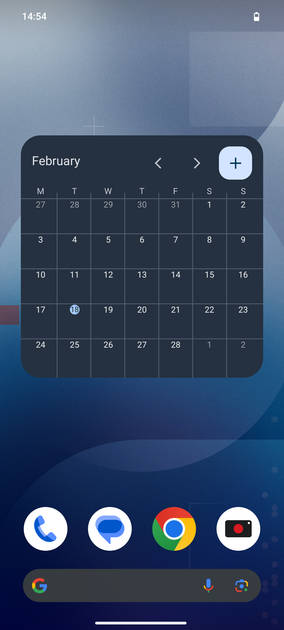
Screen With Widgets
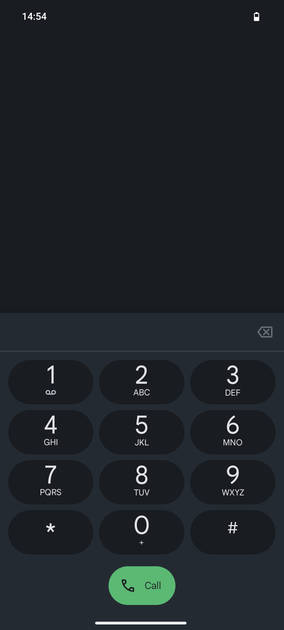
Dialer Screen
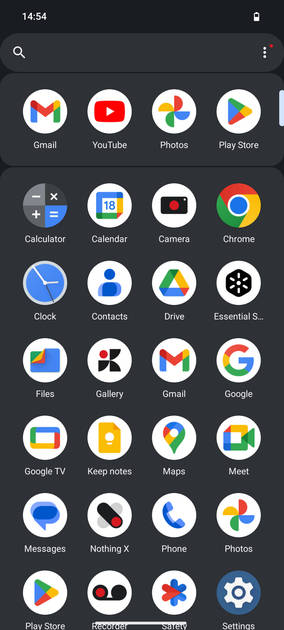
App Drawer
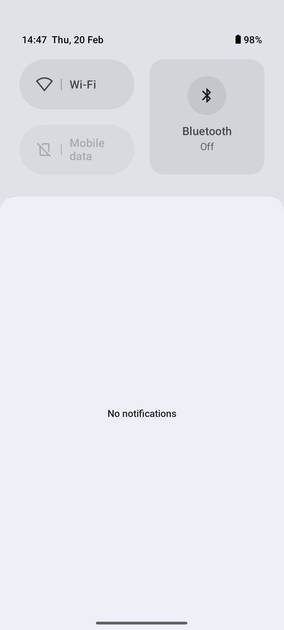
Notification Panel
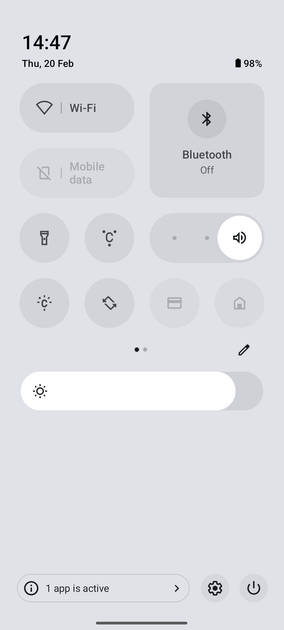
Quick Settings Panel
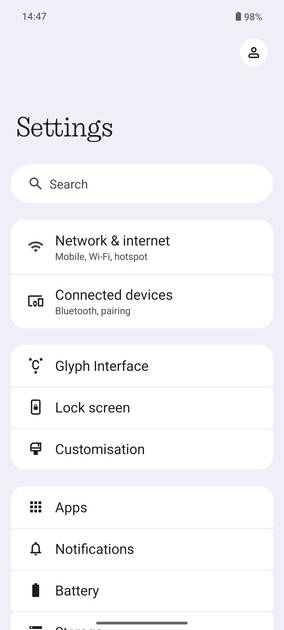
Settings Screen
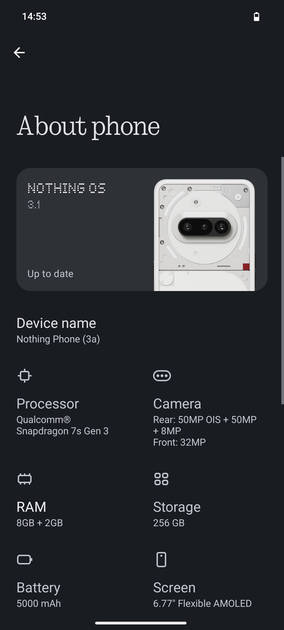
OS Version
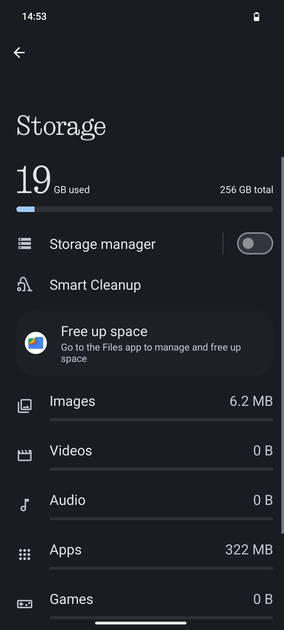
Storage
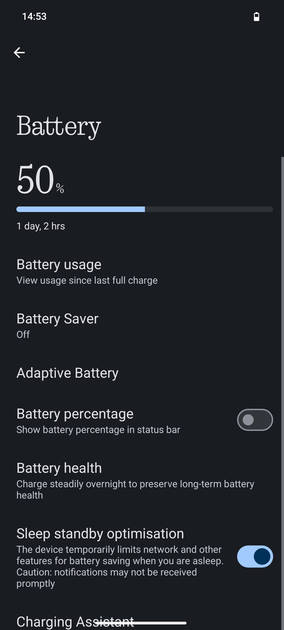
Battery

Camera On
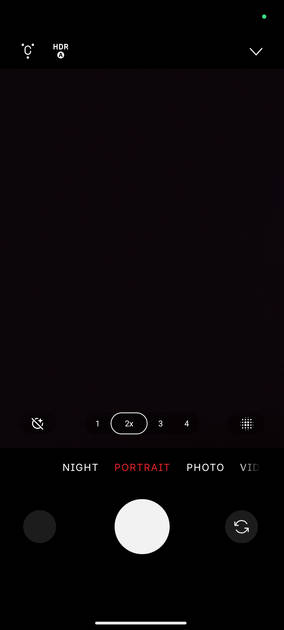
Camera Options

Camera Modes
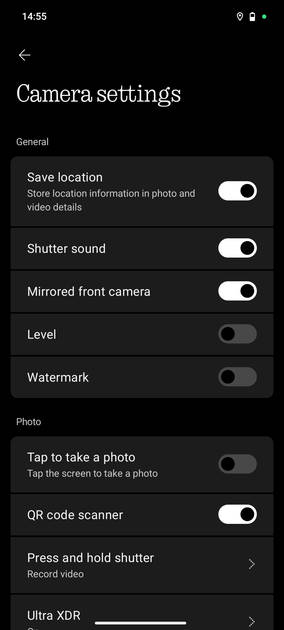
Camera Settings
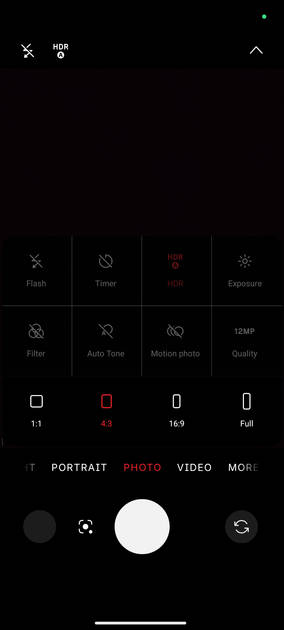
Picture Size Options
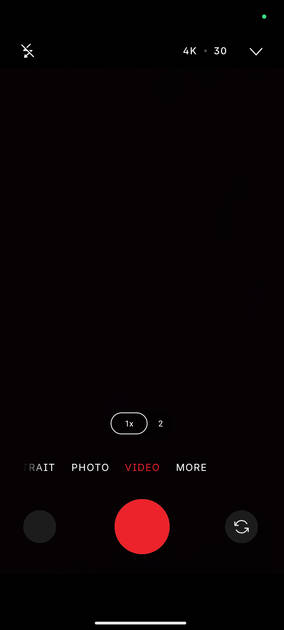
Video Size Options
|
Design |
|
|---|---|
| Height | 163.52 mm |
| Width | 77.50 mm |
| Thickness | 8.35 mm |
| Weight | 201 grams |
| Water Resistance | Yes, Splash proof, IP64 |
| Ruggedness | Dust proof |
|
Click to View

|
Rear Camera
(Very Good)
|
||||||||||||||||||||||||||||||||||||
|---|---|---|---|---|---|---|---|---|---|---|---|---|---|---|---|---|---|---|---|---|---|---|---|---|---|---|---|---|---|---|---|---|---|---|---|---|
| Resolution | ||||||||||||||||||||||||||||||||||||
|
||||||||||||||||||||||||||||||||||||
| Autofocus | Yes, Phase Detection Autofocus | |||||||||||||||||||||||||||||||||||
| OIS | Yes | |||||||||||||||||||||||||||||||||||
| Flash | Yes, LED Flash | |||||||||||||||||||||||||||||||||||
| Image Resolution | 8150 x 6150 Pixels | |||||||||||||||||||||||||||||||||||
| Settings | Exposure compensation, ISO control | |||||||||||||||||||||||||||||||||||
| Shooting Modes |
Continuous Shooting High Dynamic Range mode (HDR) |
|||||||||||||||||||||||||||||||||||
| Camera Features |
Digital Zoom Auto Flash Face detection Touch to focus |
|||||||||||||||||||||||||||||||||||
| Video Recording |
4k @30 fps Full HD @120 fps |
|||||||||||||||||||||||||||||||||||
Rear Camera Samples

Daylight / HDR Auto

Wide Angle

Max Zoom Supported 30x

Long Shot 10X

Long Shot 5X

Long Shot 3X

Long Shot 1X

High Res

Portrait Shot

Night Mode OFF

Night Mode ON

Close Up

Low Light

Low Light With Flash
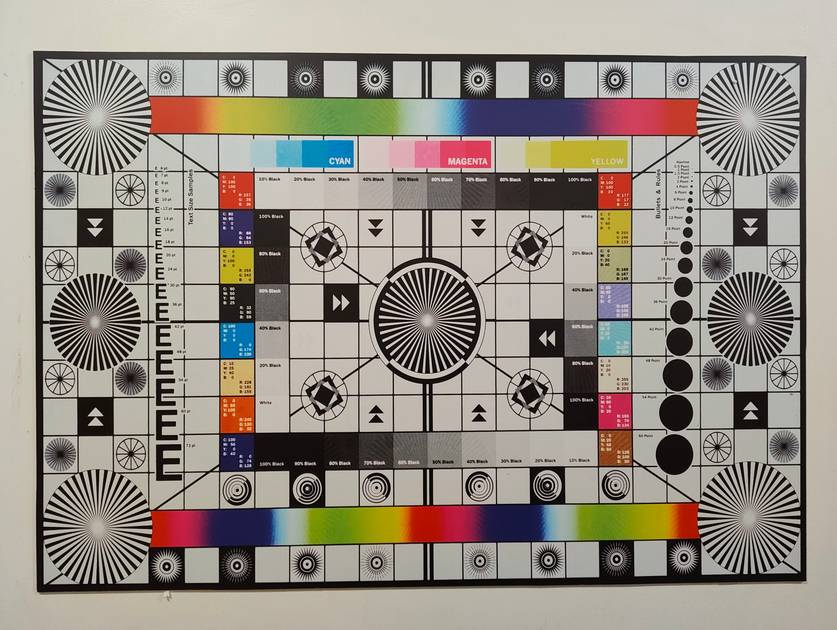
Colour Variance
|
Front Camera
(Very Good)
|
||||||||||||||
|---|---|---|---|---|---|---|---|---|---|---|---|---|---|---|
| Resolution | ||||||||||||||
|
||||||||||||||
| Video Recording | Full HD @60 fps | |||||||||||||
Front Camera Samples

Selfie

Selfie Portrait

Selfie Low Light

Selfie Low Light With Flash
|
Battery
(Very Good)
|
||||
|---|---|---|---|---|
| Capacity | 5000 mAh | |||
| Battery Type | Li-ion | |||
| Quick Charging | Yes, 50W Fast Charging, 50% in 19 minutes | |||
| Reverse Charging | Yes, 7.5W Reverse Charging | |||
|
Battery Test Results
|
Storage |
|
|---|---|
| Internal Storage | 128 GB / 256 GB |
| Storage Type | UFS 2.2 |
| Expandable Storage | No |
Network & Connectivity |
|
|---|---|
| SIM Slot(s) | Dual SIM |
| SIM Type | SIM1: Nano, SIM2: Nano |
| Network Support | 5G, 4G |
| VoLTE | Yes |
| SIM 1 |
5G bands, 4G bands
Expand
|
| SIM 2 |
5G bands, 4G bands
Expand
|
| Wi-Fi | Yes, Wi-Fi 6 (802.11 a/b/g/n/ac/ax) 5GHz, MIMO |
| Wi-Fi Features | Wi-Fi Direct, Mobile Hotspot |
| Bluetooth | Yes, v5.4 |
| GPS | Yes with A-GPS, Glonass |
| NFC | Yes |
Multimedia |
|
|---|---|
| Stereo Speakers | Yes |
| Audio Jack | USB Type-C |
Sensors |
|
|---|---|
| Fingerprint Sensor | Yes |
| Fingerprint Sensor Position | On-screen |
| Fingerprint Sensor Type | Optical |
| Other Sensors | Light sensor, Proximity sensor, Accelerometer, Compass, Gyroscope |
Recent Stories



Nothing Phone 3a 256GB User Reviews
Nothing Phone 3a 256GB Key Highlights
| Processor | Qualcomm Snapdragon 7s Gen 3 SM7635 |
| RAM & Storage | 8 GB RAM + 128 GB 8 GB RAM + 256 GB |
| Display | 6.77", 1080 x 2392 Resolution |
| Rear Camera | 50 MP + 8 MP + 50 MP |
| Front Camera | 32 MP |
| Battery | 5000 mAh |





























Nothing Phone 3a Price In India
| Product Name | Store | Price |
|---|---|---|
| Nothing Phone 3a (8 GB + 128 GB) | Flipkart | ₹24,999 |
| Nothing Phone 3a (8 GB + 128 GB) | Amazon | ₹32,998 |
| Nothing Phone 3a (8 GB + 256 GB) | Amazon | ₹34,773 |
Popular Links
- All Upcoming Phones
- vivo V80 5G
- OPPO K14 Plus 5G
- Xiaomi Redmi Note 17 Pro 5G
- Lava Virat Curve 5G
- OPPO F35 Pro
- Samsung Mobiles
- Motorola Mobiles
- vivo Mobiles
- OPPO Mobiles
- Tecno Mobiles
- realme Mobiles
- Xiaomi Mobiles