The April to June 2026 quarter was a quietly important one for the Indian TV market. No single launch dominated the conversation, but taken together, the five TVs we reviewed this period tell a clear story: the value segment is getting genuinely good, the mid-range has never been more competitive, and Sony remains the brand that earns the most loyalty from people who have actually used one.
Mini LED arrived in force at prices that felt impossible eighteen months ago. The Lumio Vision 9 2026 brought native 4K 144Hz QD-Mini LED to under Rs 73,000. Xiaomi put 512 local dimming zones and 1,200 nits peak brightness in a 75-inch panel for under Rs 1 lakh. And at the budget end, the Hisense E7Q Pro offered QLED with Dolby Vision, 144Hz, and VRR for Rs 37,999. The question for each machine was not just what it could do, but whether it delivered on its spec sheet in actual use.
What also stood out this quarter was Xiaomi’s ambition in the large-screen segment. Two Xiaomi TVs made it into our review slate in a single quarter, targeting very different buyers at very different price points, and both made a credible case. On the other end, Sony did what Sony does: offered a TV that loses on spec comparisons and wins on experience. Five TVs, three months, and one recurring theme: the gap between affordable and good is narrowing faster than anyone expected.
Table of Contents
Xiaomi X Pro QLED TV (2026): Rs 69,999
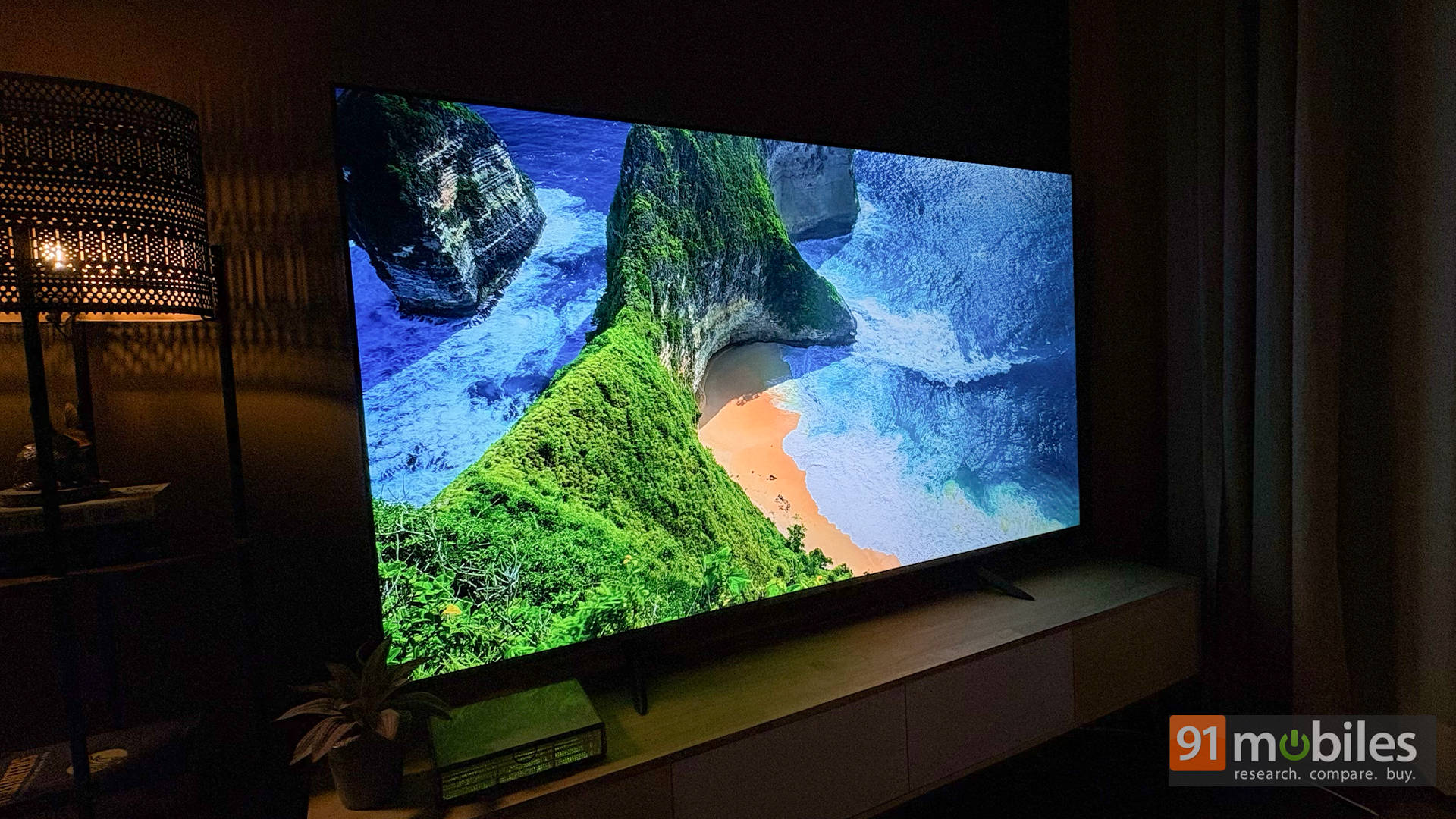
There is something immediately arresting about a 75-inch TV at under Rs 70,000. The Xiaomi X Pro QLED 2026 has that effect. The 4K QLED panel, branded MagiQLED, covers 94% of the DCI-P3 colour space and supports Dolby Vision and HDR10+, and in bright, well-lit content it delivers the punchy, saturated visuals that QLED is known for. Reds pop, greens are lush, and the sheer scale of the 75-inch panel transforms everyday streaming into something that genuinely feels different from a smaller screen.
The compromises are real but predictable. The refresh rate is a native 60Hz, with DLG (Dual Line Gate) technology simulating 120Hz by dropping to 1080p resolution, so 4K 120Hz gaming is not available here. The quad-core Cortex-A55 chip with 2GB RAM and 32GB storage is a budget chipset, and it shows in occasional sluggish app switching and animation stutter under heavier use. Audio from the 34W system is adequate for everyday streaming but lacks the bass and width to match the screen’s cinematic scale.
Where the X Pro earns its recommendation is in focus. Xiaomi has not tried to build a flagship at this price. They have built a TV for buyers whose priority is a large, vibrant screen for OTT streaming and casual viewing, running a clean Google TV interface with PatchWall alongside it. For that specific buyer, it delivers exactly what it promises. The 4-year warranty is a genuine value-add. The lack of native 4K 120Hz means serious gamers should look elsewhere.
Editor’s Rating: 8.3 / 10
Pros:
- Massive 75-inch immersive display
- Vibrant QLED colors and HDR
- Smooth Google TV experience
- Excellent value for money
Cons:
- No true 120Hz panel
- Average built-in audio output
Read the full review here
Hisense E7Q Pro 55-inch QLED TV: Rs 37,999
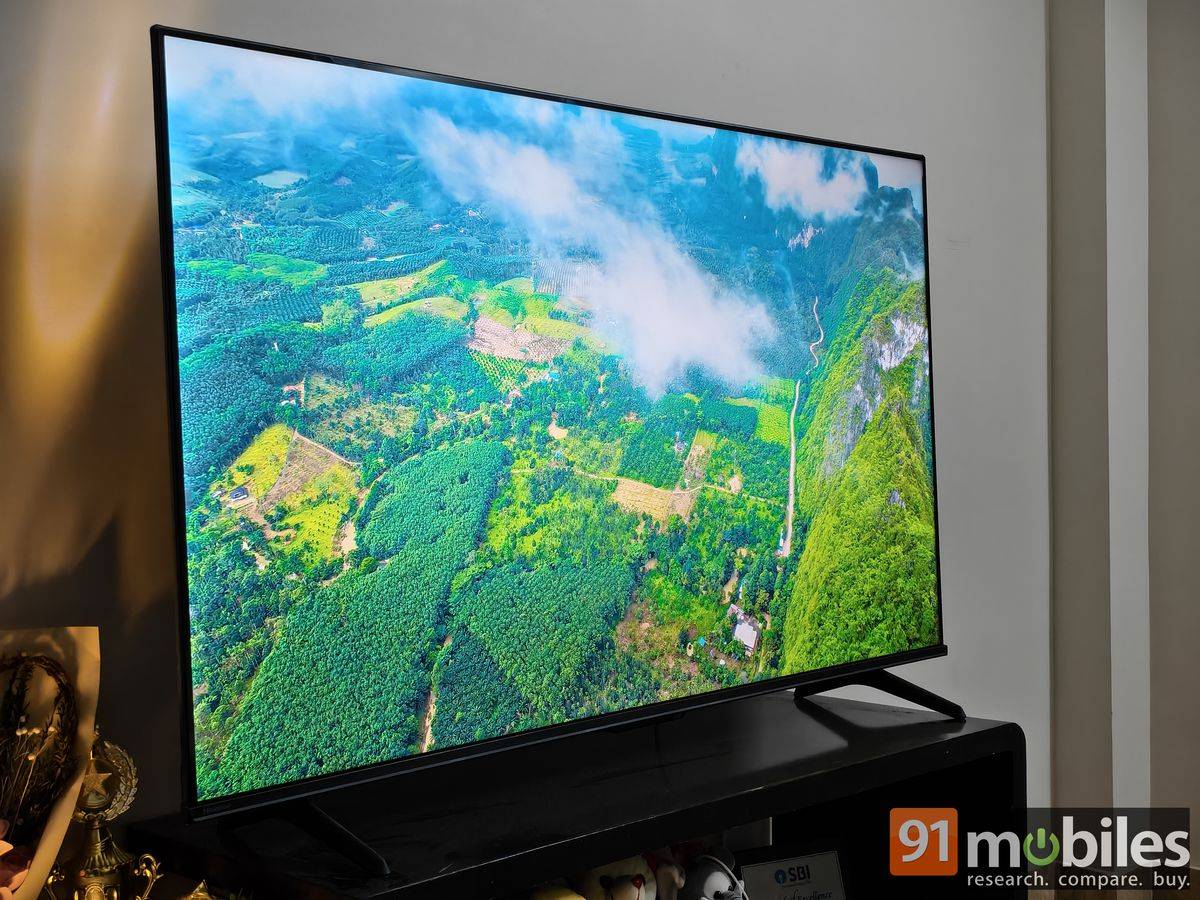
The Hisense E7Q Pro arrives at Rs 37,999 with a specification list that reads like it belongs in a TV twice its price. A 55-inch QLED panel with Dolby Vision, HDR10+, 144Hz with VRR, ALLM, Game Bar, and Filmmaker Mode, alongside 8 years of promised software support from Vidaa OS. On paper, it challenges everything you thought a sub-Rs 40,000 TV could offer.
In real-world use, the picture holds up well for its price, particularly in HDR and gaming. Connected to a PS5, the TV handled Dirt 5 at 120 fps with noticeably better HDR processing than competing budget TVs. Dark scenes from Harry Potter with Filmmaker Mode on retained reasonable shadow detail, and while it cannot match the inky blacks of a panel with proper local dimming, it delivered an immersive experience in a dimly lit room. The Vidaa OS is refreshingly clean. No mandatory account sign-in, a straightforward app grid, and 8 years of software updates in a market where most brands offer 2 to 3.
The limitations are equally clear. Peak brightness is rated at just 330 nits, and in a well-lit room the panel looks muted, with colours losing punch against ambient light. The 144Hz panel is not consistently available across all games. It applies to select supported titles only, and the reviewer found 60 fps on FC 24 and 120 fps on Dirt 5.
Editor’s rating: 8/10
Pros
- Satisfactory picture quality
- Good HDR performance
- 144Hz panel with VRR for gaming
- Clean, easy-to-use Vidaa OS
Cons
- Motion handling during sports could be better
- Average speaker output
Read the full review here
Xiaomi TV S Mini LED 75-inch (2026): Rs 99,999
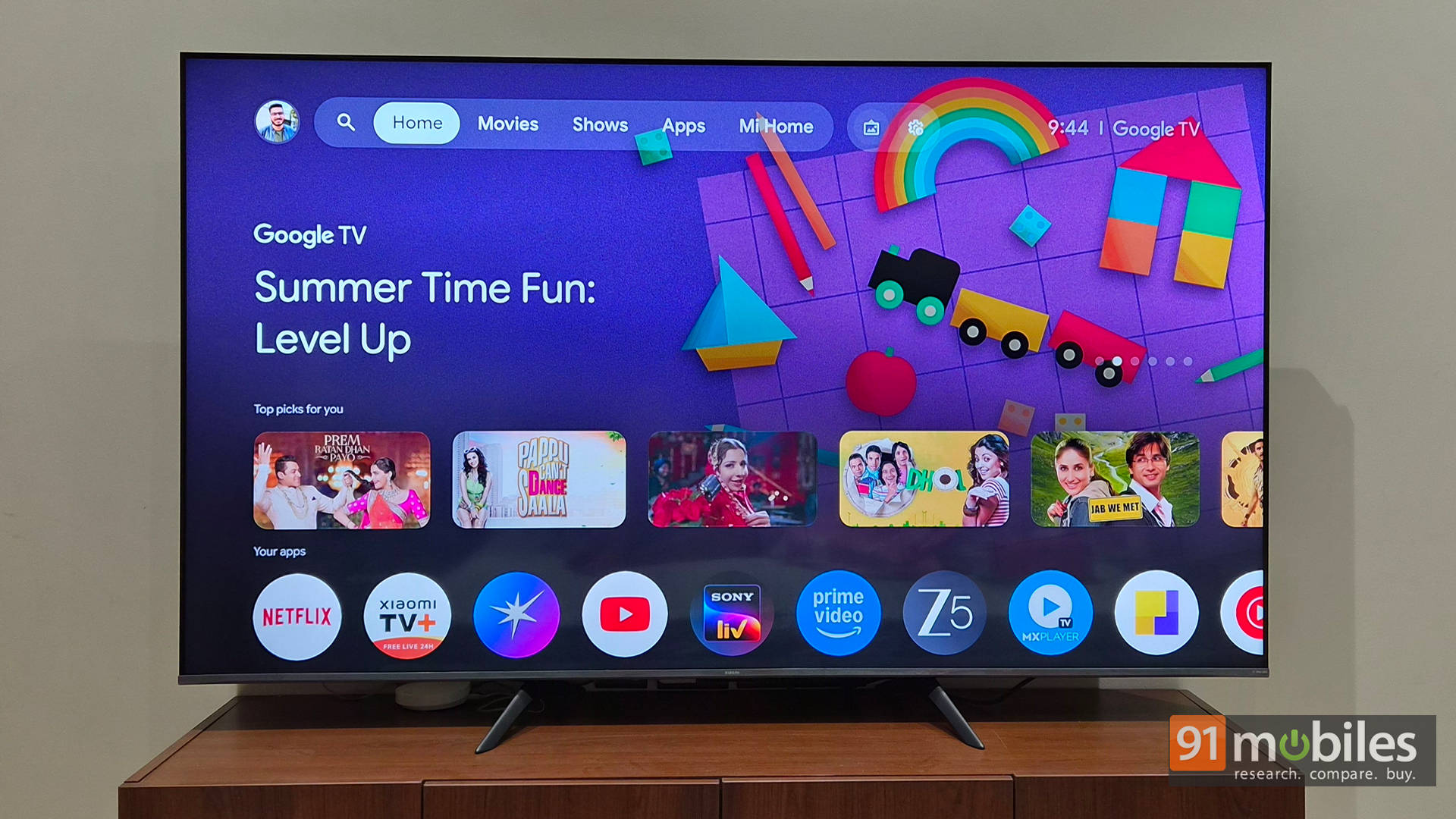
A 75-inch QD-Mini LED panel with 512 local dimming zones, Dolby Vision, HDR10+, and 1,200 nits peak brightness at Rs 99,999. The Xiaomi TV S Mini LED 75 makes a provocative case for itself on paper, and it mostly delivers. Dark scenes from The Batman and Dune show the Mini LED advantage immediately; blacks look genuinely deep, highlights punch harder, and the sense of depth is a step above anything a standard QLED can manage at this price. HDR content gets impressively bright, and the 75-inch scale amplifies every bit of that contrast improvement.
The X Pro QLED reviewed in April was about making 75 inches accessible. The S Mini LED 75 is about what happens when you spend Rs 30,000 more: better contrast, better HDR, and a more cinematic baseline. The 34W quad-speaker system is a genuine positive, performing better than most large TVs in this range without a soundbar. Google TV with PatchWall+ runs cleanly for streaming, and AirPlay 2 and Chromecast cover both Apple and Android households well.
The caveats carry weight. The 120Hz Game Boost is DLG-based, dropping to 1080p for higher frame rates. This is not a native 4K 120Hz panel, and serious console gamers looking for flawless 4K 120fps should look at the Lumio Vision 9 2026 instead. The quad-core Cortex-A55 chipset and 2GB RAM are the same budget hardware as the cheaper X Pro, and the same sluggishness in app switching surfaces here too, especially in prolonged use. This is a panel that deserves a faster processor underneath it.
Editor’s Rating: 8.5 / 10
Pros:
- Excellent Mini LED picture quality for the price
- Bright, vibrant HDR performance with strong contrast
- Surprisingly good built-in speaker setup
- Great value for a 75-inch premium-style TV
Cons:
- Not a true native 120Hz panel
- Can feel sluggish at times
Read our full review here
Lumio Vision 9 65-inch (2026): Rs 72,999 (effective Rs 64,999 with launch offers)
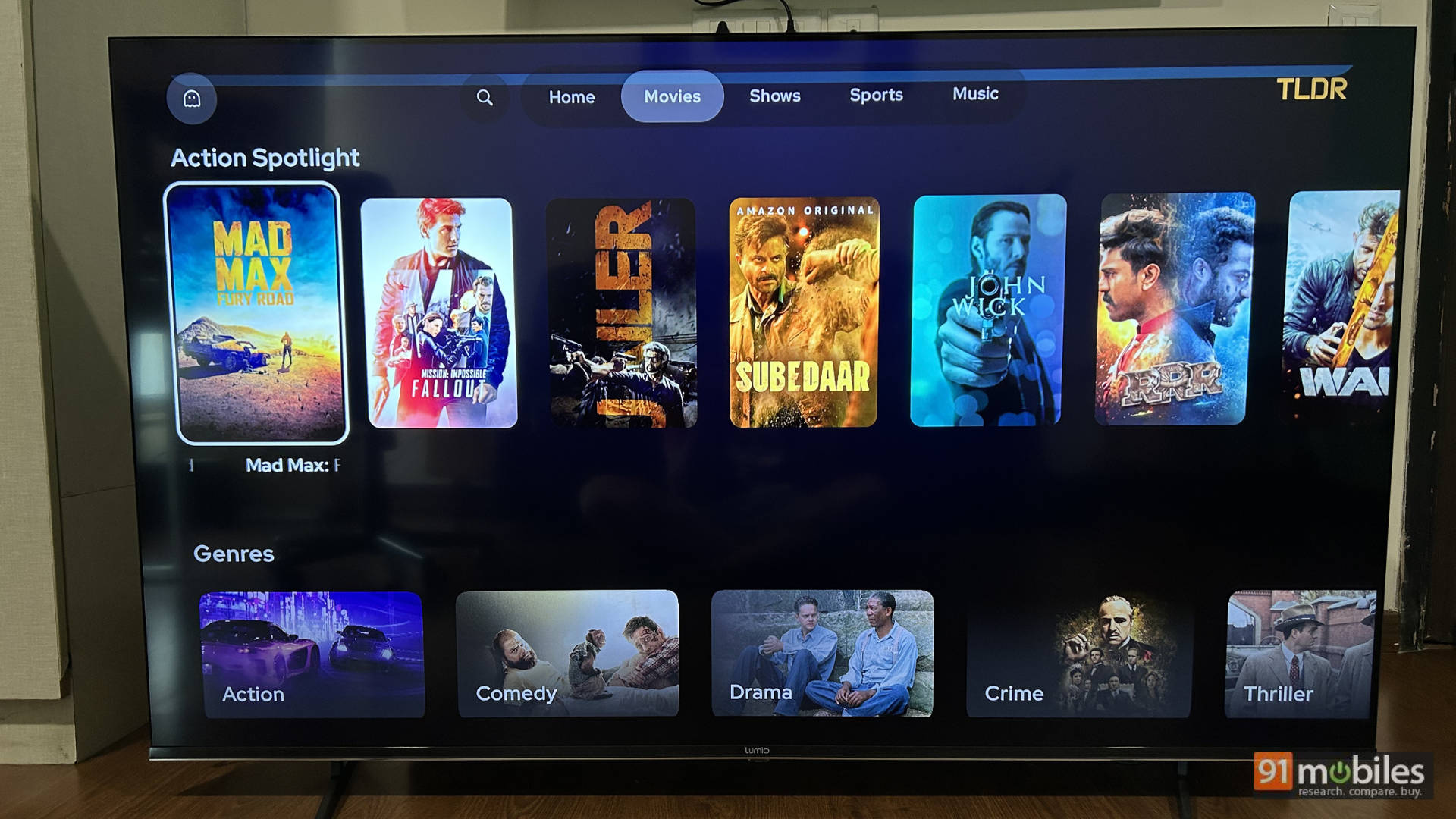
Lumio’s Vision 9 had a strong debut in 2025, and a long-term review six months later confirmed it had not slowed down. The 2026 iteration addresses the two most common requests from the first generation: a larger screen size and higher gaming refresh rates. The result is a 65-inch QD-Mini LED panel built on Lumio’s EVA (Enhanced VA) technology with native 4K at 144Hz, two full HDMI 2.1 ports at 4K 144Hz, VRR, ALLM, and an input lag of 9.7ms. For a TV at Rs 72,999, that gaming specification is remarkable.
The display uses a VA panel with Mini LED backlighting and quantum dot colour, with a 7,000:1 native contrast ratio and a claimed 100,000:1 dynamic contrast. SDR performance is where the Vision 9 2026 shines most consistently: IPL on JioHotstar had greens that looked vivid without being fake, natural skin tones, and local dimming that kept the scoreboard bright without washing out the rest. HDR is where calibration matters. Out of the box, dark and demanding HDR scenes can look slightly dimmer than the punchy SDR experience suggests, and colour accuracy in HDR benefits from manual tuning. The panel hardware is clearly capable; software updates could close this gap.
The MediaTek Pentonic 700 chipset, 3GB DDR4 RAM, and faster storage make this the quickest Google TV interface at its price point. Boot time is measured in seconds. App switching between Netflix, YouTube, and JioHotstar is immediate. The 50W hexa-driver audio system with dual subwoofers is exceptional for a built-in TV speaker, with bass extending to 38Hz. Port placement is outward-facing, making wall mounting genuinely convenient.
Editor’s Rating: 8.8 / 10
Pros:
- Superb SDR performance
- Two full HDMI 2.1 ports with support for 4K/144Hz or 1080p/240Hz
- The TLDR app is a great USP
- Punchy audio output
- Super smooth UI
Cons:
- Real-world HDR brightness could be better
- Local dimming deactivates on console inputs
- PS5 HDR needs manual tuning
Read the full review here.
Sony Bravia 3 II 55-inch (K-55XR35M2): MOP approx. Rs 95,000 (Rs 1,50,000)
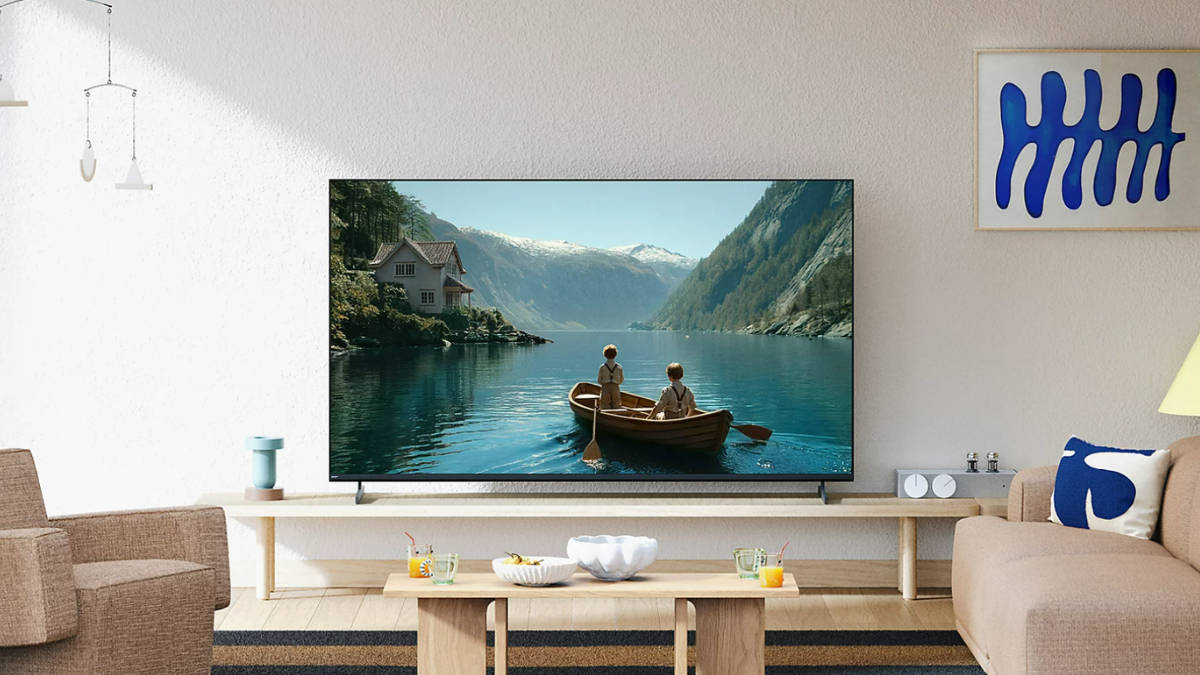
The Sony Bravia 3 II does not win spec comparisons. It is a Direct-LED panel with frame dimming and no local dimming zones. Its peak brightness is not the highest in its price bracket. On paper, several cheaper TVs offer more. And yet, the most common reactions from people who walked past it without knowing the brand or price were: ‘Is this a Mini LED?’, ‘The colours look incredible’, and, most pointedly, ‘It’s a Sony, naturally, the picture quality is excellent.’
That reaction is the product of two things: the Cognitive Processor XR and XR Triluminos Pro. Sony’s picture processing is in a different class from what competing brands offer at this price. In SDR, the Bravia 3 II covers 99.8% of the Rec. 709 colour space and delivers skin tones, shadow detail, and colour accuracy that make even 720p upscaled content look composed and watchable.
HDR content in Dolby Vision, Top Gun: Maverick was the test title, produces punchy highlights in the final dogfight without blooming in the dark opening sequences. Sony’s XR Clear Image upscaling is the best in this price class, and the Cinema preset with Motionflow off is the correct starting point for movie watching.
The gaming story is the biggest upgrade over previous Bravia models: all four HDMI ports are now HDMI 2.1, supporting 4K 120Hz with VRR and ALLM. A PS5 is auto-recognised, calibrated for HDR, and the Game Menu consolidates all gaming settings in one place. Games like Spider-Man 2 and Gran Turismo 7 looked exceptional.
The 20W X-Balanced speakers are deceptively capable, vocal clarity in particular stands out, to the point where subtitles felt optional. The included remote is designed for blind navigation and works well in the dark. Google TV runs cleanly, with Sony’s overlay for settings.
Editor’s Rating: 8.8/10
Pros:
- Excellent SDR picture quality and colour accuracy
- All four HDMI ports are 2.1
- Crisp and clear vocal audio
- Premium build quality
- Very good picture upscaling
Cons:
- Port placement can get awkward when the TV is wall-mounted
- Google TV UI can occasionally stutter
Read the full review here.