iQOO 15R long-term review: does it still deliver despite the price hikes


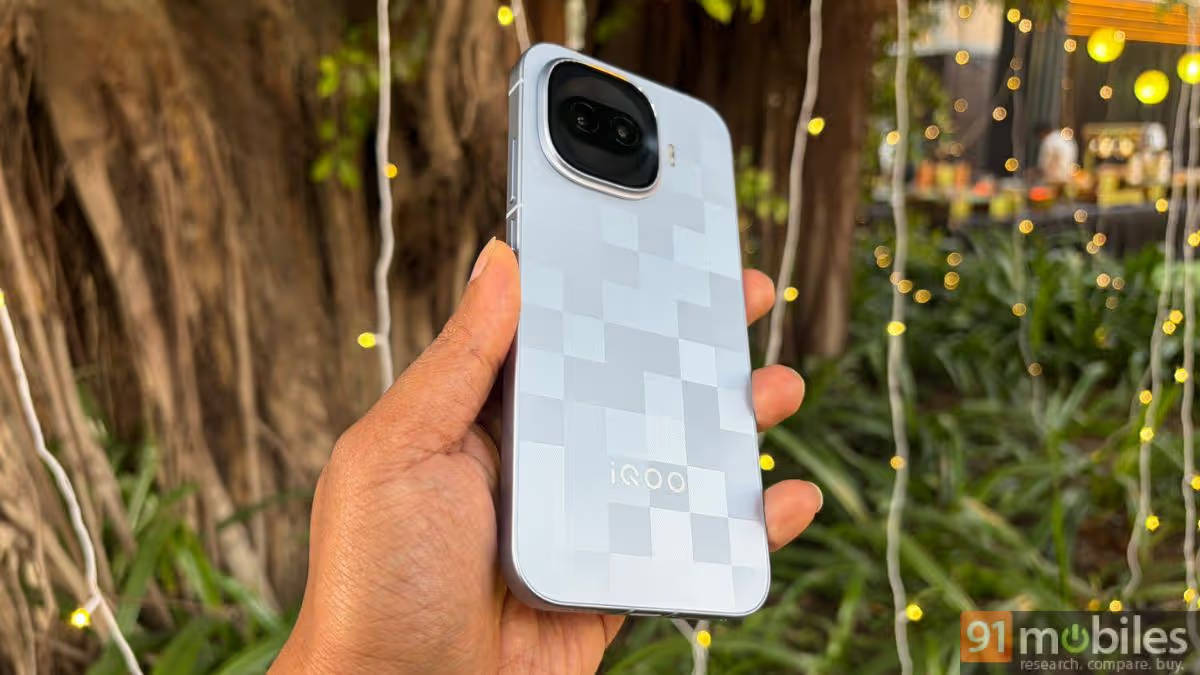
The iQOO 15R launched in India earlier this year as the brand’s performance-focused sub-flagship smartphone. Its biggest highlight was being the most affordable smartphone powered by Qualcomm’s Snapdragon 8 Gen 5 chipset, delivering flagship-grade performance at a competitive price.
Four months later, the smartphone is now Rs 5,000 more expensive, with its price now starting at Rs 49,999 due to rising component and memory costs across the industry. So, with the price increase and a highly competitive market, does the iQOO 15R (review) still make sense in 2026? Here’s our long-term review.
Table of Contents
Design and the sweet spot for size
iQOO has largely stuck to a clean and understated design language for its flagship lineup, and the 15R follows the same philosophy. The standout Triumph Silver colour variant features a tiled pattern on the rear panel. While the design certainly grabs attention, it may not appeal to everyone and can resemble bathroom tiles at first glance. The Dark Knight variant, meanwhile, offers a more classic and understated black finish.


What impressed me far more than the design was the phone’s size. The 6.59-inch display hits a sweet spot between compact and large-screen devices. It’s comfortable to hold, easy to use with one hand, and still offers an immersive experience for watching videos, scrolling through social media, and gaming. The slim bezels further enhance the viewing experience and make the device feel more premium.


Performance remains a strong selling point
The iQOO 15R is powered by Qualcomm’s Snapdragon 8 Gen 5 chipset, paired with the in-house Supercomputing Chip Q2, LPDDR5X Ultra RAM, UFS 4.1 storage, and a large 6,500mm2 vapour chamber cooling system. Even after four months of usage, performance remains one of the phone’s biggest strengths. Whether it’s streaming content, multitasking, browsing social media, gaming, or everyday productivity, the iQOO 15R handles everything with ease.
AnTuTu score


Motorola Signature
Qualcomm Snapdragon 8 Gen 5
3,098,258

iQOO 15R
Qualcomm Snapdragon 8 Gen 5
3,078,708

OnePlus 15R
Qualcomm Snapdragon 8 Gen 5
2,957,229
AnTuTu assesses a smartphone's CPU, GPU, memory, and overall user experience (higher is better)
Benchmark scores remain competitive against rivals such as the OnePlus 15R and Motorola Signature, both of which are priced higher. While it doesn’t quite match the raw power of the Snapdragon 8 Gen 5 Elite found in flagship devices, the difference is negligible in day-to-day use. For most users, there’s more than enough performance on offer here.
Outstanding battery life
Battery life continues to be one of the iQOO 15R’s standout features. The phone packs a massive 7,600mAh battery with support for 100W FlashCharge and bypass charging. In real-world usage, the phone consistently delivers close to two full days of battery life with moderate use, including video streaming, social media, casual gaming, hotspot usage, and messaging. Even power users should comfortably get through a full day without reaching for the charger.


When you do need to top up, the 100W fast charger takes the battery from empty to full in roughly 45–50 minutes, which is impressive considering the battery’s size. What’s even more remarkable is that iQOO has managed to fit such a large battery into a device that still feels relatively compact and comfortable to use.
Good cameras, but not the main attraction
Cameras aren’t the primary focus of the iQOO 15R, but they are more than capable for casual photography and social media use. The phone features a dual-camera setup comprising a 50MP primary sensor and an 8MP ultra-wide lens, while selfies are handled by a 32MP front camera.
While the hardware is solid, the absence of a dedicated telephoto or periscope lens limits the phone’s zoom capabilities and portrait photography compared to some rivals in the segment. That said, the 50MP primary camera performs well, capturing punchy colours and plenty of detail in both indoor and outdoor lighting conditions. You can also switch to the full-resolution 50MP mode for sharper images when needed.
Although the camera system lacks the versatility offered by more photography-focused smartphones, it delivers reliable results for everyday shooting, social media uploads, and casual content creation. If you want a more versatile camera setup, then the Motorola Edge 70 Pro+ (review) is an option as it offers a 3.5x telephoto lens and is also more affordable at Rs 47,999.
OriginOS 6: smooth but not perfect
The iQOO 15R runs Android 16-based OriginOS 6 and is currently on the May 2026 security patch. OriginOS 6 offers a polished and smooth UI, making the whole experience of using the phone a delight. Animations are fluid, the interface feels responsive, and there is plenty of room for customisation.


Features such as Origin Island, iQOO’s take on Dynamic Island, add a layer of convenience and visual appeal. However, the feature still needs some refinement. While using music apps, Origin Island occasionally struggles to switch correctly to the active app, resulting in an inconsistent experience. It’s a minor issue, but one you’ll likely encounter regularly if you use the feature often.
Speakers could be better
One area where the iQOO 15R left me wanting more was audio output. The stereo speakers offer a decent listening experience, but they require higher volume levels before they start sounding truly loud and impactful. The issue isn’t immersion or audio quality itself; rather, the speakers lack the punch and power seen on some competing devices. A similar observation applies when using Bluetooth and wired earphones, where the volume output could have been stronger.
iQOO 15R vs competition
iQOO 15R
POCO X8 Pro Max
If your priorities are performance, battery life, and everyday usability, the iQOO 15R remains an easy recommendation even months after its launch. However, recent market shifts and aggressive rival pricing have shaken up the segment. Enter the POCO X8 Pro Max (review). This performance-focused competitor offers a massive 9,000mAh battery. While its chipset isn’t as powerful as the iQOO 15R’s, it still handles intensive tasks with ease. If you’re looking for a wallet-friendly alternative, the POCO is a compelling choice, just keep in mind that its colossal battery comes with a much bulkier form factor.
The iQOO 15R also remains more affordable than its closest competitor, the OnePlus 15R (review), at least when comparing the 8GB + 256GB variant, which the former doesn’t have. For most users, this configuration offers more than enough performance, making it an excellent value proposition. Things get more interesting with the 12GB + 256GB models, as both phones are now priced identically.
iQOO 15R
POCO X8 Pro Max
Even so, the iQOO 15R continues to stand out thanks to its superior performance, more compact design, and larger battery capacity. The OnePlus 15R does have an edge with its 165Hz display, which can deliver higher frame rates in select games. However, the real-world difference is unlikely to be noticeable for most users unless gaming is a top priority. As a result, even at the same price, the iQOO 15R still appears to be the more compelling choice overall.
Still worth purchasing?
Four months later, the iQOO 15R continues to be one of the strongest value-for-money performance smartphones in its segment. Despite the Rs 5,000 price hike, it still delivers excellent performance, class-leading battery life, fast charging, and a comfortable form factor. The speakers could be louder, and Origin Island still needs a few refinements, but these are relatively minor compromises in an otherwise well-rounded package.