In a short time, Nothing has made its mark in the smartphone world by releasing phones with a clear USP: transparency. This has evolved beyond just a USP; it has become the brand’s identity. Building on this, Nothing expanded its product lineup with truly wireless earbuds, including the Nothing Ear (1), Ear (2), and the Nothing Ear, among others. This week in London, UK, the company announced the Nothing Headphone (1), its first-ever over-ear headphones, and unsurprisingly, the signature identity remains.
Nothing’s debut over-ear headphones are more than just a design flex; they deliver a well-rounded mix of premium sound, comfort, smart features, and battery life. While there’s stiff competition in this segment, the Headphone (1) stand out with their design and intuitive controls. But is the KEF-tuned sound quality as head-turning as the design? Let’s find out.
Design and comfort: Eye-catching, yet practical
The Headphone (1) come in a sleek but bulky case that takes up space in your backpack. A key drawback is that the headphones don’t fold, which makes them less portable. In the box, you get the headphones, a USB Type-C cable, and a 3.5mm cable.

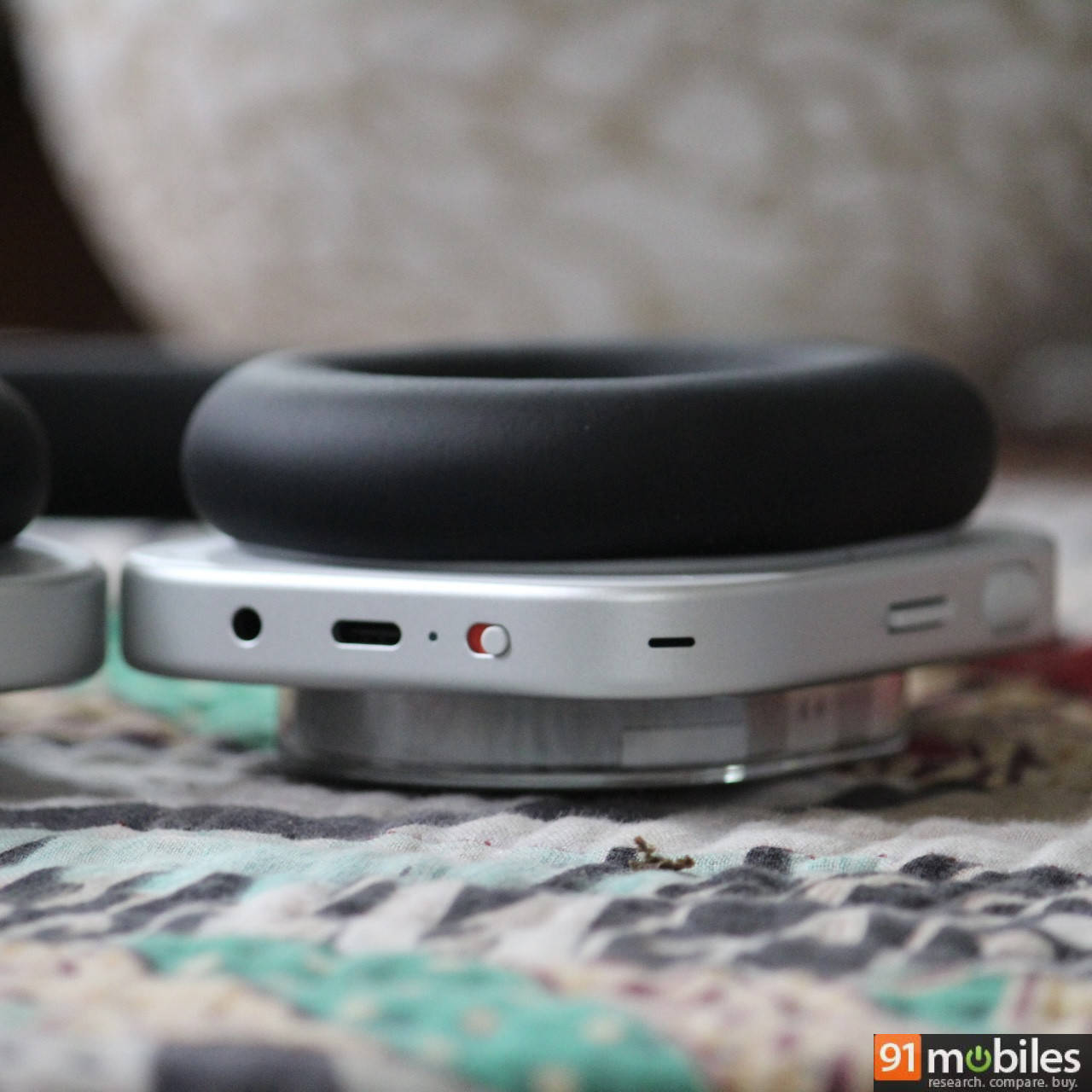
If you’ve seen Nothing products before, the transparent design won’t surprise you, but it still turns heads. With a retro, cassette-tape-like housing, visible internals, and a mix of aluminium and PU memory foam, the build feels premium without going overboard. The adjustable arms slide silently, and the ear cups offer a snug, cushioned fit that stays comfortable for a couple of hours at a time.
That said, the square earcups tend to bump into each other when worn around the neck or placed on a surface, which could lead to scuffs over time. On the bright side, they’re IP52 rated, so they’re resistant to dust and light splashes.

Ergonomics are well thought out, and the design is clearly made to stand out. I wore these during my commute, and they drew attention. A few people even asked about them. While I prefer the cleaner aesthetic of something like the Sonos Ace or Sony XM5, I didn’t mind sporting these at all.
Like most over-ears, they can get warm after extended use, and the weight becomes noticeable during longer sessions. Your mileage may vary, but I had to take breaks after about an hour.
Sound quality: Balanced and spacious, with room to tweak
The Nothing Headphone (1) make a decent first impression with their sound. Nothing is using a custom 40mm driver in each earcup, and tuning support from British audio brand KEF gives them a clean and balanced profile, with well-controlled bass that avoids sounding muddy or overpowering. Tracks like Madness by Muse or Get Lucky by Daft Punk reveal a low-end that feels deep yet disciplined in the default Balanced mode. Switch the EQ to More Bass and you’ll notice some major popping sounds at higher volume levels in bass-heavy tracks – an absolute bummer.
The default tuning leans slightly on the safe side. Vocals and treble details sometimes lack presence, resulting in certain tracks sounding somewhat muted or less energetic than expected, such as Muse’s recent single, Unravelling. Matt Bellamy’s vocals don’t quite cut through the way they should amidst the heavy guitar riffs, bass, and drums.

If you’re not fully satisfied with the out-of-the-box tuning, the Nothing X app gives you plenty of control. In addition to the basic EQ presets, such as Balanced, More Bass, More Treble, Voice, and Custom, you also get an 8-band EQ in the Advanced tab that allows you to tune the vocal clarity or treble to your taste precisely. A few quick tweaks can noticeably improve detail and balance.

In short, the Headphone (1) sounds good from the start and can sound even better with a bit of tinkering with advanced EQ. They’re detailed and immersive, but EQ fine-tuning is needed to unlock their full potential. But if you’re looking for that richness, balance, and energy from the sound, you’re better off spending a little extra on the Sony WH-1000XM4.
For those who want more immersive sound, spatial audio, and dynamic head tracking add an extra layer of presence, especially while watching movies or playing games. Unfortunately, the bass enhancer and the advanced equaliser are not compatible with spatial audio. So you can have only one or the other at a time, not both.
ANC: Effective, but the seal does most of the work
ANC is effective, and you have the option to choose between low, mid, high, and adaptive ANC, depending on how much outside noise you want to block out. Adaptive ANC utilises hybrid microphones and wear detection to tailor noise cancellation to your surroundings. Even without ANC enabled, the earcups create a decent seal around the ears for effective passive noise cancellation.
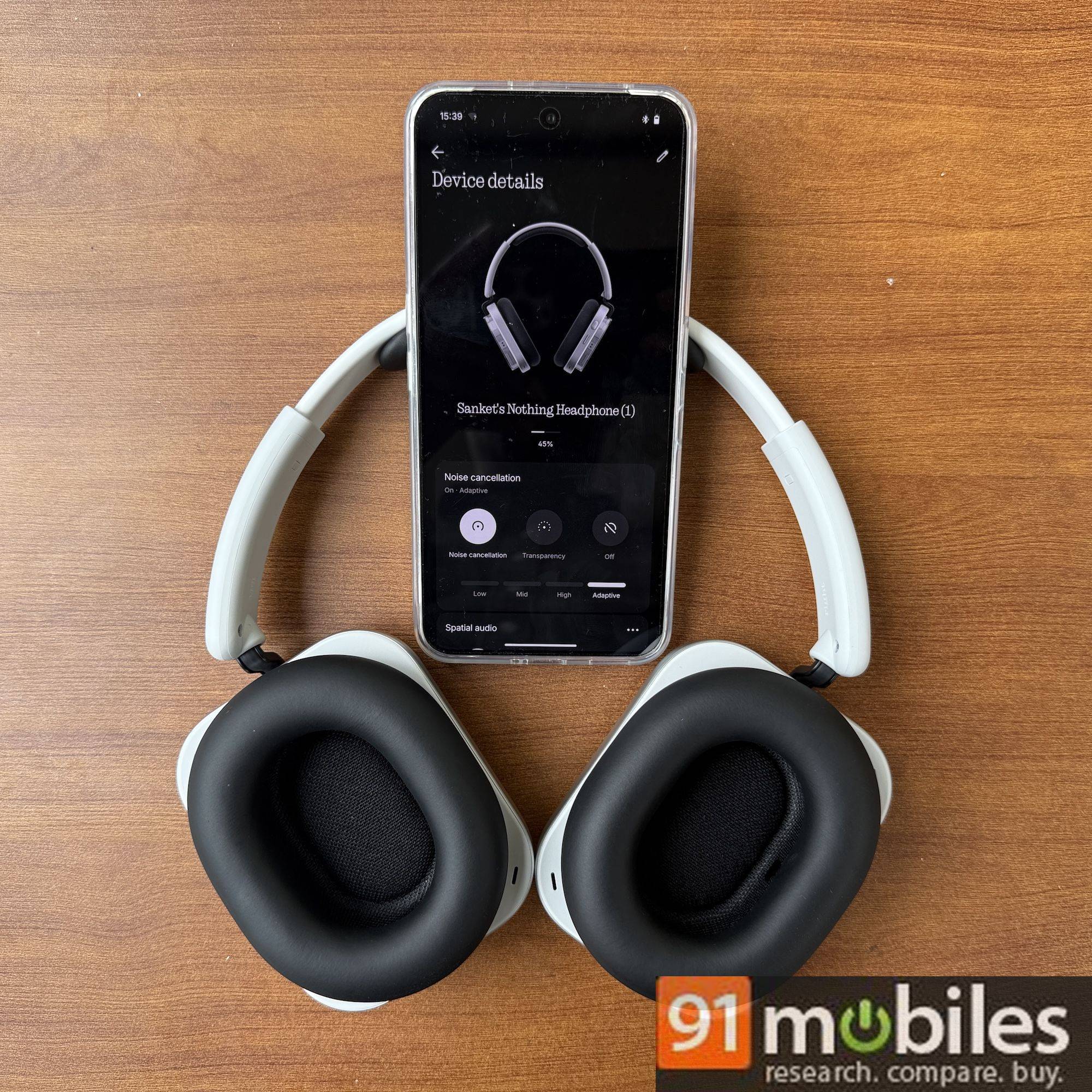
Transparency mode works well, letting in enough ambient sound to keep you aware without completely disrupting your audio.
Controls: Physical buttons with a learning curve
Nothing skips touch panels in favour of physical controls, a choice I appreciate. But with the Roller, Paddle, and Button system, there’s a bit of a learning curve.
The Roller adjusts volume, plays/pauses music with a click, and toggles ANC modes with a long press. The Paddle is designed for track skipping and scrubbing, but during my testing, the scrubbing feature failed to work on both iOS and the Nothing Phone (3), likely due to app limitations. The Button launches a smart assistant or Channel Hop on the Nothing Phone (3), which cycles through recent audio apps. While it worked fine launching Apple Intelligence on my iPhone, the app-switching feature didn’t work consistently on the Nothing Phone (3), despite enabling all the right settings.
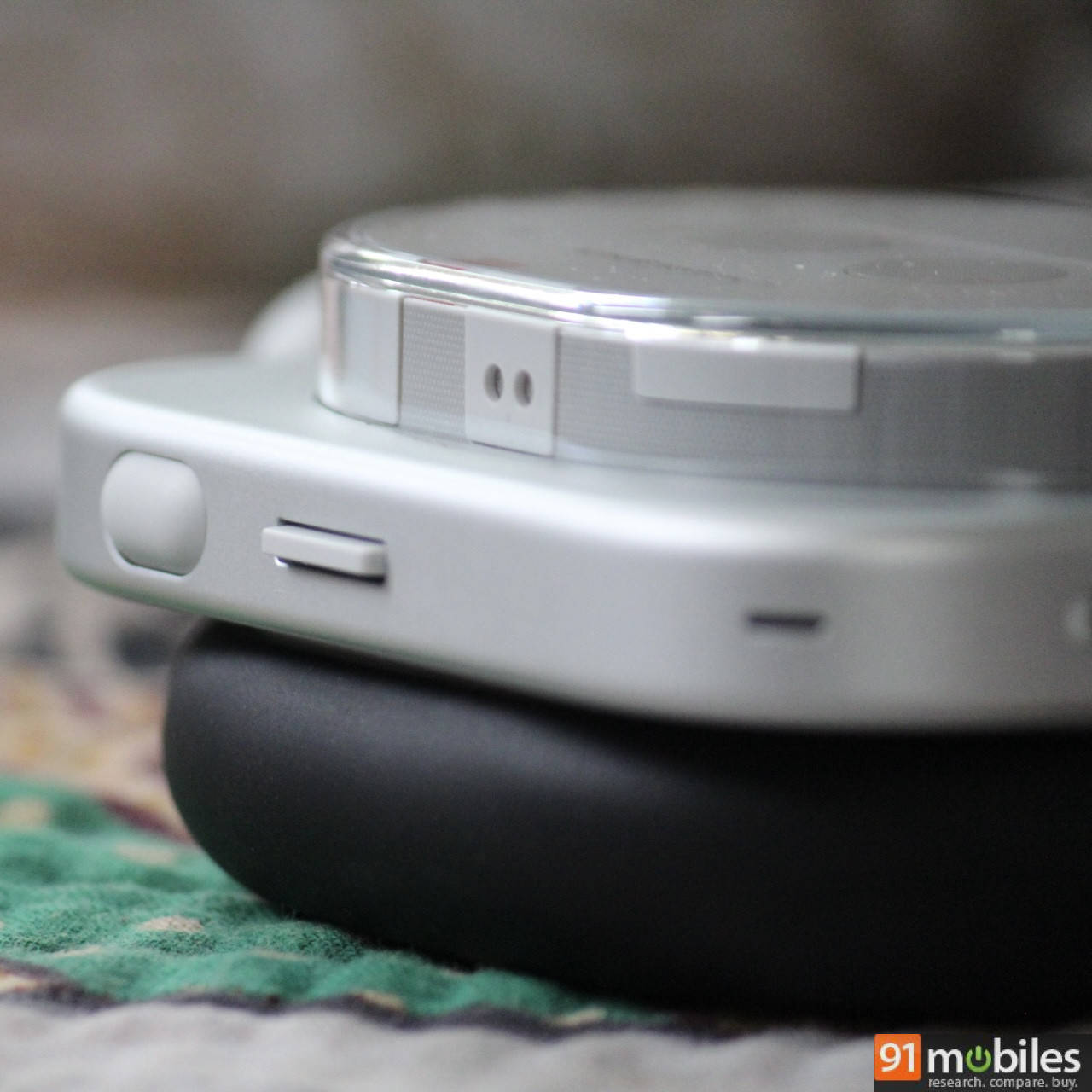
That said, once you get used to the layout, physical buttons are more reliable than touch controls, especially for accidental touches or lag. Still, even after two weeks, I found myself fumbling to remember which button did what.
Call quality: Surprisingly solid
Call quality is strong, thanks to four dedicated microphones and AI-based Clear Voice Technology, which effectively filters out ambient noise. Whether you’re in a cafe or on a windy street, voices sound clean and intelligible.
Dual-device connectivity is another win, allowing you to switch between phone and laptop without re-pairing, a helpful feature for multitasking or making quick calls between sessions.
Battery life: Surpasses rivals
Battery performance is impressive. Nothing claims up to 80 hours of playback with ANC off and around 35 hours with it enabled. I couldn’t verify those numbers exactly, but after using the headphones for about two hours a day over two weeks, with the battery still sitting around 20 per cent, the claims seem credible.
Verdict
Nothing’s first-ever headphones aren’t just about standing out. They manage to back the flashy design with a mostly solid feature set. You get great battery life, decent noise cancellation, and a wide, immersive soundstage that feels premium. The KEF-backed tuning provides a solid foundation, and with some EQ work, you can further enhance clarity and balance.
That said, there are quirks. The default tuning feels too safe, some features (like scrubbing or Channel Hop) are hit-or-miss, and the non-folding design affects portability. The weight and warmth can also make longer sessions a bit tiring.
But if you’re okay spending a few minutes tweaking settings and don’t mind the bold design language, the Headphone (1) offers something most headphones in this price range don’t: personality. They’re not perfect, but they’re interesting, and that alone sets them apart in a sea of same-looking over-ear headphones. But if sound quality matters to you above all else, you should grab the Sony WH-1000XM4 or the Bose QuietComfort. In fact, during festive sales, the Sony headphones can be bought for as much as the Headphone (1) cost.
Editor’s rating: 8 / 10
Pros:
- Spacious and immersive soundstage with impressive separation
- Unique design that feels premium
- Stellar battery life with ANC enabled
- Solid passive isolation and decent ANC performance
Cons:
- Popping issues at high volumes in bass-heavy EQ modes
- Non-foldable design affects portability
- Default tuning lacks vocal and treble energy