OnePlus 15R long term review: still a smooth performer after several price hikes?


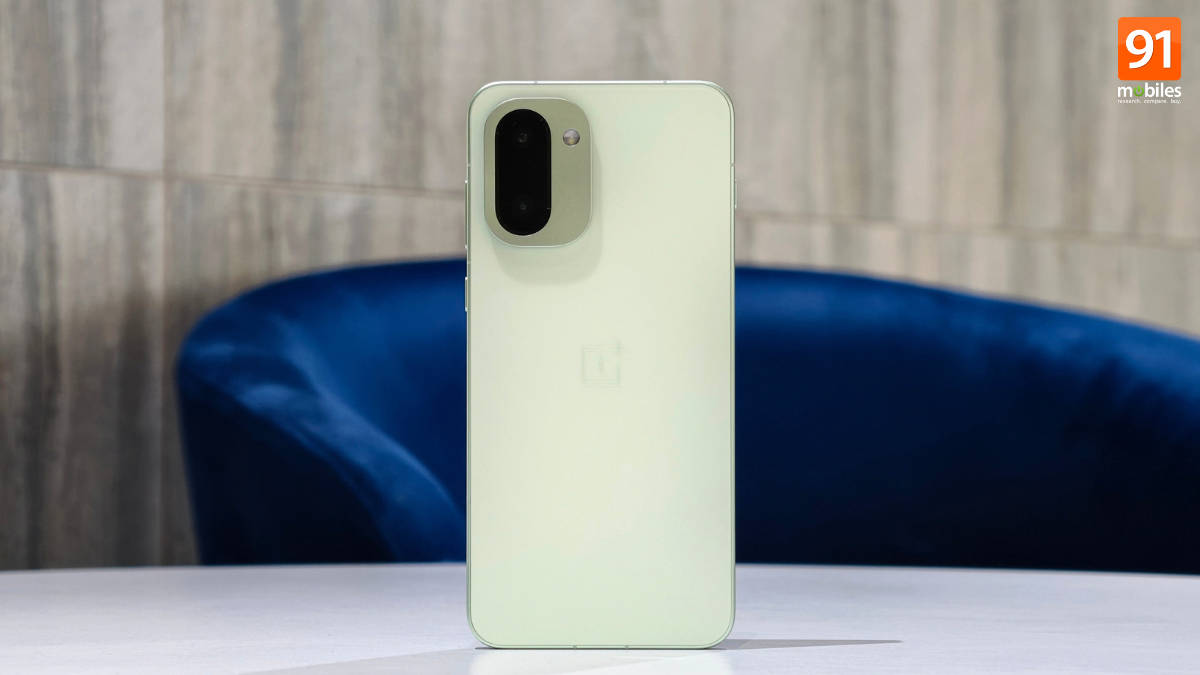
While OnePlus is winding down operations in North America and Europe, the brand has reaffirmed that India remains a highly important market and will continue to launch a wide range of products. With such strong assurance, OnePlus remains a competent player in the market, and its phones continue to stay relevant, such as the OnePlus 15R. Launched in December 2025 at Rs 47,999, the phone’s price has since increased to Rs 59,999 due to the industry-wide memory shortage, a situation that has forced most brands to follow the same path.
Along with the price hikes, the OnePlus 15R has also received several software updates over the course of seven months, making it a more polished device since its release. So, if you’ve been planning to get one and are wondering how it has fared over time? Find out in this long-term review.
Table of Contents
Clean and subtle design
When the OnePlus 15R launched late last year, its rear design made huge headlines for adopting a minimal, subtle camera module over the OnePlus 13R’s circular, bold camera island. Depending on how you perceive this move, there’s no denying that the 15R’s rear panel with the compact, metallic camera housing continues to look extremely clean.


Moving on, the aluminium frame and glass back panel instil great confidence when using the OnePlus 15R caseless. Although the panel’s matte finish makes the device prone to slipping from hands when not held firmly, the Mint Breeze colourway has such a calm and soothing appearance that it’s hard to get tired of it. For those seeking something classic, there’s the Charcoal Black variant, while the Electric Violet could suit those willing to stand out.
Weighing between 213 and 219 grams, depending on the colour variant, the OnePlus 15R certainly weighs heavier than smartphones launched after it, such as the iQOO 15R (202g) and Xiaomi 17T (200g), both with 6.59-inch displays, while the Moto Edge 70 Max is bulkier at 221g. That said, the OnePlus 15R may not fare well with users coming from handy or small-sized phones despite the premium build.
Durability
The OnePlus 15R is the first “R” series phone from OnePlus to feature full IP66, IP68, IP69, and IP69K ratings, offering the same strong protection against dust and high-pressure water as the OnePlus 15. While the front Corning Gorilla Glass 7i has picked up some minor scratches over months of use, the rear glass still looks pristine. I’ve even washed the phone directly under a running tap, and it continues to work flawlessly.
Smoothest display experience in its class
The major highlight of the OnePlus 15R’s display continues to be its 165Hz refresh rate support, which still makes it the only phone in its price class to offer it. Unfortunately, as was the case at launch, the panel is mostly limited to 120Hz in all scenarios except certain games. Despite this restriction, scrolling and operating the phone is as silky as it gets. After the OPPO Find X9 Ultra and OnePlus 15, the OnePlus 15R is the smoothest phone I have used this year.

Despite the price hike to Rs 59,999, the OnePlus 15R’s display doesn’t hold back in offering a top-tier experience, regardless of the content you view on it daily, including YouTube videos, OTT content, social media posts, or gallery media. On top of this, the stereo speakers produce loud and crisp output.
Potent performance powerhouse
As the first smartphone powered by the Qualcomm Snapdragon 8 Gen 5, the OnePlus 15R performs remarkably well in daily use, whether for gaming or the usual tasks, such as multitasking, chatting, scrolling through apps, fiddling with the animations, etc.
While the iQOO 15R and Motorola Edge 70 Max, both with the Snapdragon 8 Gen 5, come close to offering a fluid experience, the OnePlus 15R’s hardware and software combination remains unmatched, as the phone shows no signs of stuttering and its animations are highly responsive. While I’ll cover this in more detail in the software section, I feel OxygenOS utilises the maximum potential of the chipset to offer a leading, well-refined experience.
The OnePlus 15R can run certain games at 165Hz refresh rates, such as popular titles from Supercell like Clash Royale and Clash of Clans, Call of Duty: Mobile, and BGMI, with the latter using frame interpolation to add more frames in real time. Having left playing Clash Royale years ago, I installed it on the OnePlus 15R to assess the experience at 165Hz, and the phone didn’t disappoint. Every scroll and flick was buttery smooth, with animations that looked spectacularly fluid, though the difference isn’t significant from 120Hz.
AnTuTu score


iQOO 15R
Qualcomm Snapdragon 8 Gen 5
3,078,708

Motorola Edge 70 Max
Qualcomm Snapdragon 8 Gen 5
2,972,932

OnePlus 15R
Qualcomm Snapdragon 8 Gen 5
2,957,229

vivo X200T
MediaTek Dimensity 9400 Plus
2,821,319
AnTuTu assesses a smartphone's CPU, GPU, memory, and overall user experience (higher is better)
Moving on to CODM, after playing two consecutive Multiplayer matches of around eight minutes each, the phone’s temperature stayed around 40 degrees Celsius, while the frame rate remained consistently above 160 fps throughout the session. With the strong hardware and excellent optimisation on offer, it’s safe to say the OnePlus 15R will continue to deliver a great experience even several years from now. This has personally been my experience with previous OnePlus phones, including the OnePlus 12, 12R, and Nord 5.
OxygenOS keeps getting better, but not for long
While OxygenOS 17 will not see the light of day, since OnePlus smartphones will jump ship to ColorOS starting with Android 17, the OnePlus 15R’s software has only improved since its launch. Launched with OxygenOS 16, the device came packed with immense homescreen and lockscreen customisability, nifty productivity and imaging AI features, dozens of improved animations, and detailed light and shadow effects throughout the interface.


Just a couple of months back, the OxygenOS 16.0.7 update (dubbed OxygenOS 16.1 internally) brought brand new features, such as Live Space, contour glow, easy homescreen and app drawer management, a revamped Camera app, new AI translation functionalities, and more. While we’ve covered every new addition of the update in a dedicated article, I was particularly impressed by the smooth interactivity of Live Space, OxygenOS’ take on live activities on the lockscreen.


That said, the OnePlus 15R’s software is as fun to use as it was on day one. While OxygenOS 16 may have its quirks, such as notifications disappearing from the lockscreen when the phone is unlocked, it’s one of the most refined, fluid, and feature-rich Android skins out there.
The Android 17-based ColorOS 17 update will be the OnePlus 15R’s first major OS upgrade. It is expected to arrive in stable form within a few months, after which the phone will receive three additional Android updates. While this level of software support is fairly nominal for a device priced around Rs 60,000, rivals like the Vivo X200T promise five OS upgrades and the Motorola Signature offers seven, both faring better than the OnePlus 15R.
Battery built for heavy use
Running on an large 7,400mAh battery, the OnePlus 15R has held up pretty well in terms of offering multi-day endurance. In our last in-house test, the OnePlus 15R clocked over 18 hours on the PCMark Battery Drain test, an impressive feat in our books. In real-world use, the battery life is equally good, with the phone offering as high as 12 hours of screen on time on a full charge within a 24-hour period.
For a better understanding, here are the day-wise battery stats we’ve achieved during regular use of the OnePlus 15R:
The usage largely included watching movies or YouTube videos, playing games for several minutes a day, scrolling Instagram, and replying to WhatsApp messages. Even with heavy use, without extensive gaming, the OnePlus 15R can easily stretch through 1.5 days on a single charge, with location, Bluetooth, mobile data, and WiFi enabled for the whole time. Even without LTPO technology on the display, which was present on the 13R, the 15R’s massive battery makes up for it.
After the iQOO 15R (7,600mAh), the OnePlus 15R offers the largest battery in the sub-Rs 60,000 segment, a capacity that should suffice for most use cases even when pushed to its limits. With 80W fast charging on board, the device fully charges from 20 percent within just 50 minutes, per our lab tests.
Capable cameras that lack versatility
One of the biggest criticisms the OnePlus 15R received from the tech fraternity during its launch was the removal of the 50MP 2x telephoto lens found on the OnePlus 13R. While the criticism was somewhat valid, the telephoto camera on the 13R had a small sensor size and lacked OIS. To make up for this, OnePlus has significantly improved the 2x digital crop quality on the 15R with the help of its proprietary imaging pipeline, DetailMax Engine.

The 8MP ultrawide is useful for capturing wide perspectives of a given scene, while the details fall behind considerably compared to the main camera. Even though the cameras aren’t the OnePlus 15R’s strong suit, OnePlus has made sure that the most crucial lens, the 50MP primary camera, performs well in most scenarios and lighting conditions.
Here are some fresh camera samples taken on the OnePlus 15R on the latest firmware update as of July 31st:
Is the OnePlus 15R still worth buying?
The OnePlus 15R is a capable powerhouse that offers an excellent gaming experience, immersive entertainment, fluid software, a reliable primary camera, and top-notch battery life. This makes it a perfectly safe bet for 90 percent of the users out there looking for a phone around Rs 60,000 in mid-2026.

Since it omits a telephoto lens and wireless charging, the OnePlus 15R comes really close to offering the same experience as the OnePlus 15, which now sits at Rs 85,999 after the price hikes, making it a much more suitable pick if camera flexibility isn’t your top priority.
Speaking of which, the Vivo X200T and Xiaomi 17T stand as solid alternatives for photography enthusiasts and hobbyists, though you miss out on a large battery and the unique software perks OxygenOS carries.