OPPO has unveiled the successor to its capable flagship, the Find X8 Pro (review), globally and in China, and it’s far more than a mere name change with minor tweaks. The all-new OPPO Find X9 Pro remagines nearly every aspect from the ground up, starting with the design, which now feels more reassuring. Apart from that, the smartphone features the all-new high-end chipset, upgraded battery, enhanced camera setup, new AI features, and more.
I’ve had the chance to spend some time with the device, and here are my first impressions of the Find X9 Pro, which is set to launch in India very soon.
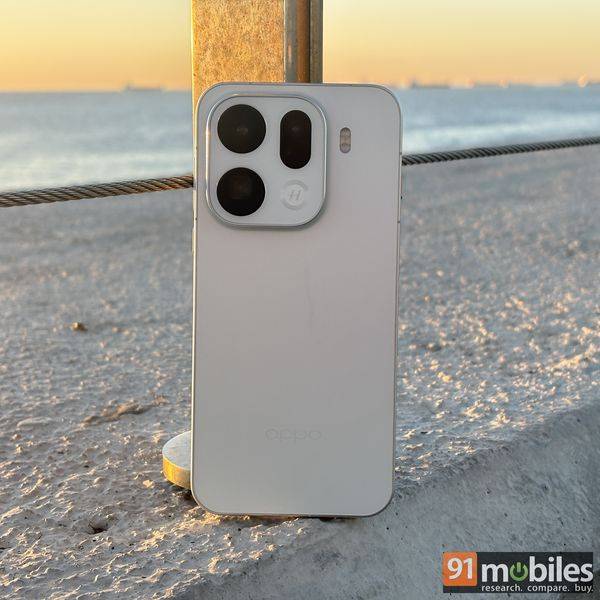
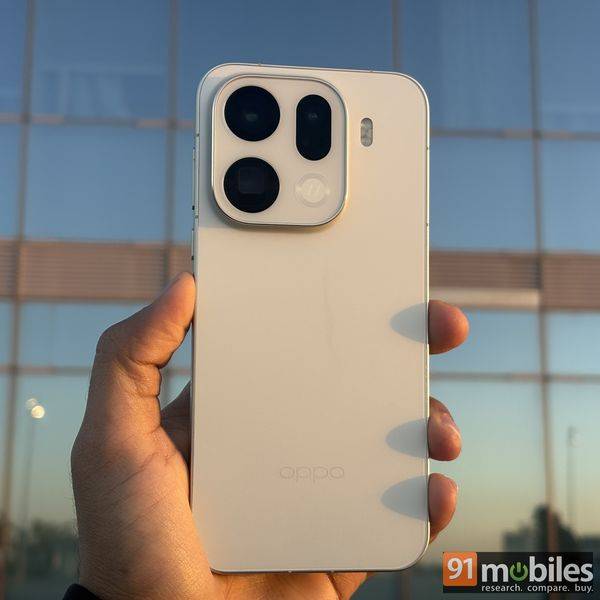
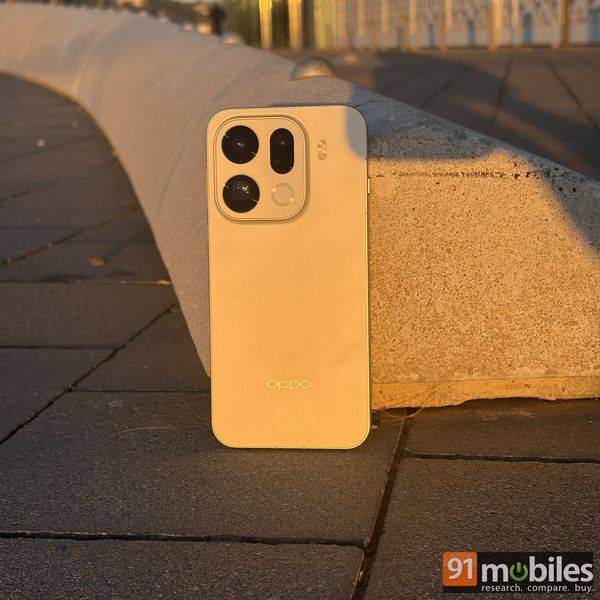
The OPPO Find X9 Pro sports a design that both looks and feels distinct from its predecessor. The handset now adopts a flat-edge frame with a smooth, velvety matte finish on the back, replacing the curved edges and marble-like texture of the Find X8 Pro. The result is a cleaner aesthetic and a noticeably more secure in-hand feel, making the device far less slippery than before.
The handset has also moved away from the large circular camera module in favour of a new squircle design. OnePlus took a similar move with the OnePlus 15. OPPO says this change was made to prevent the camera module from getting smudged during daily use. This claim will be verified during our extensive usage in a full review. Until then, the module isn’t as gigantic as the previous one. However, it does cause a slight wobble when placed on a flat surface, though far less than many other corner-aligned camera modules I’ve encountered.
Despite the noticeable protrusion, the module blends seamlessly into the glass back, lending the device a refined, cohesive look. Interestingly, it also doubles as a natural resting spot for the index finger, which becomes even more essential given its size and weight of 224 grams. The module even has an ‘H’ logo, which stands for OPPO’s partnership with camera maker Hasselblad.
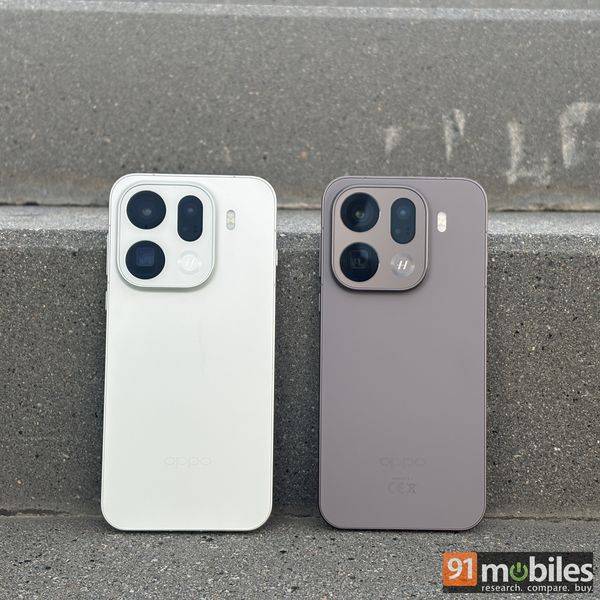
The Find X9 Pro comes in two colour variants: Silk White and Titanium Charcoal. We received the Silk White variant, which features elegant silver edges accented by neatly integrated white antenna lines. The left spine of the smartphone sports a multi-functional Snap Key instead of an alert slider. The key is similar to the OnePlus Action Key to launch AI Mind Space or customise it to switch between sound profiles, toggle the flashlight, launch the voice recorder, activate translations, and more. On the right spine, the device houses a ‘Quick’ button to launch the camera app. Unlike iPhones, the button cannot be customised to any other action (as of now).
The smartphone comes with IP66, IP68, and IP69 ratings for water and dust resistance. It also boasts high durability against accidental drops, earning 5-star drop-resistant certification from the Swiss testing company SGS.

The Find X9 Pro sports a 6.78-inch AMOLED display with formidable Corning Gorilla Glass Victus 2 protection. The bezels are narrower now, with just 1.15mm thickness on all four sides, for an immersive viewing experience. Moreover, the display brightness can drop to as low as one nit to reduce eye strain in low-light environments, and the 2,160Hz PWM dimming reduces flicker and eases eye strain.
For outdoor visibility, the Find X9 Pro is rated to achieve a maximum brightness of 3,600 nits. Since it is an LTPO panel, support for up to 120Hz remains dynamic, enhancing battery efficiency. The display resolution stays at FHD+ (2,772×1,272p), which may not match the quality of the QHD+ panel, but with 10-bit colour depth, 100 percent DCI-P3, and HDR10+, HDR Vivid, and Dolby Vision support, the visual quality should still rival that of any flagship display.
The smartphone features a 3D ultrasonic fingerprint sensor that, during my brief time with the device, proved to be extremely snappy and accurate at unlocking the device. Moreover, the scanner is positioned where the thumb naturally rests when holding the device.
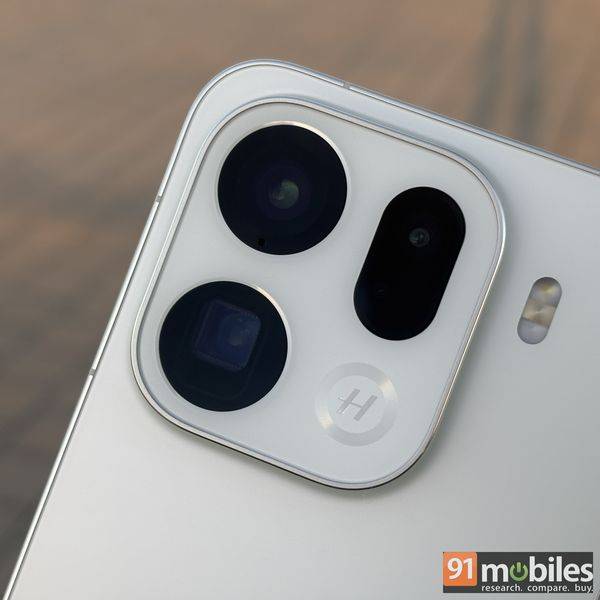
The Hasselblad camera system on the Find X9 Pro comprises a 50MP Sony LYT-828 primary sensor, a 50MP ultrawide sensor (the same as last year), and a 200MP telephoto lens. There is no fourth sensor this time; instead, the smartphone is claimed to use the upgraded 200MP sensor with sensor crop and advanced computational photography to deliver lossless zoom up to 13.2x. In controlled environments, I have found the sensor performs well in zoomed shots at the expense of minor smoothening; however, more testing across different lighting conditions is needed to reach a verdict.
We’re in Barcelona for the global launch of the #OPPOFindX9 series! 📍
— 91mobiles (@91mobiles) October 28, 2025
Here’s a quick look at some camera samples shot on the Find X9 Pro. 👇📸 pic.twitter.com/Kn5BcMO8a3
OPPO claims that the smartphone uses an industry-first True Colour Camera System for accurate colour reproduction, while its Lumio Imaging Engine improves clarity, dynamic range, and noise reduction. Additionally, the handset is the world’s first smartphone to capture images at a full 50MP resolution by default. This technically means details are better retained when zoomed in, although whether this comes at the expense of clarity, especially in low-light conditions, is something we’ll address in our full review.
For selfies and video calling, the handset features an upgraded 50MP snapper from last year’s 32MP. The company claims that the smartphone can capture motion photos, more commonly known as live photos, at 4K resolution so that each frame remains “ultra-clear”. These motion photos are shareable on social media platforms like Instagram.
At the core of the Find X9 Pro lies MediaTek’s latest flagship Dimensity 9500 SoC, paired with 16GB of LPDDR5X RAM and 512GB UFS 4.1 storage. It’s rated as a very capable chipset, more powerful than Apple’s A19 Pro SoC, and the phone felt quite snappy for the short time I used it. But its actual performance will be tested when it is put through extreme real-world use, such as gaming, editing, video recording, and more.
To keep thermals in check, the Find X9 Pro employs a massive 36,344.4mm-square heat-dissipation system, featuring advanced materials such as a redesigned vapour chamber, thermal gel, and extensive graphite layers. During my limited time with the device, it remained comfortably cool, but I’ll reserve final judgment on its thermal performance until the full review.
Software-wise, the OPPO Find X9 Pro ships with the company’s latest iteration of its custom Android skin, ColorOS 16, out of the box. The skin is layered atop Android 16 to deliver smooth, seamless animation, a new Luminous Rendering Engine, Flux home screen, and Aqua Dynamics. The software also introduces new Motion Photos with depth effects, AI-powered depth recommendations, mini widgets, video wallpapers, and more for the lock screen.
The OPPO AI suite gains new capabilities with ColorOS 16, including the ability to analyse screenshots and suggest next steps, such as adding reminders to the Calendar app for an event, with AI Mind Space. Additionally, Gemini can now access AI Mind Space data to provide a more personalised AI voice assistant experience with relevant responses and results. We’ll explore these AI features in depth in our full Find X9 Pro review, so stay tuned.
The OPPO Find X9 Pro houses a 7,500 mAh battery, which is the beefiest I’ve come across on a flagship. OPPO uses its third-gen Silicon battery, which can store more charge while maintaining the smartphone’s slim, sleek 8.25mm profile. The larger battery should translate to longer run time of the smartphone. I need to spend some more time with the device to call the shots, but if the OEM’s word is anything to go by, the handset can deliver an average of two days of typical usage between charges.
To ensure users aren’t tied to a wall charger for long when the battery runs low, the Find X9 Pro debuts with 80W SUPERVOOC wired and 50W AIRVOOC wireless charging support. The wired charger is included in the box, and despite the sustained 80W speeds, OPPO claims the Find X9 Pro is designed to retain up to 80 percent of its original battery capacity even after five years of use.
The OPPO Find X9 Pro India price hasn’t been announced yet, but it is confirmed to arrive in the country soon, allegedly on November 18th. In its home country, China, the handset is retailing at roughly Rs 65,000. The Indian pricing could be higher than that, considering its predecessor, Find X8 Pro, is currently selling at Rs 99,999.
The OPPO Find X9 Pro appears poised to carry the Find X series legacy forward and could well emerge as a serious contender in smartphone photography, taking on the iPhone 17 series, Google Pixel 10 series, and Samsung Galaxy S25 series. OPPO has also announced a dedicated teleconverter camera kit for the device, offering up to 10x optical and 200x digital zoom, which will be sold separately.
By blending OPPO’s cutting-edge camera innovation with enduring performance, the OPPO Find X9 Pro should cater to photography enthusiasts who want to capture every moment and event, no matter the setting or lighting conditions. The Find X9 Pro has been announced globally for a price of EUR 1,299, which roughly translates to Rs 1,34,000. While the phone’s India price has not been disclosed yet, we expect it to arrive somewhere around Rs 1 lakh, much like its predecessor. At this flagship price point, the Find X9 Pro could be worth buying if professional-grade photography is what you’re after. But we will have more to share in our detailed review, so stay tuned.