OPPO Find X9s camera review: near-flagship experience


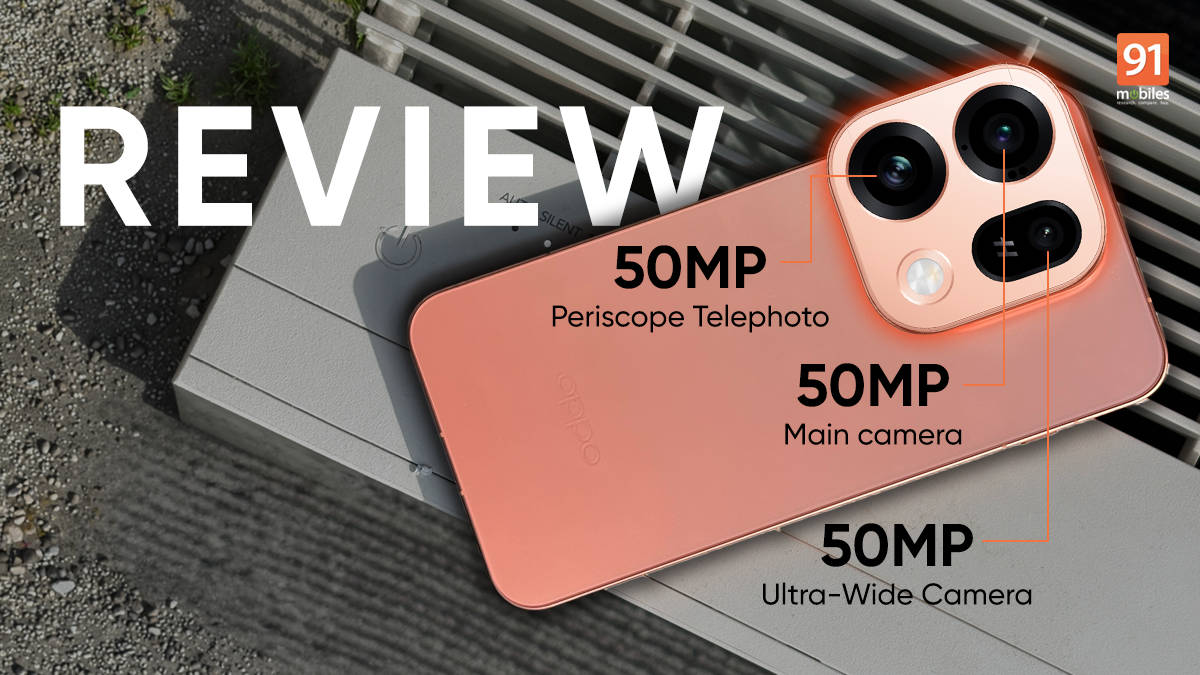
Of everything, the OPPO Find X9s‘ cameras deserve special attention. Powered by the capable ISP of the sub-flagship MediaTek Dimensity 9500s SoC, the handset boasts an impressive camera hardware, coming remarkably close to the flagship Find X9. The Find X9s features a Hasselblad-tuned triple rear camera setup, comprising a 50MP f/1.8 OIS primary sensor, a 50MP f/2.0 ultrawide lens with a 120-degree field of view, and a 50MP 3x periscope telephoto camera with OIS. On paper, this has to be the most capable camera system in the sub-flagship segment.
But how does the hardware translate into real-world performance? Has OPPO cut any corners to keep the cost in check? We answer those questions, and plenty more, in this OPPO Find X9s camera review.
Table of Contents
OPPO Find X9s camera specifications
Starting with a quick comparison between the OPPO Find X9s and the Find X9 (review), OPPO hasn’t gone out of its way to differentiate the two devices. Both smartphones share the same ultrawide and telephoto cameras at the rear, with the primary sensor being the key point of distinction. The OPPO Find X9s features a 24mm 50MP f/1.8 main camera, whereas the standard Find X9 steps things up with a 23mm 50MP Sony LYT-808 sensor paired with a brighter f/1.5 aperture.
| OPPO Find X9s | OPPO Find X9 |
| 50MP f/1.8 main sensor | 50MP f/1.6 main sensor |
| 50MP f/2.0 ultrawide lens | 50MP f/2.0 ultrawide lens |
| 50MP f/2.6 periscope telephoto camera | 50MP f/2.6 periscope telephoto camera |
| 32MP front camera | 50MP front camera |
While we didn’t have both devices side by side to directly compare their imaging performance, the Find X9’s larger and brighter primary sensor is likely to deliver superior results, especially in challenging lighting conditions. Additionally, the vanilla Find X9 is equipped with a higher-resolution 50MP front camera, which should capture more detail than the selfie shooter on the X9s.
Nevertheless, the Find X9s also benefits from Hasselblad tuning, so the gap in image quality is unlikely to be dramatic in everyday use.
OPPO Find X9s camera features and app experience
The OPPO Find X9s retains virtually all the camera features found on its siblings. The camera app includes a wide range of filters and shooting modes, including Stage, Silhouette, Fireworks, Retouch, Action Mode, Macro, Soft Light, and the signature XPan mode, among others.


The overall camera app experience also remains largely unchanged, and that’s a good thing. The interface feels cleaner, more intuitive, and easier to navigate than the one on the Vivo X300 FE. OPPO has also added subtle touches that enhance the experience, such as authentic camera-style sound effects in XPan mode.
While it lacks the AI portrait modes and other creative options which the Vivo X300 FE offers, the Find X9s camera app comes together to deliver a polished and straightforward user experience, with the option to dive into more advanced controls through the ‘Master’ mode.
OPPO Find X9s camera performance
All four OPPO Find X9s cameras are quick to lock focus and capture shots in rapid succession. OPPO has also done a commendable job with the software optimisation, as lens switching on the smartphone appears smooth and largely free of noticeable jitter in the frame.
When it comes to capturing images, the Find X9s ensures a well-rounded experience with a strong focus on natural colour reproduction, sharp details, and reliable dynamic range in well-lit environments. In low light, the handset may struggle with light flare and near-accurate colours. But on the bright side, there are modes like stage and fireworks that adjust ISO levels to control exposure for better results. The results look much better, as evident in the samples below.
Without Stage mode
With Stage mode
Moving on, the phone tends to lean towards slightly brighter tones when switching from the primary camera to the telephoto lens. While the shift is not drastic, it is noticeable enough to leave room for improvements while capturing distant objects and portraits. The telephoto lens also produces images that can appear slightly soft and overly sharp at times, with bokeh that occasionally looks unnatural.
With Master mode
Without Master mode
If you wish to avoid heavy processing and sharpening, the OPPO Find X9s’ Master Mode is worth using. The mode, which can be used in Auto or switched to Pro with manual controls, captures more natural images than the regular Photo mode, with no boosted HDR or aggressive post-processing. While less punchy, the images, especially travel shots, offer more realistic tones, fine detail, and well-balanced highlights.

Apart from this, the OPPO Find X9s cameras feature several XPan modes, offering a DSLR-like experience with classic and cinematic style shots, inspired by Hasselblad film cameras. The smartphone also comes with an action mode, which is meant to reduce blur for fast-moving subjects. However, in our experience, it didn’t consistently deliver the expected results. Both the primary and telephoto lenses introduced noticeable blur when attempting to capture a still moment of a batter hitting a cricket ball.


It’s a minor drawback in an otherwise strong camera setup when viewed in isolation. But how does it perform against the competition? That is what we will cover in the next section.
OPPO Find X9s vs Vivo X300 FE camera comparison
| OPPO Find X9s | Vivo X300 FE |
| 50MP f/1.8 main sensor | 50MP f/1.6 main sensor |
| 50MP f/2.0 120-degree FoV ultrawide lens | 8MP f/2.2 115-degree FoV ultrawide lens |
| 50MP 3x f/2.6 periscope telephoto camera | 50MP 3x f/2.2 periscope telephoto camera |
| 32MP front camera | 50MP front camera |
Both smartphones go beyond raw camera hardware to enhance the overall photography experience. OPPO continues its partnership with Hasselblad, bringing signature colour tuning and imaging enhancements to the Find X9s. Meanwhile, the Vivo X300 FE (review) benefits from Vivo’s collaboration with Zeiss, offering features such as multi-focal portrait modes, distinct colour profiles, and additional imaging refinements.
Vivo has also gone a step further by offering support for its telephoto extender kit (sold separately), which provides a superior 200mm focal length. The Find X9s does not support a teleconverter lens.
To gauge the OPPO Find X9s camera performance, we compared its results across different scenarios with those of the Vivo X300 FE.
Daylight
OPPO Find X9s
Vivo X300 FE
The OPPO Find X9s produces noticeably less saturated images compared to the Vivo X300 FE, which tends to favour a more contrast-heavy look. As a result, the Find X9s feels more natural and true to life, making it the better choice for users who prefer realistic colour reproduction. The handset also captures slightly brighter images, while delivering sharper details and noticeably better dynamic range overall than its arch-rival.
Ultrawide
OPPO Find X9s
Vivo X300 FE
The OPPO Find X9s’ superior 50MP ultrawide camera makes this comparison feel rather one-sided. The handset captures noticeably sharper and more detailed images, along with more natural colour reproduction. It also handles highlights and shadow areas far better, delivering improved exposure balance and dynamic range compared to the Vivo X300 FE, which relies on a far more modest 8MP ultrawide sensor.
Portraits
Both phones capture portrait shots using their respective telephoto cameras, albeit with different focal lengths. The Vivo X300 FE defaults to an 83mm focal length (roughly 3.5x zoom), while the OPPO Find X9s opts for a slightly wider 73mm equivalent (3x zoom). The tighter crop on the Vivo gives it a slight edge in detail retention and subject separation.
OPPO Find X9s
Vivo X300 FE
That said, both smartphones perform admirably when it comes to edge detection, handling hair and complex outlines well without awkward cutouts or inconsistent blurring. The Vivo X300 FE also delivers portraits with a slightly more natural bokeh effect. Even so, the OPPO Find X9s holds its own with pleasing results and near-accurate skin tone and colour reproduction; however, this goes for a toss when switched to the 85mm lens with a brighter appeal.
Selfie
OPPO Find X9s
Vivo X300 FE
The Vivo X300 FE outshines the OPPO Find X9s in selfie performance, with near identical results as portraits. The Vivo smartphone, with its superior 50MP camera, captures better facial details. However, the skin tones and colours appear boosted. The OPPO Find X9s enjoys superiority in accuracy and dynamic range.
Low light (night mode)
OPPO Find X9s
Vivo X300 FE
In low light (with and without night mode), the Vivo X300 FE tends to produce slightly more natural-looking images. This is largely due to its better control over light flaring, which also helps preserve finer details in challenging scenes. However, the X300 FE still struggles with visible grain in darker environments – an area where the OPPO Find X9s outshines.
Videos


Unlike the Vivo X300 FE, the OPPO Find X9s supports 4K 60fps video recording across all its cameras, ensuring more consistent footage regardless of the lens in use. There is a slight jitter when switching between the 3x and 6x zoom levels, but aside from that, the videos look stable with only a minor shift in colours. That said, I do wish OPPO had included a dual-view recording mode to capture footage from the front and rear cameras simultaneously. Moreover, in low light, the handset fails to control the light flare as effectively as the Vivo X300 FE.
Verdict
The cameras on the OPPO X9s remain one of the most well-rounded in the sub-flagship segment. Its biggest strength lies in consistency, with both primary and ultrawide cameras producing sharp and balanced images with realistic tones, outperforming rivals such as the Vivo X300 FE. However, it’s not a very easy recommendation to make in the X9 series, given that you have a more capable camera phone in the Find X9, which is also cheaper.
The OPPO phone’s telephoto camera doesn’t bring the best-in-class performance. While it captures pleasing portraits with solid edge detection, the lens is occasionally prone to softness or aggressive sharpening. The Hasselblad mode can fix some of these processing issues, but images might appear less punchy and not ideal for immediate social media postings.
Low-light photography is another area where the Find X9s could use some refinement, particularly when it comes to controlling lens flare and maintaining accurate colours. Despite that, the overall camera experience remains impressive, extending to selfies and video recording as well. Features such as XPan mode and Master Mode further elevate the experience for users who enjoy experimenting with photography beyond simple point-and-shoot usage.
All of these aspects make the OPPO Find X9s achieve a strong balance between camera hardware, software optimisation, and overall usability. While it may not dethrone true flagships or consistently outclass every rival across all scenarios, for users seeking a dependable and versatile camera-focused smartphone, the Find X9s deserves attention. The handset is priced in India starting at Rs 79,999.
| Pros | Cons |
| Nartural colours with sharp details | Lens flare in low light |
| Consistent ultrawide lens | Telephoto shots can look overprocessed |
| Useful Hasselblad shooting modes |