4 reasons to buy the Nothing Phone (3a) Lite and 3 reasons to skip it


Nothing introduced a new ‘Lite’ smartphone this year. The Nothing Phone (3a) Lite is the third phone in the series, and one that’s also its most affordable yet. Starting at Rs 20,999, the Phone (3a) Lite offers the familiar Nothing design, a clean and customisable UI, and a decent set of specifications. We’ve reviewed the Nothing Phone (3a) Lite in detail and compared it with rivals in the same segment. In this article, we talk about the reasons to buy and skip the Phone (3a) Lite.
Table of Contents
Reasons to buy the Nothing Phone (3a) Lite
Bright and vibrant display
The Nothing Phone (3a) Lite comes with a 6.77-inch AMOLED display that stands out for its perfectly symmetrical, albeit slightly thick, bezels. It offers an FHD resolution with an adaptive 120Hz refresh rate, delivering smooth scrolling and good sharpness for everyday use. With up to 1,300 nits of brightness, the screen remains easily readable outdoors, and HDR content on apps like JioHotstar looks bright and colour-accurate in the Vivid mode, while the 1080p resolution provides enough detail for daily viewing.
Head-turning design
The Nothing Phone (3a) Lite borrows its rear design more from the Phone (3) than the Phone (3a), with all three cameras placed in the top-left corner instead of a central camera module. To achieve its “Lite” identity, Nothing has removed many of the intricate internal design elements, but it still keeps the signature red square, vertical Nothing branding with the model number, and exposed screws for that familiar mechanical aesthetic.

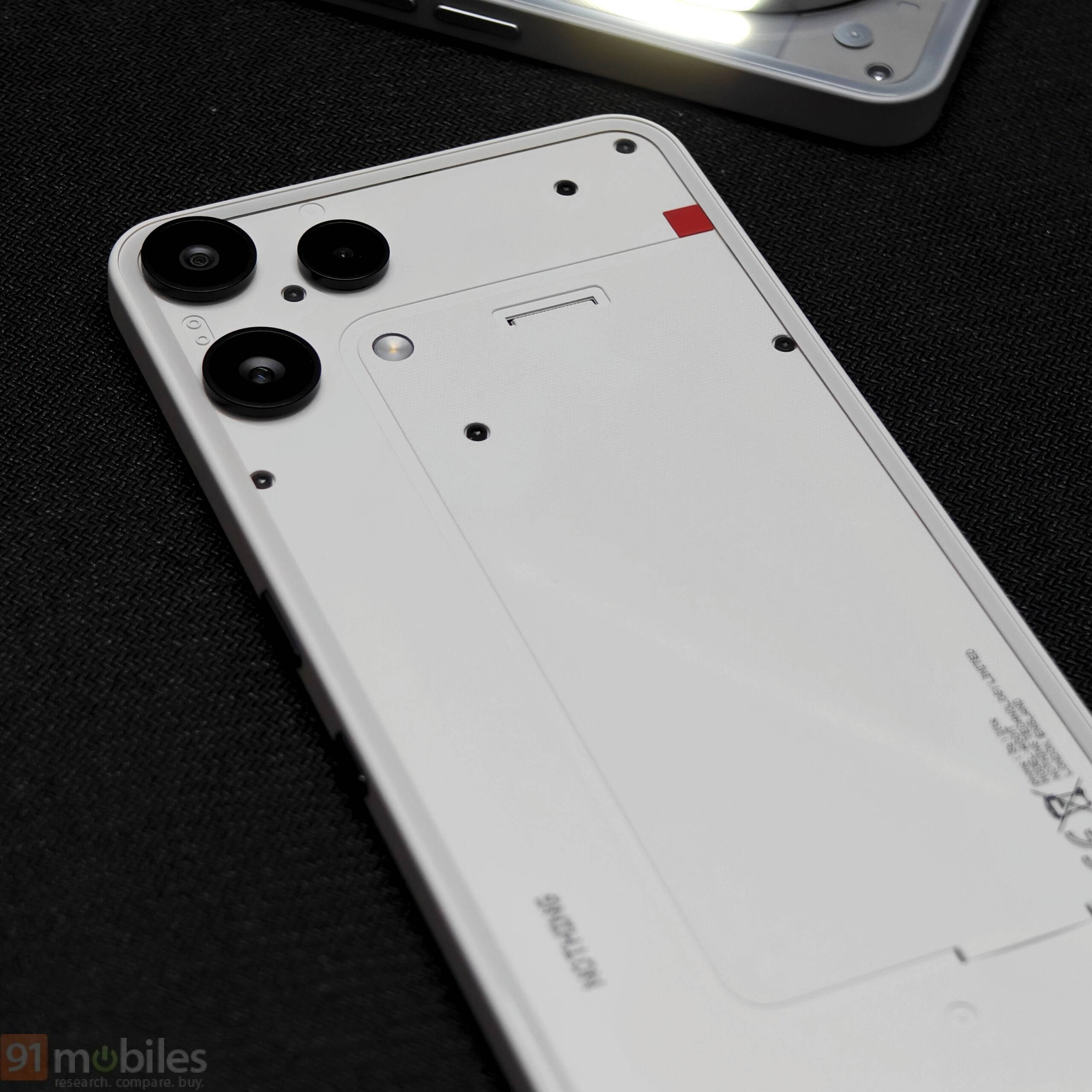
A large rectangular block on the back subtly mimics a TV remote’s battery panel, while the Glyph setup is pared down to a single light at the bottom. Despite these changes, the phone remains comfortable to hold thanks to its 199g weight and well-balanced distribution. The Nothing Phone (3a) Lite will definitely stand out if you want a phone for its looks.
Dependable battery life
Like the Nothing Phone (3a) and (3a) Pro, the Phone (3a) Lite also packs a 5,000mAh battery, which may seem modest compared to newer rivals under Rs 25,000, but still delivers solid real-world endurance. With mixed usage that includes streaming, social media, browsing, light gaming, and background music over both 5G and Wi-Fi, the phone can comfortably achieve around 8 hours or more of screen-on time with Bluetooth and location enabled throughout.
If you’re someone who’s not heavily concerned with a massive battery, then the Phone (3a) Lite should be enough as your daily driver.
Stand out, long-supported software
Beyond its design, the Nothing Phone (3a) Lite’s software stands out as a key strength. It runs Android 15-based Nothing OS 3.5 with a clean, minimal aesthetic that skips flashy blur effects and heavy animations in favour of a distinct, stock-like experience. The monochrome look, complemented by subtle black and red accent colours, especially across widgets, gives the interface a unique personality that many users will find refreshing.


The smartphone will get three OS updates, starting with the Nothing OS 4, and six years of security patches.
Reasons to skip the Nothing Phone (3a) Lite
Average speaker
Although the display impresses, the single bottom-firing speaker is a letdown. It lacks the clarity and loudness of the stereo setups found on the Phone (3a) and even cheaper rivals like the Realme P4 and Moto G86 Power, producing sound that feels heavy and bloated at higher volumes.
Charges slow
The Nothing Phone (3a) Lite supports 33W fast charging but ships without a charger. In our testing, it took about 58 minutes to go from 20 to 100 percent with a 68W PD adapter and just over an hour with a 65W charger. Given its battery size, the charging speed feels conservative, especially when rivals like the Realme 15T offer much faster 60W charging.
| Smartphone | Battery Capacity | Charging Support | Charging time (20% to 100% ) |
| Nothing Phone 3a Lite | 5000 mAh | 33W Fast Charging | 58m |
| realme 15T | 7000 mAh | 60W Fast Charging | 1h 4m |
Cameras need improvement
Although the Phone (3a) Lite shares similar main camera hardware with the Phone (3a), it skips OIS, making steady hands crucial, especially in low light. The camera prioritises natural colours and keeps shadows darker, but this comes at the cost of fine detail, which drops further at 2x digital zoom. It also tends to add a bluish tint to skies, which may not appeal to everyone.