Samsung Galaxy Tab S12+ first impressions: the Plus is back, and it’s thinner, lighter and more powerful


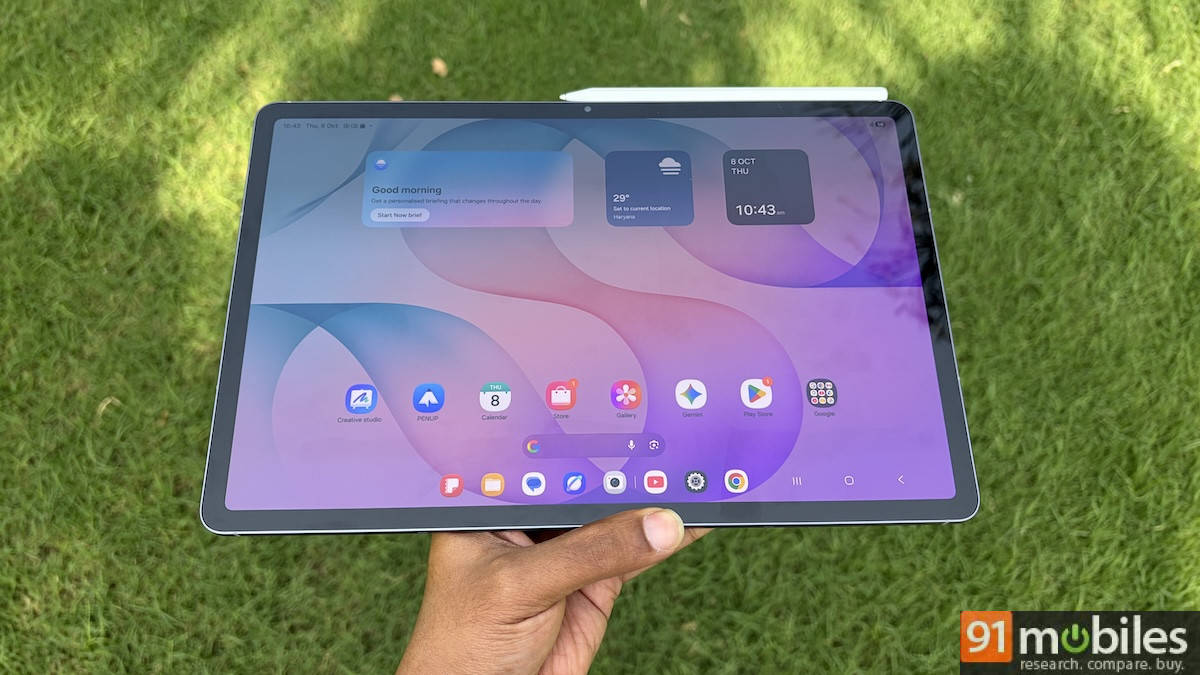
Samsung’s tablet lineup has settled into a tidy pattern: the Ultra turns up every year, while the regular and Plus models take turns. This year, it’s the Plus’s turn, which means the Galaxy Tab S12+ has two years of catching up to do, since there was no Tab S11+ last time around. There’s no regular Tab S12 either, so anyone who wants a smaller Samsung flagship tablet will have to wait until 2027.
The Tab S12+ starts at Rs 1,29,999 for the 12GB + 256GB variant, while the 12GB + 512GB model costs Rs 1,49,999. Meanwhile, the larger Tab S12 Ultra starts at Rs 1,49,999 for 12GB + 256GB and goes up to Rs 1,69,999 for the 12GB + 512GB version. Yes, you read that right: the S12+ with 512GB costs exactly the same as the base Ultra, which makes the “Plus or Ultra?” question more interesting than usual. For reference, the Tab S10+ came out in 2024 with a starting price of Rs 90,999, so the new tablets are also victims of the ongoing global memory supply crisis.
I’ll focus on the Tab S12+ in this article, sharing my early impressions of the new upgrades before an in-depth review comes out.


The Tab S12+ runs on the MediaTek Dimensity 9500, a 3nm chip that’s two generations ahead of the Dimensity 9300+ in the Tab S10+. It’s paired with 12GB of RAM, 256GB or 512GB of storage and, rarely for a flagship these days, a microSD slot that supports up to 2TB cards. If you’re coming from the Tab S10+ or older, the performance jump should be noticeable. There’s also a new 3D Vapour Chamber that Samsung says dissipates heat better than the flat one in the Tab S10+, which should help keep performance steady during long editing or gaming sessions. I’ll be putting that claim to the test in the full review.

The S Pen comes in the box, which is nice at this price. But that’s it. The keyboards (the Pro Keyboard and Book Cover Keyboard Slim) and the 45W charger, however, are sold separately.


On paper, the Galaxy Tab S12+ looks like a proper upgrade for anyone using the Tab S10+ or an older tablet: a bigger, brighter display in a slimmer, lighter body, a far more powerful chip and a bigger battery, plus the IP68 rating and seven years of updates. That makes the price hike easier to swallow, though at Rs 1,29,999 it’s still a lot of money for a tablet. It’s also a very different choice from the Ultra. The Ultra has a 14.6-inch display, an 11,600mAh battery, Wi-Fi 7 (the Plus gets Wi-Fi 6E) and an extra 8MP ultrawide camera on the back, which is a lot of extra tablet for Rs 20,000 more at the same storage.
The questions I’ll be answering in my full review are the ones that matter most with a tablet this expensive. Does the Dimensity 9500 deliver in real-world use, especially when you’re running three apps side by side? Can the 10,600mAh battery live up to that 21-hour claim? And, most importantly, is the Plus the sweet spot, or should you spend the extra on the Ultra? Stay tuned.