Samsung Galaxy Z TriFold first impressions: the hype is real


I finally got my hands on Samsung’s masterpiece, the Galaxy Z TriFold, and I have to tell you how amazing the device is. It’s not as if this hasn’t been done before — the TriFold isn’t really the first triple-folding smartphone the world has seen. That said, Samsung has the muscle to take it to the world stage, unlike the other brands in contention. Simply put, the Galaxy Z TriFold delivers fully on the promise made by foldable smartphones when they first appeared and dazzled everyone with their innovativeness — the promise of a phone that turns into a tablet. Book-style foldables, including Samsung’s own Galaxy Z Fold7 (review), are nice and all — but the Z TriFold opens up to turn into a proper 10-inch tablet. Let me dive a bit deeper into the details.

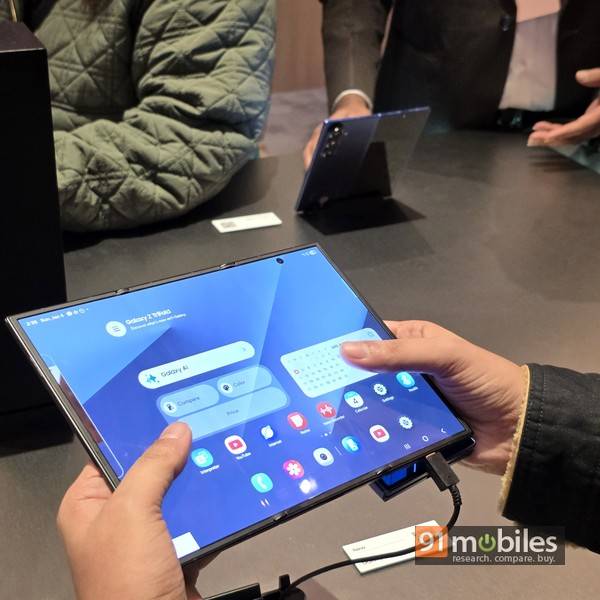
Table of Contents
Design: delivering on the promise
The Galaxy Z Fold7 is a great foldable, and I think the main thing that works in its favour is the fact that it looks and feels like a conventional bar phone when folded. Samsung has applied the same logic while designing the Galaxy Z TriFold — it wouldn’t be practical if the device delivers on innovation but ends up being unwieldy and too thick or heavy to carry around. The TriFold is 12.9mm thick and weighs a shade over 300 grams. These numbers can’t be compared to regular phones, but the important thing is that the device doesn’t feel cumbersome from a portability and daily use perspective.
From the front and back, the design language is typical of Samsung’s flagships — clean and minimalist. To reveal the main screen, you twist and unfold it twice. When I tried for the first time, it gave me goosebumps. This is a nifty piece of tech. While the main 10-inch display hogs all the attention, one can’t help but notice how thin the device is — just under 4mm.

And it’s not as if Samsung has compromised on durability. The Z TriFold seems solidly built, and Samsung is promising that its newly refined Armor FlexHinge tech, titanium hinge, advanced Armor Aluminium frame, and strict quality checks should help alleviate any durability concerns you might have. Despite the screen folding twice, the creases are minimal and barely there, and the phone folds flat without any gaps between the panels. Worth noting that the device is IP48 rated for resistance to water.

Displays: signature Samsung
The cover screen is a 6.5-inch FHD+ Dynamic AMOLED panel with 120Hz refresh rate and 2,600 nits peak brightness, while the main screen measures 10 inches and goes up to 1,600 nits. And true to Samsung’s reputation, these panels score high on vibrancy and responsiveness.
Other than the fact that these screens are quite capable (an aspect which is crucial for any smartphone), they work well for different use cases. The 6.5-inch cover screen is apt for handling calls, messaging and regular usage, while the 10-inch main display is perfect for use cases where the large screen real estate can come in handy — video watching, browsing the web, working with complex documents, spreadsheets etc. None of these are unusual or unexpected, but the fact that the same device can handle all of these easily is what makes the Galaxy Z TriFold special.
Specs: flagship-grade

Hygiene stuff this. As a high-end premium flagship, the Z TriFold’s specs sheet is packed with top-notch hardware:
- Cover screen: 6.5-inch FHD+, Dynamic AMOLED 2X, 2,520 x 1,080, 21:9, 2600 nits peak brightness, 120Hz adaptive refresh rate
- Main screen: 10.0-inch QXGA, Dynamic AMOLED 2X, 2,160 x 1,584, 1600 nits peak brightness, 120Hz adaptive refresh rate
- Dimensions & weight: 159.2 x 75.0 x 12.9mm folded, 159.2 x 214.1 x 3.9mm unfolded, 309g
- Cameras: 200MP wide with OIS, 12MP ultra-wide, 10MP telephoto with OIS, 10MP front camera on main screen, 10MP front camera on cover screen
- SoC, RAM & storage: Snapdragon 8 Elite for Galaxy, 16GB RAM, up to 1TB storage
- Battery: 5,600mAh, 45W charging (wired), 15W wireless
The productivity promise

It wouldn’t be a Galaxy without an infusion of AI-powered smarts, and the Galaxy Z TriFold doesn’t disappoint in this regard. Running Android 16 with One UI 8, the device also tries to make optimum use of the larger screen real estate available: for running multiple apps together, as an example. Three apps can be run side by side in portrait. The TriFold also features standalone DeX mode, and allows users to access up to four different workspaces, with each one running up to five apps simultaneously. This sounds brilliant in theory, and I figure this would be great for productivity and keeping work and personal stuff separate, if used to its fullest. Extended Mode allows users to add an external monitor and work with a dual-screen setup. The Galaxy AI features on offer include Photo Assist, Browsing Assist and more. Of course, the Gemini Live integration promises a whole bunch of Google AI-powered smarts.
To sum it all up

As of the time of writing, it isn’t clear when the Galaxy Z TriFold will make it to India, if at all. I hope it does, because I’ve tasted blood after playing with it briefly, and I can’t wait to try it out properly to see how it fares in day-to-day usage. It’s already available in Korea, and will come to regions like China, Taiwan, Singapore and the UAE soon, with the US also being one of the countries where it’ll make an official appearance.
The fact that the Z TriFold carries the Samsung name, which brings with it the full brand promise in terms of the ecosystem play, the service support, the durability, the software support etc, makes it even more compelling. The hardware and software capabilities are tried and tested, but whether it can entice audiences globally is something that remains to be seen. From an India perspective, I can say that if Samsung does bring to our shores, it could find takers despite the expected high price tag… we just love showing off, you see. But more than the table value it carries, I think the real value it can deliver is for serious users who can squeeze the most out of it and bend it to their will, pun intended.