Battery life has always been one of the most important laptop specs. At least for non-gaming machines. It is not the flashiest number on a spec sheet, and it rarely gets the same attention as a faster processor or a brighter OLED display, but it is the one feature that decides whether a laptop actually fits into your day. A machine can look premium, benchmark well, and still become annoying the moment you leave the charger behind. That is why a strong battery result matters so much. It changes how you work, where you work, and how often you have to think about power management.
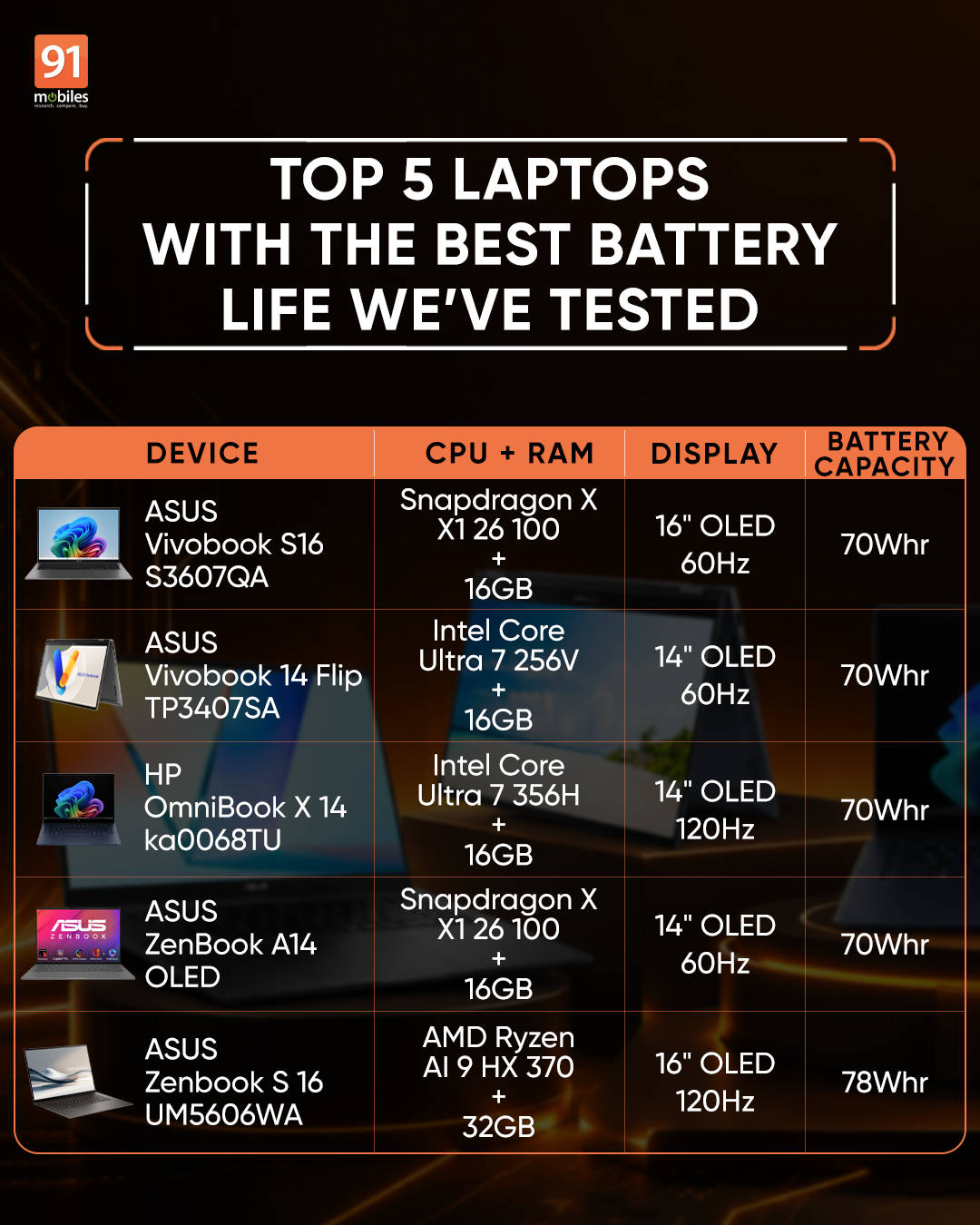
This list is built around laptops we have personally tested over the last 18 months, not around claimed endurance numbers from marketing pages. That distinction matters. A laptop with a big battery is not automatically a long-lasting laptop. Display type, processor platform, efficiency tuning, and even how the laptop behaves in Balanced mode all influence real-world runtime. In practice, this year’s list is interesting because it shows two clear trends. First, Qualcomm-powered Windows laptops have made a serious push into endurance. Second, ASUS has quietly built one of the strongest battery-life lineups in the market, across clamshells, convertibles, and premium ultrabooks.
Note: This is a living list built from laptops we have personally tested over the last 18 months. New models will be added when they earn a place here.
Table of Contents
How We Test Laptop Battery Life
To keep the results consistent, we use the PCMark 10 Video Loop battery benchmark. It is a simple but useful test that loops video playback until the laptop shuts down from a full charge. The point is not to recreate one perfect workload but to have a repeatable baseline that gives us an honest sense of how long the laptop lasts in a light, real-world scenario.
Every laptop is tested in Balanced power mode, with brightness fixed at 80 percent, and battery-saving or sleep features turned off. Fan modes stay on Auto wherever possible. That means the results are not inflated by aggressive low-power settings that most people would never actually use in daily life. It also means the numbers are easier to compare across platforms, because the same method is applied to each machine.
That testing approach is important here because battery life does not exist in isolation. A laptop that lasts 20 hours but feels sluggish or awkward to use is not automatically better than one that lasts 16 hours but gives you a better screen, stronger performance, or a more practical keyboard. In other words, battery life is only part of the story. The best machines on this list are the ones that combine endurance with enough polish to make the rest of the experience worthwhile.
Top 5 laptops with the best battery life we’ve tested
1. ASUS Vivobook S16 S3607QA-SH079WS
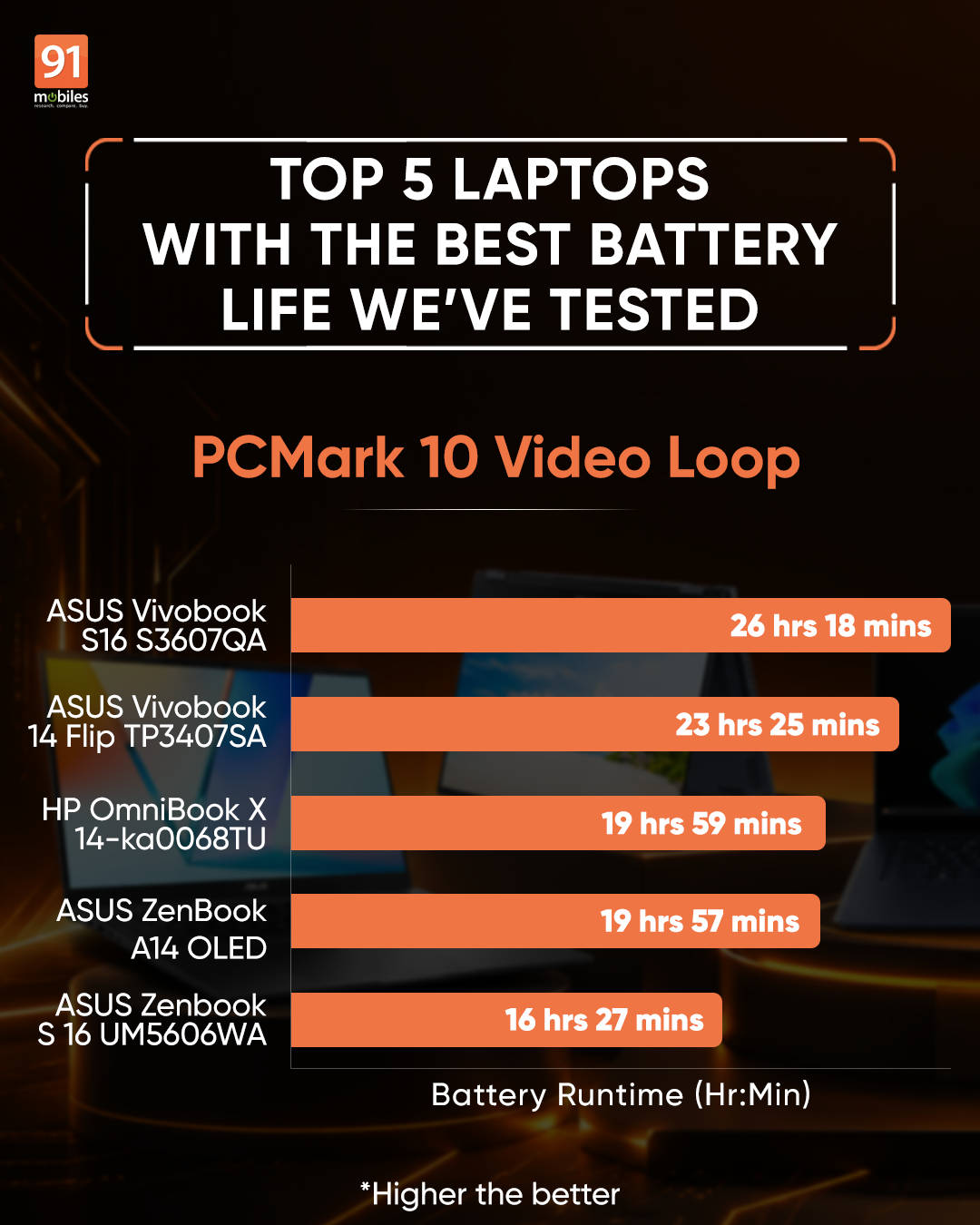
Battery life tested: 26 hours 18 minutes
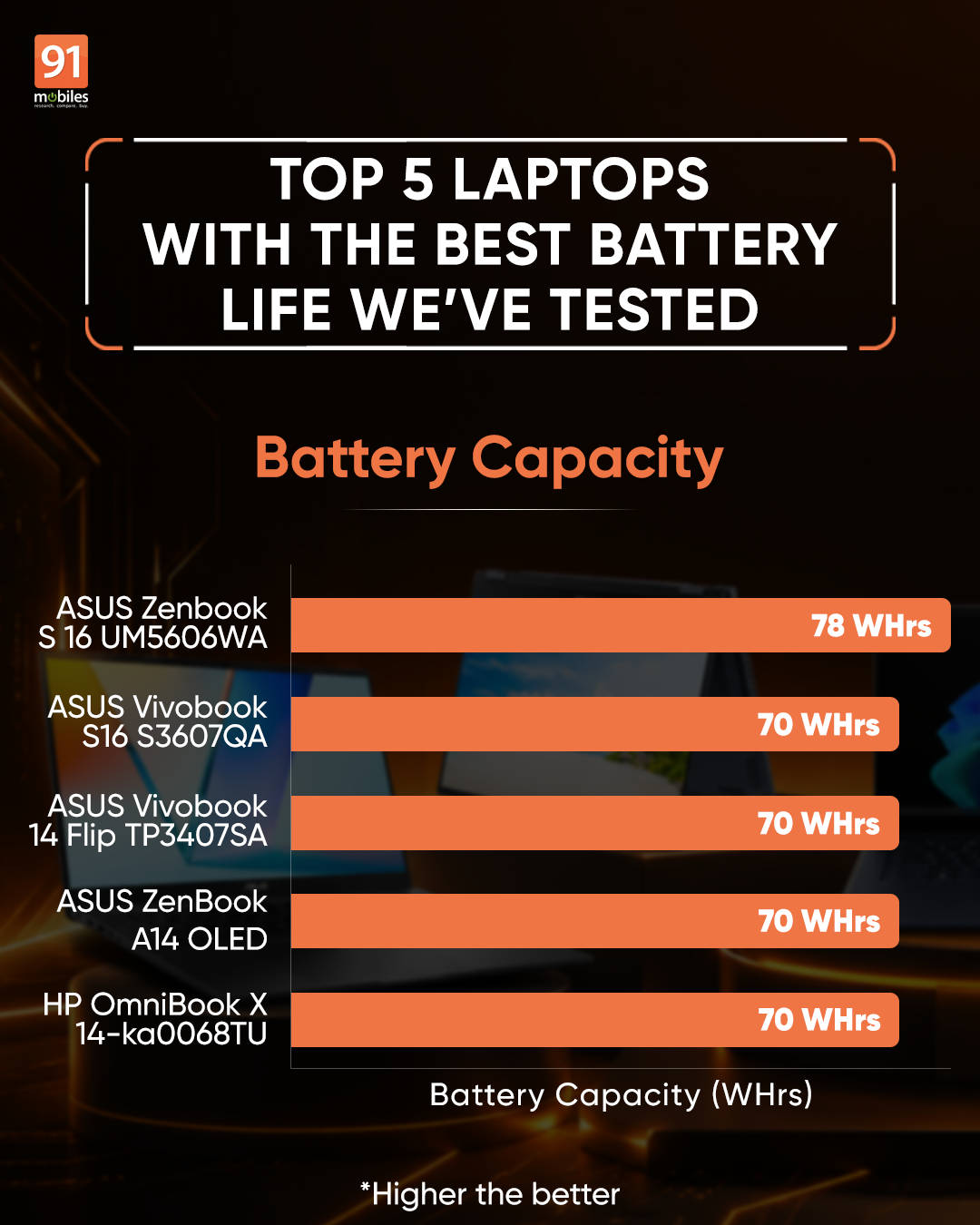
Battery capacity: 70Wh
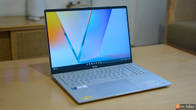
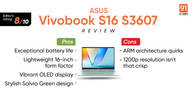
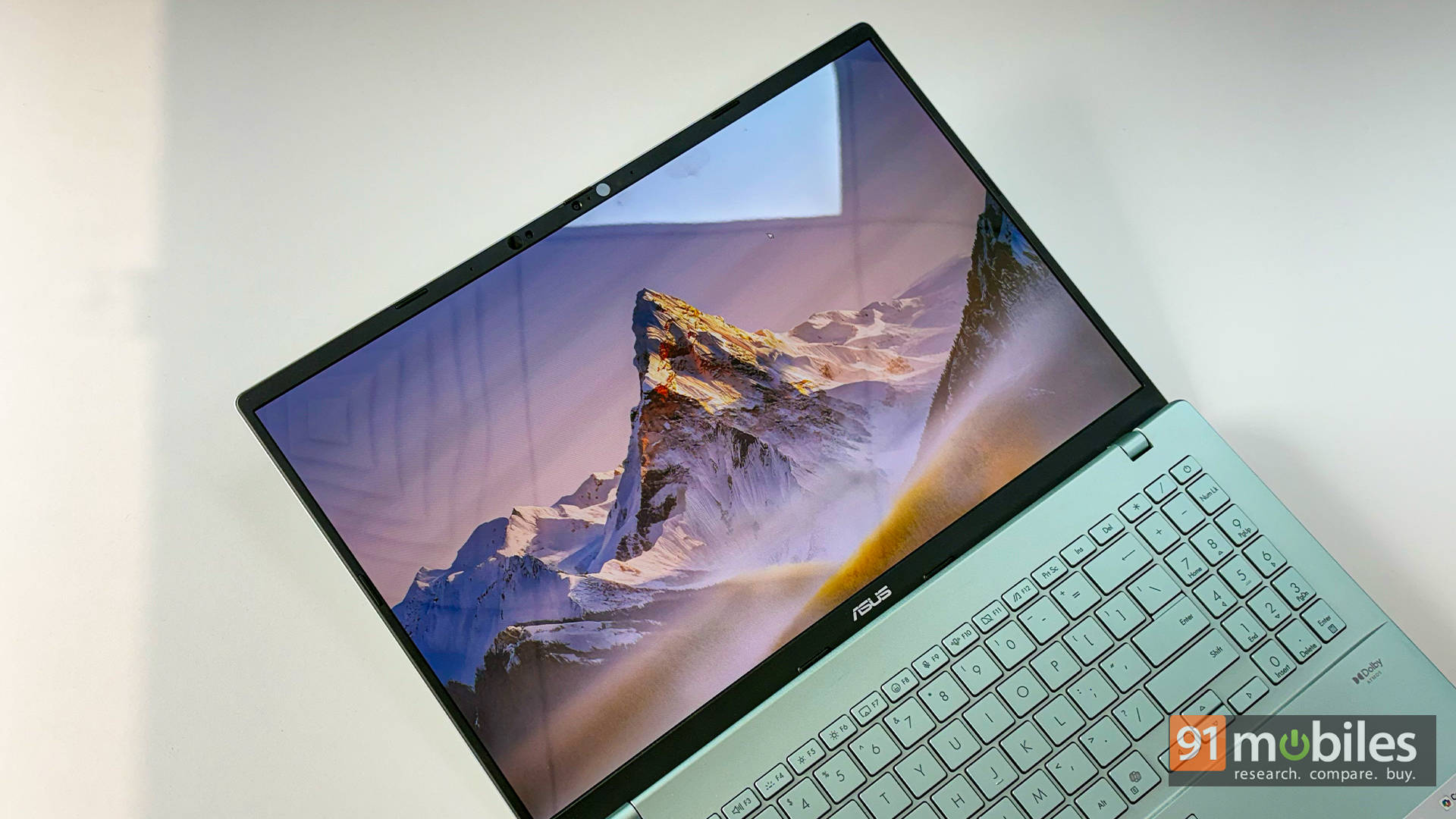
The ASUS Vivobook S16 is still the standout here, and not by a small margin. A tested runtime of 26 hours and 18 minutes is outstanding for any Windows laptop, and even more so for a 16-inch machine with an OLED display. In practical terms, this is the kind of laptop that changes your habits. You stop hovering around charging points. You stop carrying a charger everywhere. You stop mentally tracking battery percentage in the middle of the day.
That level of endurance is not accidental. Qualcomm’s Snapdragon platform plays a big role here, but so does ASUS’ decision to position this as a productivity-focused machine rather than a performance-first one. The Vivobook S16 is clearly meant for users who spend most of their time in browsers, documents, meetings, email, and media. It feels like a laptop built for modern hybrid work, where you may start the day on a desk and end it on a sofa, in a café, or in a meeting room.
The large OLED panel is one of the reasons the S16 feels premium, but it also explains part of the battery balancing act. OLED gives you excellent contrast and vibrant colours, which makes the display more pleasant for long viewing sessions. At the same time, the 1200p resolution is not especially crisp at this size. That is one of the few compromises you notice if you sit close to the screen. ARM compatibility is the other obvious caveat. Most users will be fine, but anyone relying on niche legacy software should still be aware of the platform shift.
Even so, none of those limitations undo the main achievement here. The Vivobook S16 is the laptop on this list that most effectively removes battery anxiety from the equation. That is why it sits at the top.
Pros
- Exceptional battery life
- Lightweight 16-inch form factor
- Vibrant OLED display
- Stylish Salvia Green design
Cons
- ARM architecture quirks
- 1200p resolution is not very crisp
2. ASUS Vivobook 14 Flip TP3407SA-QL025WS
Battery life tested: 23 hours 25 minutes
Battery capacity: 70Wh
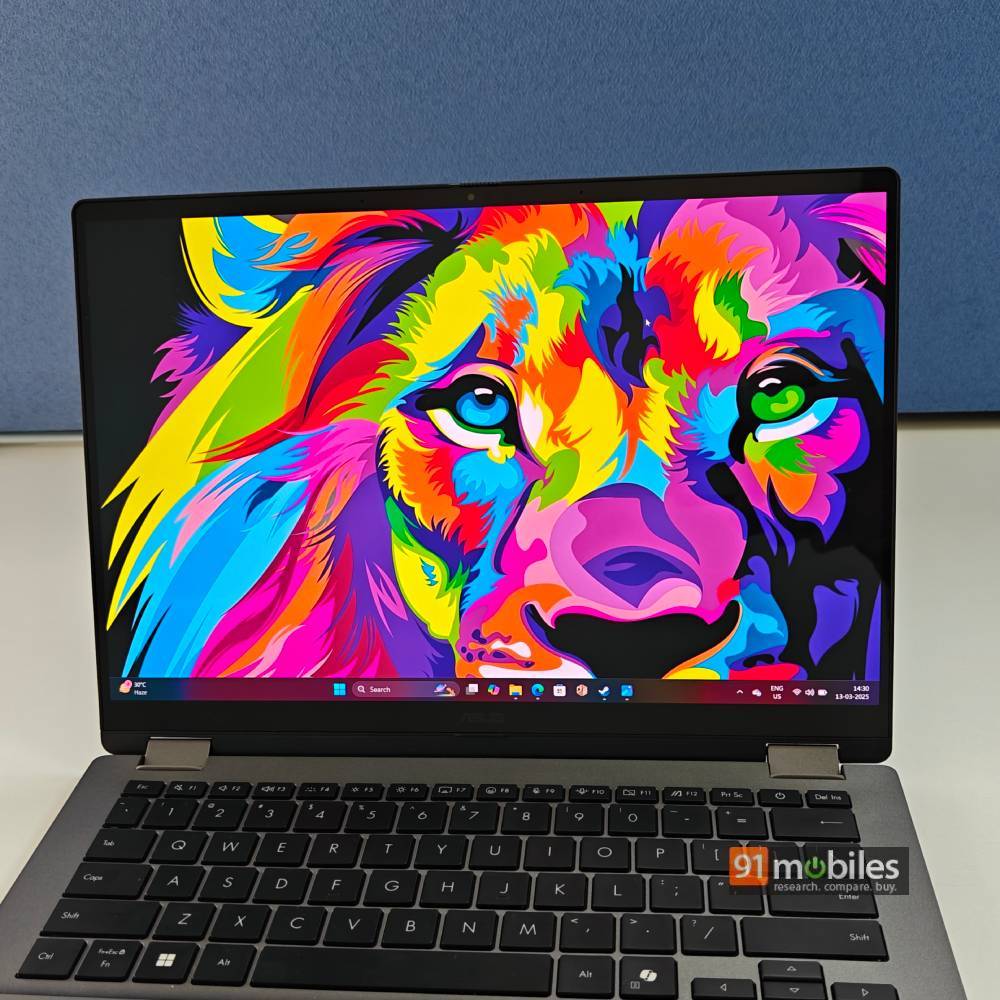
The Vivobook 14 Flip takes the same endurance-first approach and packages it into a more flexible body. At 23 hours and 25 minutes, it is one of the few convertibles that genuinely feels ready for all-day use without forcing a charger into your bag as a permanent accessory. In a 2-in-1 this is pretty good than in a standard clamshell, because convertible laptops are usually expected to do more. They need to work as a laptop, a tablet, a media stand, and occasionally a presentation device. Battery life becomes even more critical when a single machine is expected to handle all of that.
What makes the 14 Flip appealing is not just the number, but the way it fits into real usage. It is practical both as a laptop and as a tablet, accomplishing tasks like browsing and note-taking. In tent or stand mode, it becomes a good companion for streaming and presentations. The battery endurance means you can actually use those modes freely instead of treating them as short novelty sessions that have to be timed around a charger.
The review pointed out a few things that make the laptop easier to live with. The keyboard is comfortable, the build quality is solid, the display is good, and features like Windows Hello and the camera shutter add real-world convenience. That said, it is still not a performance monster, and the reflective panel can become annoying in brighter environments.
This is the sort of laptop that makes sense for students, travellers, and office users who like the idea of a single machine that can shift roles throughout the day without dying halfway through.
Pros
- Fantastic battery life
- Good build with a comfortable keyboard
- Great display with convertible form factor
- Windows Hello with camera shutter
Cons
- Raw performance is not class-leading
- Reflective display
3. HP OmniBook X 14-ka0068TU
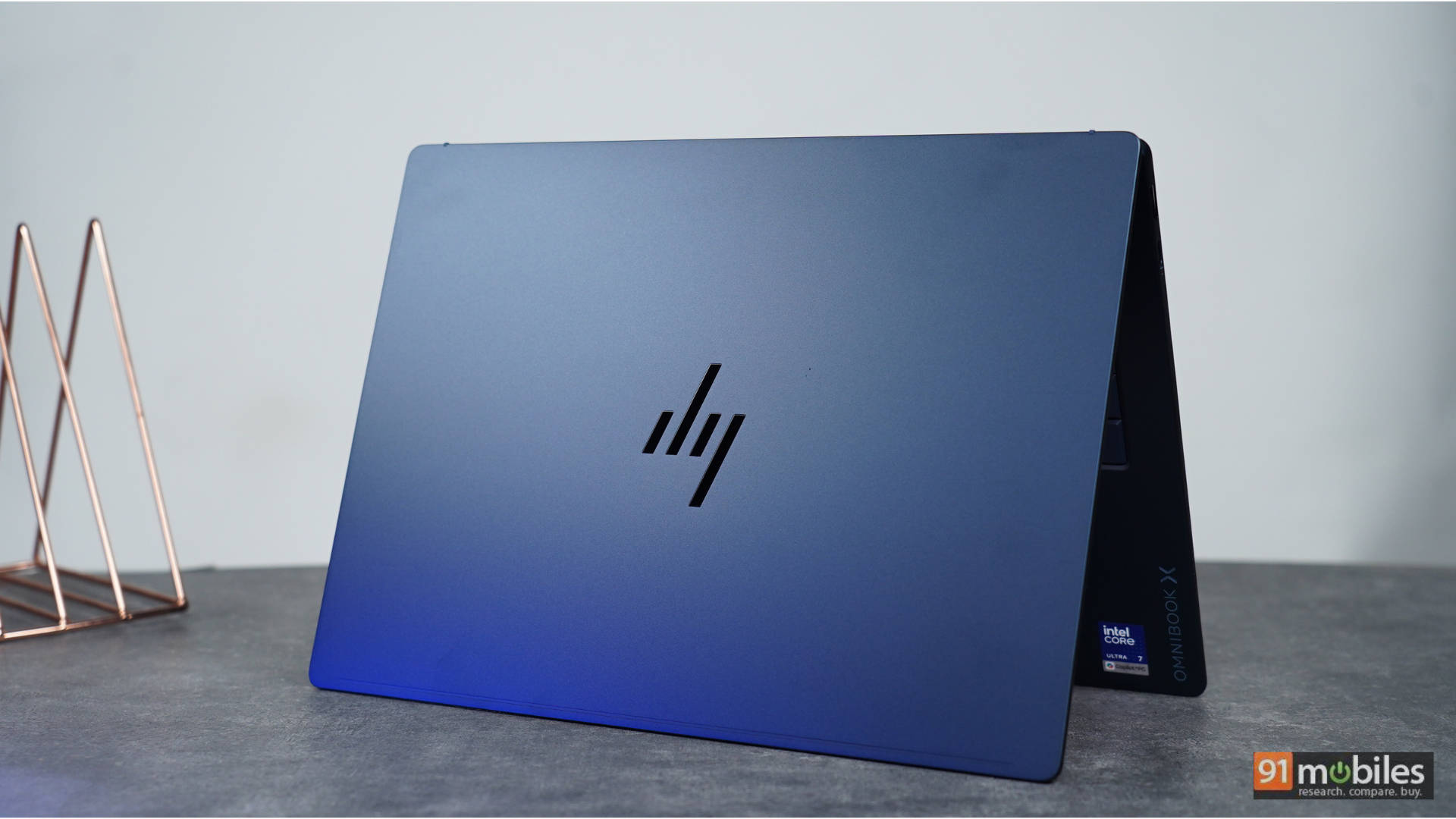
Battery life tested: 19:59
Battery capacity: 70Wh
HP’s OmniBook X 14 is the first laptop on this list that starts to feel like a genuinely premium daily driver rather than a battery endurance specialist. At 19 hours and 59 minutes, it still clears the kind of runtime most people would happily take on a work laptop, but what makes it more interesting is how complete the rest of the package feels.
This is a compact 14-inch machine, which immediately gives it a portability advantage. It is easier to carry than the larger 16-inch Vivobooks, and it feels more suited to users who move around frequently. The 3K OLED display adds a real premium touch, because the sharper panel makes the laptop feel more expensive the moment you start using it. Text looks cleaner, visuals pop more, and the panel quality adds a sense of polish that many thin-and-light laptops still fail to deliver.
Our review has framed it as a freelancer-friendly machine, and that is a pretty accurate way to think about it. It has a strong keyboard, sturdy build quality, and enough ports to avoid the usual ultrabook frustration. The battery life helps reinforce that sense of practicality as this is not just about being able to keep going. It is about doing so while still feeling like a capable work machine.
There are a couple of trade-offs. The audio could be fuller, and the lack of a built-in SD card reader will matter to some creators. Still, the OmniBook X 14 earns its place because it balances endurance, portability, and a premium display better than almost anything else in its class.
Pros
- Stunning 14-inch 3K OLED 120Hz VRR display
- Exceptional keyboard
- Fantastic build quality with plenty of ports
- Compact 100W GaN charger included
Cons
- Audio performance lacks bass and depth
- No built-in SD card reader
4. ASUS Zenbook A14 OLED UX3407QA-QD259WS
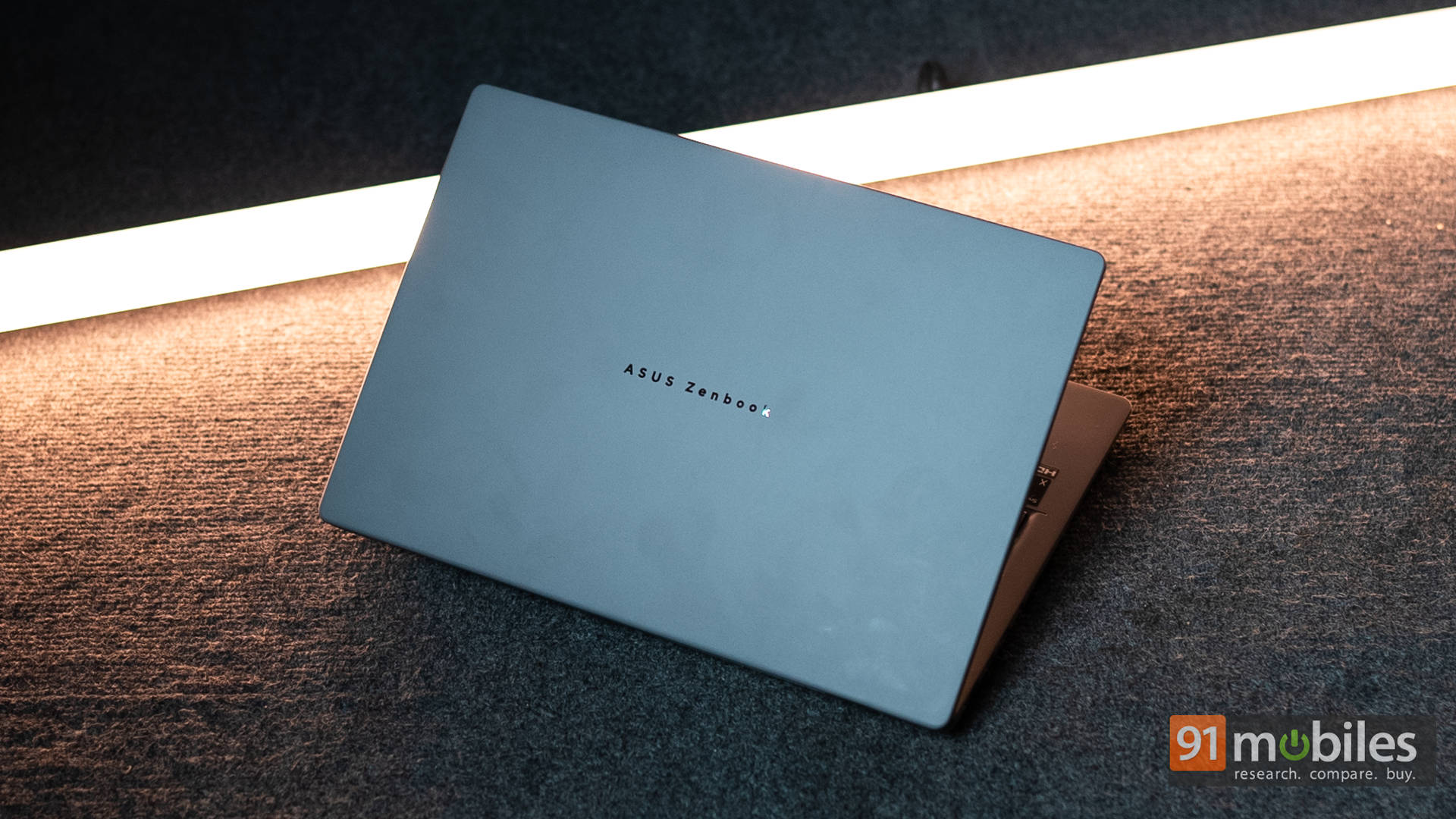
Battery life tested: 19:57
Battery capacity: 70Wh
The Zenbook A14 is the lightest-feeling laptop in this group, and that gives it a very different kind of appeal. As such the machine is not the biggest, the fastest, or the most dramatic machine here, but it is trying to be the easiest one to carry and use for long stretches. At 19 hours and 57 minutes, it lands almost exactly on the HP OmniBook X 14 in battery life, which makes the portability story even more convincing.
This is a laptop that makes sense for users who spend a lot of time away from a desk. Just toss the machine into a backpack without a second thought, take it to meetings, move between rooms, or carry it across a campus or office floor without feeling burdened. This practicality is a big part of its appeal. The keyboard and touchpad are both strong and when a laptop is this light, every part of the typing and navigation experience has to be good, because there is less physical heft to hide any flaws.
In our review, the biggest compromise is the display. The 60Hz 1200p panel does not match the premium nature of the rest of the machine. Storage is another limitation, since 512GB can start to feel tight if you keep a lot of media, projects, or large software installs on the machine. But the upside remains compelling. Battery life is excellent, portability is excellent, and the build feels sturdy enough to last through heavy daily use.
The Zenbook A14 is not the most exciting laptop on paper. It is just one of the easiest to actually live with.
Pros
- Exceptional battery life and portability
- Solid everyday performance
- Durable build quality
- Great keyboard and touchpad
Cons
- 60Hz 1200p display feels outdated
- Only 512GB storage offered
- Not for performance enthusiasts
5. ASUS Zenbook S 16 UM5606WA-RJ310WS
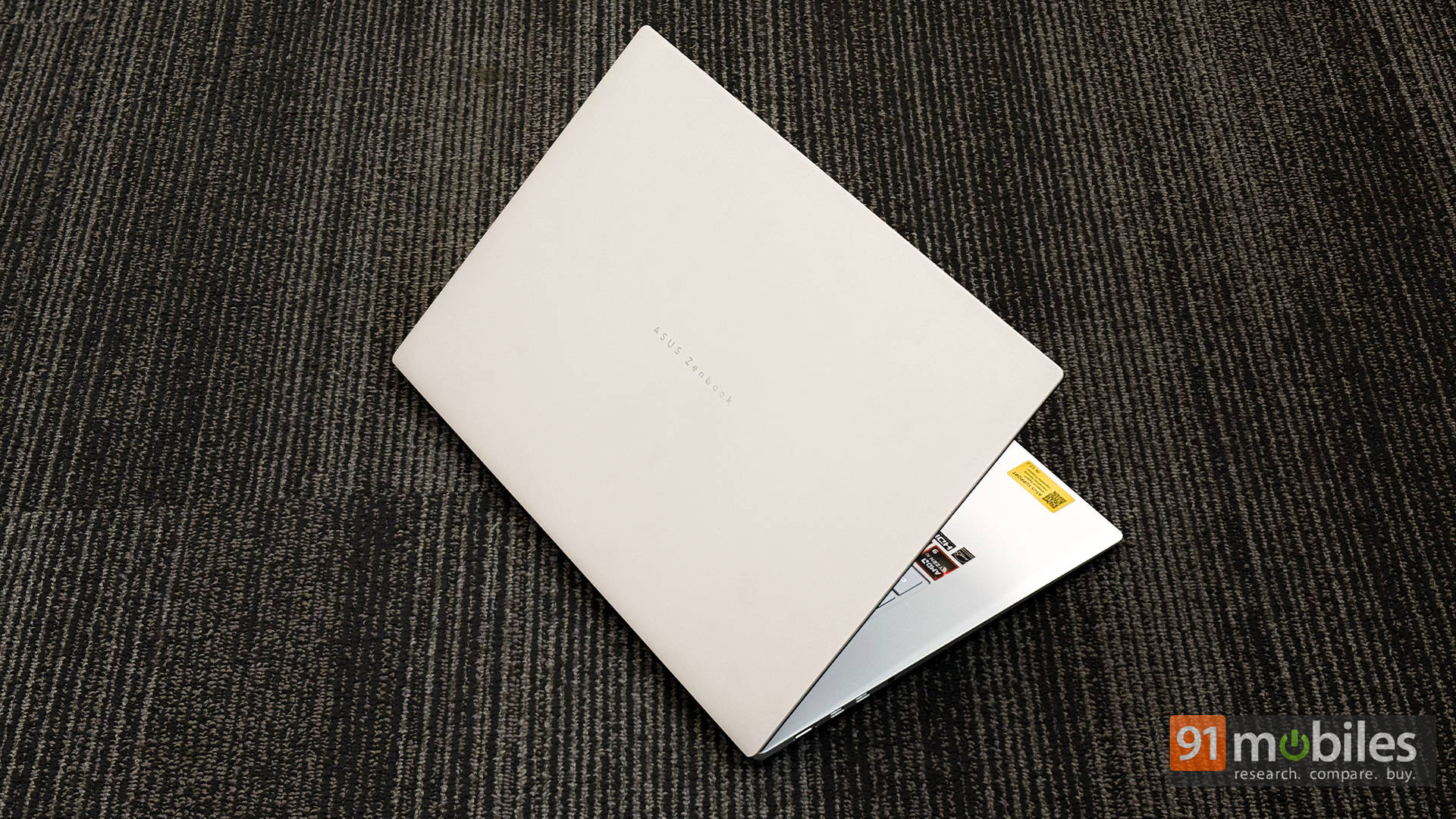
Battery life tested: 16:27
Battery capacity: 78Wh
The Zenbook S 16 is the most performance-oriented machine on this list, and that changes how you should think about its battery result. At 16 hours and 27 minutes, it is not chasing the same extreme longevity as the top two entries, but it is doing very well for a machine with heavier hardware and a much more ambitious overall design.
That approach is visible everywhere. The display is a 3K 120Hz OLED touchscreen, which immediately gives the laptop a more upscale feel than the typical productivity machine. The performance is strong enough to handle demanding multitasking and creative work comfortably, and the build quality is clearly aiming at the premium end of the market. In use, it feels like a laptop for people who want one machine that can do a bit of everything, without looking or feeling like a compromise.
Its place on the list is important for another reason too. It shows that battery life is not only about efficiency-driven hardware like Qualcomm chips. It also depends on how well a manufacturer tunes a more powerful, more feature-rich design. The Zenbook S 16 is proof that you can have strong performance, a premium OLED panel, and still avoid the kind of battery collapse that used to be common in this class.
It is expensive, no question. But it is also the most rounded option here for users who care about power as much as endurance.
Pros
- Premium build quality
- Impressive battery life
- Great performance
- Gorgeous 3K 120Hz OLED display with touch support
Cons
- Quite expensive
Final Takeaway
Battery life is no longer just a supporting spec. On the best laptops, it is a core part of the experience. It determines whether a machine feels flexible or fragile, whether it can travel with you comfortably, and whether it turns into a laptop you enjoy using or one you keep checking for a charger.
What this list makes clear is that there is no single formula for great battery life. Some laptops get there through ultra-efficient processors, some through careful tuning, and some by simply balancing a lot of expensive hardware more intelligently than most. The ASUS Vivobook S16 is the endurance leader. The Vivobook 14 Flip is the most versatile. The HP OmniBook X 14 and Zenbook A14 are the strongest portable all-rounders. The Zenbook S 16 is the premium choice for users who want a more powerful machine without giving up too much runtime.
That is the real story here. Good battery life is no longer about compromise. It is about freedom. And these five laptops deliver more of it than most of the market.