Xiaomi 17T vs Vivo X200T comparison: one excels, one wins


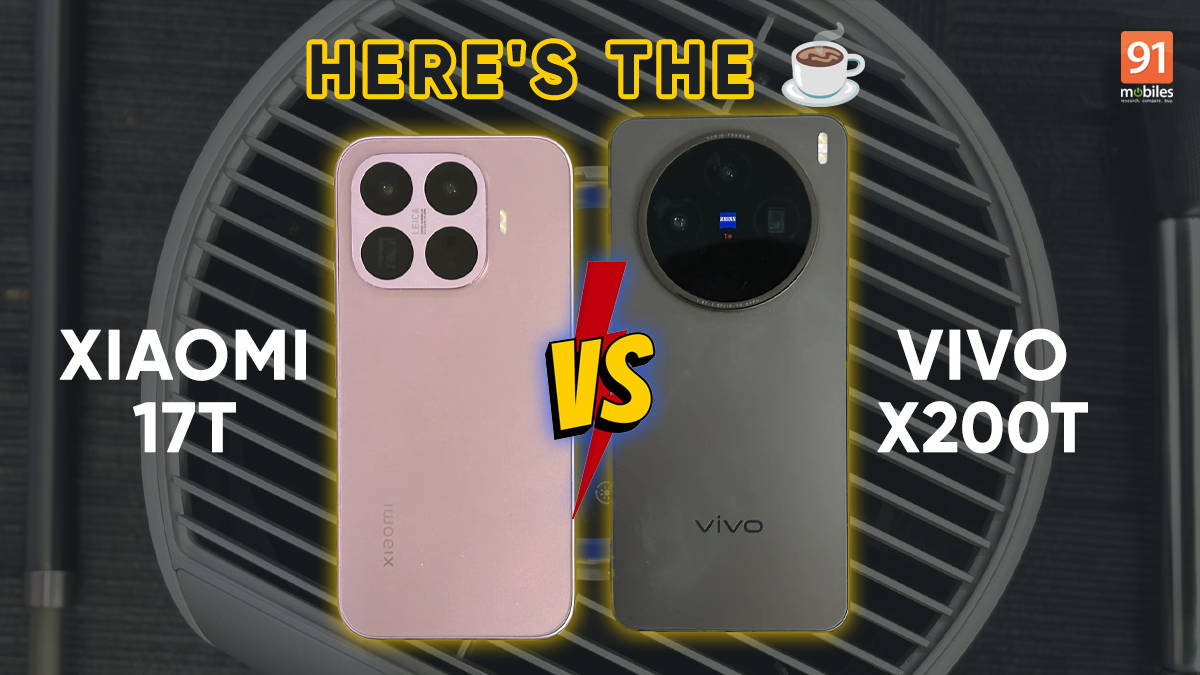
The Xiaomi 17T (review) and Vivo X200T (review) are both sub-Rs 60,000 smartphones that aim to deliver flagship-grade camera performance without the flagship price tag. While Xiaomi leans on its Leica partnership to enhance the photography experience, Vivo continues to rely on the Zeiss optics that have helped the X-series build a strong reputation among mobile photography enthusiasts. However, in doing so, both phones take slightly different approaches, with the Xiaomi 17T opting for a mid-range chipset instead of the sub-flagship processor found in the Vivo X200T.
How these differing philosophies translate into real-world usage is what we aim to find out in this comparison. Unlike our previous specifications-based comparison, this article focuses on everyday performance, camera experience, battery life, and usability to help you determine which smartphone is the better fit for your needs.
Table of Contents
Design and in-hand feel
| Smartphone | Xiaomi 17T | Vivo X200FE |
| Dimensions | 157.6 × 75.2 x 8.17 mm | 160.01 x 74.29 x 7.99 mm |
| Weight | 200 grams | 203 grams |
| Colour options | Black, Blue, and Violet | Stellar Black and Seaside Lilac |
Both smartphones offer a design identical to their respective flagship offerings. However, corners have been cut on the Xiaomi 17T. Although you can’t tell by looking at it, the handset boasts a plastic frame. The Corning Gorilla Glass 7i display protection on the smartphone is also inferior to the vanilla Xiaomi 17. That said, the Xiaomi 17T still feels sturdy and is IP68 water and dust resistance certified.


The Vivo X200T carries nearly the same build quality and durability as the Vivo X200. The handset features an aluminium frame. The display protection glass may have been swapped for Schott Sensation Core glass instead of Corning Gorilla Glass, but it has IP68, and a premium in-hand feel remains unchanged.
While the Vivo X200T is marginally taller, it is not as broad as the Xiaomi 17T. This makes the Vivo smartphone relatively easy to handle, hold, and reach those far corners with minimum finger gymnastics with just one hand. The handset also feels easier to unlock with its ultrasonic fingerprint scanner, positioned naturally where the thumb would rest, as opposed to lower down the screen on the Xiaomi 17T, which uses a relatively slower optical fingerprint scanner for security.

However, if looks matter more than ergonomics, the Xiaomi 17T should be your pick. The handset exudes a cleaner look with its relatively compact, squarish camera module, matching the colour scheme of the smartphone.
Cameras
| Smartphone | Primary Sensor | Secondary Sensor | Tertiary Sensor |
| Xiaomi 17T | 50 MP | 12 MP Ultra-Wide Angle | 50 MP Telephoto |
| vivo X200T | 50 MP Wide Angle | 50 MP Telephoto | 50 MP Ultra-Wide Angle |
The Xiaomi 17T and Vivo X200T are both camera-focused smartphones, but they take slightly different approaches to delivering top-tier photography in their segment. One of the most noticeable differences lies in their camera partnerships. Xiaomi has teamed up with Leica to fine-tune the imaging experience on the 17T, while Vivo continues its long-standing collaboration with Zeiss on the X200T.
Xiaomi 17T
Vivo X200T
Both devices offer a wide range of shooting modes and features within their camera apps. The Vivo X200T feels more feature-rich, with numerous AI-powered photography tools and additional shooting options aimed at enthusiasts. The Xiaomi 17T, on the other hand, takes a cleaner approach, offering a more intuitive and user-friendly camera interface that makes it easier to access key controls and modes.
Individually, we have observed that the Xiaomi 17T camera looks more versatile with a triple 50MP setup, including a 5x periscope telephoto lens that you won’t find even on more expensive smartphones. The enhanced telephoto lens proves its worth with strong zoom performance, though images can sometimes appear soft or over-processed.
As for the rest of the setup, the images look crisp and vibrant across cameras. The Leica Authentic mode provides more natural colours and stronger contrast at the expense of some shadow detail. Additional Leica features, including Leica Ultra Pure optics, Live Moments, and creative shooting modes, enhance the photography experience. Selfies from the 32MP front camera tend to look soft with slightly oversaturated colours.
The Vivo X200T, on the other hand, offers a capable and visually appealing camera system, even though it ships with a 3x periscope telephoto lens instead of 5x. The handset’s image processing favours punchy colours, strong contrast, and eye-catching results over strict realism, producing sharp photos with reliable exposure and good dynamic range in most conditions. The 3x telephoto camera performs well for portraits, creating pleasing background separation, although Vivo applies noticeable beautification that softens facial details.
A standout aspect of the X200T is its 32MP front camera, which captures detailed selfies with natural-looking skin tones and good clarity. Low-light performance is also impressive, with effective lens flare suppression, controlled noise levels, and solid detail retention after dark.
To evaluate how they stack up against each other, we put both smartphones through a series of tests across different scenarios using their default settings. Here’s how they performed.
Daylight
Xiaomi 17T
Vivo X200T
The Vivo X200T outputs images with superior details, colour accuracy and contrast, and relatively well-balanced exposure from its main camera in daylight. The Xiaomi 17T, on the other hand, tends to overexpose the image clicked in the same environment and angle. This results in slightly blown-out details, underwhelming dynamic range and contrast, and less accurate colours.
Ultrawide
Xiaomi 17T
Vivo X200T
A similar trend continues with the ultrawide camera, at least when it comes to colour science. The Xiaomi smartphone leans towards warmer, slightly overexposed tones, while Vivo keeps things closer to reality and maintains better contrast. However, the Xiaomi 17T pulls ahead by producing cleaner images overall. Its shots appear noticeably less grainy than those from the Vivo X200T, resulting in less distorted images.
Portraits
Xiaomi 17T
Vivo X200T
Portraits are where the Xiaomi 17T truly shines. Captured using its 5x periscope telephoto camera, the handset delivers portraits with near-accurate skin tones and colours. It also retains more fine detail, giving subjects a sharper and more natural look. The Vivo X200T, meanwhile, tends to oversaturate skin tones and applies noticeable beautification effects even when Beauty mode is disabled. As a result, facial features appear softer, and the image takes on a slightly watercolour-like appearance when viewed closely.
As for the edge detection and bokeh effect, both smartphones appear on par with each other. There is minimal distortion while separating the foreground from the background, and the bokeh effect also looks pretty natural.
Selfie
Xiaomi 17T
Vivo X200T
The Xiaomi 17T may offer near-accurate-looking selfies, but the Vivo X200T outshines it with more appealing images from the front camera. The Vivo smartphone also excels with superior details, although the exposure to background details and dynamic range looks better on the Xiaomi 17T.
Low light (night mode)
Xiaomi 17T
Vivo X200T
In low light, the Vivo X200T excels with better control over light flare, lower noise levels, and a more accurate representation of the scene compared to the Xiaomi 17T. While Xiaomi still manages to produce a pleasing image in challenging lighting conditions, it falls short of its rival, which delivers superior detail and overall image quality.
Display and audio
| Smartphone | Display | Peak Brightness |
| Xiaomi 17T | 6.59 inches - AMOLED | 3500 nits |
| vivo X200T | 6.67 inches - AMOLED | 5000 nits |
The Xiaomi 17T and Vivo X200T both are backed by an AMOLED display with near-identical features. As a result, there isn’t a day and night difference in the viewing experience on the two smartphones. Even the bezels are razor-thin. The Xiaomi 17T has an added advantage of superior 1.5K resolution as opposed to FHD+ on its counterpart, but it is difficult to tell them apart. The picture quality and colours on the Vivo smartphone appear just as sharp as those on the Xiaomi 17T.


However, the X200T has an advantage when used outdoors under direct sunlight. Its display, which can reach up to 5,000 nits of peak brightness, appears noticeably brighter than the Xiaomi 17T’s panel, which tops out at 3,200 nits. As a result, if you spend a lot of time outdoors, the Vivo X200T may be the better choice.
Both smartphones ship with stereo speakers, but the audio from the Xiaomi 17T sounds fuller and louder than the Vivo X200T. This tilts the competition in Xiaomi’s favour for multimedia enthusiasts.
Performance and software
The Xiaomi 17T is powered by MediaTek Dimensity 8500 Ultra SoC, paired with 12GB RAM and 256GB/ 512GB storage onboard. It’s a capable mid-range chipset, which, as observed in the phone’s review as well, has enough firepower to deliver smooth performance for both everyday and demanding workloads. I don’t have much to complain about the smartphone, except that it is not as snappy as the Vivo X200T.
AnTuTu score


vivo X200T
MediaTek Dimensity 9400 Plus
2,821,319

Xiaomi 17T
MediaTek Dimensity 8500 Ultra
2,136,906
AnTuTu assesses a smartphone's CPU, GPU, memory, and overall user experience (higher is better)
The Vivo smartphone is powered by MediaTek Dimensity 9400+ SoC, aided by 12GB RAM and up to 512GB storage. It might be last year’s flagship chipset, but it easily outperforms the Xiaomi 17T’s SoC on major synthetic benchmark apps such as AnTuTu and Geekbench. However, the Vivo smartphone seems less optimised to handle demanding workloads in the Burnout CPU Throttle test. This could be attributed to its cooling capabilities.
Burnout Score
Xiaomi 17T
48.8%
vivo X200T
34.4%
Burnout assesses CPU throttling and sustained performance under heavy load (higher is better)
The handset’s temperature rose by an average of 14.4 degrees Celsius after a 30-minute gaming session involving BGMI and Call of Duty: Mobile. This is notably higher than the Xiaomi 17T, which recorded a temperature increase of just 9.2 degrees Celsius under the same conditions, graphics settings, and test duration. While the Xiaomi smartphone is the better choice for sustained performance, we did not notice any significant performance degradation on the Vivo X200T during intensive tasks such as multitasking, gaming, and photo editing.
| Smartphone | Software Support |
| Xiaomi 17T | NA |
| vivo X200T | 5 Years OS Updates + 7 Years Security Updates |
On the software front, both smartphones prioritise longevity, offering five years of major Android OS upgrades and a largely similar user experience. The Xiaomi 17T runs HyperOS 3 based on Android 16 out of the box, while the Vivo X200T ships with OriginOS 6 atop Android 16. Both interfaces are heavily customised, offering a wealth of personalisation options alongside a growing suite of AI-powered features.
During my time with both devices, the Vivo X200T’s interface felt more polished and feature-rich than that of the Xiaomi 17T. Features such as floating windows, a desktop-style app dock, and several thoughtful multitasking enhancements help elevate the overall experience. However, it falls short when it comes to ecosystem integration. Unlike HyperOS 3, which offers seamless connectivity with Xiaomi devices and even select third-party products such as Apple’s AirPods, OriginOS lacks the same level of cross-device interoperability.
Battery and charging
PCMark Battery score (in hours)
vivo X200T
6200 mAh
16.2
Xiaomi 17T
6500 mAh
14.8
PCMark battery test measures phone battery life from 100% to 20% (higher is better)
On paper, the Xiaomi 17T packs a 6,500mAh battery, which is superior to the Vivo X200T’s 6,200mAh battery. This won’t give it an edge in the PCMark battery test, but our internal testing shows the Xiaomi smartphone offering superior backup. When subjected to the same YouTube video streaming and gaming tests, the 17T consumed a total of 15 percent battery. The Vivo X200T’s battery, on the other hand, dropped by 19 percent.
However, the Xiaomi 17T has to work on its standby time to actually make its battery count for everyday usage. Despite the bigger battery, the handset delivered roughly 5.5 hours of screen time, which is marginally lower than the Vivo X200T’s 6 hours of screen time during our review.
| Smartphone | Battery Capacity | Charging Support | Charging time (20% to 100% ) |
| Xiaomi 17T | 6500 mAh | 67W Hyper Charging v3.0 | 1h 13m |
| vivo X200T | 6200 mAh | 90W Flash Charging | 44m |
The Vivo X200T also has an edge when it comes to juicing up the battery. The handset boasts a 90W fast charging solution, which takes just 44 minutes to fully charge an almost dead battery to 100 percent. Contrary to this, the Xiaomi 17T takes around 73 minutes for the same amount to be charged. This makes the smartphone less appealing to users who are always on the go. The Vivo X200T seems to be a better choice for users who want long battery endurance with minimum charging times.
Verdict
Priced identically at Rs 59,999 for the base variant, the Xiaomi 17T and Vivo X200T both cater to different priorities despite their camera-focused approach. The Xiaomi 17T stands out with its stylish design, versatile 5x telephoto camera, sharper portraits, richer stereo speakers, and better thermal management under sustained workloads. The handset also offers a cleaner camera experience and stronger ecosystem integration through HyperOS.
The Vivo X200T, however, emerges as the more complete all-rounder, delivering superior camera consistency across most scenarios, particularly in daylight, selfies, and low-light photography. Furthermore, its brighter display, significantly faster performance, quicker charging speeds, and more refined software experience further strengthen its appeal. While it runs warmer under heavy loads, the performance advantage remains evident in everyday use.
Which one should you buy?
| Xiaomi 17T | Vivo X200T |
| If photography, multimedia consumption, and sustained gaming performance are your priorities. | For users seeking a better overall smartphone with stronger cameras, flagship-grade performance, faster charging, and a more polished user experience. |