My last phone was a little over two years old when it started to show its age. Apps took a beat too long to open, the battery needed a top-up by late afternoon, and switching between WhatsApp, email, and a payment app felt slower every month. If that sounds familiar, you are exactly the person OPPO has in mind with the K14 Plus, the newest member of a K series that also includes the K14 and K14x.
OPPO sums up the K14 Plus in a simple phrase: Powered to Perform, Built to Last. The first half is about how fast and capable the phone feels today. The second half is about whether it will still feel that way years from now. Considering it is a bold claim, I spent time using the K14 Plus as my main phone through ordinary workdays and weekends, and in this overview I will go through its key features in order of what matters most, along with how each one fitted into my day.
Table of Contents
Powered to Perform: Dimensity 7360 MAX and a 1.5K 144Hz AMOLED display
The K14 Plus runs on the MediaTek Dimensity 7360 MAX, a 4nm chipset with an octa-core CPU made up of four Cortex-A78 cores at 2.5GHz and four Cortex-A55 cores at 2.0GHz, paired with an Arm Mali-G615 GPU. It comes with LPDDR4X RAM and UFS 3.1 storage in 6GB and 128GB, 8GB and 128GB, and 8GB and 256GB configurations, with up to 16GB of RAM expansion, and OPPO has quoted an AnTuTu score of over 1 million, which is quite impressive.
The more important point is that this performance is built to hold up. A 5,000mm² Glacier vapour chamber, backed by 19,989mm² of graphite, is designed to slow down the rise in temperature during long calls, extended recording and heavy use, so performance holds steadier over long sessions.
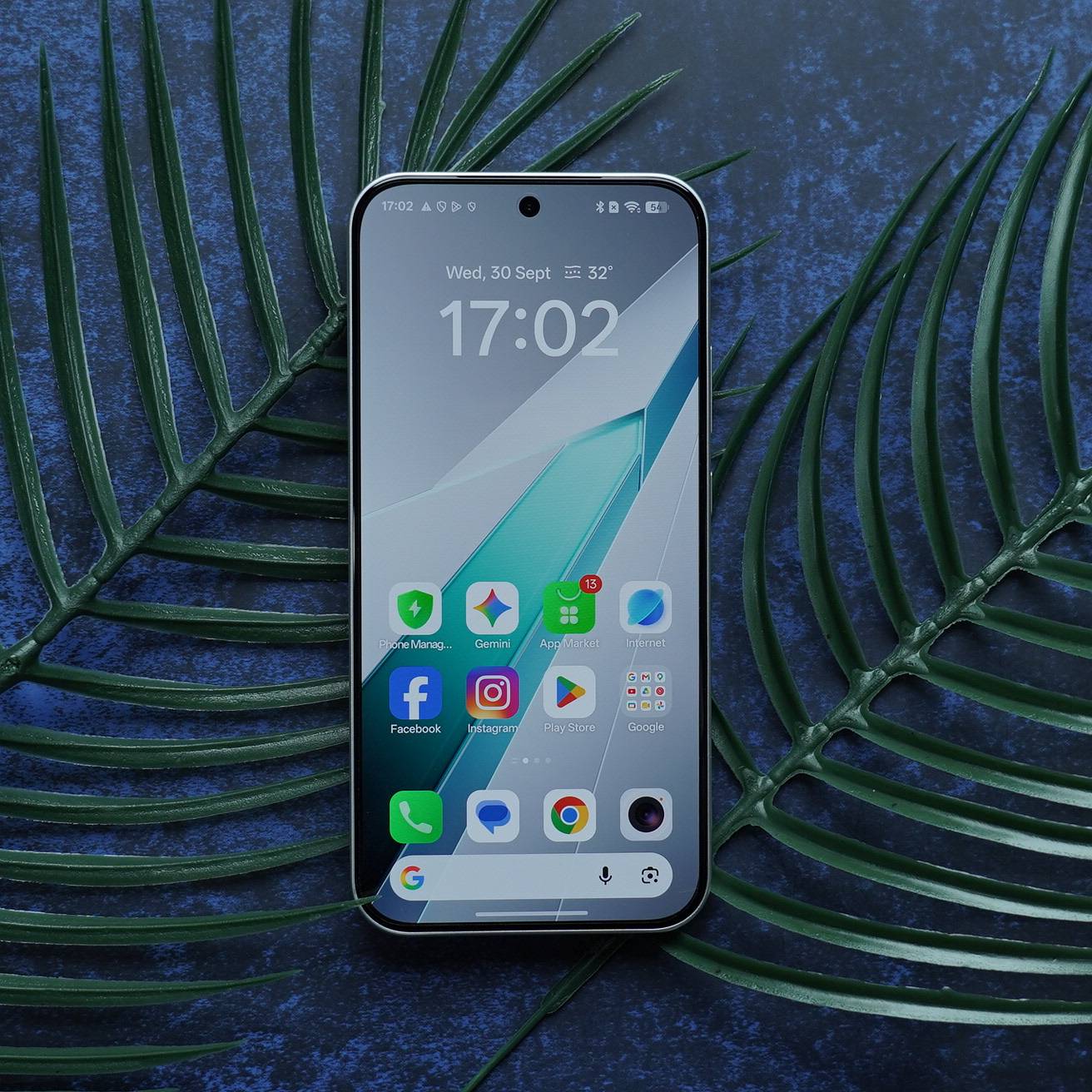
The display matches the chipset. It is a 6.78-inch 1.5K AMOLED panel with a resolution of 1,272 x 2,772, 450 PPI and 10-bit colour for 1.07 billion colours. The refresh rate adapts between 60Hz, 90Hz, 120Hz and 144Hz, and touch sampling goes up to 240Hz. For outdoor use, the screen reaches 1,800 nits of global peak brightness, while the 3,600-nit figure refers to local peak brightness in highlights. At low brightness, 2,160Hz high-frequency PWM dimming is designed to make the screen more comfortable to look at.
How it helped me: my mornings involve a lot of quick switching between apps: replying to work messages, checking the day’s calendar, booking a cab and paying for coffee with UPI. On the K14 Plus, all of that felt quick and fluid, and scrolling through news and social feeds was noticeably smoother than on my old phone. On a long video call in the afternoon, the phone stayed comfortable to hold, and checking directions in bright midday sun was easy because the screen remained clear and readable.
Camera: 50MP OIS main camera, 4K video and a 16MP Sony front camera
The main camera uses a 50MP sensor with a 1/2-inch size and optical image stabilisation, and by default it combines pixels to produce sharper 12.5MP photos. Turbo RAW multi-frame processing improves dynamic range and handles bright highlights better, while AI Night Mode with the Raw Super Night algorithm is designed for clearer low-light shots. OPPO has also tuned the camera for skin tones, with recognition and correction for white, black, yellow, and brown skin tones, which matters in group photos.
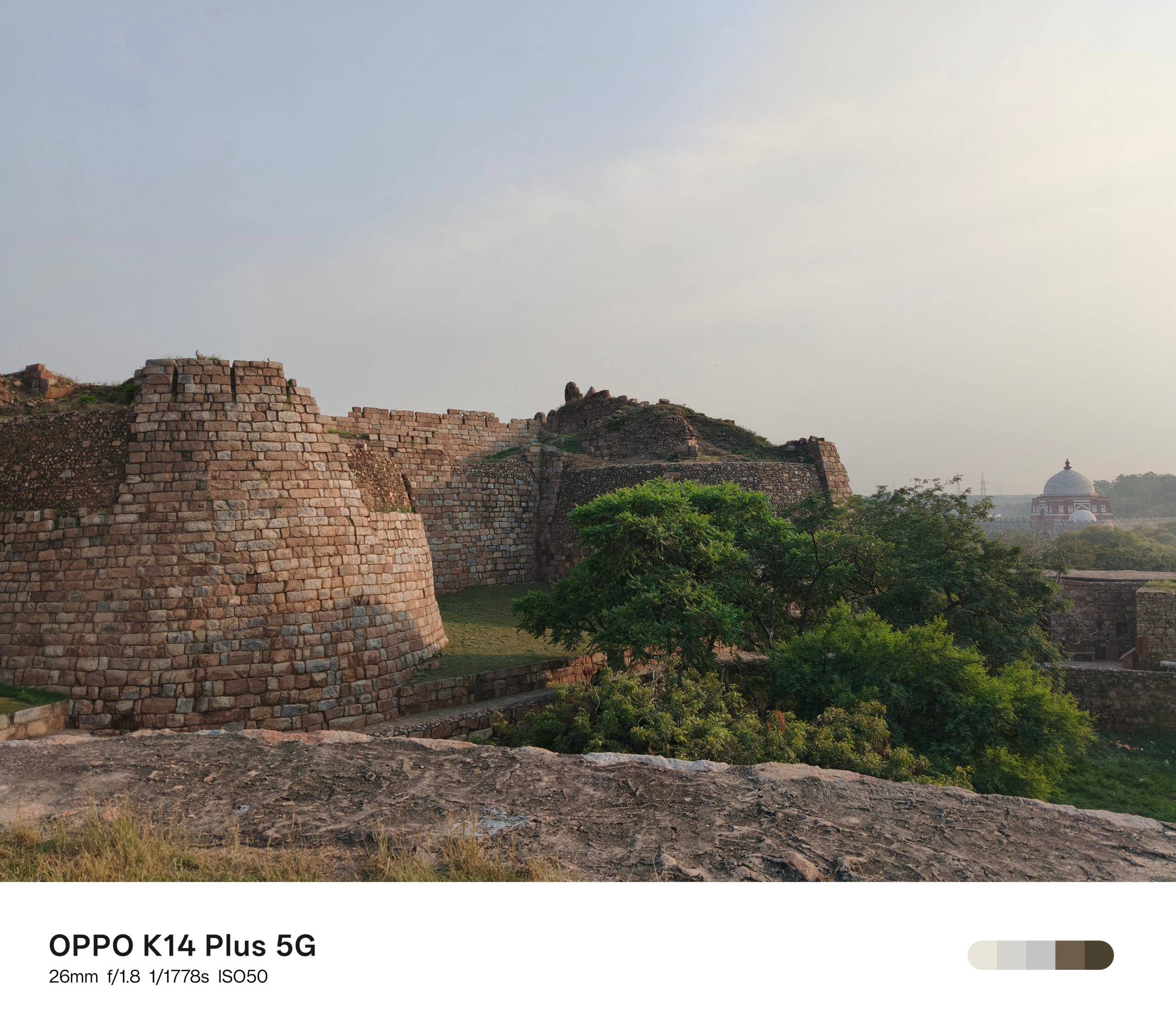
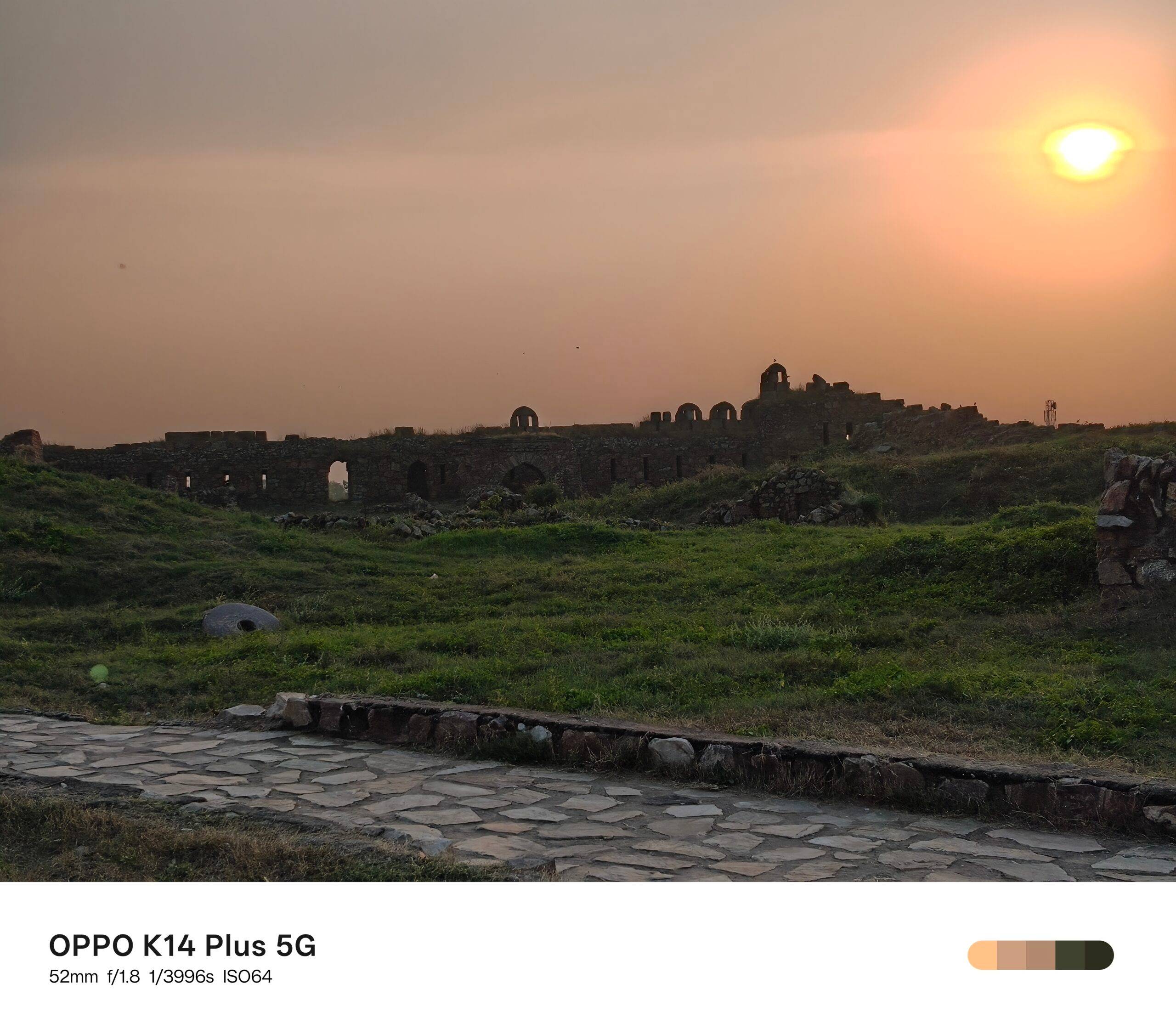
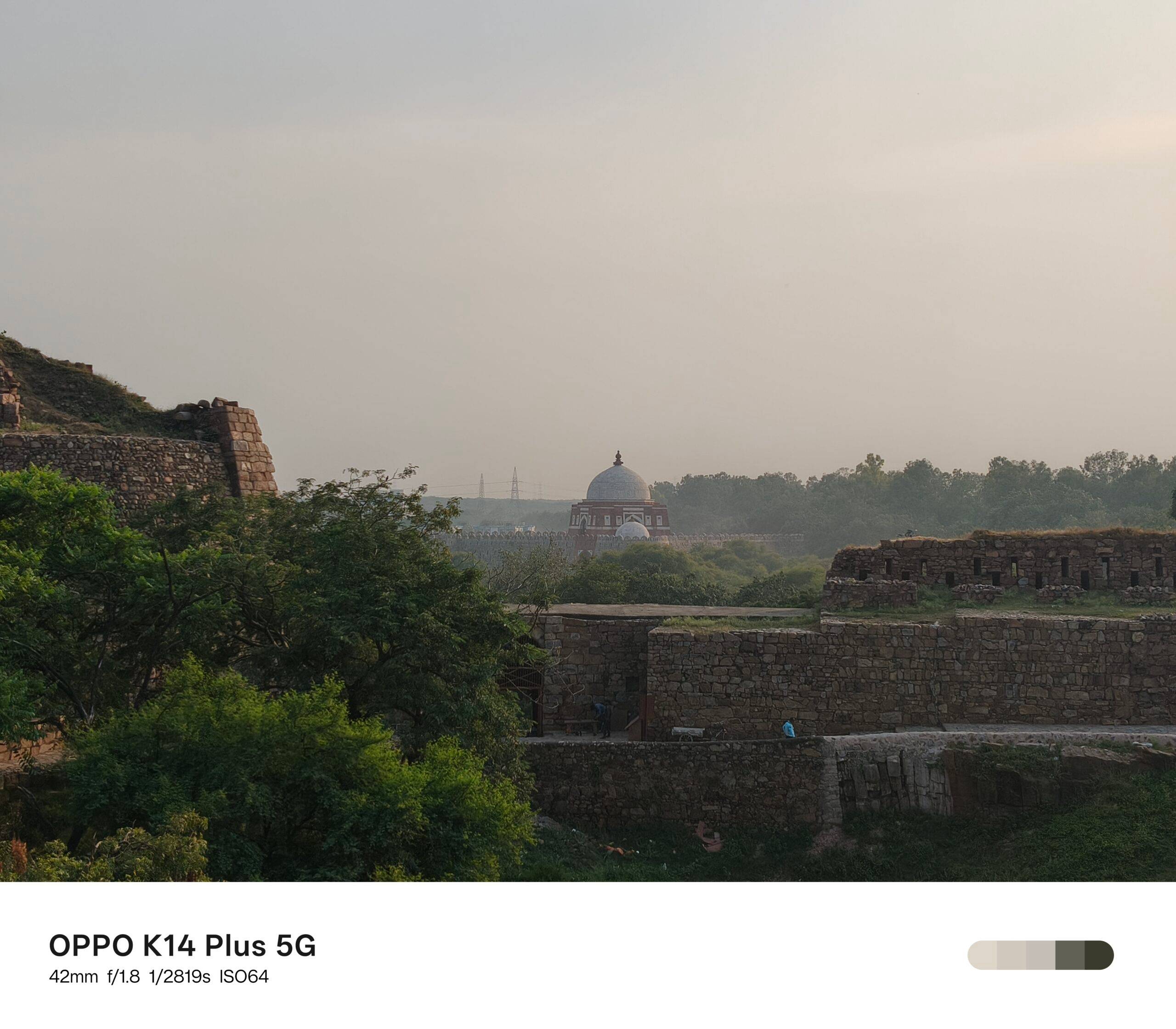
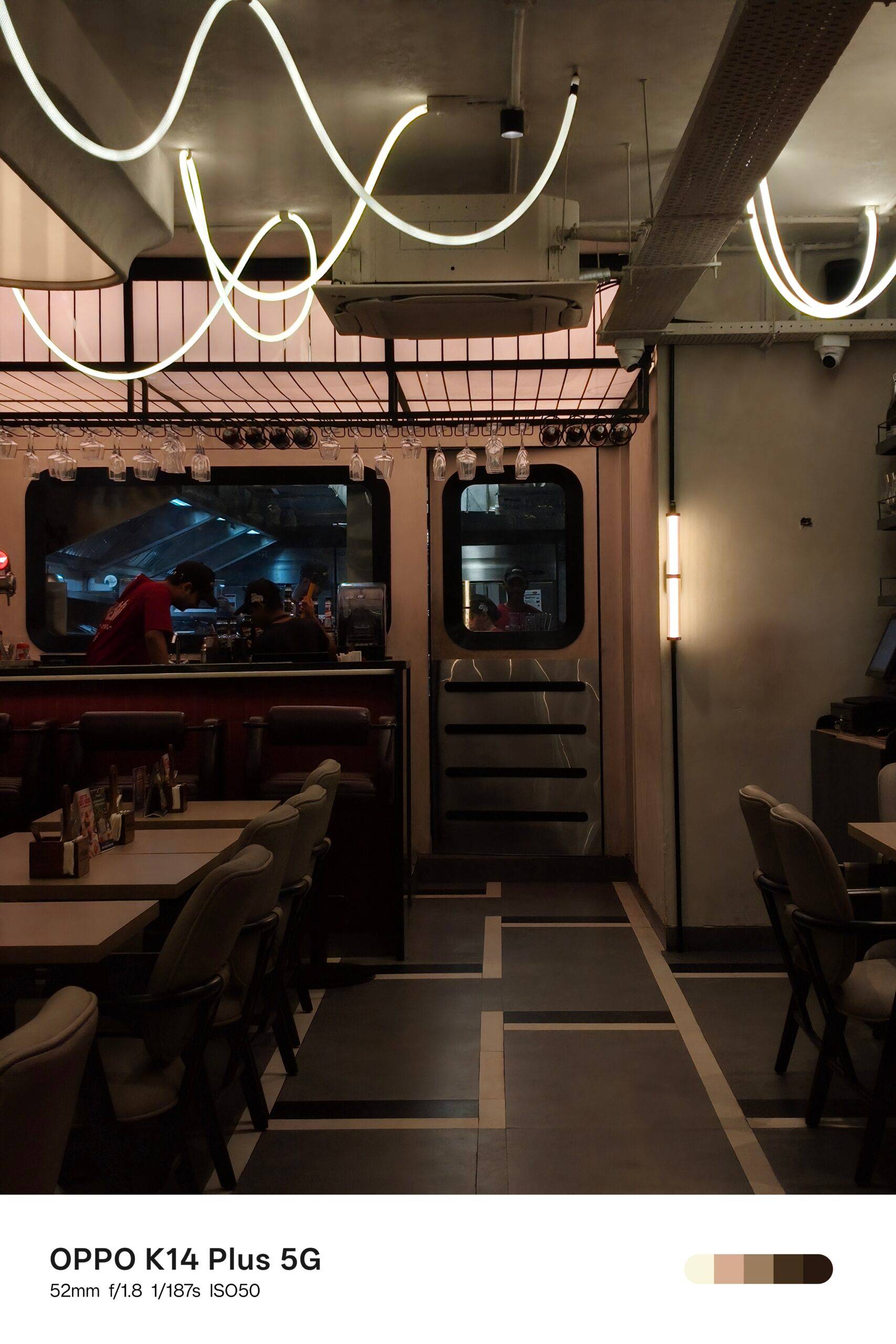
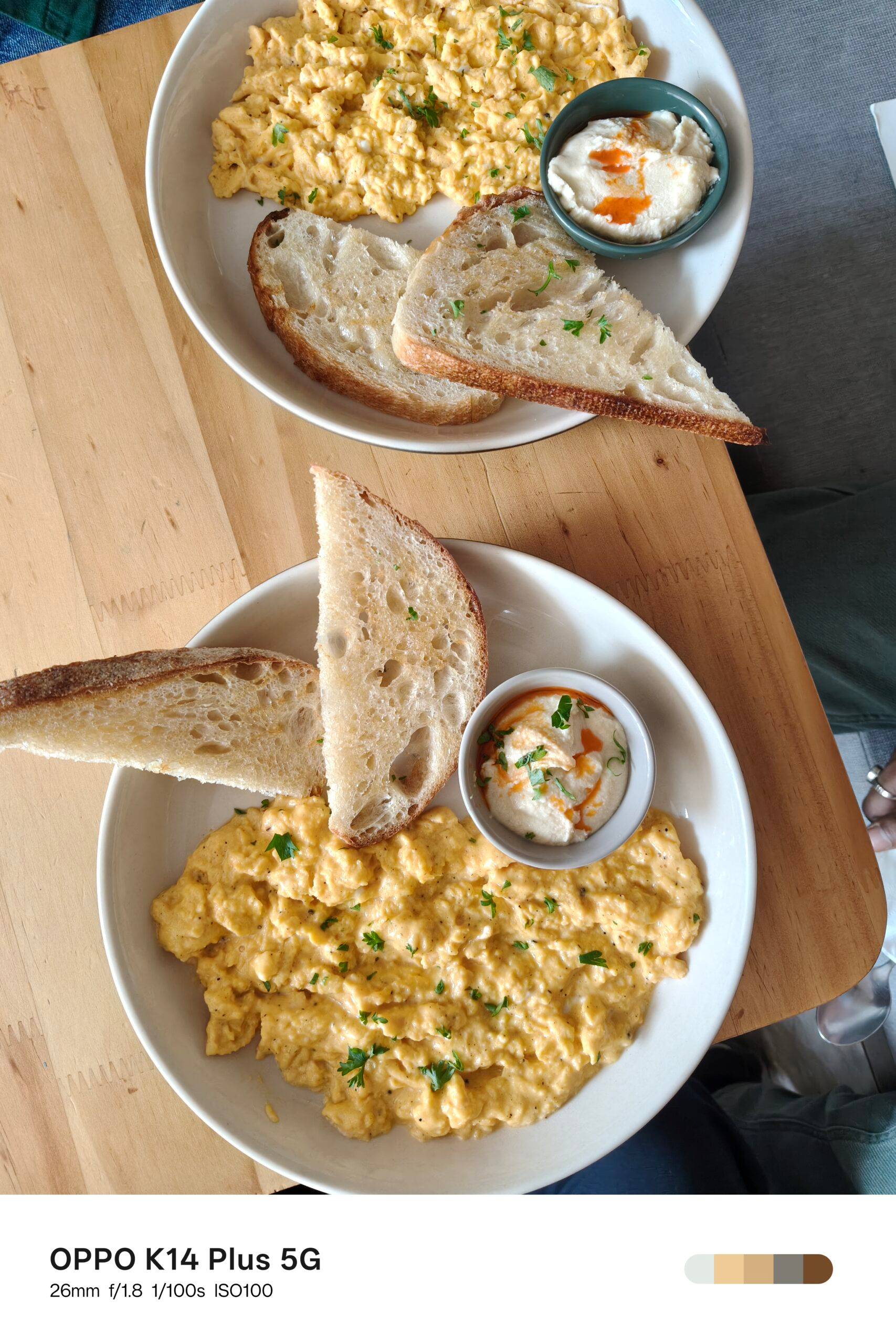

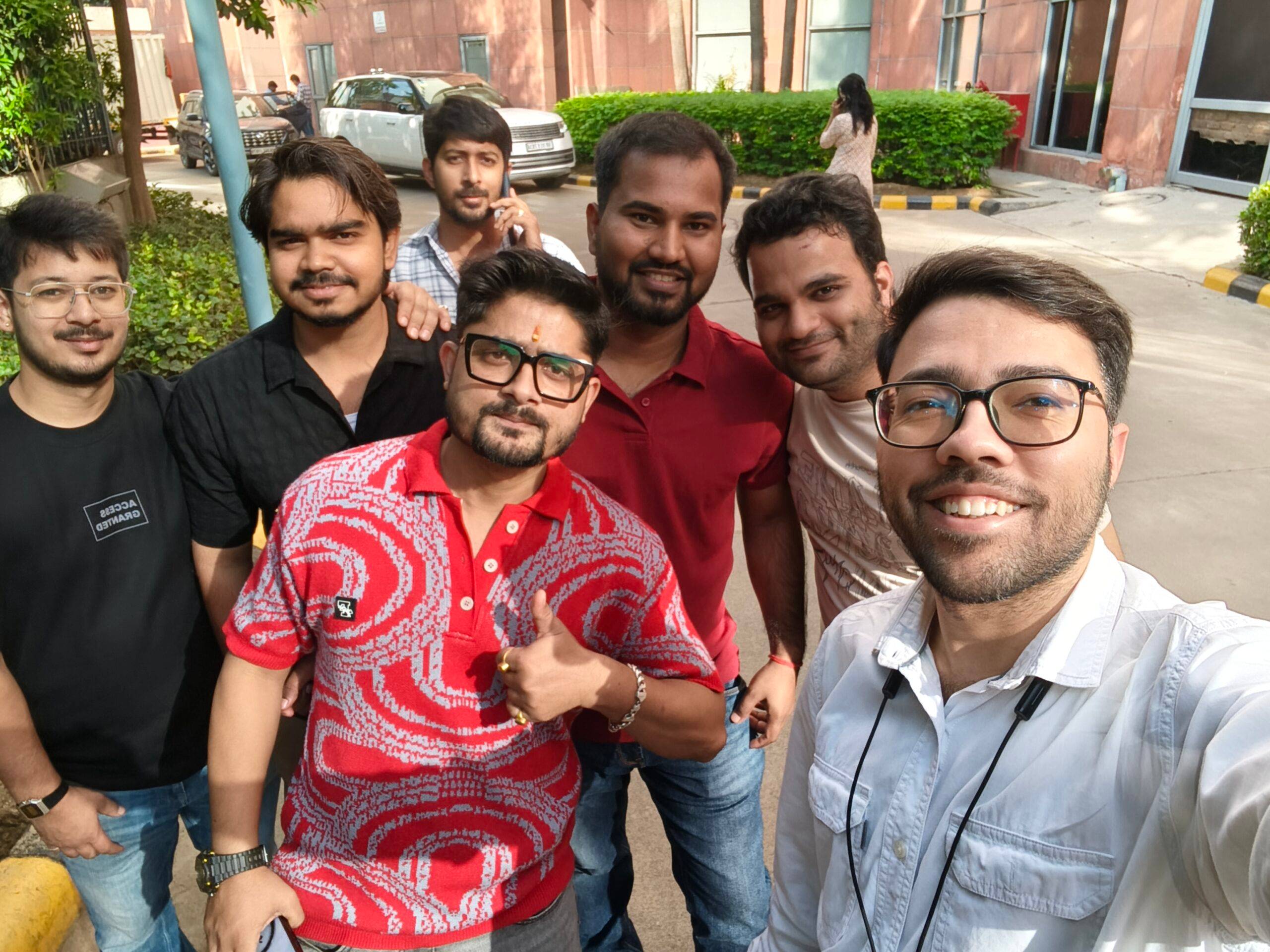
Video goes up to 4K at 30fps on the rear camera, with slow motion at 1080p 120fps and 720p 240fps. Dual-view recording uses the front and rear cameras at the same time, and Motion Photos work on both. On the front, a 16MP Sony IMX480 camera handles selfies and video calls, and the display can act as a soft fill light for selfies in dim rooms. AI Portrait Glow improves the lighting on faces, while AI Popout 2.0 and AI Remix Collage make it easy to create fun posts for social media. There is even an underwater camera mode for static fresh water up to 1.5 metres for up to 30 minutes, with an auto-drainage routine that clears water from the speaker when you exit.

How it helped me: most of my photos are everyday moments, such as family dinners, a friend’s birthday or a weekend outing. At a dimly lit dinner, the photos came out clear without the blur I was used to, and in group shots everyone’s skin tones looked natural rather than washed out. I used dual-view recording to film the cake-cutting at a family birthday with everyone’s reactions in the same clip, and the front camera’s fill light helped on a late evening video call.
Built to Last: 8,000mAh battery with an 1,800-cycle lifespan
The battery is the headline of the Built to Last story. The K14 Plus packs an 8,000mAh battery, and OPPO says it retains over 80 per cent of its capacity after 1,800 full charge cycles. At one full charge a day, that works out to roughly six years.
In OPPO’s lab tests, the battery lasts for 20.97 hours of YouTube playback, 30.33 hours of WhatsApp voice calls, 15.03 hours of Instagram Reels and 14.39 hours of Google Maps navigation, with typical mixed use stretching to about 2.95 days. When you do need to charge, 45W SUPERVOOC charging takes the phone from 1 per cent to 8 per cent in five minutes and to full in just over 100 minutes. Bypass charging sends power straight to the system during long sessions to reduce heat and battery wear, and 10W reverse wired charging can top up your earbuds, another phone or small accessories.
How it helped me: the biggest change was simply not thinking about the battery. On a busy weekday of calls, maps, messaging and music on the commute, I went to bed with plenty of charge left, and on a weekend trip I did not pack a power bank at all. One morning I forgot to charge overnight, and a few minutes on the charger while I got ready was enough to get me through to the office. I also used the reverse charging to rescue a friend’s earbuds on the way back.
Longevity and durability: 6-Year Smoothness Protection and IP69K, IP68 and IP66
Battery health is only part of a phone’s lifespan. The other part is whether it stays smooth. OPPO says the K14 Plus has passed its lab tests for 6-Year Smoothness Protection, using ageing technology that simulates years of use and checks app launch speed, boot time, multimedia response and app installation before and after. This applies to the 256GB model, while the 128GB models are rated for five years.
Several software features support this. The Luminous Rendering Engine keeps animations seamless, the Trinity Engine uses Parallel Loading to prepare apps in the background, and the Adaptive Scheduling Architecture manages memory so the system stays responsive. OPPO also plans to deliver a Smoothness Boost update roughly every six months during the upgrade cycle, and Extended Use Care 2.0 lets you run system checks and clean-ups.
For physical durability, the K14 Plus carries IP69K, IP68 and IP66 ratings, tested by SGS to ISO 20653:2023. IP68 covers submersion at 1.5 metres for 30 minutes, and IP66 covers powerful water jets. Splash Touch keeps the screen responsive when it is wet, and the phone is built to handle use in heavy rain.
How it helped me: this is the feature that speaks most directly to anyone whose phone has started to lag. Knowing the K14 Plus is tested to stay smooth for years makes it feel like a long-term purchase rather than a two-year one. During a sudden downpour on my way home, I could still answer a call and check messages with wet hands, and when I knocked a glass of water over on my desk, I wiped the phone down and carried on.
Premium experience: aerospace-grade aluminium and ultra-thin bezels
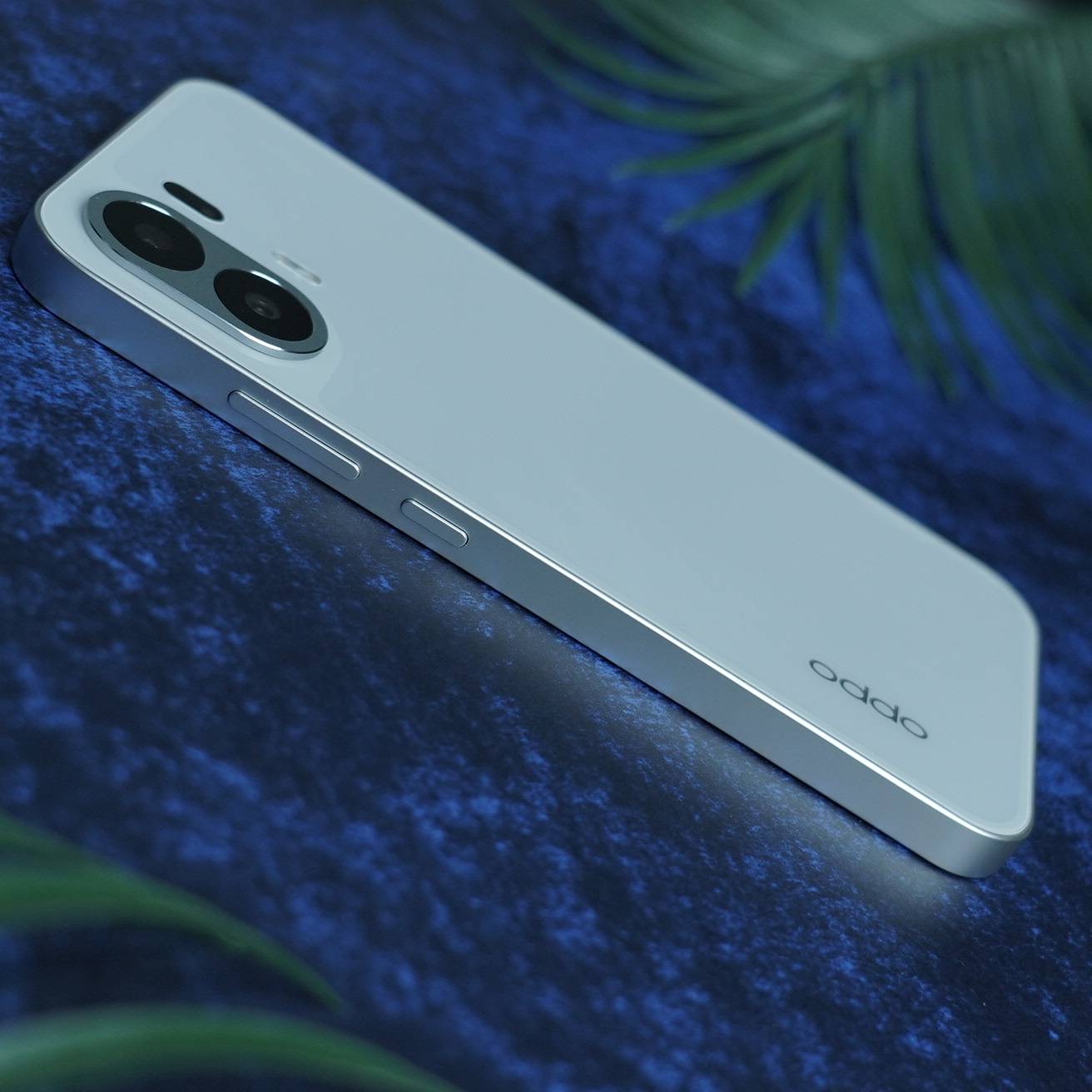
The K14 Plus does not feel like a compromise in the hand. The frame and mainboard cover use AM04 aerospace-grade aluminium alloy, which adds structural strength, helps spread heat and has passed 1,000 bend tests. The bezels are ultra-thin at 1.66mm on top, 1.65mm on the sides and 1.90mm at the bottom, giving a 93.6 per cent screen-to-body ratio. Despite the large battery, the phone measures 8.44mm thick and weighs 207g. There is an in-display optical fingerprint sensor, and the phone comes in Solar Orange and Star White.
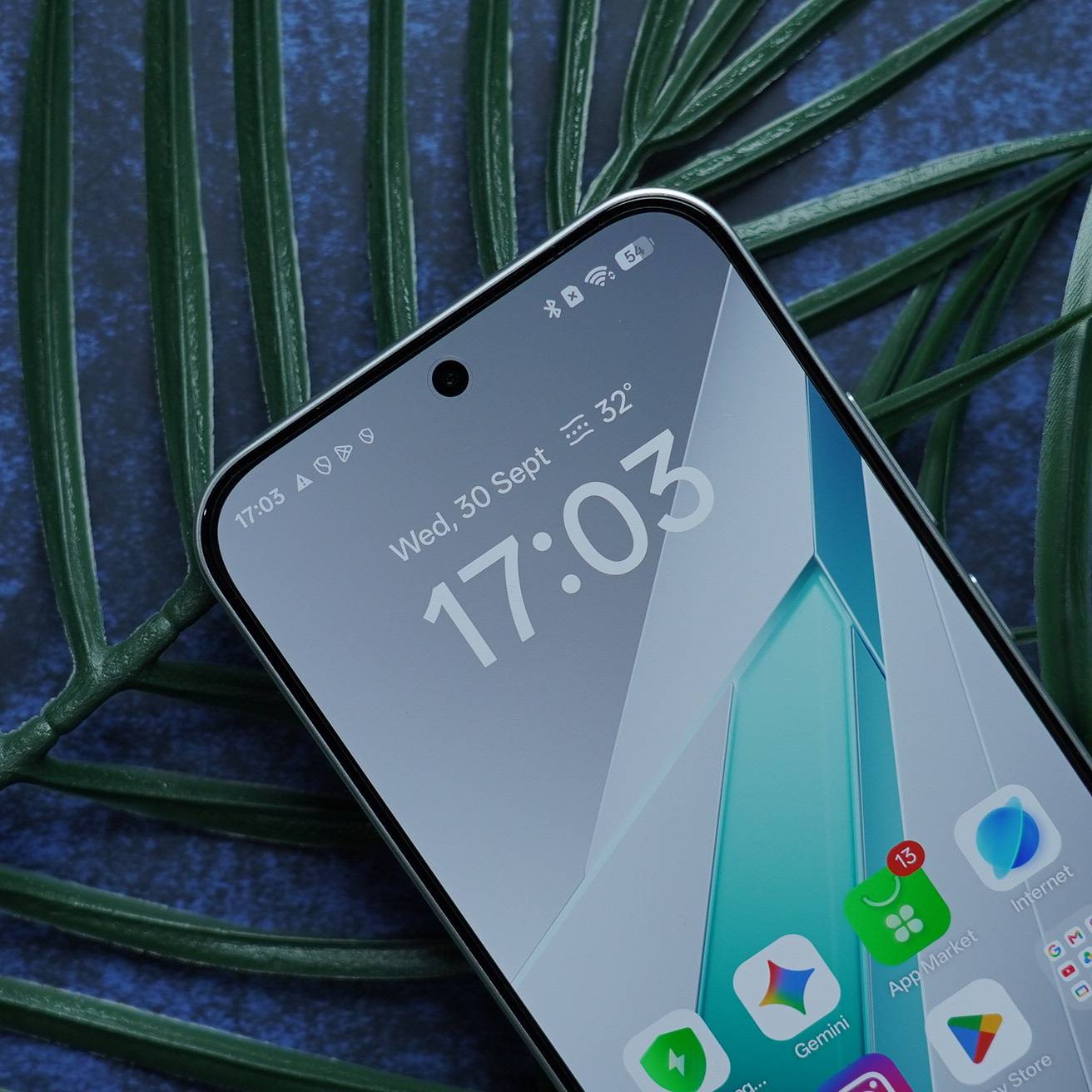
How it helped me: the slim bezels make the screen feel bigger without making the phone harder to hold, and the in-display fingerprint sensor unlocked the phone quickly every time I pulled it out to pay or check a message. The Solar Orange finish also stands out without looking loud.
The everyday extras
ColorOS adds a set of AI tools that help with daily tasks. AI Recording Sticker lets you mark key points while recording and then creates a summary that prioritises those points. AI Writer helps draft social media captions and polish notes, and AI Doc Scanner turns paper documents into clear PDFs. AI Call Guard can detect synthetic voices on unknown calls and WhatsApp calls, and Shake to quick launch opens Google Pay or PhonePe with a shake. O+ Connect also makes it simpler to share photos with family members who use an iPhone.
How it helped me: I used AI Recording Sticker in a team meeting to mark the action points, which made writing the follow-up email much quicker, and AI Doc Scanner saved me a trip to the photocopy shop when I needed to send a signed form.
OPPO K14 Plus price in India and availability
The OPPO K14 Plus is priced at ₹29,999 for the 6GB and 128GB model, ₹32,999 for the 8GB and 128GB model and ₹35,999 for the 8GB and 256GB model. It goes on sale on 8 October 2026 on Flipkart during the Big Billion Days sale and on the OPPO India e-store. A ₹4,000 instant bank discount on sale day brings the effective prices down to ₹25,999, ₹28,999 and ₹31,999, and No Cost EMI is available for up to six months.
Bottomline
The OPPO K14 Plus is not a phone built to win a single benchmark. It is built for people like me, who want a phone that feels fast today and still feels dependable years from now. The Dimensity 7360 MAX and 1.5K 144Hz AMOLED display make everyday use smooth, the 50MP OIS camera and 16MP Sony front camera capture the moments that matter, and the 8,000mAh battery, 1,800-cycle lifespan, 6-Year Smoothness Protection and IP69K, IP68 and IP66 protection deliver on the promise to last.
If your current phone has started to slow down, the K14 Plus is a smart, value-for-money upgrade. At an effective price starting at ₹25,999 during the Big Billion Days sale, it is the best smartphone under ₹30,000 to buy right now. Powered to Perform. Built to Last.
This is a promotional post done as part of a brand collaboration.