iPhone Air Spigen Ultra Hybrid MagFit case review: no compromises


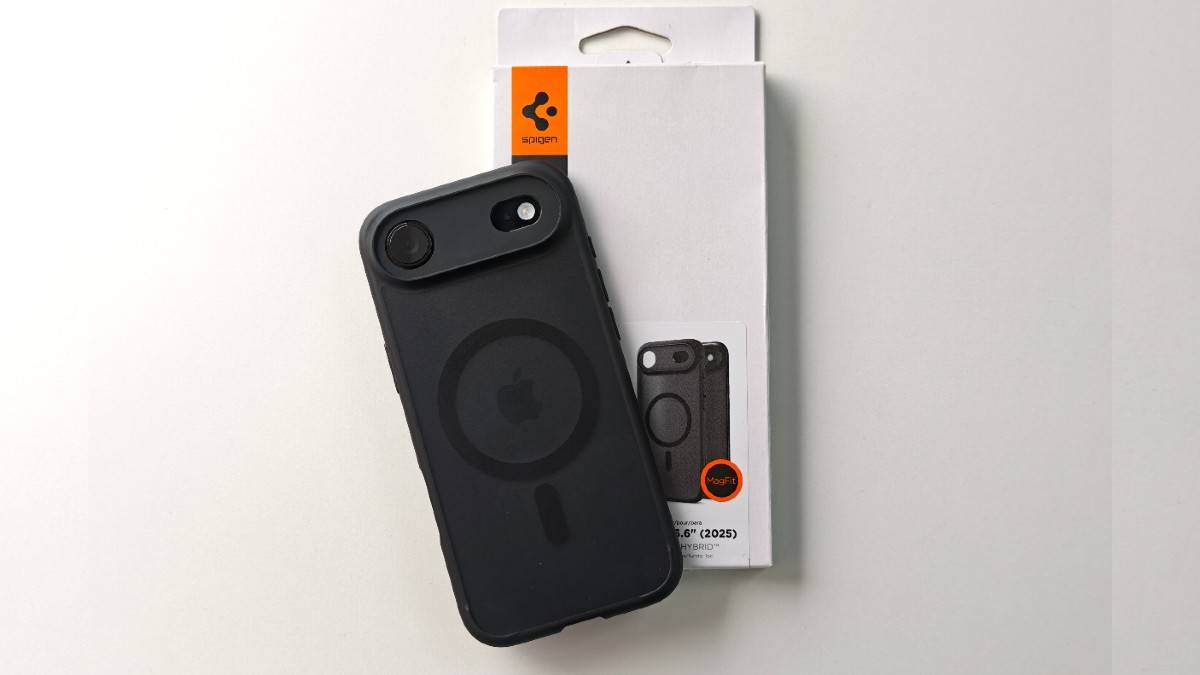
The iPhone Air may have an ultra-durable titanium body and Ceramic Shield Glass 2 protection. That said, we’d still recommend using a case with this super-slim phone. Investing in a good case is essential, not only for protection but also to keep the Rs 1,19,000 device looking brand new for longer.
The Spigen Ultra Hybrid Magfit case for the iPhone Air could be the near-perfect choice for that. I have been using the case with the smartphone for over a week now, and this is what I make of it:
Table of Contents
Build


I tested the case with the black iPhone Air, and the Frost Black case variant paired with it seamlessly. The Spigen Ultra Hybrid case has a translucent finish that keeps the back of the phone partially visible. The Apple logo subtly reveals itself when light hits at the right angle.

The edges and corners of the case have a solid black Thermoplastic Polyurethane (TPU) layer, a material that feels soft to the touch yet offers a firm grip. The TPU extends all the way around the iPhone Air’s camera plateau, almost wrapping over it like a protective mask. Spigen has done well to safeguard the camera module and the bottom corners, which are more susceptible to damage, with extra padding.
Protection
Both the camera module and the bottom edges feature a raised lip that absorbs shocks from minor drops and keeps the lens from directly coming into contact with hard surfaces, reducing the risk of scratches. Additionally, the case prevents the phone from wobbling due to the protruding camera lens when placed flat, ensuring a more stable and comfortable typing experience when the phone is kept on your desk.

The case also features a raised lip around the display edges, keeping the screen slightly elevated from flat surfaces to help prevent scratches.
Comparison with Apple’s iPhone Air case

The official Apple case for the iPhone Air is priced at Rs 4,900. It has a relatively transparent look with a slight greyish tint. The Apple case feels slightly slimmer in comparison, and has ports for Apple’s new sling-bag style Crossbody strap, which lets you hang the Air around your neck. Moreover, it offers a slightly better Camera Control button than the Spigen case.
Be that as it may, the Apple case seems a little flimsy and features a smooth, glossy finish that easily attracts fingerprints and smudges. The Spigen case is relatively more sturdy and boasts a matte finish, which not only ensures a cleaner profile but also offers a good, confident in-hand feel. Additionally, the case won’t glide from an inclined surface as easily as the Apple case would.

Moving on, the Apple case lacks the same corner padding found on the Spigen case and keeps the protruding camera lens less exposed to scratches.
Extras

The Spigen Ultra Hybrid Magfit case for the iPhone Air protects the phone buttons too. They may protrude slightly, but they feel much more tactile compared to the official Apple case. As the name suggests, the case is MagSafe-compatible, including support for the iPhone Air MagSafe Battery, which attaches to the back just as securely as it does on the official case.
Additionally, the Spigen case includes slots for a lanyard and a recessed area around the camera control on the right spine, making it easier to locate and use the controls by touch.
Verdict
The Spigen Ultra Hybrid MagFit case is currently available in India for Rs 1,452, making it a compelling choice for iPhone Air owners. While slightly bulkier than the official Apple case, it offers robust protection without compromising style or functionality. In fact, it outperforms the pricier Apple case in most practical aspects, striking a well-rounded balance between safeguarding the phone, usability, and design.
Pros
- Excellent protection
- Premium feel
- MagSafe compatibility
Cons
- Adds minor bulk