
vivo V50e 256GB
+ Compare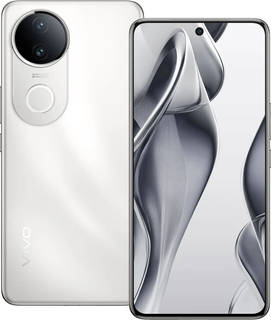











-
Design23

-
Rear Camera15

-
Front Camera4

-
360° View
![360° View]()
-
UI Screenshot17
![UI Screenshot]()
-
Videos2
![Videos]()



Key Specs
Performance
-
MediaTek Dimensity 7300 -
Octa core (2.5 GHz, Quad Core + 2 GHz, Quad core) -
8 GB RAM, LPDDR4X
Display
-
6.77 inches (17.2 cm); AMOLED (Curved Display) -
1080x2392 px (FHD+) -
120 Hz Refresh Rate -
Bezel-less with punch-hole display
Rear Camera
-
Dual Camera Setup - 50 MP (upto 10x Digital Zoom) Wide Angle Primary Camera
- 8 MP Ultra-Wide Angle Camera
-
Smart Aura Light -
4k @30 fps Video Recording
Front Camera
-
50 MP Wide Angle Lens -
Screen flash -
4k @30 fps Video Recording
Battery
-
5600 mAh, Li-ion -
90W Fast Charging; USB Type-C port
General
-
SIM1: Nano, SIM2: Nano -
5G Supported -
128 GB / 256 GB internal storage, Non Expandable -
Dust Resistant, Water Resistant
vivo V50e 256GB Prices in India
 Flipkart
vivo V50e 256GB Compare Camera Samples












































vivo V50e 256GB Expert Review Summary
Expert Rating:
![Ashish Kumar]()
Verdict
The Vivo V50e aims to balance style, performance, and battery life in the competitive sub-Rs 30K segment. While the cameras are reliable and prioritise a natural look, they can occasionally lack sharpness and vibrancy. The Vivo V50e handles daily tasks like calling, browsing, and light gaming with ease, but power users might crave more performance, especially with iQOO and POCO offering some stellar gaming-focused options.
Pros
- Sleek & lightweight design
- Vibrant AMOLED display
- Reliable battery life
- Decent primary camera
Cons
- Lacks the punch in performance
- Ultrawide & low-light images need improvement
Display and design
+
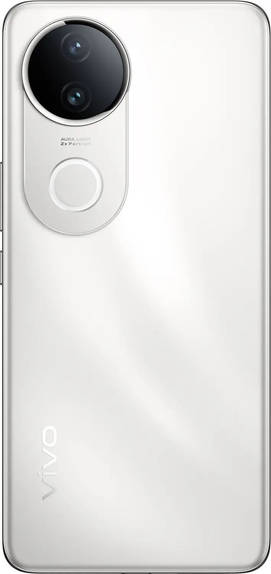
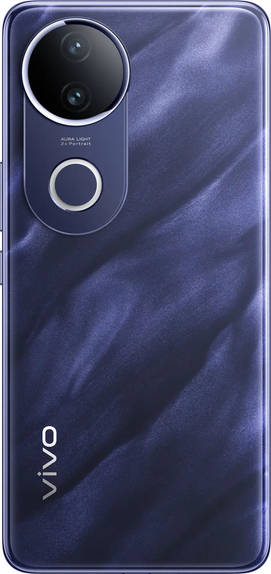
As mentioned, the Vivo V50e is mostly identical to the Vivo V50 in design, without the Zeiss branding. There are new colour options available, including Sapphire Blue and Pearl White. The Sapphire Blue colour has a rich pattern that is said to be different from each other. 'No two V50e Sapphire Blue are alike', as per the company.SmartphoneThicknessWeightIP ratingVivo V50e7.6mm*186 gramsIP69Vivo V507.39mm189 gramsIP69OPPO F29 Pro7.55mm180 gramsIP69*For the Sapphire Blue variant
Read More
Cameras
+
For photography, the Vivo V50e sports a dual-camera setup comprising a 50MP OIS Sony IMX882 primary sensor and an 8MP ultra-wide camera. There's no telephoto camera for sharper portrait shots, but it's good to see that Vivo has not skipped the ultra-wide camera. The front camera is a 50MP Samsung ISOCELL JN1 snapper for selfies and video calling.While the smartphone lacks Zeiss tuning, it comes with all the camera modes and capabilities of the Vivo V50. The V50e offers 4K video recording at 30fps from both front and rear cameras, wedding-style portraits (exclusively designed for India), AI Aura light for enhanced low-light photography, and three different focal lengths: 1x (24mm), 1.5x (35mm), and 2x (50mm).The Vivo V50e delivers a natural colour profile across various shooting modes, prioritising realistic tones over exaggerated vibrancy. While shadow detail is well preserved, overall colours can appear slightly muted. The ultra-wide camera follows the same colour science, though its smaller 8MP sensor can result in noticeable noise, particularly in darker areas. Portraits feature a pleasing shallow depth of field but may lack a bit of facial detail and colour precision. Selfies maintain a natural look with well-balanced background exposure, though some finer details can occasionally be lost.Read on to find out how it compares against Vivo V50 and OPPO F29 Pro.DaylightIn daylight, the Vivo V50e produces colours that are closer to natural tones. While its shadows may appear somewhat crushed, the device retains detail even in darker areas. The Vivo V50 excels in capturing details and delivers vibrant tones that make subjects stand out, resulting in visually appealing images.The OPPO F29 Pro's 50MP primary camera favours a high-contrast look over brighter, more detailed images in well-lit conditions. Compared to the Vivo V50e, it falls short in sharpness, with details appearing less crisp and colours leaning towards pastel tones rather than natural hues.Ultra-wideBoth smartphones deliver similar colours when switching to the ultra-wide lens from the respective primary cameras. However, thanks to its 50MP sensor, the Vivo V50 offers images with finer details and reduced graininess, particularly in shadowy areas. While the Vivo V50e does a decent job, it holds an advantage over the OPPO F29 Pro, which skips the ultra-wide camera for a dedicated macro shooter.PortraitThe Vivo V50 captures portraits in 23, 35, and 50mm focal points, whereas the Vivo V50e offers 26, 38, and 53mm focal points. To balance things, we captured the above images at the maximum focal points of both smartphones with an identical aperture of f/2.0.The Vivo V50e maintains a natural look by preserving shadows but falls short of reproducing natural tones and facial details. In contrast, the Vivo V50 brightens portraits—sometimes at the cost of shadow depth—yet delivers superior facial detail and more accurate skin and clothing colours. Both smartphones offer comparable bokeh and edge detection performance.The OPPO F29 Pro outperforms the Vivo V50e with more accurate skin tones and superior detail reproduction. It also handles shadows better, retaining more depth and contrast. However, it struggles to maintain a natural-looking bokeh effect.SelfieDespite featuring the same 50MP front camera, the results differ noticeably. The Vivo V50e produces natural-looking selfies with subdued colours but falls short of capturing finer facial details. The Vivo V50 is good with detail reproduction, resulting in sharp images. However, it adopts a more vivid profile, introducing a reddish tint to skin tones and enhancing overall colour vibrancy.Unlike portraits, the OPPO F29 Pro struggles to retain shadows when it comes to selfies. The handset tends to overexpose scenes to enhance brightness and visual appeal. However, this results in slightly inaccurate colour reproduction and a loss of finer details. If you are not seeking that, the Vivo V50e might be a better option, which also offers good exposure to background details.Low-light (night mode)The Vivo V50e and V50 automatically use a long exposure, typically associated with night mode, when capturing images in dimly lit environments, and there is no option to disable this feature. This might not bother most users, as the result appears appealing. The Vivo V50e struggles with details but gets the job done. The regular V50 smartphone, on the other hand, offers detailed images with reduced light flare and near-accurate colours.Compared to the OPPO F29 Pro, the Vivo V50e delivers a more visually appealing output. While the OPPO F29 maintains a contrast-heavy look, it struggles with sharpness, crispness, and colour accuracy. The Vivo V50e performs relatively better, though some details are smoothed out to minimise graininess.
Read More
Performance and software
+
At the core of the Vivo V50e lies an unchanged MediaTek Dimensity 7300 SoC from its predecessor. This is paired with 8GB RAM and 128GB/ 256GB storage options. The storage is not user-expandable using a microSD card, so calculate your usage needs before investing in the device. The 256GB storage is Rs 2,000 more expensive than the 128GB storage option.The Vivo V50e's synthetic benchmark scores are nowhere close to the segment's POCO X7 Pro, Realme P3 Ultra, iQOO Neo 10R, and more.Nevertheless, its real-world performance remains dependable for everyday users. I was able to get through my day-to-day activities of browsing, streaming, and scrolling social media with ease.Additionally, the smartphone's thermal efficiency is on par with competitors, including the performance-focused iQOO Neo 10R. After playing BGMI, Call of Duty: Mobile, and Real Racing 3 for 30 minutes each, the Vivo V50e heated up by roughly 5.5 degrees Celsius on average. However, it is not quite swift at getting the job done like clicking multiple photos in succession and jumping between apps with multiple of them running in the background. I noticed some lags here and there when the smartphone was pushed to its limit during my usage. However, it is nothing concerning. The handset should hold well for non-gamers and editors.SmartphonePre-installed appsOS updatesVivo V50e553 years major + 4 years securityVivo V50513 years major + 4 years securityOPPO F29 Pro732 years major + 3 years security
Read More
Battery and charging
+
The Vivo V50e features a 5,600mAh battery with 90W fast charging support—modest upgrades over its predecessor that make a slight real-world difference, even if not significantly reflected in synthetic benchmarks. In the PCMark battery test, the Vivo V50e achieves a runtime of 15 hours and 8 minutes, approximately 40 minutes less than the V40e. The lower score doesn't impact real-world performance. The handset is quite efficient for streaming, gaming, browsing, scrolling, and more. During our lab test, the handset's battery drained by 2 percent while streaming a 30-minute YouTube video and 6 percent on average after playing BGMI, Call of Duty: Mobile, and Real Racing 3 for half an hour each. When it comes to charging, the Vivo V50e takes 42 minutes to go from 20 percent to 100 percent using the included charger. This is on par with the V40e, which features an 80W charger but a slightly smaller 5,500mAh battery.SmartphoneBattery and charging speedsCharging time (20-100 percent)Vivo V50e5,600mAh, 90W42 minutesVivo V506,000mAh, 90W42 minutesOPPO F29 Pro6,000mAh, 80W60 minutes
Read More
Read full Review

Verdict
The Vivo V50e aims to balance style, performance, and battery life in the competitive sub-Rs 30K segment. While the cameras are reliable and prioritise a natural look, they can occasionally lack sharpness and vibrancy. The Vivo V50e handles daily tasks like calling, browsing, and light gaming with ease, but power users might crave more performance, especially with iQOO and POCO offering some stellar gaming-focused options.
- Sleek & lightweight design
- Vibrant AMOLED display
- Reliable battery life
- Decent primary camera
Pros
- Lacks the punch in performance
- Ultrawide & low-light images need improvement
Cons
Display and design
+As mentioned, the Vivo V50e is mostly identical to the Vivo V50 in design, without the Zeiss branding. There are new colour options available, including Sapphire Blue and Pearl White. The Sapphire Blue colour has a rich pattern that is said to be different from each other. 'No two V50e Sapphire Blue are alike', as per the company.SmartphoneThicknessWeightIP ratingVivo V50e7.6mm*186 gramsIP69Vivo V507.39mm189 gramsIP69OPPO F29 Pro7.55mm180 gramsIP69*For the Sapphire Blue variant
Read MoreCameras
+For photography, the Vivo V50e sports a dual-camera setup comprising a 50MP OIS Sony IMX882 primary sensor and an 8MP ultra-wide camera. There's no telephoto camera for sharper portrait shots, but it's good to see that Vivo has not skipped the ultra-wide camera. The front camera is a 50MP Samsung ISOCELL JN1 snapper for selfies and video calling.While the smartphone lacks Zeiss tuning, it comes with all the camera modes and capabilities of the Vivo V50. The V50e offers 4K video recording at 30fps from both front and rear cameras, wedding-style portraits (exclusively designed for India), AI Aura light for enhanced low-light photography, and three different focal lengths: 1x (24mm), 1.5x (35mm), and 2x (50mm).The Vivo V50e delivers a natural colour profile across various shooting modes, prioritising realistic tones over exaggerated vibrancy. While shadow detail is well preserved, overall colours can appear slightly muted. The ultra-wide camera follows the same colour science, though its smaller 8MP sensor can result in noticeable noise, particularly in darker areas. Portraits feature a pleasing shallow depth of field but may lack a bit of facial detail and colour precision. Selfies maintain a natural look with well-balanced background exposure, though some finer details can occasionally be lost.Read on to find out how it compares against Vivo V50 and OPPO F29 Pro.DaylightIn daylight, the Vivo V50e produces colours that are closer to natural tones. While its shadows may appear somewhat crushed, the device retains detail even in darker areas. The Vivo V50 excels in capturing details and delivers vibrant tones that make subjects stand out, resulting in visually appealing images.The OPPO F29 Pro's 50MP primary camera favours a high-contrast look over brighter, more detailed images in well-lit conditions. Compared to the Vivo V50e, it falls short in sharpness, with details appearing less crisp and colours leaning towards pastel tones rather than natural hues.Ultra-wideBoth smartphones deliver similar colours when switching to the ultra-wide lens from the respective primary cameras. However, thanks to its 50MP sensor, the Vivo V50 offers images with finer details and reduced graininess, particularly in shadowy areas. While the Vivo V50e does a decent job, it holds an advantage over the OPPO F29 Pro, which skips the ultra-wide camera for a dedicated macro shooter.PortraitThe Vivo V50 captures portraits in 23, 35, and 50mm focal points, whereas the Vivo V50e offers 26, 38, and 53mm focal points. To balance things, we captured the above images at the maximum focal points of both smartphones with an identical aperture of f/2.0.The Vivo V50e maintains a natural look by preserving shadows but falls short of reproducing natural tones and facial details. In contrast, the Vivo V50 brightens portraits—sometimes at the cost of shadow depth—yet delivers superior facial detail and more accurate skin and clothing colours. Both smartphones offer comparable bokeh and edge detection performance.The OPPO F29 Pro outperforms the Vivo V50e with more accurate skin tones and superior detail reproduction. It also handles shadows better, retaining more depth and contrast. However, it struggles to maintain a natural-looking bokeh effect.SelfieDespite featuring the same 50MP front camera, the results differ noticeably. The Vivo V50e produces natural-looking selfies with subdued colours but falls short of capturing finer facial details. The Vivo V50 is good with detail reproduction, resulting in sharp images. However, it adopts a more vivid profile, introducing a reddish tint to skin tones and enhancing overall colour vibrancy.Unlike portraits, the OPPO F29 Pro struggles to retain shadows when it comes to selfies. The handset tends to overexpose scenes to enhance brightness and visual appeal. However, this results in slightly inaccurate colour reproduction and a loss of finer details. If you are not seeking that, the Vivo V50e might be a better option, which also offers good exposure to background details.Low-light (night mode)The Vivo V50e and V50 automatically use a long exposure, typically associated with night mode, when capturing images in dimly lit environments, and there is no option to disable this feature. This might not bother most users, as the result appears appealing. The Vivo V50e struggles with details but gets the job done. The regular V50 smartphone, on the other hand, offers detailed images with reduced light flare and near-accurate colours.Compared to the OPPO F29 Pro, the Vivo V50e delivers a more visually appealing output. While the OPPO F29 maintains a contrast-heavy look, it struggles with sharpness, crispness, and colour accuracy. The Vivo V50e performs relatively better, though some details are smoothed out to minimise graininess.
Read MorePerformance and software
+At the core of the Vivo V50e lies an unchanged MediaTek Dimensity 7300 SoC from its predecessor. This is paired with 8GB RAM and 128GB/ 256GB storage options. The storage is not user-expandable using a microSD card, so calculate your usage needs before investing in the device. The 256GB storage is Rs 2,000 more expensive than the 128GB storage option.The Vivo V50e's synthetic benchmark scores are nowhere close to the segment's POCO X7 Pro, Realme P3 Ultra, iQOO Neo 10R, and more.Nevertheless, its real-world performance remains dependable for everyday users. I was able to get through my day-to-day activities of browsing, streaming, and scrolling social media with ease.Additionally, the smartphone's thermal efficiency is on par with competitors, including the performance-focused iQOO Neo 10R. After playing BGMI, Call of Duty: Mobile, and Real Racing 3 for 30 minutes each, the Vivo V50e heated up by roughly 5.5 degrees Celsius on average. However, it is not quite swift at getting the job done like clicking multiple photos in succession and jumping between apps with multiple of them running in the background. I noticed some lags here and there when the smartphone was pushed to its limit during my usage. However, it is nothing concerning. The handset should hold well for non-gamers and editors.SmartphonePre-installed appsOS updatesVivo V50e553 years major + 4 years securityVivo V50513 years major + 4 years securityOPPO F29 Pro732 years major + 3 years security
Read MoreBattery and charging
+The Vivo V50e features a 5,600mAh battery with 90W fast charging support—modest upgrades over its predecessor that make a slight real-world difference, even if not significantly reflected in synthetic benchmarks. In the PCMark battery test, the Vivo V50e achieves a runtime of 15 hours and 8 minutes, approximately 40 minutes less than the V40e. The lower score doesn't impact real-world performance. The handset is quite efficient for streaming, gaming, browsing, scrolling, and more. During our lab test, the handset's battery drained by 2 percent while streaming a 30-minute YouTube video and 6 percent on average after playing BGMI, Call of Duty: Mobile, and Real Racing 3 for half an hour each. When it comes to charging, the Vivo V50e takes 42 minutes to go from 20 percent to 100 percent using the included charger. This is on par with the V40e, which features an 80W charger but a slightly smaller 5,500mAh battery.SmartphoneBattery and charging speedsCharging time (20-100 percent)Vivo V50e5,600mAh, 90W42 minutesVivo V506,000mAh, 90W42 minutesOPPO F29 Pro6,000mAh, 80W60 minutes
Read MoreCompetitors For vivo V50e 256GB
View Alternatives
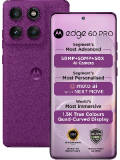

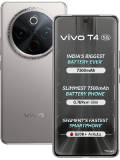






vivo V50e 256GB Specifications
General |
|
|---|---|
| Launch Date | April 10, 2025 (Official) |
| Operating System | Android v15 |
| OS Updates | 3 Years |
| Security Updates | 4 Years |
| Custom UI | Funtouch OS |
Performance
(Very Good)
|
|
|---|---|
| Chipset | MediaTek Dimensity 7300 View Details |
| Processor | Octa core (2.5 GHz, Quad core, Cortex A78 + 2 GHz, Quad core, Cortex A55) |
| Architecture | 64 bit |
| Fabrication | 4 nm |
| Graphics (GPU) | Mali-G615 MC2 |
| RAM | 8 GB |
| RAM Type | LPDDR4X |
Benchmark Screenshots
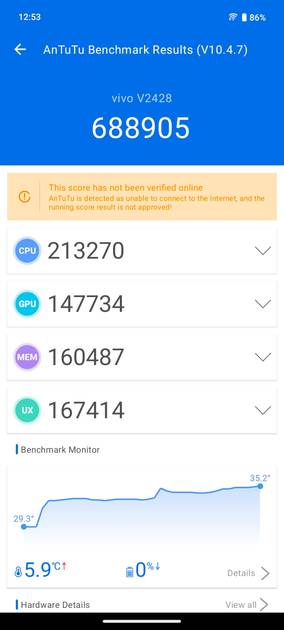
AnTuTu Benchmark
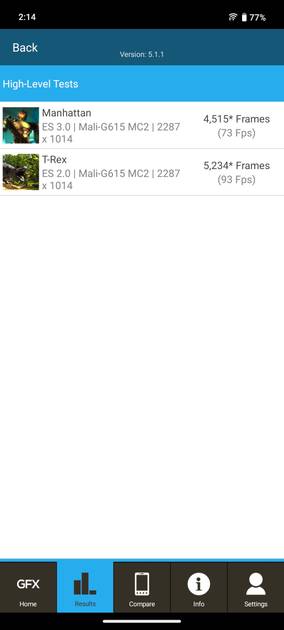
Graphics Benchmark
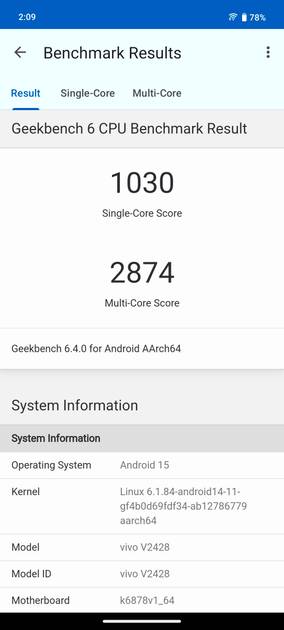
Geekbench6 Benchmark
|


Display
(Excellent)
|
|
|---|---|
| Display Type | AMOLED (Curved Display) |
| Screen Size | 6.77 inches (17.2 cm) |
| Resolution | 1080x2392 px (FHD+) |
| Peak Brightness | 1800 nits |
| HBM Brightness | 1300 nits |
| PWM Dimming | 2160 Hz |
| Refresh Rate | 120 Hz |
| Aspect Ratio | 19.9:9 |
| Pixel Density | 388 ppi |
| Screen to Body Ratio (calculated) | 88.33 % |
| Screen Protection | Yes |
| Bezel-less Display | Yes with punch-hole display |
| HDR 10 / HDR+ Support | Yes, HDR 10+ |
| Screen to Body Ratio (claimed by the brand) | 92.6 % |
UI Screenshots

Lock Screen

Home Screen

Screen With Widgets

Dialer Screen

App Drawer

Notification Panel
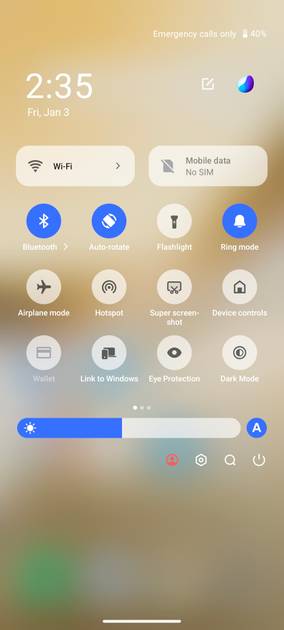
Quick Settings Panel
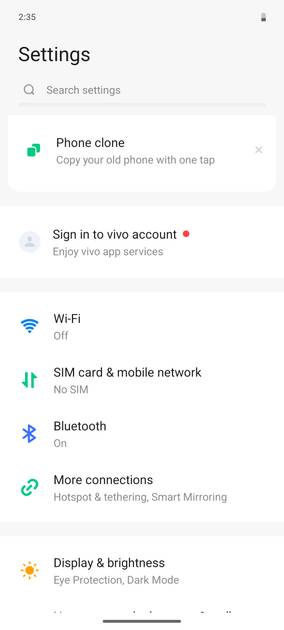
Settings Screen

OS Version
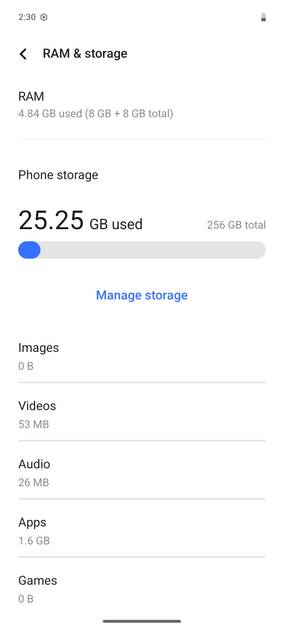
Storage
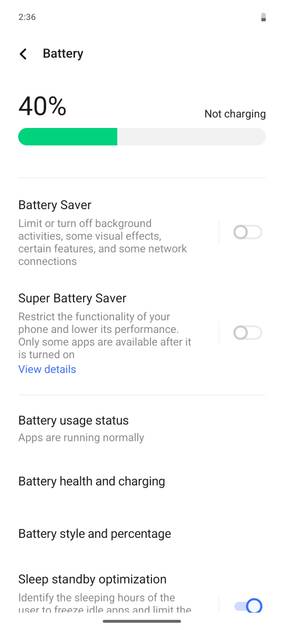
Battery

Camera On
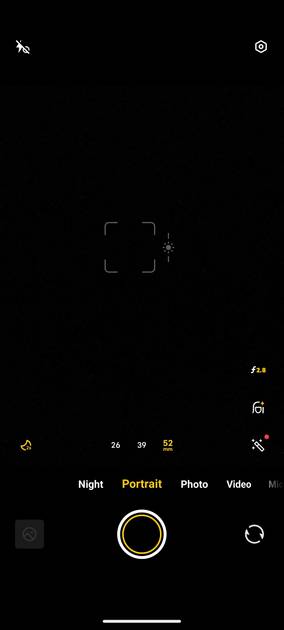
Camera Options

Camera Modes
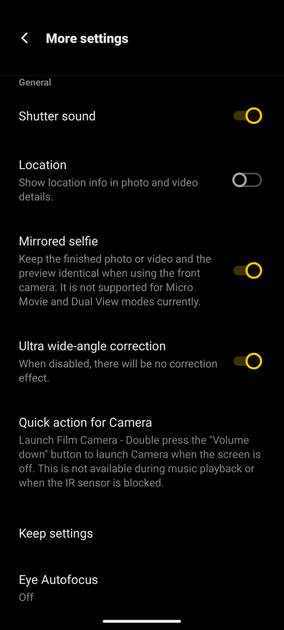
Camera Settings
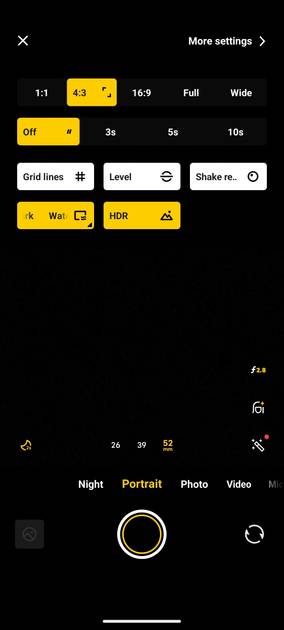
Picture Size Options
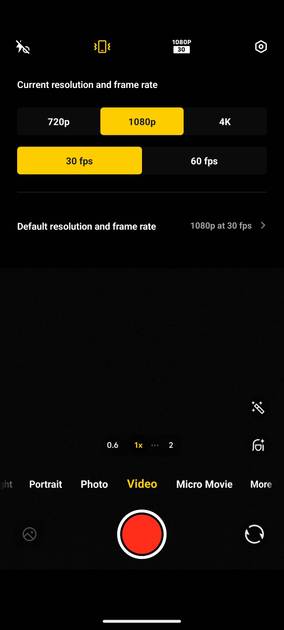
Video Size Options
|
Design |
|
|---|---|
| Height | 163.29 mm |
| Width | 76.72 mm |
| Thickness | 7.61 mm |
| Weight | 186 grams |
| Build Material | Back: Plastic |
| Water Resistance | Yes, Water resistant, IP68, IP69, (up to 30 minutes in a depth of 1.5 meter) |
| Ruggedness | Dust proof |
|
Click to View

|
Rear Camera
(Very Good)
|
|||||||||||||||||||||||||||
|---|---|---|---|---|---|---|---|---|---|---|---|---|---|---|---|---|---|---|---|---|---|---|---|---|---|---|---|
| Resolution | |||||||||||||||||||||||||||
|
|||||||||||||||||||||||||||
| Autofocus | Yes | ||||||||||||||||||||||||||
| OIS | Yes | ||||||||||||||||||||||||||
| Flash | Yes, Smart Aura Light | ||||||||||||||||||||||||||
| Image Resolution | 8150 x 6150 Pixels | ||||||||||||||||||||||||||
| Settings | Exposure compensation, ISO control | ||||||||||||||||||||||||||
| Shooting Modes |
Continuous Shooting High Dynamic Range mode (HDR) Film Camera SuperMoon |
||||||||||||||||||||||||||
| Camera Features |
10 x Digital Zoom Auto Flash Face detection Touch to focus |
||||||||||||||||||||||||||
| Video Recording |
4k @30 fps Full HD @60 fps HD @120 fps |
||||||||||||||||||||||||||
| Video Recording Features | Dual Video Recording | ||||||||||||||||||||||||||
Rear Camera Samples

Daylight / HDR Auto

Wide Angle

Max Zoom Supported 10x

Long Shot 10X

Long Shot 5X

Long Shot 3X

Long Shot 1X

High Res

Portrait Shot

Night Mode OFF

Night Mode ON

Close Up

Low Light

Low Light With Flash
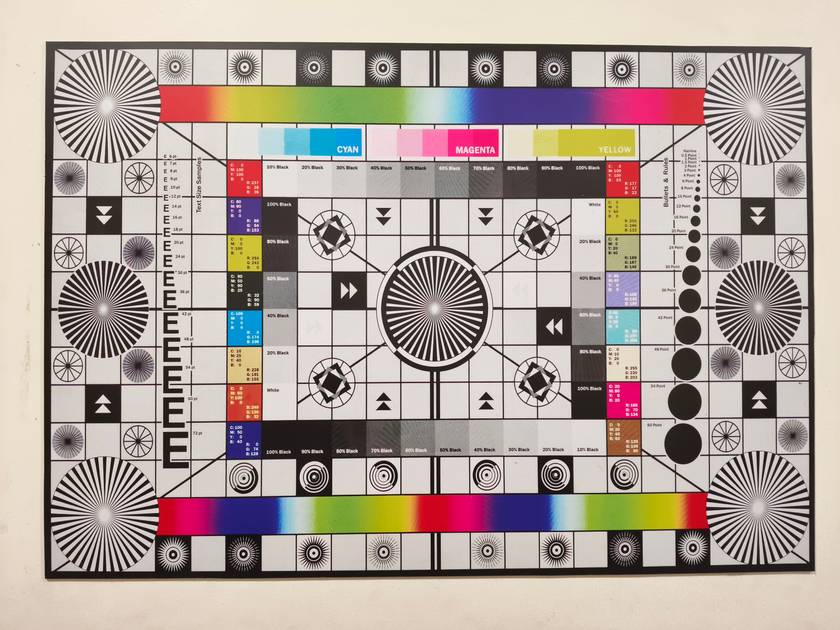
Colour Variance
|
Front Camera
(Excellent)
|
||||||||||||||||
|---|---|---|---|---|---|---|---|---|---|---|---|---|---|---|---|---|
| Resolution | ||||||||||||||||
|
||||||||||||||||
| Autofocus | Yes | |||||||||||||||
| Flash | Yes, Screen flash | |||||||||||||||
| Video Recording | 4k @30 fps | |||||||||||||||
Front Camera Samples

Selfie

Selfie Portrait

Selfie Low Light

Selfie Low Light With Flash
|
Battery
(Very Good)
|
|
|---|---|
| Capacity | 5600 mAh |
| Battery Type | Li-ion |
| Quick Charging | Yes, 90W Fast Charging, 50% in 20 minutes |
| Reverse Charging | Yes |
Storage |
|
|---|---|
| Internal Storage | 128 GB / 256 GB |
| Storage Type | UFS 2.2 |
| Expandable Storage | No |
Network & Connectivity |
|
|---|---|
| SIM Slot(s) | Dual SIM |
| SIM Type | SIM1: Nano, SIM2: Nano |
| Network Support | 5G, 4G |
| VoLTE | Yes |
| SIM 1 |
5G bands, 4G bands
Expand
|
| SIM 2 |
5G bands, 4G bands
Expand
|
| SAR Value | Head: 0.988 W/kg, Body: 0.869 W/kg |
| Wi-Fi | Yes, Wi-Fi 6 (802.11 a/b/g/n/ac/ax) 5GHz, MIMO |
| Wi-Fi Features | Mobile Hotspot |
| Bluetooth | Yes, v5.4 |
| GPS | Yes with A-GPS, Glonass |
| NFC | No |
Multimedia |
|
|---|---|
| Stereo Speakers | Yes |
| Audio Jack | USB Type-C |
Sensors |
|
|---|---|
| Fingerprint Sensor | Yes |
| Fingerprint Sensor Position | On-screen |
| Fingerprint Sensor Type | Optical |
| Other Sensors | Light sensor, Proximity sensor, Accelerometer, Compass, Gyroscope |
vivo V50e 256GB User Reviews
vivo V50e 256GB Key Highlights
| Processor | MediaTek Dimensity 7300 |
| RAM & Storage | 8 GB RAM + 128 GB 8 GB RAM + 256 GB |
| Display | 6.77", 1080 x 2392 Resolution |
| Rear Camera | 50 MP + 8 MP |
| Front Camera | 50 MP |
| Battery | 5600 mAh |





























vivo V50e Price In India
| Product Name | Store | Price |
|---|---|---|
| vivo V50e (8 GB + 128 GB) | Flipkart | ₹24,499 |
| vivo V50e (8 GB + 128 GB) | Amazon | ₹33,999 |
| vivo V50e (8 GB + 256 GB) | Flipkart | ₹28,999 |
Popular Links
- All Upcoming Phones
- Upcoming vivo Phones
- vivo phones under 10k
- vivo phones under 20k
- OPPO K14 Plus 5G
- Xiaomi Redmi Note 17 Pro 5G
- Lava Virat Curve 5G
- OPPO F35 Pro
- Xiaomi Redmi Note 17 Pro Max 5G
- Samsung Mobiles
- Motorola Mobiles
- vivo Mobiles
- OPPO Mobiles
- Tecno Mobiles
- realme Mobiles
- Xiaomi Mobiles