
Movie |
Thatcherism | Politics
Disclaimer: All content and media belong to original content streaming platforms/owners like Netflix, Disney+ Hotstar, Amazon Prime Videos, JioCinema, SonyLIV etc. 91mobiles entertainment does not claim any rights to the content and only aggregate the content along with the service providers links.


Best European Film Mejor Pelcula Europea | 1993 | Ken
Best Feature | 1990 | Ken
Box Office Collection 1,232,210 USD
The 'Six Irishmen,' mentioned by Sir Robert Neil of MI5 (with politician Alec Nevin) to Kerrigan is in reference to the 'Birmingham Six.' In 1974 the pub Tavern In The Town and Mulberry Bush, in Birmingham England, was bombed, killing 21 persons and injuring 182 people. The police picked up the nearest six Irishmen and subjected them to 'in-depth interrogation' to obtain false confessions. Patrick Hill, Gerard Hunter, Richard McIlkenny, William Power, John Walker and Hugh Callaghan all served 16 horrific years in jail until the convictions were overturned in 1991. Hugh Callaghan details his ordeal in the book, *Cruel Fate,* co-authored with Sally Mulready in 1994-1995. The movie In the Name of the Father (1993), was based on the Guildford Four, who were similarly jailed using false confessions, along with members of their extended family living in London. That's how the Brits induced Gerry Conlon, Daniel Day-Lewis' character, to confess, by throwing his father, aunts, uncles, and cousins in jail, too. Members of the Guildford Four ordeal were released in 1989 and 1991, where illegal police tactics and hidden evidence were brought to light. The appeals trials of the Guildford Four paved the way for the release of the Birmingham Six, who were in jail longer, and their pleas for appeals were ignored, and never heard until after the Guildford Four / Conlon Family convictions were finally thrown out. All of the innocent Birmingham Six and Guildford Four were still in jail at the time this movie was released.
According to the book 'Picture This!: A Guide to over 300 Environmentally, Socially, and Politically Relevant Films and Videos' (1992) by Sky Hiatt, "Hidden Agenda (1990) ignited critical tumult and shouting matches when it aired at the Cannes Film Festival in 1990". In an 01/01/1991 Los Angeles Times article, David Gritten states "around this time, all hell broke loose . . . In Cannes, a press conference for Hidden Agenda (1990) ended in uproar. Alexander Walker, film critic of the London Evening Standard, stood up and launched a blistering attack on the film, casting doubt on the truth of the events depicted." Director Ken Loach said: "Then when we tried to answer Walker, we were shouted down by a group of [British] journalists. Then they in turn were shouted down by members of the international press. One of them accused Walker of representing the most reactionary elements in the British press. As someone said at the time, there's a lot of competition." Further: "Finally, a group of journalists from Britain's tabloid press, not including Walker, formed a deputation to Cannes Festival director Gilles Jacob, demanding that Hidden Agenda (1990) be withdrawn. 'He took great delight in laughing them from the room, says Loach, his eyes twinkling."
The real case referred by a politician in order to discredit Kerrigan and the British police work was used as the basis of In the Name of the Father (1993), a movie that also dealt with the troubles in Ireland.
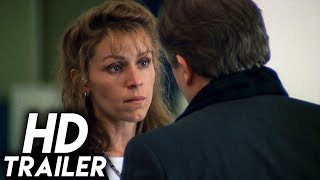
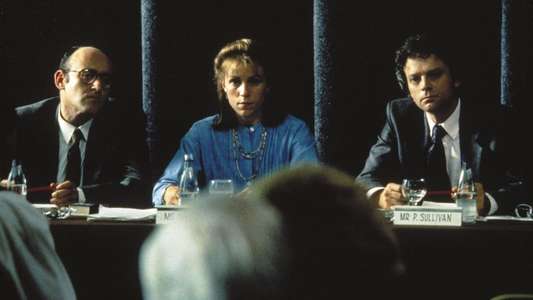
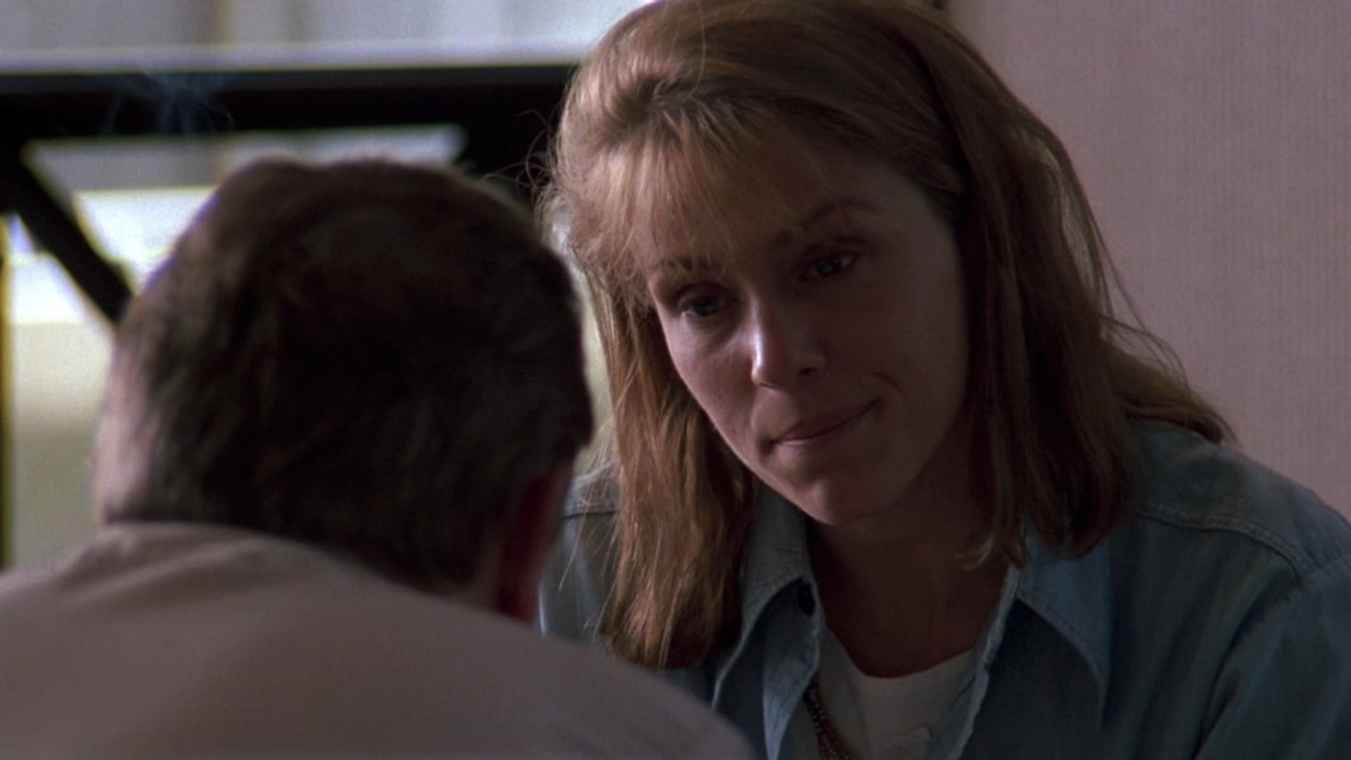
Frances McDormand and Brad Dourif also played a couple in another social and politically charged movie, in Mississippi Burning (1988).
This picture was entered into and then selected for feature film competition at the Cannes Film Festival in 1990 and won the Special Jury Prize there.
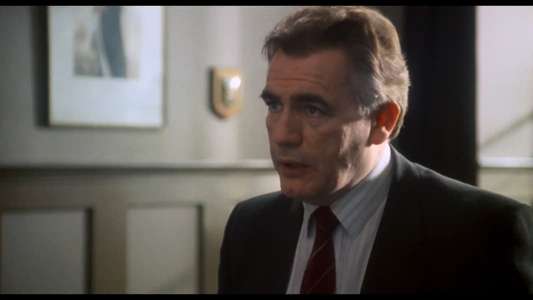
"Sir Robert Neil: You know Ireland can be a wonderful place... if it wasn't for the Irish!"
"Kerrigan: Go back to America. Get out of Belfast, you're in danger here. Ingrid, it's finished. Ingrid Jessner: Not for them, it isn't. Not for Nevin and the others. They're not going to disappear, you know they're still in place. I have a plane to catch, Mr. Kerrigan."