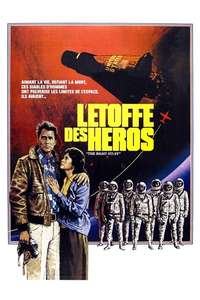

Movie |
Epic | Based On Novel Or Book
Disclaimer: All content and media belong to original content streaming platforms/owners like Netflix, Disney+ Hotstar, Amazon Prime Videos, JioCinema, SonyLIV etc. 91mobiles entertainment does not claim any rights to the content and only aggregate the content along with the service providers links.









Best Film Editing | 1984 | Glenn
Best Sound | 1984
Best Music Original Score | 1984 | Bill
Best Effects Sound Effects Editing | 1984
Best Sound Editing ADR | 1984
Best NonEuropean Film Bedste ikkeeuropiske film | 1985 | Philip
Screenwriter of the Year | 1985 | Philip
Top Ten Films | 1983
Best Director | 1983 | Philip
Best Foreign Language Film | 1985 | Philip
Best Art DirectionSet Decoration | 1984 | W. Stewart
Best Picture | 1984 | Robert
Best Actor in a Supporting Role | 1984 | Sam
Best Cinematography | 1984 | Caleb
Best Motion Picture Drama | 1984
Best Drama Adapted from Another Medium | 1984 | Philip
Best Director | 1984 | Philip
Best Family Motion Picture Drama | 1985
Best Dramatic Presentation | 1984 | Tom
Best Foreign Language Film | 1985
Outstanding Directorial Achievement in Motion Pictures | 1984 | Philip
Best Film | 1984 | Philip
Best Edited Feature Film | 1984 | Glenn
Budget 27,000,000 USD
Box Office Collection 21,500,000 USD
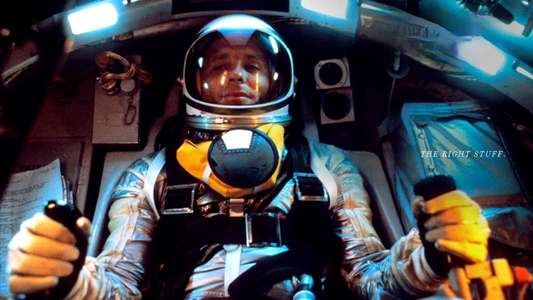
The mysterious "fireflies" observed by John Glenn on his first orbital flight were actually tiny flakes of frost illuminated by sunlight. As the spacecraft orbited into darkness behind the Earth, the sub-zero temperatures caused condensation on its skin to freeze. When warmed by the sun on the other side of the orbit, the temperature change caused some of this frost layer to break free and to be illuminated by the sun. This was confirmed by astronaut Scott Carpenter on the next Mercury flight when he banged on the craft's side, causing more of the flakes to break free and become visible.
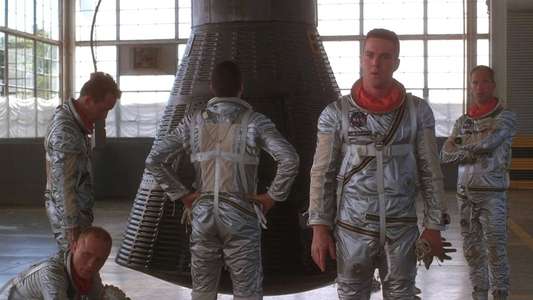
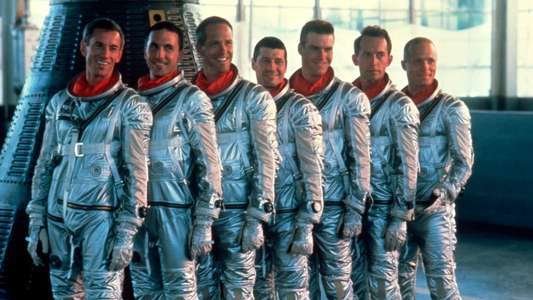
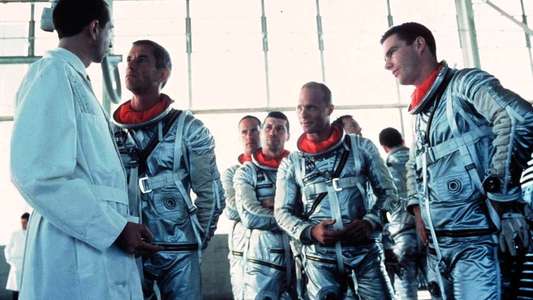
While several of the lead actors chose to meet their real-life counterparts, Scott Glenn elected not to meet with Alan Shepard. Scott said he wanted to get down Shepard's character and nuances by observation and by hearing others' points of view. After filming, the real Alan Shepard wrote writer and director Philip Kaufman and commented on Scott Glenn's "spot-on" performance - except for "not being nearly as good-looking as he was."
It is generally believed that Gus Grissom was not at fault in the real-life hatch-blowing incident on the Liberty Bell 7 capsule. Kickback from the manual activation switch caused a tell-tale bruise to form on the hand activating it, and Grissom never developed the bruise. Wally Schirra, at the end of his Mercury 8 space flight, deliberately activated his own hatch to demonstrate how the bruise formed and exonerate his comrade. The most likely explanation for Grissom's hatch blowing is that the external release lanyard came loose as it was only held in place with a single screw - a design that was changed to be more secure for subsequent flights. N.A.S.A. apparently believed in Grissom's innocence as well, as he remained in a prime rotation spot for subsequent Gemini and Apollo flights. There is also significant belief among astronauts of the time that, had he not been killed in the Apollo 1 fire, Grissom would have been the first man to walk on the moon.
In the film, Alan Shepard says "Louise, I'm going to the moon, I swear to God. I'm on my way." Of the Mercury Seven, Shepard was the only one that did go there, on Apollo 14, becoming the fifth person to walk on the moon (and the only person to ever play golf on the moon) on February 5-6, 1971.
The failure montage ends with a rocket that goes nowhere and just lets out a humorous "pop". That is the Mercury-Redstone 1 launch failure, also known as "The four-inch flight". Due to a cabling error, the umbilicals separated in the wrong order, leading to an electrical fault that shut down the engine. The rocket then - dutifully - followed the correct procedure for a premature engine shutdown. 1) It released the escape tower, that took off. 2) It deployed the drogue chute for the recovery parachute (that is the "pop" seen in the film) 3) When not sensing any load on the main parachute, the rocket assumed the main parachute had failed and deployed the reserve. This left the rocket in a precarious condition: unanchored, fueled, with armed pyrotechnics, and with a parachute hanging down the side that - if the wind caught it - could have toppled the rocket. Flight director Chris Kraft made the call to just let the rocket sit until next the day when the batteries had drained and the liquid oxygen had boiled off. The rocket was recovered and although it was in good condition it never flew again. MR-1 was eventually put on display at the Space Orientation Center of Marshall Space Flight Center.
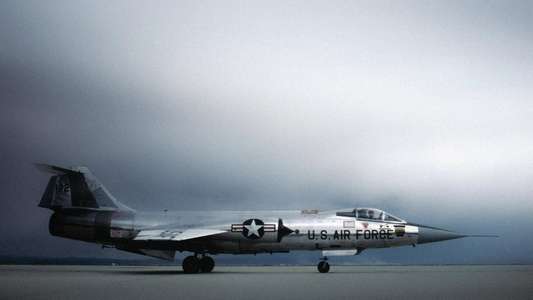
"[first lines] Narrator: There was a demon that lived in the air. They said whoever challenged him would die. Their controls would freeze up, their planes would buffet wildly, and they would disintegrate. The demon lived at Mach 1 on the meter, seven hundred and fifty miles an hour, where the air could no longer move out of the way. He lived behind a barrier through which they said no man could ever pass. They called it the sound barrier."
"[repeated lines] Chuck Yeager: Hey, Ridley, ya got any Beeman's? Jack Ridley: Yeah, I think I got me a stick. Chuck Yeager: Loan me some, will ya? I'll pay ya back later. Jack Ridley: Fair enough."