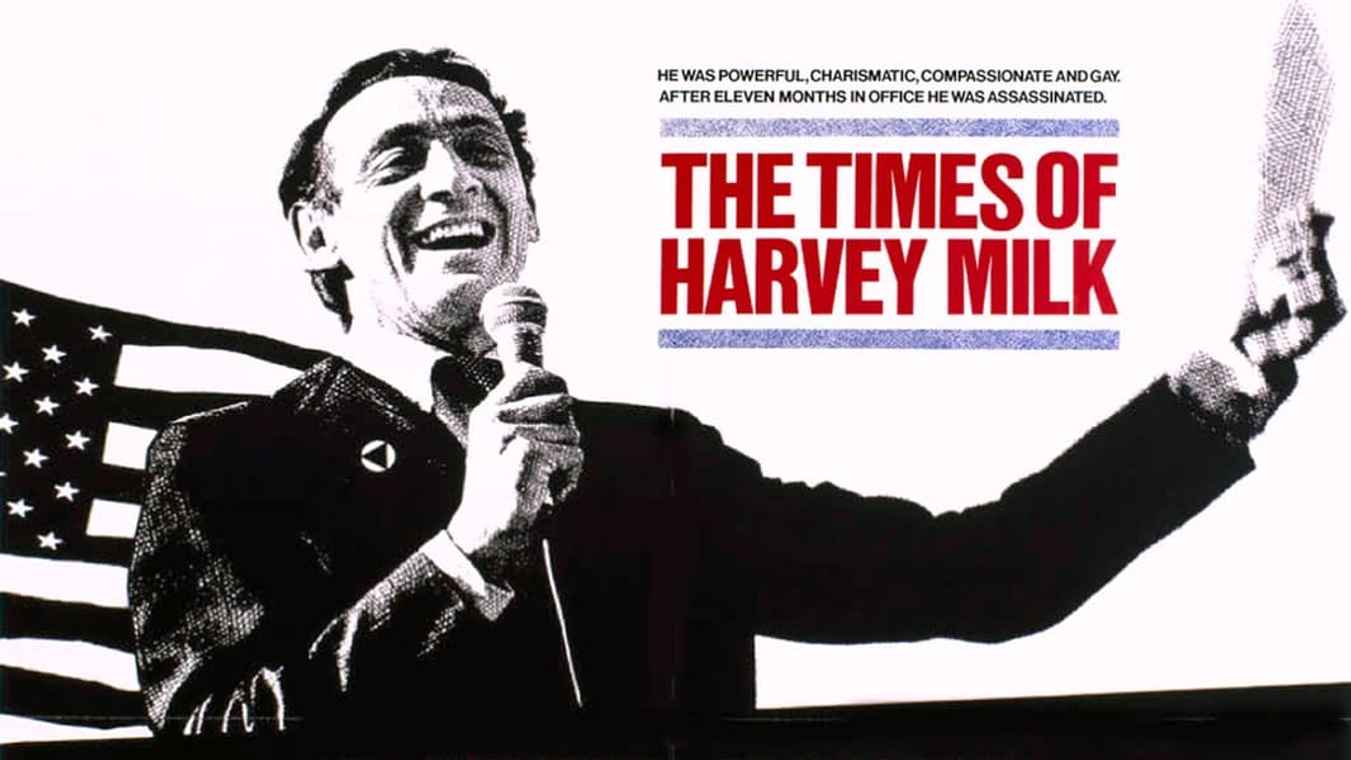

Movie |
Double Murder | California
Disclaimer: All content and media belong to original content streaming platforms/owners like Netflix, Disney+ Hotstar, Amazon Prime Videos, JioCinema, SonyLIV etc. 91mobiles entertainment does not claim any rights to the content and only aggregate the content along with the service providers links.


Best Documentary Features | 1985 | Rob
Outstanding InterviewInterviewer Programs | 1985 | Richard
Documentary | 1985 | Rob
Best Documentary | 1985 | Rob
The Influentials | 2015 | Rob
1985 | Richard
Best Documentary | 1985
Best Documentary | 1984
1986
Documentary | 1985 | Rob
Best Feature | 1984 | Rob
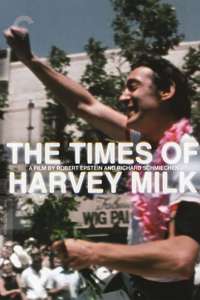
Selected for preservation by the National Film Registry in 2012.
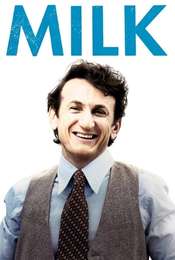
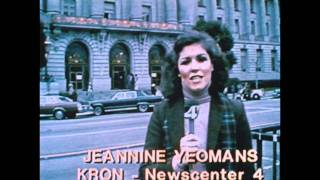
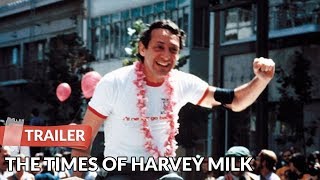
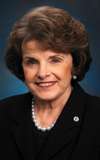
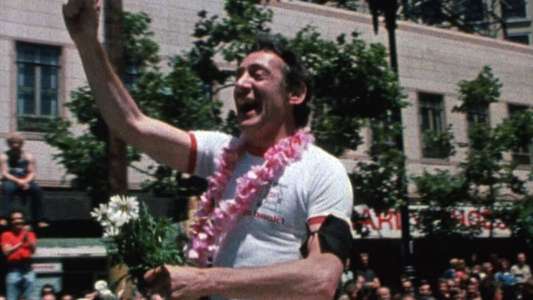
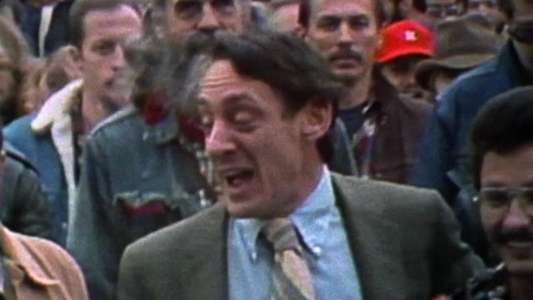
The film opens with acting mayor Dianne Feinstein breaking the news to the assembled press outside City Hall that mayor George Moscone and Harvey Milk had both been shot and killed by city supervisor Dan White. Gus Van Sant opens his biopic Milk (2008) with the exact same footage.
This film is part of the Criterion Collection, spine #557.
The end of the film claims that one reason for Dan White's comparatively light sentence was that his lawyers argued that his consumption of junk food had caused his depression and mental illness, and contributed to his compulsion to commit murder. This is a widely disseminated misrepresentation of White's defense strategy that has become popularly known as the "Twinkie defense." In reality, White's lawyers claimed that his massive consumption of junk food was a symptom, not a cause, of his depression. Psychologists employed by White's defense argued that he was clinically depressed, and pointed to several changes in behavior, among them the consumption of mass quantities of junk food, as evidence of that depression. A November 2003 article by Carol Pogash in the SF Gate, "Myth of the 'Twinkie Defense: The Verdict in the Dan White Case Wasn't Based on His Ingestion of Junk Food,'" systematically debunks this narrative.
Bill Kraus, an activist who is one of the interviewees in this documentary, was also a central figure in the 1987 nonfiction book And the Band Played On: Politics, People, and the AIDS Epidemic by San Francisco Chronicle journalist Randy Shilts. When that book was adapted into a 1993 telefilm, Kraus was played by Ian McKellen. Kraus died in 1986 of AIDS-related causes.
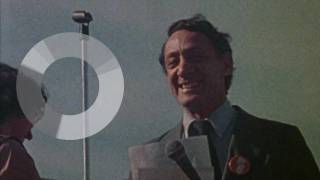
"[last lines] Harvey Milk: I know that you cannot live on hope alone, but without it, life is not worth living. And You... And You... And You... Gotta give em hope. Thank You very much."
"Sally M. Gearhart: It was one of the most eloquent expressions of a community's response to violence that I've ever seen, and I think that we as Lesbians and Gay men, and all the straight people who where marching with us that night - and there were thousands - I think we said it. I think we sent a message to the nation that night about what our immediate response was - not violence, but a certain respect for Harvey and a deep... a deep... regret and feeling of tragedy about it, because Moscone had been our friend as well."