For nearly four decades, Amkette has evolved alongside India’s technology landscape – from pioneering storage solutions to digital entertainment, gaming peripherals, productivity devices and smart accessories. While the product categories have changed dramatically, the company’s underlying philosophy has remained constant: technology creates value only when it improves everyday life. In this conversation, Rajiv Bapna reflects on Amkette’s journey, the lessons learnt from both successes and setbacks, and the opportunities that lie ahead.
Q1. Amkette is one of the rare brands that not only survived the death of physical storage but thrived. What is the core DNA of Amkette that allows it to pivot so successfully when entire product categories go obsolete?
People often call our journey one of reinvention. I’d call it continuity of purpose.
For almost four decades, we’ve believed technology only creates value when it improves everyday life. As needs change, our job is to spot which emerging technologies are actually ready to serve them.
That thinking has taken us from storage to digital entertainment, gaming, productivity and now connected devices. We’ve never seen ourselves as a storage company or a gaming company – we’re in the business of helping consumers adopt technology with confidence.
The other constant is that we try to evolve before circumstances force us to. We respect what got us here, but we don’t get emotionally attached to a category. Every new technology gets the same question: how does this genuinely help our customer? Everything else follows from that.
Q2. You’ve previously mentioned that a vast majority of your active product portfolio didn’t exist just three years ago. How do you keep your R&D and product development cycles nimble enough to match this kind of speed?
Innovation starts with observation, not engineering. Our teams spend a lot of time watching how people actually use technology – what frustrates them, where a new technology could genuinely help – before we build anything.
The first question is never “can we build this?” It’s “will this meaningfully improve the experience?” If yes, we engineer it to our standards for reliability, usability and design.
Adopting every new technology isn’t the goal; recognising which ones are actually ready to make a difference is. Speed matters, but speed without discipline doesn’t create products people keep using. We try to move fast without cutting corners on quality.
Q3. Over the decades of transitioning from digital storage to digital entertainment and peripherals, what was a product or pivot that didn’t go as planned, and what did that teach you about the Indian consumer?
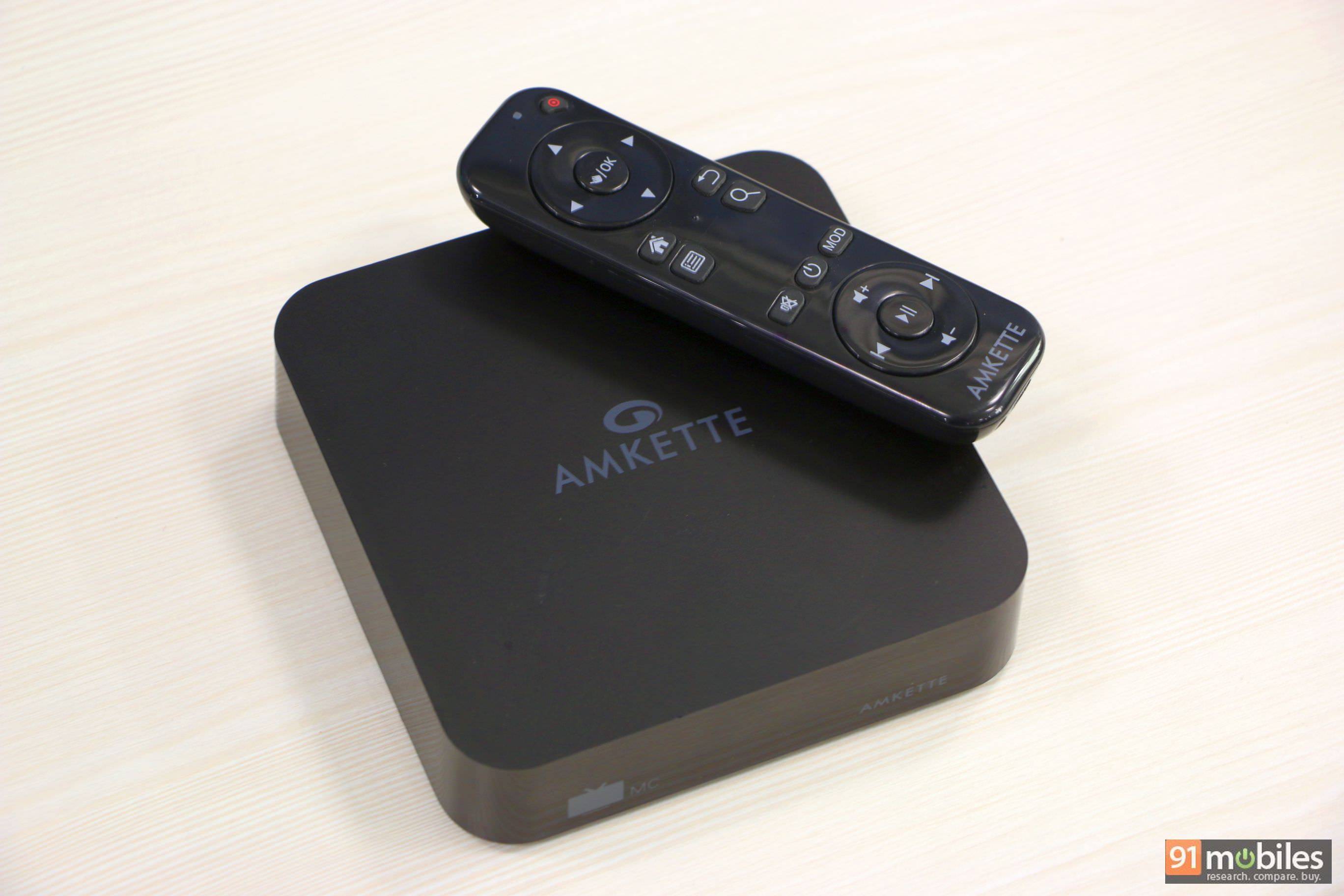
EVO TV stands out. After Flash TV created a new category – letting people enjoy digital content on their TVs, we spent nearly two years building EVO TV, with a patented interface designed specifically for Indian users. It won the NDTV Gadget Guru Award for Consumer Electronics Product of the Year in 2013.
We were convinced we’d built something remarkable, and invested heavily in manufacturing and marketing. Commercially, it didn’t work.
In hindsight, we had the right product but the wrong timing. Broadband penetration was low, internet quality was inconsistent, and the ecosystem simply wasn’t ready – even though EVO TV could turn almost any TV into a smart TV.
It was a costly lesson, but an important one: innovation alone isn’t enough, the ecosystem around it has to be ready too. It’s a lesson that still shapes how we evaluate every major opportunity today.
Q4. What was the “aha!” moment that led Amkette to aggressively enter the gaming peripherals market with the EvoFox line?
There wasn’t a single moment – it evolved. Early success with a few gaming controllers told us Indian gamers wanted products that combined performance, quality and value.
Things accelerated once my son Varun Bapna, who now leads Product Development and Technology at Amkette, got deeply involved. As an avid gamer himself, he brought an instinctive read on the gaming community that complemented our decades of engineering experience.
The result was EvoFox – a brand built around experience, not just specifications, that gamers could trust and aspire to own. The same philosophy runs through EvoFox, our XS productivity series and Mozen power: harness meaningful technology, engineer it well, and make it accessible to a much larger audience.
Q5. Indian gamers are incredibly value-conscious but also demand premium features (like hot-swappable switches in the Ronin series or Tri-mode connectivity). How does Amkette balance premium engineering with aggressive pricing?
Indian consumers expect both premium performance and real value – we see that as an engineering challenge, not a limitation.
For every feature, the question isn’t “can we add it?” but “will it meaningfully improve the experience?” The hard part isn’t adding features, it’s choosing the right ones – the ones customers actually value, versus ones that just add cost and complexity.
Strong relationships across our design, engineering and manufacturing ecosystem let us optimise intelligently rather than simply cut costs. The goal has never been cheaper products – it’s premium technology at a much larger scale.
Customer experience is everyone’s job here. A bad customer experience genuinely bothers all of us, not just support, and that shows up in hundreds of decisions customers never see but feel every time they use our products.
Q6. As the gaming and esports community in India explodes, how is Amkette working directly with gamers to design the next generation of EvoFox products?
The gaming community is one of the most informed, demanding customer groups in tech – that’s an advantage, not a challenge. We stay in continuous dialogue through reviews, online communities, our service teams and direct feedback, and some of our best product improvements have come straight from those conversations.
Varun brings the gamer’s voice into our product discussions every day, so we judge products by the experience they deliver, not just the spec sheet. Our ambition isn’t to launch more products – it’s to build what Indian gamers want today and will expect tomorrow.
Q7. You are competing against global giants like Logitech and Razer. What is the unique advantage an Indian brand has when designing for the local market that global brands often miss?
We have real respect for Logitech, Razer and other global brands – they’ve contributed enormously to this industry. Our advantage is proximity: we don’t have to imagine how Indians work, play or use technology, we live it.
Indian consumers are informed and aspirational – they want the latest technology, but expect it to deliver real value. Designing for India isn’t about making things cheaper; it’s understanding that balance of performance, reliability, design and affordability. Being close to the market also means faster feedback loops from consumers, retailers and reviewers.
We don’t compete on price. We compete on relevance.
Q8. You’ve previously spoken about logistical challenges and policy inconsistencies in the Indian market. How has your approach to distribution, especially in Tier 2 and Tier 3 cities, evolved to become a competitive moat against foreign brands?
Building a great product is only half the job – customers need to discover it, try it, buy it and get supported wherever they live. Early on, we started thinking about distribution the way an FMCG company would; we’ve often called ourselves a “Fast Moving Computer Goods” company. That pushed us to build a nationwide distribution and after-sales network well before it was common in our industry.
Consumers in Tier 2 and Tier 3 cities are just as discerning as those in metros – many still want to see and try a product before buying, and dependable local support matters enormously. That’s why we stay omnichannel: e-commerce and offline retail complement each other. Distribution isn’t just logistics for us, it’s part of the customer experience, and it’s been one of Amkette’s enduring strengths.
Q9. When global competitors have massive R&D budgets, how do you prioritise where to innovate, whether it’s ergonomics, wireless technology, or battery life, to ensure Amkette products stand out on the shelf?
We don’t have the R&D budgets of the world’s largest tech companies, and we’ve never measured innovation by lab size or patent count. We innovate where customers actually feel the difference.
For any new technology, the question is “will this make the product meaningfully better?” not “how fast can we add it?” So our priorities shift by product – ergonomics in one, wireless performance or battery life in another – depending on where customers will notice the most improvement.
A lot of what matters is invisible: better components, thoughtful design, long-term reliability. Our strength is recognising which technologies are ready to create real value, then engineering them into products people enjoy using.
Q10. We’ve gone from storage to mobility, and now to gaming and smart convergence. Looking ahead to the next 5 to 10 years, what is the next major technological shift Amkette is preparing for?
Across four decades of shifts – from personal computing to entertainment, mobility, gaming, and connected devices one thing hasn’t changed: what people value. Products that make life simpler, more productive, more enjoyable.
The next decade will be shaped by AI, intelligent peripherals and connected ecosystems – devices that are more personalised, more context-aware, better at anticipating what users need. For us, that’s not about adding AI because it’s fashionable; it’s the same filter we’ve always used: does this genuinely improve everyday life?
The lines between productivity, gaming, content creation and smart living are also blurring, which opens up products that fit naturally into people’s digital lives rather than serving one purpose. Whatever the next wave looks like, our approach stays the same: understand people first, technology second.
Q11. With the push for domestic manufacturing, how much of Amkette’s future roadmap involves localising the manufacturing of complex electronics like mechanical keyboards and gamepads?
I’m far more optimistic about electronics manufacturing in India now than I was five years ago – demand has grown, and the ecosystem is maturing fast. Manufacturing isn’t new to us either; we were among the first companies to manufacture floppy diskettes in India, so we understand both the opportunity and the difficulty of building here.
We already have solid manufacturing infrastructure, so we can expand localisation wherever it genuinely improves quality, responsiveness or competitiveness – in phases, not all at once. As the component ecosystem matures and volumes grow, more complex products will naturally become viable to build locally.
Our ambition isn’t just to manufacture more in India – it’s to build products from India that can compete with the best in the world.
Closing Reflection
Four decades in, one thing hasn’t changed: our purpose. Technologies come and go, categories come and go, but the belief stays the same – technology should improve everyday life, not just impress people.
That belief took us from storage to entertainment, gaming, productivity and now connected devices. It’s taught us when to move, when to wait, and how to turn new technology into products people genuinely enjoy. The next wave will bring things we can’t fully predict today – our job will be the same as it’s always been: understand people, engineer thoughtfully, and make technology feel simple and within reach.