CES 2026: NVIDIA announces DLSS 4.5 support for all RTX GPUs and new G-Sync Pulsar gaming monitors


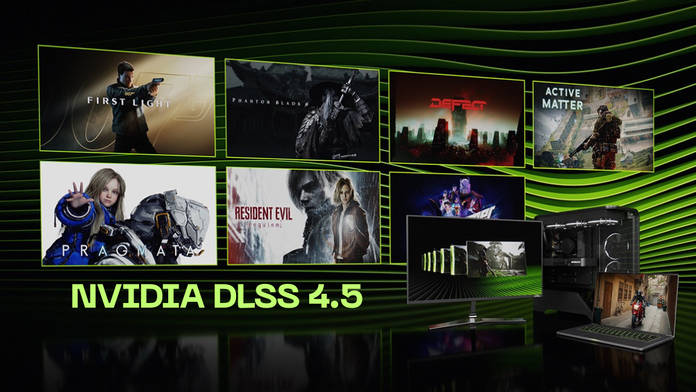
At CES 2025, NVIDIA first launched its newest DLSS 4 for RTX series GPUs. With DLSS 4, supported users were able to enjoy benefits like frame generation and an RTX 50 series exclusive feature, multi-frame generation, which could boost base frame rates up to 4x. With the new DLSS 4.5, NVIDIA is confident that it has improved the ghosting and artefact problems that are often accompanied by upscaling. There’s also a new 6x multi-frame generation option along with a dynamic multi-frame generation option arriving soon. We’ll explore the details in a little more depth below:
What is DLSS 4.5 and what does it bring?
DLSS (Deep Learning Super Sampling) 4.5 builds directly on the foundation of version 4 but focuses heavily on stability and image fidelity with its second-generation Transformer model. The key feature is the improved AI reconstruction engine, which now uses a dataset trained across hundreds of games to better handle “failure modes” like disocclusion and thin geometry.
Show Full Article


NVIDIA also claims that the “Performance” mode in the new upscaler even exceeds the native rendering and that the “Ultra Performance” mode is now fully 4K capable. If proven true, this could drastically improve the image quality. The update also brings two major additions to the frame generation suite.


First, there is a new 6x Multi-Frame Generation mode, exclusive to the new RTX 50 series cards, which can theoretically turn 30 FPS into a silky 180 FPS in supported titles. Second, and perhaps more importantly for the average user, is the Dynamic Multi-Frame Generation option, which has been teased. This intelligent mode automatically switches between generation multipliers (e.g., 2x, 3x, 4x) based on the scene’s complexity and your current latency, ensuring you get the smoothest experience without input lag penalties.


The new model will also be supported across older RTX 20/30 series GPUs but there’s no official word if the performance enhancements will apply to them as well. This is likely because these GPUs lack Tensor Core FP8 acceleration, which is what the DLSS 4.5 functions on. It remains to be seen if the new DLSS 4.5 shows any performance improvements on these models.
It is important to note that while the 2nd Gen Transformer Super Resolution is available now for all RTX GPUs, the Dynamic and 6x Frame Generation features are scheduled to launch in Spring 2026 exclusively for the RTX 50 Series GPUs.
What games support DLSS 4.5?
The good news is you don’t have to wait long. NVIDIA has confirmed that DLSS 4.5 Super Resolution will be available in over 400 games and apps immediately. While the official rollout for the NVIDIA App is scheduled for January 13th, the features are currently available in beta. Users with a compatible RTX GPU can head over to the NVIDIA App, opt into the beta via the “About” settings, and follow the instructions to unlock the latest models. There will also be a new Game Ready Driver (v591.74) waiting for you in the Drivers tab to ensure everything runs smoothly.
The launch lineup fully supporting the 2nd Gen Transformer models includes hundreds of existing titles, while the advanced Multi-Frame Generation features for RTX 50 series owners will be enabled in supported games closer to the Spring 2026 launch window.
NVIDIA G-Sync Pulsar gaming monitors
Launching alongside DLSS 4.5 is the next evolution of NVIDIA’s display tech: G-SYNC Pulsar. Available starting January 7th on select displays from ASUS, Acer, AOC, and MSI, this new standard solves the old dilemma of choosing between smooth visuals and sharp movement. Traditionally, you had to pick between “VRR” (no screen tearing) or “ULMB” (clear motion). Pulsar combines both by rapidly turning the backlight on and off in sync with your game’s frame rate. This trick prevents your eyes from blurring moving objects, delivering an effective motion clarity of over 1000Hz, basically making fast-paced games look four times sharper than usual.


These monitors also feature G-SYNC Ambient Adaptive Technology, which uses a built-in sensor to automatically adjust the screen’s brightness and warmth based on your room’s lighting, saving you from manual tweaking day and night. Thanks to a partnership with MediaTek, all this tech is now built directly into the monitor’s main chip, making these advanced features more accessible and easier to produce.
With tools like DLSS 4.5, NVIDIA is essentially shifting toward a software-first approach for gamers. These updates let them squeeze significantly more performance out of existing hardware, effectively extending the life of older cards like the RTX 40 and even the RTX 30 series. It is a smart retention move: if you can get a “like-new” experience on your current GPU thanks to better upscaling and frame generation, you are more likely to stick with the GeForce ecosystem, even if upgrading to a pricey RTX 50 series card isn’t in the budget right now.