Computex 2026: Acer refreshes Aspire, Swift, TravelMate and QD‑OLED displays for the AI PC era


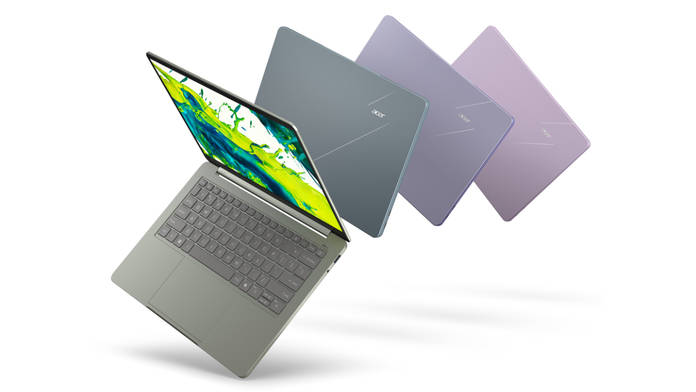
Acer is using Computex 2026 to reset its entire Windows lineup around AI PCs, with new Aspire, Swift, and TravelMate machines aimed at everyone from students and home users to travelling executives. The common thread between these products is quite simple: modern Intel Core Series 3/Core Ultra chips with built-in NPUs, long battery life, and cleaner designs or bulky workstations. We’ll look at it in a bit more detail below.
Table of Contents
Acer Aspire: AI PCs for home and students
The new Aspire X 16 AI and Aspire 18 AI target everyday users who split time between work, study, and entertainment. The Aspire X 16 AI is the slimmer, more premium option, pairing Intel Core Ultra X‑series chips and integrated graphics with a 16‑inch 3K OLED, 120 Hz display and long battery life in a portable chassis. It’s ideal for people who want a nicer screen and a bit more power for light editing and AI features but still need something easy to carry. That’s a welcome change for students and home workers who care more about a good screen and battery life than raw power.


The Aspire 18 AI goes all in instead, with a large 18‑inch WUXGA display and high refresh rate, making it feel closer to a portable desktop. It targets at-home users, students, and casual creators who mostly work at a desk but still want the option to move around the house or campus, and it comes with extras like Wi‑Fi 7, dual Thunderbolt 4 ports, and an oversized touchpad for comfort.
Acer’s Aspire C 24 and C 27 AI all‑in‑one desktops complete this family for shared spaces. They offer 23.8‑ and 27‑inch Full HD panels, slim stands, and a choice of AMD Ryzen AI or Intel Core Ultra chips, with pop‑up IR webcams and a clean design for family rooms or small home offices. It’s a sensible pick for anyone who wants a ‘portable desktop’ without building a full tower.
Show Full Article
Acer Swift: thin‑and‑light AI laptops
For people who care more about portability and style, Acer’s Swift series gets two new AI‑ready models. The Swift Air 14 is the mainstream thin‑and‑light machine with a 14‑inch, under‑1.3 kg aluminium laptop using Intel Core Series 3 processors and a dedicated NPU to run on‑device AI features. It offers up to all-day battery life, fast charging, a 120 Hz WUXGA display, quad speakers, and a 1080p IR webcam, making it a good everyday choice for students and office workers who move a lot.


The Swift Spin 14 AI is the more flexible 2‑in‑1 option. It steps up to Intel Core Ultra with higher AI performance, adds a 360‑degree hinge, and uses a 14‑inch 120 Hz touchscreen that supports an active stylus for notes and sketching. With Wi‑Fi 7, Thunderbolt 4, HDMI 2.1, and features like a 5 MP IR webcam with presence detection and a fingerprint reader, it’s clearly tuned for power users, hybrid workers, and light creators who want tablet modes without giving up a full laptop keyboard.
Acer TravelMate: AI and security for business
On the business side, Acer’s new TravelMate models bring the same AI focus to enterprises and SMBs. The TravelMate P6 14 AI sits at the top here with an ultra-light (under 1 kg) Copilot+ PC with Intel Core Ultra Series 3 and Intel vPro, which targets security and remote manageability. It promises up to 30 hours of battery life, Wi‑Fi 7, Thunderbolt 4, and a 14‑inch display with options up to 2.8K OLED, alongside numerous hardware security features and AI‑assisted video call tools. For IT teams, the vPro and security additions will probably matter more than the AI branding.


Below it, the TravelMate P2 Spin 14 offers a 2‑in‑1 design for field workers and flexible roles, with a 14‑inch WUXGA touchscreen, a garaged Wacom stylus, dual webcams (including a world‑facing one), MIL‑STD 810H durability, and Wi‑Fi 7. The TravelMate X2 14 and X2 15 complete the lineup as more traditional clamshells for SMBs, with Intel Core Series 3, MIL‑STD durability, TPM, optional fingerprint and chassis intrusion alerts, Wi‑Fi 6E, and AI‑enhanced audio/video for calls. The 15‑inch version also adds a numeric keypad for spreadsheet‑heavy work.
Acer ProDesigner PE320QK G0: QD‑OLED for colour‑critical work
The Acer ProDesigner PE320QK G0 targets photographers, video editors and other creators who need accurate colour on screen. It uses a 32‑inch 4K QD‑OLED panel with true 10‑bit colour and DisplayHDR True Black 500, so photos and footage show more detail, deeper blacks and smoother gradients.
Acer tunes this monitor for colour‑critical work, with Delta E under 1, Calman Verified certification and coverage of 99 percent DCI‑P3 and 98 percent Adobe RGB. In practice, that means you can trust what you see when grading, retouching or preparing print assets. A 120 Hz refresh rate and 0.03 ms response time also help when scrubbing through video. Quality‑of‑life touches include the Acer Smart Dial remote for quick adjustments and Creator Hub software, which lets users switch colour spaces, hook up an external calibrator and arrange multi‑monitor layouts.
Acer CE320QK G: QD‑OLED for prosumers and content creators
The Acer CE320QK G aims at prosumers and content creators who want similar QD‑OLED punch without all the pro‑studio extras. It also offers a 32‑inch 4K QD‑OLED panel with true 10‑bit colour and DisplayHDR True Black 500, so you still get sharp detail and strong contrast for editing and streaming.


Colour accuracy lands at Delta E under 2 with 99 percent DCI‑P3 coverage, which is more than enough for most content‑focused workflows. The 120 Hz refresh rate and 0.03 ms response time keep motion smooth, while AMD FreeSync Premium Pro support adds variable refresh rate for tear‑free video and gaming. An adjustable ErgoStand with tilt, swivel and height movement helps users set up a more comfortable desk for long sessions.
Final thoughts and availability
Acer’s new Aspire, Swift, and TravelMate models neatly cover most use cases: Aspire is for home and students, Swift is for thin‑and‑light everyday laptops, and TravelMate is for business users who need extra security and durability. Compared to older Aspire, Swift, and TravelMate laptops, this update is doing more than just slapping on an NPU label.
Recent Aspire AI models already got faster screens and slimmer bodies, and the new X 16 and 18 AI go further with 120 Hz displays, larger OLED options, and better battery claims.
The Swift Air 14 and Swift Spin 14 AI are lighter and more portable than earlier Swift Go and Swift 14 notebooks while still improving battery life and connectivity, and the new TravelMate machines add better vPro security, Wi‑Fi 7, and tougher builds than previous business models.
Most of these AI PCs are scheduled to start rolling out globally between July and September 2026, with some regions (like Australia) getting select models later in the year. India pricing and exact launch dates haven’t been confirmed yet, but Acer typically brings its key Aspire, Swift, and TravelMate lines to the market soon after their global debut.